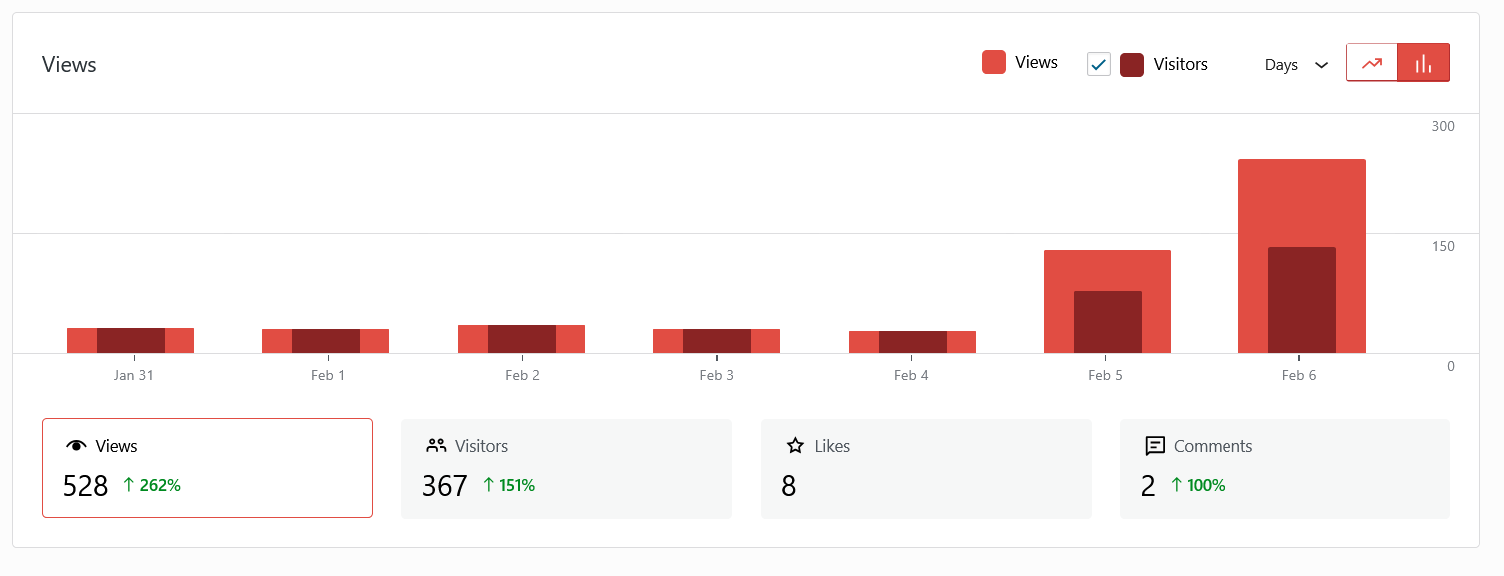
See The Recipes in This Blog Are Being Stolen by AI.
My writing and insights can’t be this good!
As Pepperdine University literature professor Jessica Hooten Wilson told Fortune in a recent interview, “it’s not even an inability to critically think. It’s an inability to read sentences.” Gen Z Arriving at College Unable to Read https://futurism.com/future-society/gen-z-literacy-reading
I no longer wonder why I still have a job.
Yikes.
lifeunderwriter.net is a personal WordPress.com blog run by an experienced life insurance underwriting professional (the author uses the handle “SupremeCmdr” and has been posting since at least 2008).
The site’s tagline is “Curated Content From a Life Underwriting Professional”. It primarily features:
The content often ties back to how various medical, lifestyle, or demographic factors might influence underwriting decisions in life insurance, but it has evolved over time into a more eclectic mix. Recent posts (including into 2025) frequently cover:
The blog is not a commercial service site offering underwriting services (an older page mentions “Underwriting Solutions LLC” from around 2006–2017, but those appear to be in hibernation or discontinued). It functions more as a personal journal / link blog than a formal resource or forum.
It remains active with regular (sometimes frequent) posts, though the style is informal, opinionated, and not strictly professional/academic. If you’re in the life insurance field or interested in mortality/longevity topics through an underwriter’s lens, it can offer interesting curated reading; otherwise, it’s a niche personal blog.
It has evolved over time into a more eclectic mix?
How about always been a more eclectic mix!
If you’re using these systems for anything that matters, you need a verification pass that goes way beyond a lazy skim. That means detail-oriented human work — you must check every claim, every diagram, every link, every word, every line of code, every outcome and citation and fact. And who’s best positioned to verify? The very people who are already good at whatever the AI is trying to do: the workers it’s supposed to replace.
Doctors can check medical claims. Senior programmers can check AI coding outputs. Strong copywriters can check that whatever GPT writes sings — they know a good turn of phrase when they read it and can make sure each paragraph flows from the one before it.
That’s the biggest irony of AI work. If you’re not already good at the task it’s doing, you can’t tell if what it generates is good. You don’t have the knowledge or the context. If you don’t know French, then you don’t know if a French translation sounds clunky or if you just told someone to eat shit in your new commercial because of new slang that sounds like the phrase you translated. No, AI won’t take all the jobs. Here’s why. – https://www.freethink.com/artificial-intelligence/ai-wont-take-all-the-jobs
The full essay is worth reading. Enjoy!
July 15, 2025
I began studying AI in the mid-1980s. Unusually for a computer scientist of that era, my interest was entirely in information, not in machines. I became obsessed with understanding what it meant to live during the transition from the late Industrial Age to the early Information Age.
What I learned is that computers fundamentally alter the economics of information. We now have inexpensive access to more information, and to higher quality information, than ever before. In theory, that should help individuals reach better decisions, organizations devise improved strategies, and governments craft superior policies. But that’s just a theory. Does it?
The answer is “sometimes.” Unfortunately, the “sometimes not” part of the equation is now poised to unleash devastating consequences.
Consider the altered economics of information: Scarcity creates value. That’s been true in all times, in all cultures, and for all resources. If there’s not enough of a resource to meet demand, its value increases. If demand is met and a surplus remains, value plummets.
Historically, information was scarce. Spies, lawyers, doctors, priests, scientists, scholars, accountants, teachers, and others spent years acquiring knowledge, then commanded a premium for their services.
Today, information is overabundant. No one need know anything because the trusty phones that never leave our sides can answer any question that might come our way. Why waste your time learning, studying, or internalizing information when you can just look it up on demand?
Having spent the past couple of years working in higher education reform and in conversation with college students, I’ve come to appreciate the power—and the danger—of this question. Today’s students have weaker general backgrounds than we’ve seen for many generations because when information ceased being scarce, it lost all value.
It’s important to recall how recently this phenomenon began. In 2011, an estimated one-third of Americans, and one-quarter of American teenagers, had smartphones. From there, adoption among the young grew faster than among the general population. Current estimates are that over 90% of Americans, and over 95% of teenagers, have smartphone access.
Even rules limiting classroom use cannot overcome the cultural shift. Few of today’s college students or recent grads have ever operated without the ability to scout ahead or query a device for information on an as-needed basis. There’s thus no reason for them to have ever developed the discipline or the practices that form the basis for learning.
The deeper problem, however, is that while instant lookup may work well for facts, it’s deadly for comprehension and worse for moral thinking.
A quick lookup can list every battle of WWII, along with casualty statistics and outcome. It cannot reveal the strategic or ethical deliberations driving the belligerents as they entered that battle. Nor can it explain why Churchill fought for the side of good while Hitler fought for the side of evil—a question that our most popular interviewers and podcasters have recently brought to prominence.
At least, lookup couldn’t provide such answers until recently. New AI systems—still less than three years old—are rushing to fill that gap. They already offer explanations and projections, at times including the motives underlying given decisions. They are beginning to push into moral judgments.
Of course, like all search and pattern-matching tools, these systems can only extrapolate from what they find. They thus tend to magnify whatever is popular. They’re also easy prey for some of the most basic cognitive biases. They tend to overweight the recent, the easily available, the widely repeated, and anything that confirms pre-conceived models.
The recent reports of Grok regurgitating crude antisemitic stereotypes and slogans illustrate the technological half of the problem. The shocking wave of terror-supporting actions wracking college campuses and drawing recent grads in many of our cities illustrate the human half.
The abundance of information has destroyed its value. Because information—facts and data—are the building blocks upon which all understanding must rest, we’ve raised a generation incapable of deep understanding. Because complex moral judgments build upon comprehension, young Americans are also shorn of basic morality
We are rapidly entering a world in which widespread access to voluminous information is producing worse—not better—decisions and actions at all levels. We have outsourced knowledge, comprehension, and judgment to sterile devices easily biased to magnify popular opinion. We have bred a generation of exquisitely credentialed, deeply immoral, anti-intellectuals on the brink of entering leadership.
When the ubiquity of instant lookup evolves beyond basic facts and into moral judgments, banal slogans and mindless cruelty will come to rule our lives.
Is there a way out of this morass? Perhaps the only one that the ancients discovered back when information, understanding, and morality all retained immense value: faith in a higher power. Because the path we’ve set on our own is heading into some very dark places.
This article was originally published by RealClearScience and made available via RealClearWire.
Is sports wagering a public health crisis?
“Folks might be familiar with this group at Northeastern, the Public Health Advocacy Institute. It is treating gambling as a public health issue and has deemed it a crisis…
“First of all, lots of people, predominantly young men, are losing more money than they can afford gambling on sports, or are developing either full-blown or sort of borderline gambling addictions. To me, that makes it a public health issue.”
Jonathan D. Cohen on how sports gambling became a public health crisis – https://awfulannouncing.com/gambling/author-jonathan-d-cohen-perils-sports-betting.html
The next major health epidemic in the U.S. will not come from a pathogen. This plague has a potential patient population in the tens of millions, limited effective treatments, and is not widely studied in the medical community. I’m referring to sports gambling, an activity that deeply alarms me as a physician who specializes in addiction. Problem gambling can increase the incidence of depression and anxiety and can lead to bankruptcy, homelessness, or suicide. Why gambling addiction is America’s next health crisis – https://kevinmd.com/2025/06/why-gambling-addiction-is-americas-next-health-crisis.html
Yikes.
CrowdStrike fixes start at “reboot up to 15 times” and get more complex from there — https://arstechnica.com/information-technology/2024/07/crowdstrike-fixes-start-at-reboot-up-to-15-times-and-get-more-complex-from-there/
Deeply sorry for the inconvenience and disruption…
The Administration for Community Living (ACL) has published its profile of older Americans 2021, an annual summary of critical statistics related to the older population. The updated report shows an older population that’s increasing in size and diversity.
The older population is growing and becoming more diverse — https://healthjournalism.org/blog/2022/12/the-older-population-is-growing-and-becoming-more-diverse/

And in case you’re thinking none of this matters because you are still young…
We found that midlife, generally considered to encompass the ages of 40 to 65, has become a time of crisis…the midlife crisis experienced by most people is subtler, more nuanced and rarely discussed among family and friends. It can be best described as the “big squeeze” – a period during which middle-aged adults are increasingly confronted with the impossible choice of deciding how to split their time and money between themselves, their parents and their kids.
The real midlife crisis confronting many Americans — https://theconversation.com/the-real-midlife-crisis-confronting-many-americans-114347
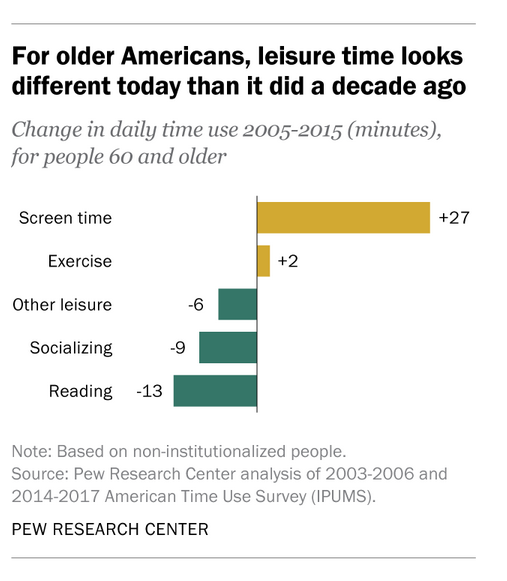
Due to the holiday, travel, and entertaining I’ve been spending less time in front of my screens.
Well, time to get back to my normal screen time habit.
Cryptocurrencies are a social movement based on the belief that markings in a ledger on the internet have intrinsic value. The organizers of these ledgers call these markings Bitcoin, or Dogecoin, or offer other names based on the specific ledger. That’s really all a cryptocurrency is. There’s no magic. It’s not money, though it has money-like properties. It’s not anything except a set of markings. Sure, the technology behind the ledgers and how to create more of these markings is kind of neat. But crypto is a movement based on energetic storytellers who spin fables about the utopian future to come. In a lot of ways, cryptocurrencies are like Florida land that no one ever intends to use. It has value in the moment it is traded, but only because there’s a collective belief that it has some intrinsic worth.
Matt Stoller BIG newsletter 12.07.21 — https://mattstoller.substack.com/
FTX seems to be a textbook example of how many investors are easily hoodwinked by media narratives about the latest investment genius who has magically discovered some new way of delivering unprecedented returns.
How Easy Money Fueled the FTX Crypto Collapse – https://mises.org/wire/how-easy-money-fueled-ftx-crypto-collapse

Good book. It should be required reading for everyone before they invest a single penny.
Update 12.01.22
One more extra credit reading assignment. FTX’s Collapse Was a Crime, Not an Accident
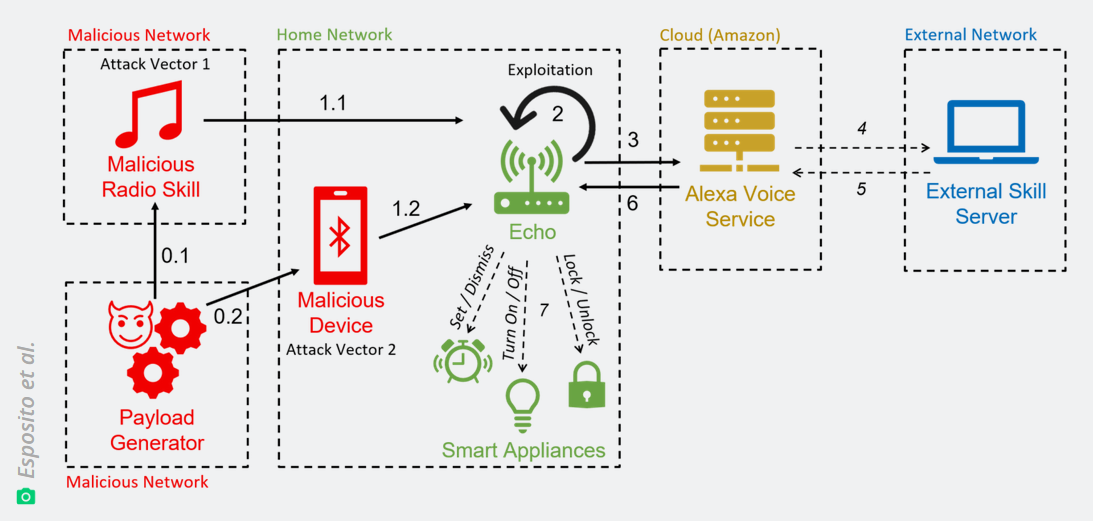
Some days I’m very happy being old fashioned. I still need a key to open my front door. I have to open my refrigerator to see what’s inside. And Good God I have to manually select the music I want to listen too.
Some days I’m very happy being old fashioned. Today is one of those days.
 lifeunderwriter.net
You must be logged in to post a comment.