What Grok Thinks About This Blog – 01.04.26

lifeunderwriter.net is a personal WordPress.com blog run by an experienced life insurance underwriting professional (the author uses the handle “SupremeCmdr” and has been posting since at least 2008).

The site’s tagline is “Curated Content From a Life Underwriting Professional”. It primarily features:

  • Curated links to external articles, studies, and news items
  • Commentary and personal reflections from the author’s perspective as someone who has worked in life insurance underwriting (assessing mortality risks, medical records, risk classification for policies, etc.)
  • Insights related to the insurance industry, mortality trends, health/longevity topics (e.g., vitamin D in older adults, obesity treatments, nutrition, diabetes risks), retirement planning (e.g., deferring Social Security), remote work in insurance, and occasional broader thoughts on society, technology, or resilience

The content often ties back to how various medical, lifestyle, or demographic factors might influence underwriting decisions in life insurance, but it has evolved over time into a more eclectic mix. Recent posts (including into 2025) frequently cover:

  • Health and nutrition (e.g., protein’s role in diets, GLP-1 drugs, probiotics)
  • Personal anecdotes (cooking recipes, music like Pat Metheny)
  • Retirement and aging commentary
  • Industry observations (e.g., older workers, AI’s effects)

The blog is not a commercial service site offering underwriting services (an older page mentions “Underwriting Solutions LLC” from around 2006–2017, but those appear to be in hibernation or discontinued). It functions more as a personal journal / link blog than a formal resource or forum.

It remains active with regular (sometimes frequent) posts, though the style is informal, opinionated, and not strictly professional/academic. If you’re in the life insurance field or interested in mortality/longevity topics through an underwriter’s lens, it can offer interesting curated reading; otherwise, it’s a niche personal blog.

It has evolved over time into a more eclectic mix?

How about always been a more eclectic mix!
My Statin Comes From India

According to the USP, the bulk of the APIs come from India. That country is responsible for 50% of the active pharmaceutic ingredients. China is not far behind at 32%. The European Union supplies 10%. That’s a big change since 2000. Back then, European countries like France, Germany, Switzerland and Denmark supplied 42% of the APIs. Drug Recalls From India – Can You Trust Foreign-Made Generics?https://www.peoplespharmacy.com/articles/more-drug-recalls-from-india-do-you-trust-foreign-made-generics

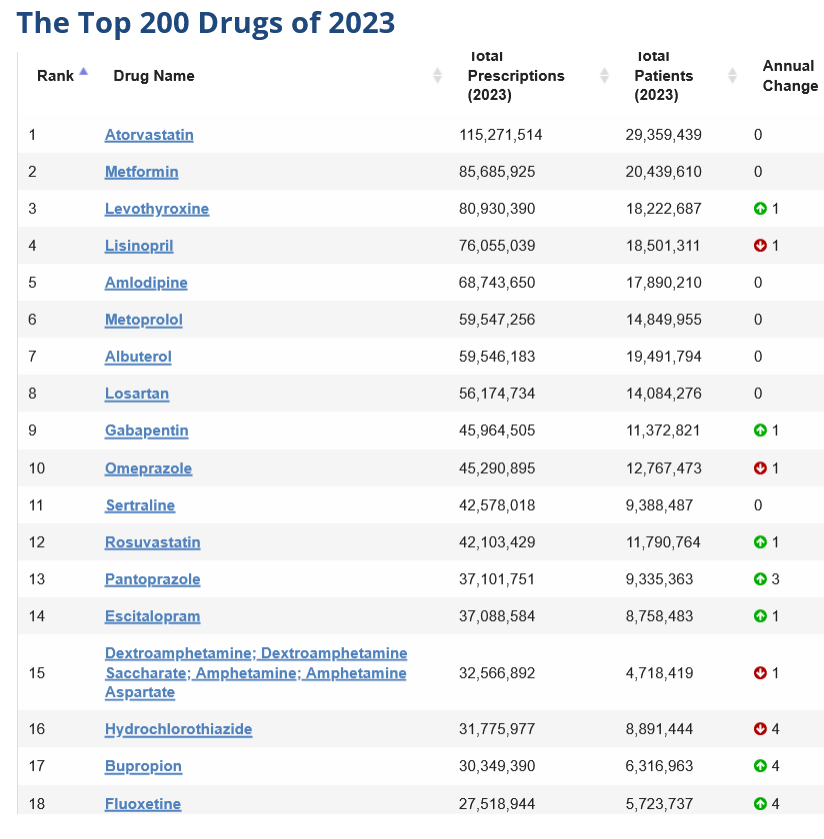
Dozens of companies received approval from the FDA over the years to sell metoprolol and bupropion in the U.S. Yet from 2018 to 2024, the agency reported running only 2 tests on metoprolol and 7 on bupropion through its quality surveillance program — in each case, by pulling a sample from a single drug maker. In many of those years, the drugs weren’t tested at all, FDA records show. Those that were assessed received passing results. The FDA Often Doesn’t Test Generic Drugs for Quality Concerns, So ProPublica Didhttps://www.propublica.org/article/fda-generic-drug-testing

ClinCalc DrugStats Databasehttps://clincalc.com/DrugStats/

Both articles are long reads but worth your time.

Yikes.

What ChatGPT Run Through Duck.ai Thinks About This Blog

Lifeunderwriter.net is a blog mainly focused on topics related to life underwriting in the insurance sector. It covers various aspects of the underwriting process, success tips for professionals, and insights into the life insurance industry.

Key Features of the Blog

  • Curated Content: The blog displays curated content from a life underwriting professional aimed at sharing knowledge and resources.
  • Topics Covered: Posts may include discussions on underwriting practices, medical news relevant to underwriters, career tips, and personal insights about the industry.
  • Regular Updates: The blog has been active for several years, with posts dating back to 2008, and it appears to encourage subscriber engagement.

Recent Posts and Themes

Recent entries suggest a mix of industry insights and personal reflections. Topics range from the impact of emerging trends in underwriting to the importance of keeping updated with medical advancements.

If you’re interested in specific articles or themes from the blog, let me know!

What Grok Thinks About This Blog

Lifeunderwriter.net is a personal WordPress blog titled “Curated Content From a Life Underwriting Professional.” It features reflective commentary, curated articles, and personal anecdotes written by an anonymous life underwriting expert (someone with over 15 years of remote work experience in the field). The content spans topics related to health, longevity, demographics, lifestyle, risk assessment, retirement planning, nutrition, and broader societal issues like AI’s impact on critical thinking or remote work trends.

Key Features and Content

  • Blog Posts: Entries date back to at least 2008 and include recent ones from 2024–2025. Examples include discussions on vitamin D supplementation for older adults, coffee’s link to atrial fibrillation, Social Security finances, cognitive disabilities tied to income/education, and personal reflections on retirement or resilience.
  • Themes: Heavily influenced by the author’s professional background in life insurance underwriting (e.g., assessing mortality risks, medical summaries for policies), but it extends to non-professional topics like cooking recipes, music (e.g., Pat Metheny), or even cheese production history.
  • Style: Informal and opinionated, with embedded links to external studies, charts, images, and disclaimers. It’s not a commercial site—no services are actively offered, though older posts (e.g., from 2017) mention “hibernating” outsourced underwriting services like attending physician statement summaries.

Audience and Purpose

The blog targets readers interested in a underwriter’s unique lens on aging, mortality, and wellness—think professionals in insurance, finance, or health, plus general audiences curious about evidence-based life hacks. It’s more of a personal journal than an authoritative resource, emphasizing work-life balance (e.g., the author’s low-stress remote setup since ~2006) and long-term planning like deferring Social Security to age 70.

No direct contact info is listed, but it’s hosted on WordPress.com for easy following. If you’re in life insurance, it might resonate with underwriting pros navigating industry shifts like accelerated processes during COVID-19.

Cheese production history?

Would You Trust an AI Chatbot with Your Children?

All this offloading of parental responsibility to AI is alarming because one of ChatGPT’s biggest flaws, its manipulative and sycophantic nature, is known to intensify delusions and cause breaks from reality — a grim phenomenon that’s been linked to numerous suicides, including several teenagers. Parents Using ChatGPT to Rear Their Childrenhttps://futurism.com/artificial-intelligence/parents-chatgpt-rear-children

Here’s the disclaimer from the ChatGPT homepage:

ChatGPT can make mistakes. Check important info.

Yikes.

What ChatGPT Thinks About This Blog

Here’s what I found on LifeUnderwriter.net (the blog):

  • It is a blog hosted on WordPress at [lifeunderwriter.net] titled “Curated Content From a Life Underwriting Professional”. lifeunderwriter.net+2lifeunderwriter.net+2
  • The posts cover a variety of topics — not strictly life-insurance underwriting: health topics, longevity, demographics, lifestyle commentary. For example, a post from September 2024 titled “The Placebo Effect: When the Mind Becomes the Medicine” touches on aging and life-expectancy issues. lifeunderwriter.net
  • The blog seems to be running for a long time: there are archived posts going back at least to November 2013. lifeunderwriter.net+1
  • It appears to use standard blogging content and isn’t obviously a commercial site for underwriting services or a carrier guide. It seems more personal / commentary-oriented rather than strictly professional underwriting guidance.

My assessment

  • If you were looking for professional underwriting guides (for example, detailed carrier requirements, rating classes, medical tables, etc.), this blog may not be the best or most authoritative source — it seems more reflective/opinion-style rather than official.
  • If you were interested in someone’s perspective who works in life underwriting and writes broadly about risk, life-expectancy, aging, etc., then this blog could be quite interesting.

I Want My Daughter (or granddaughter) to get Skin Care Advice From TikTop (from a 7 YO)

Content creator ages ranged from 7 to 18 years. Each video reviewed had an average of 1.1 million views. Regimens featured an average of 6 products, costing an average of $168/regimen. Only one-quarter of videos (26.2%) included sunscreen. The top 25 most-viewed videos contained an average of 11 and a maximum of 21 potentially irritating active ingredients.

Conclusions: Skin care regimens on TikTok are costly, infrequently include sunscreen, and often involve exposure to ingredients that carry a risk of irritation, allergic contact dermatitis, and sun sensitivity. They offer little to no benefit for the pediatric populations they are targeting. Pediatric Skin Care Regimens on TikTok https://pubmed.ncbi.nlm.nih.gov/40484399/

Yikes.

You’re welcome.

Think Again About Outsourcing Your Thinking

Artificial intelligence can be an oxymoron. And dangerous for some humans.

What Is ChatGPT? Everything You Need to Know About OpenAI’s Popular Chatbot – https://www.pcmag.com/explainers/what-is-chatgpt-everything-you-need-to-know-about-openais-popular-chatbot

ChatGPT has been found to encourage dangerous and untrue beliefs about The Matrix, fake AI persons, and other conspiracies, which have led to substance abuse and suicide in some cases. A report from The New York Times found that the GPT -4 large language model, itself a highly trained autofill text prediction machine, tends to enable conspiratorial and self-aggrandizing user prompts as truth, escalating situations into “possible psychosis.” ChatGPT touts conspiracies, pretends to communicate with metaphysical entities — attempts to convince one user that they’re Neohttps://www.tomshardware.com/tech-industry/artificial-intelligence/chatgpt-touts-conspiracies-pretends-to-communicate-with-metaphysical-entities-attempts-to-convince-one-user-that-theyre-neo

ChatGPT Is Telling People With Psychiatric Problems to Go Off Their Medshttps://futurism.com/chatgpt-mental-illness-medications

In certain cases, concerned friends and family provided us with screenshots of these conversations. The exchanges were disturbing, showing the AI responding to users clearly in the throes of acute mental health crises — not by connecting them with outside help or pushing back against the disordered thinking, but by coaxing them deeper into a frightening break with reality…Online, it’s clear that the phenomenon is extremely widespread. As Rolling Stone reported last month, parts of social media are being overrun with what’s being referred to as “ChatGPT-induced psychosis,” or by the impolitic term “AI schizoposting“: delusional, meandering screeds about godlike entities unlocked from ChatGPT, fantastical hidden spiritual realms, or nonsensical new theories about math, physics and reality. An entire AI subreddit recently banned the practice, calling chatbots “ego-reinforcing glazing machines that reinforce unstable and narcissistic personalities.”  People Are Becoming Obsessed with ChatGPT and Spiraling Into Severe Delusionshttps://futurism.com/chatgpt-mental-health-crises

Yikes.