Coffee and Atrial Fibrillation

At the end of the study, the group that drank coffee experienced a 39% lower risk of recurring AFib episodes. In addition to coffee’s potential anti-inflammatory effects, the researchers proposed that those who drank coffee may have naturally replaced less healthy drinks, such as sugary sodas, with coffee instead. University of California – San Francisco. “Surprising heart study finds daily coffee may cut AFib risk by 39%.” ScienceDaily. http://www.sciencedaily.com/releases/2025/11/251110021046.htm (accessed November 10, 2025).

Journal Reference: Christopher X. Wong, Christopher C. Cheung, Gabrielle Montenegro, Hannah H. Oo, Isabella J. Peña, Janet J. Tang, Samuel J. Tu, Grace Wall, Thomas A. Dewland, Joshua D. Moss, Edward P. Gerstenfeld, Zian H. Tseng, Henry H. Hsia, Randall J. Lee, Jeffrey E. Olgin, Vasanth Vedantham, Melvin M. Scheinman, Catherine Lee, Prashanthan Sanders, Gregory M. Marcus. Caffeinated Coffee Consumption or Abstinence to Reduce Atrial Fibrillation. JAMA, 2025; DOI: 10.1001/jama.2025.21056
ASCOT-Legacy 20-year follow-up – Long-term Benefits of Atorvastatin

Patients allocated to atorvastatin had a significant reduction in non-fatal myocardial infarction (MI) and fatal coronary heart disease (CHD) events (HR (95% CI) 0.81 (0.69 to 0.94, p=0.006)), total coronary events (0.88 (0.80 to 0.98, p=0.017)) and CV deaths (0.86 (0.74 to 0.99, p=0.048)). No significant reduction in heart failure (HF), strokes, total CV events and all-cause mortality was observed. Long-term benefits of atorvastatin on the incidence of cardiovascular events: the ASCOT-Legacy 20-year follow-uphttps://heart.bmj.com/content/early/2025/03/25/heartjnl-2024-325104

Dr. M. Zann McMahan, thank you.

Heart Attacks Happen in the Young

Dr Ravi Prakash, senior consultant in cardiology at PSRI Hospital, Delhi, said that data from hospitals across India between 2020 and 2023 show that 50% of heart attack patients are below the age of 40. Doctors and researchers are alarmed by the growing number of cardiac arrests among individuals under 40 years of age. Experts attribute this rise to sedentary lifestyle, stress, poor diet, smoking, alcohol consumption, and even genetic factors. 50% of heart attack cases since 2020 among adults below 40https://www.newindianexpress.com/amp/story/xplore/2025/Feb/24/50-of-heart-attack-cases-since-2020-among-adults-below-40

Prevention of MI in young individuals is an important public health problem. Despite being categorized as “low risk” prior to their events, most young individuals who experience an MI have pre-existing risk factors, such as obesity, diabetes, hypertension, and hyperlipidemia. Tobacco use, which occurs in approximately 50% of young adults who experience an MI, remains one of the most important modifiable risk factors. Additionally, substance abuse, tobacco use, diabetes, left ventricular systolic dysfunction, and systemic inflammatory disease are all associated with a worse long-term prognosis in those who experience an MI at a young age. Not All Heart Attacks are Created Equal: Thinking Differently About Acute Myocardial Infarction in the Younghttps://journal.houstonmethodist.org/articles/10.14797/mdcvj.345

Yikes.

Just 2-4 Cups of Fruits and Veggies Does What?

Lowers blood pressure, improves kidney health, improves CVD risk factors.

In a randomized control trial over a five-year period, investigators divided the cohort of 153 patients with hypertension into three groups:

  1. Study participants adding 2-4 cups of base-producing fruits and vegetables in addition to their usual daily food intake
  2. Study participants prescribed NaHCO3 (acid-reducing sodium bicarbonate, which is common baking soda) tablets in two daily doses of 4-5 650 mg tablets
  3. Study participants receiving standard medical care from primary care clinicians

The results of the study show that both fruits and vegetables and NaHCO3 improved kidney health, but only fruits and vegetables, and not NaHCO3, reduced blood pressure and improved indices of cardiovascular disease risk.

The trial supports fruits and vegetables as foundational hypertension treatment to reduce chronic kidney disease progression and cardiovascular disease risk.

Elsevier. “Eating more fruits and vegetables to reduce dietary acid lowers blood pressure and improves kidney and heart health in patients with hypertension.” ScienceDaily. http://www.sciencedaily.com/releases/2024/08/240806131316.htm (accessed August 11, 2024).

Journal Reference:

  1. Nimrit Goraya, Nicolaos E. Madias, Jan Simoni, Maninder Kahlon, Nazan Aksan, Donald E. Wesson. Kidney and Cardiovascular Protection Using Dietary Acid Reduction in Primary Hypertension: A Five-Year, Interventional, Randomized, Control Trial. The American Journal of Medicine, 2024; DOI: 10.1016/j.amjmed.2024.06.006

I had two cups of fruit in my breakfast bowl this morning.

What did you eat for breakfast?

Statins Raise Diabetes Risk (but CV Benefit Outweighs the Risk)

Statins raise the risks for increased glucose levels and the development of type 2 diabetes among people who don’t have it at baseline, but those risks are outweighed by the cardiovascular benefit, new data suggested.

The meta-analysis of trials in the CTT Collaboration included individual participant data from 19 double-blind randomized, controlled trials with a median follow-up of 4.3 years comparing statins with placebo in a total of 123,940 participants, including 18% who had known type 2 diabetes at randomization. Also analyzed were another four double-blind trials of lower- vs higher-intensity statins involving a total of 30,724 participants followed for a median of 4.9 years, with 15% having diabetes at baseline.

In the 19 trials of low- or moderate-intensity statins vs placebo, statins resulted in a significant 10% increase in new-onset diabetes compared with placebo (rate ratio, 1.10), while high-intensity statins raised the risk by an also significant 36% (1.36). This translated to a mean absolute excess of 0.12% per year of treatment.

Compared with less intensive statin therapy, more intensive statin therapy resulted in a significant 10% proportional increase in new-onset diabetes (1.10), giving an absolute annual excess of 0.22%

In an accompanying editorial, Hertzel C. Gerstein, MD, and Marie Pigeyre, MD, PhD, both of McMaster University and Hamilton Health Sciences, Hamilton, Ontario, Canada, noted that the decreased absolute annual incidence of life-threatening cardiovascular outcomes with statins in people at high risk for type 2 diabetes “clearly exceeds the 0.1%-1.3% per year increased absolute incidence of type 2 diabetes.”

Statins Raise Diabetes Risk, but CV Benefit Outweighs It – Medscape – April 09, 2024. — https://www.medscape.com/viewarticle/statins-raise-diabetes-risk-cv-benefit-outweighs-it

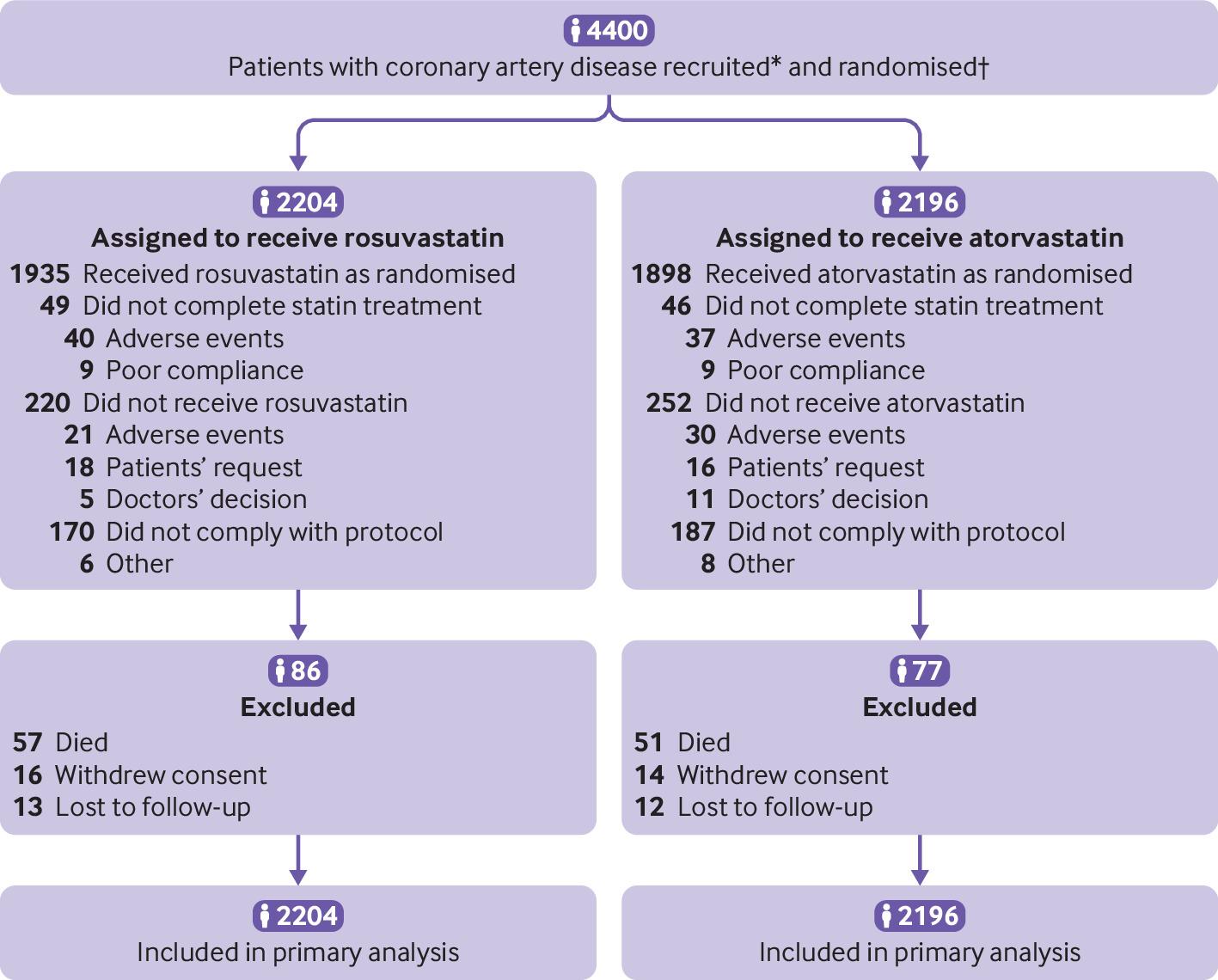
Rosuvastatin vs Atorvastatin in Adults with Coronary Artery Disease

In people with coronary artery disease, rosuvastatin and atorvastatin showed comparable efficacy in terms of a composite of all cause death, myocardial infarction, stroke, or any coronary revascularisation within three years

Rosuvastatin was associated with greater efficacy in reducing LDL cholesterol levels, but it incurred a higher risk of new onset diabetes mellitus requiring antidiabetics and cataract surgery than atorvastatin

Rosuvastatin versus atorvastatin treatment in adults with coronary artery disease: secondary analysis of the randomised LODESTAR trial – BMJ 2023;383:e075837 — https://doi.org/10.1136/bmj-2023-075837

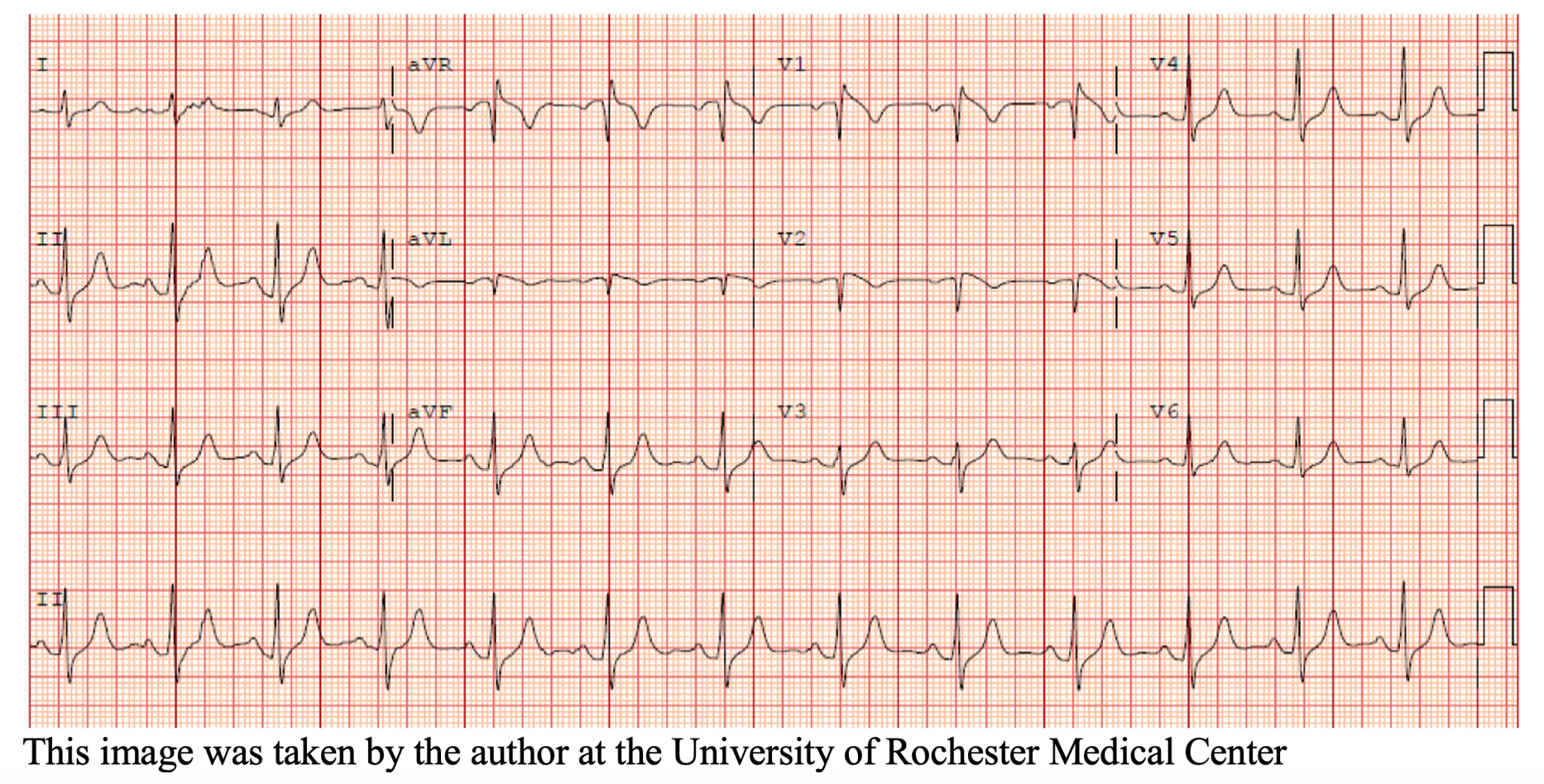
Brugada Syndrome

A 36-year-old female presents to the ED after experiencing an episode of sudden syncope. The patient has no significant past medical history, and reports that she was walking to the end of her driveway to retrieve her mail when she suddenly collapsed to the ground. She recalls waking up on her driveway with concerned neighbors gathered around her…

http://www.emdocs.net/em3am-brugada-syndrome/

Dear Readers – another Saturday morning and this Grandpa Underwriter is back to his old tricks of reading about things that are WAY ABOVE his pay grade. There are two clinical scenarios in the article. Enjoy!

Sleep Apnea and Heart Failure

Sleep apnea affects ∼50% to 75% of patients with heart failure.

Still Too Hot To Blog but I had to share this.