Coffee and Atrial Fibrillation

At the end of the study, the group that drank coffee experienced a 39% lower risk of recurring AFib episodes. In addition to coffee’s potential anti-inflammatory effects, the researchers proposed that those who drank coffee may have naturally replaced less healthy drinks, such as sugary sodas, with coffee instead. University of California – San Francisco. “Surprising heart study finds daily coffee may cut AFib risk by 39%.” ScienceDaily. http://www.sciencedaily.com/releases/2025/11/251110021046.htm (accessed November 10, 2025).

Journal Reference: Christopher X. Wong, Christopher C. Cheung, Gabrielle Montenegro, Hannah H. Oo, Isabella J. Peña, Janet J. Tang, Samuel J. Tu, Grace Wall, Thomas A. Dewland, Joshua D. Moss, Edward P. Gerstenfeld, Zian H. Tseng, Henry H. Hsia, Randall J. Lee, Jeffrey E. Olgin, Vasanth Vedantham, Melvin M. Scheinman, Catherine Lee, Prashanthan Sanders, Gregory M. Marcus. Caffeinated Coffee Consumption or Abstinence to Reduce Atrial Fibrillation. JAMA, 2025; DOI: 10.1001/jama.2025.21056

How To Reduce Your Risk of Developing Diabetes

The researchers, from 23 universities in Spain and Harvard Chan School, split 4,746 PREDIMED-Plus participants into an intervention group and a control group and followed their health outcomes for six years. The intervention group adhered to a Mediterranean diet; reduced their caloric intake by about 600 calories per day; engaged in moderate physical activity, such as brisk walking and strength and balance exercises; and received professional support for weight loss control. The control group adhered to a Mediterranean diet without calorie restriction, exercise guidance, or professional support. Participants ranged from age 55 to 75, were overweight or obese, and had metabolic syndrome, but were free of T2D at baseline.

The study found that those in the intervention group had a 31% lower risk of developing T2D compared to those in the control group. Additionally, the intervention group lost an average of 3.3 kilograms and reduced their waist circumference by 3.6 centimeters, compared to 0.6 kilograms and 0.3 centimeters in the control group. Scientists found 3 simple tweaks that cut diabetes risk by 31%https://www.sciencedaily.com/releases/2025/08/250829022835.htm Harvard T.H. Chan School of Public Health. ScienceDaily. http://www.sciencedaily.com/releases/2025/08/250829022835.htm (accessed August 29, 2025).

Guess I’ll cut out beer.

Thinking Styles – What’s Your Style?

Read this thinking style pyramid and refer back to it as often as needed.

This image has an empty alt attribute; its file name is screenshot-2025-04-26-074800.png

We are all suckers for click bait. I started with this:

Older Adults Face Higher Cancer Risk From Alcohol, Even at Low or Moderate Levelshttps://www.medscape.com/viewarticle/older-adults-face-higher-cancer-risk-alcohol-even-low-or-2025a

Scary stuff if you’re an older adult! I should STOP DRINKING ALCOHOL.

But what if this study is wrong? See pyramid above. Sensing bias in the article I took a look at the comments. Dr. Bradley Fawkes’ comment was noteworthy. In the results section of the study you’ll find this:

“While no associations were found for low- or moderate-risk drinking patterns vs occasional drinking among individuals without socioeconomic or health-related risk factors…” Alcohol Consumption Patterns and Mortality Among Older Adults With Health-Related or Socioeconomic Risk Factors – https://jamanetwork.com/journals/jamanetworkopen/fullarticle/2822215

So in the absence of socioeconomic or health-related risk factors no associations were found.

Cheers!

Obesity is Not a Disease

David L. Katz, MD, MPH, FACPM, FACP, FACLM is a specialist in Internal Medicine, Preventive Medicine/Public Health, and Lifestyle Medicine – globally recognized for expertise in chronic disease prevention, health promotion, and nutrition. The founding director of Yale University’s Prevention Research Center, and past president of the American College of Lifestyle Medicine, Katz is the founder of the non-profit True Health Initiative, founder of Diet ID, and Chief Medical Officer for leading food-as-medicine company, Tangelo. He is a senior science advisor to Blue Zones. He holds multiple US patents, including for advances in dietary assessment. He has roughly 250 peer-reviewed publications, has authored 19 books- including multiple editions of a leading textbooks in nutrition and preventive medicine, and has earned numerous awards for his contributions to public health, including three honorary doctoral degrees.

https://www.vumedi.com/video/obesity-is-not-a-disease-so-what-is-it

Diet until proven otherwise.

Diet and Healthy Aging

In the journal Nature Medicine this week there was an important open-access publication about a large combined cohort of over 105,000 health professionals prospectively followed for 30 years. Only 9.3% reached the age of 70 years with “healthy aging” —without 11 major chronic diseases and no impairment of cognitive or physical function or mental health. Our Diet and Healthy Aging Eric Topol, MD – https://erictopol.substack.com/p/our-diet-and-healthy-aging

Dr. Eric Topol’s assessment of this study is well balanced and thoughtfully written. His bio is here: https://www.scripps.edu/faculty/topol/

Healthy aging in this study is described as reaching age 70 without developing any of 11 major diseases: cancer (except for non-melanoma skin cancers), diabetes, heart attack, coronary artery disease, congestive heart failure, stroke, kidney failure, chronic obstructive pulmonary disease, Parkinson disease, multiple sclerosis and amyotrophic lateral sclerosis.

My Half-Birthday is coming up soon. I’ll be 70.5 years young. The biggest take home lesson for me is this:

Beer is better for you than pizza.

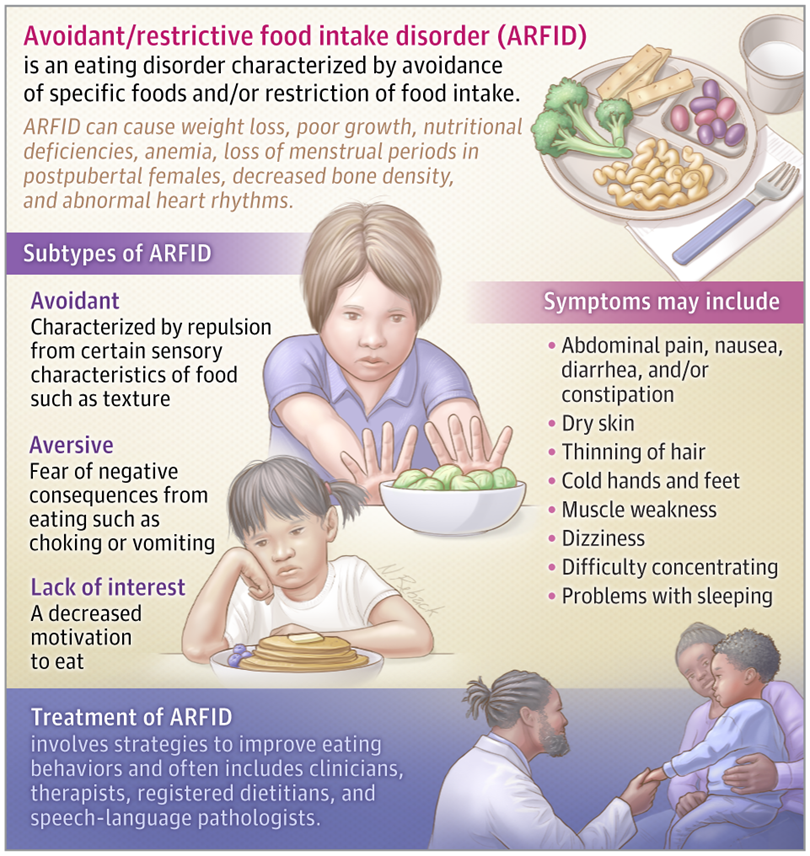
Eating Disorders Awareness Week

An analysis of hospital data by the Royal College of Psychiatrists showed that hospital admissions for eating disorders had increased by 84% in the past five years, reaching a total of 24 268 admissions. Some 11 049 more admissions were recorded in 2020-21 than in 2015-16. The number of young people with eating disorders rose by 90% in the five year period analyzed, from 3541 to 6713 episodes, with a 35% increase in the past year alone. Boys and young men showed a 128% rise in hospital admissions, from 280 in 2015-16 to 637 in 2020-21.

One in five deaths of people with anorexia nervosa is due to suicide, and all eating disorders see high rates of self-harm and depression. Eating disorders: Guidance is issued to doctors after 84% rise in past five years – BMJ 2022; 377 doi: https://doi.org/10.1136/bmj.o1256 (Published 19 May 2022)

Need help? https://www.nationaleatingdisorders.org/get-help/

Compounding Compounds the Problem

Compound pharmacies that bulk produce weight-loss drugs without FDA approval are doing so without that oversight.  And because compounding pharmacies aren’t required to report instances of patient harm involving their medications, problems may go undetected.“It’s kind of like ‘Whack-A-Mole,’” said Al Carter, a pharmacist and executive director at the National Association of Boards of Pharmacy. He said state boards will only investigate when they receive a complaint.“There are bad actors out there, purporting to be compounding pharmacies that are licensed in specific states or have the credentials to be able to compound when in actuality they don’t,” said Carter. “My understanding is most licensed, legitimate pharmacies aren’t compounding” weight-loss medications. ‘Compounded’ weight-loss drugs are a growing problem for state regulatorshttps://stateline.org/2024/07/08/compounded-weight-loss-drugs-are-a-growing-problem-for-state-regulators/

A website sold patients obesity drugs at affordable rates. Now they’re paying the price.https://www.npr.org/2025/02/08/nx-s1-5246124/a-website-sold-patients-obesity-drugs-at-affordable-rates-now-theyre-paying-the-price

“The two main goals of the medication are weight loss and diabetes management, so patients should stay on the lowest dosage possible until they feel like they’ve plateaued,” said Charu Sawhney, DO, MPH, an internal medicine physician with Harbor Health in Round Rock, Texas. When patients move up on the dosage too fast, they’re going to have more trouble, said Sawhney. “This is when we see the most severe side effects like the malnutrition and dehydration that can sometimes land patients in the hospital,” she said. Considerations for Prescribing GLP-1s Get More Complicated – Medscape – February 07, 2025https://www.medscape.com/viewarticle/considerations-prescribing-glp-1s-get-more-complicated

I admit as a Former Fat Man that the world of obesity and now a miracle drug to fight the disease fascinates the hell out of me. Caveat emptor!

Low Serum Levels of 3 Carotenoids Linked to Increased Risk for Migraine

The cross-sectional study, which was performed on a nationally representative United States cohort, indicated an inverse association between serum carotenoid levels and migraine risk in adults. https://www.clinicalpainadvisor.com/news/low-serum-levels-of-3-carotenoids-linked-to-increased-risk-for-migraine/

α-Carotene, β-Carotene, β-Cryptoxanthin, Lycopene, Lutein, and Zeaxanthin – https://lpi.oregonstate.edu/mic/dietary-factors/phytochemicals/carotenoids

Yum.

It’s 8:00 AM…yes, I’m Thinking About Drinking

Alcohol use is ubiquitous in the United States, with 84% of adults reporting use at some point. Alcohol use disorder (AUD) is a serious and persistent disease at the extreme end of alcohol use that contributes heavily to the burden on the healthcare system, with more than 200,000 hospitalizations each year due to the condition. About 6% of people in the United States have AUD. However, only 7.6% of patients with AUD seek treatment, although several pharmacologic and nonpharmacologic treatment options are available. Stephen Soreff. Rapid Rx Quiz: Alcohol Use Disorder Treatments – Medscape – Dec 30, 2024. https://reference.medscape.com/viewarticle/1002119

  • Overall mortality rates increased from 10.7 (95% CI, 10.6-10.8) per 100,000 in 1999 to 21.6 (95% CI, 21.4-21.8) per 100,000 in 2020, representing a significant twofold increase.
  • Adults aged 55-64 years demonstrated both the steepest increase and highest absolute rates in both 1999 and 2020.
  • American Indian and Alaska Native individuals experienced the steepest increase and highest absolute rates among all racial groups.
  • The West region maintained the highest absolute rates in both 1999 and 2020, despite the Midwest showing the largest increase. Edited by Lora McGlade. US Alcohol-Related Deaths Double Over Two Decades, With Notable Age and Gender Disparities – Medscape – November 21, 2024. https://www.medscape.com/viewarticle/us-alcohol-related-deaths-double-over-two-decades-notable-2024a1000l98?

Nearly 500 years ago, Swiss physician and chemist Paracelsus expressed the basic principle of toxicology: “All things are poison and nothing is without poison; only the dose makes a thing not a poison.” This is often condensed to: “The dose makes the poison.” It means that a substance that contains toxic properties can cause harm only if it occurs in a high enough concentration. https://www.chemicalsafetyfacts.org/health-and-safety/the-dose-makes-the-poison/

Dry January? If you’re doing this trendy behavior you know you drank too much this past holiday season.

Cancer warnings on alcohol? No one will read them.

Trust your intuition. If you’ve ever felt like you drink too much alcohol then you do.

1-800-662-HELP or text 988 for SAMHSA’s National Helpline.