For some, it can be dangerous. In the past few years, reports have swelled of people, especially teens, experiencing short- and long-term “marijuana-induced psychosis,” with consequences including hospitalizations for chronic vomiting and auditory hallucinations of talking birds. Multiple studies have drawn a link between heavy use of high-potency marijuana, in particular, and the development of psychological disorders, including schizophrenia, although a causal connection hasn’t been proved. “It’s entirely possible that this new kind of cannabis—very strong, used in these very intensive patterns—could do permanent brain damage to teenagers because that’s when the brain is developing a lot,” Keith Humphreys, a Stanford psychiatry professor and a former drug-policy adviser to the Obama administration, told me. Humphreys stressed that the share of people who have isolated psychotic episodes on weed will be “much larger” than the number of people who end up permanently altered. But even a temporary bout of psychosis is pretty bad. Marijuana Is Too Strong Now – https://www.theatlantic.com/ideas/archive/2024/08/high-potency-marijuana-regulation/679639/
Lifestyle Underwriting
Low Magnesium Levels Do What?
Scientists from the University of South Australia measured blood samples from 172 middle aged adults, finding a strong link between low magnesium levels and high amounts of a genotoxic amino acid called homocysteine. University of South Australia. “Low magnesium levels increase disease risk.” ScienceDaily. http://www.sciencedaily.com/releases/2024/08/240812123307.htm (accessed August 13, 2024).
Journal Reference:
Varinderpal S. Dhillon, Permal Deo, Michael Fenech. Low magnesium in conjunction with high homocysteine increases DNA damage in healthy middle aged Australians. European Journal of Nutrition, 2024; DOI: 10.1007/s00394-024-03449-0
Whole grains, dark green leafy vegetables, nuts, beans, bananas, avocados and dark chocolate are magnesium-rich foods.
The T2D-GENE Trial
The prevalence of type 2 diabetes was significantly lower in the lifestyle intervention group than in the control group.
University of Eastern Finland. “Type 2 diabetes can be prevented by diet and exercise even in individuals with a high genetic risk.” ScienceDaily. http://www.sciencedaily.com/releases/2024/08/240807122749.htm (accessed August 10, 2024).
Effects of Genetic Risk on Incident Type 2 Diabetes and Glycemia: The T2D-GENE Lifestyle Intervention Trial – The Journal of Clinical Endocrinology & Metabolism, dgae422, https://doi.org/10.1210/clinem/dgae422
Remember, Stay as Thin as You Can as Long as You Can.
This Is a Post For Old People – Move More, Take Vitamin D, Statins are not Evil
Quotes are taken from summaries of three different studies. Source: Statins, Vitamin D, and Exercise in Older Adults – Medscape – July 26, 2024. https://www.medscape.com/s/viewarticle/statins-vitamin-d-and-exercise-older-adults.
On a personal level I’ve been taking a low dose statin forever, 100 IU Vitamin D3 and a multivitamin daily, need to move more, Fexofenadine prn, and still not a vegan or drive an EV.
The study found that among older adults aged 75-84, initiation of statin therapy led to a 1.2% risk reduction in major CVD over a 5-year period. For older adults aged 85 and greater, initiation of statins had an even larger impact, leading to a 4.4% risk reduction in major CVD over a 5-year period. The study found that there was no significant difference in adverse effects including myopathy or liver dysfunction in both age groups.
For older adults aged 75 or greater, empiric vitamin D supplementation is recommended because of the possible reduction of risk in all-cause mortality in this population. Of note, this was a grade 2 recommendation by the panel, indicating that the benefits of the treatment probably outweigh the risks. The panel stated that vitamin D supplementation could be delivered through fortified foods, multivitamins with vitamin D, or as a separate vitamin D supplement.
The study found that participants who were more sedentary were less likely to age healthfully, with each additional 2 hours of TV watching per day associated with a 12% reduction in likelihood of healthy aging. Light physical activity was associated with a significant increase in healthy aging, with a 6% increase in the likelihood of healthy aging for each additional 2 hours of light activity. Each additional 1 hour of moderate to vigorous activity was associated with a 14% increase in the likelihood of healthy aging. These findings support discussions with patients that behavior change, even in small increments, can be beneficial in healthy aging.
Cannabis Use and Psychosis Risk (Aussie Version)
Professor Emmerson says Queensland’s Metro North Health — Australia’s largest public health service, based in north Brisbane and the surrounding region — is seeing increased presentations of psychosis due to medicinal cannabis.”The Metro North early psychosis service reports 10 per cent of their new presentations — so these are kids aged 16 to 21 — are people who’ve ended up on medicinal cannabis and are becoming psychotic,” the Brisbane-based psychiatrist says.
Doctors warn of significant increase in people hospitalized with psychosis after being prescribed medicinal cannabis — https://www.abc.net.au/news/2024-07-21/medicinal-cannabis-psychosis-harm-risk-prescription-marijuana/104116952
Cannabis Use and Psychosis Risk
The investigators found that cannabis use was significantly associated with psychotic disorders during adolescence (adjusted hazard ratio [aHR], 11.2; 95% CI, 4.6 to 27.3), but not during young adulthood (aHR, 1.3; 95% CI, 0.6 to 2.6). Adolescents who used cannabis also had a substantially higher risk for hospitalizations and emergency department visits (aHR, 26.7; 95% CI, 7.7 to 92.8), while there was no substantial risk observed in young adulthood (aHR, 1.8; 95% CI, 0.6 to 5.4). Growing Evidence Supports the Link Between Cannabis Use and Psychosis Risk — https://www.psychiatryadvisor.com/news/cannabis-use-and-psychosis-risk/
Have you read the book The Dangerous Truth About Today’s Marijuana by Laura Stack? https://johnnysambassadors.org/book/
If you have small children I highly recommend this book.
Scary Charts – 07.01.24

Source: The World’s Deadliest Behavioral Risk Factors – https://www.statista.com/chart/32039/behavioral-risks-leading-to-highest-estimated-number-of-deaths-from-related-diseases/
Flamethrower + Robot Dog = (fill in the blank)
Thermonator, the first “flamethrower-wielding robot dog,” is legal in 48 US states.

At first I thought this wasn’t real after reading this article but it is.
You can now buy a flame-throwing robot dog for under $10,000 — https://arstechnica.com/gadgets/2024/04/you-can-now-buy-a-flame-throwing-robot-dog-for-under-10000/
I had to watch the video. I suggest sound off if you don’t want to poop in your pants.
More Women Are Drinking Themselves Sick – KFF Health News
Republished from kffhealthnews.org
When Karla Adkins looked in the rear view mirror of her car one morning nearly 10 years ago, she noticed the whites of her eyes had turned yellow.
She was 36 at the time and working as a physician liaison for a hospital system on the South Carolina coast, where she helped build relationships among doctors. Privately, she had struggled with heavy drinking since her early 20s, long believing that alcohol helped calm her anxieties. She understood that the yellowing of her eyes was evidence of jaundice. Even so, the prospect of being diagnosed with alcohol-related liver disease wasn’t her first concern.
“Honestly, the No. 1 fear for me was someone telling me I could never drink again,” said Adkins, who lives in Pawleys Island, a coastal town about 30 miles south of Myrtle Beach.
But the drinking had caught up with her: Within 48 hours of that moment in front of the rearview mirror, she was hospitalized, facing liver failure. “It was super fast,” Adkins said.

Historically, alcohol use disorder has disproportionately affected men. But recent data from the Centers for Disease Control and Prevention on deaths from excessive drinking shows that rates among women are climbing faster than they are among men. The Biden administration considers this trend alarming, with one new estimate predicting women will account for close to half of alcohol-associated liver disease costs in the U.S. by 2040, a $66 billion total price tag.
It’s a high-priority topic for the Department of Health and Human Services and the Department of Agriculture, which together will release updated national dietary guidelines next year. But with marketing for alcoholic beverages increasingly geared toward women, and social drinking already a huge part of American culture, change isn’t something everyone may be ready to raise a glass to.
“This is a touchy topic,” said Rachel Sayko Adams, a research associate professor at the Boston University School of Public Health. “There is no safe level of alcohol use,” she said. “That’s, like, new information that people didn’t want to know.”
Over the past 50 years, women have increasingly entered the workforce and delayed motherhood, which likely has contributed to the problem as women historically drank less when they became mothers.
“Parenthood tended to be this protective factor,” but that’s not always the case anymore, said Adams, who studies addiction.
More than 600,000 people in the U.S. died from causes related to alcohol from 1999 to 2020, according to research published in JAMA Network Open last year, positioning alcohol among the leading causes of preventable death in this country behind tobacco, poor diet and physical inactivity, and illegal drugs.
The World Health Organization and various studies have found that no amount of alcohol is safe for human health. Even light drinking has been linked to health concerns, like hypertension and coronary artery disease and an increased risk of breast and other cancers.
More recently, the covid-19 pandemic “significantly exacerbated” binge-drinking, said George Koob, director of the National Institute on Alcohol Abuse and Alcoholism at the National Institutes of Health, as people used alcohol to cope with stress. That is particularly true of women, who are more likely to drink alcohol because of stress than men, he said.
But women are also frequently the focus of gender-targeted advertising for alcoholic beverages. The growth of rosé sales and low-calorie wines, for example, has exploded in recent years. New research published by the International Journal of Drug Policy in February found that the “pinking of products is a tactic commonly used by the alcohol industry to target the female market.”
Also at play is the emergence of a phenomenon largely perpetuated by women on social media that makes light of drinking to deal with the difficulties of motherhood. The misperception of “mommy wine culture,” said Adams, is that “if you can drink in a normal way, a moderate way, if you can handle your alcohol, you’re fine.”
And while it’s unclear to what extent memes and online videos influence women’s drinking habits, the topic merits further study, said Adams, who with colleagues last year found that women without children at age 35 are still at the highest risk for binge-drinking and alcohol use disorder symptoms among all age groups of women. But over the past two decades, the research concluded, the risk is escalating for both childless women and mothers.
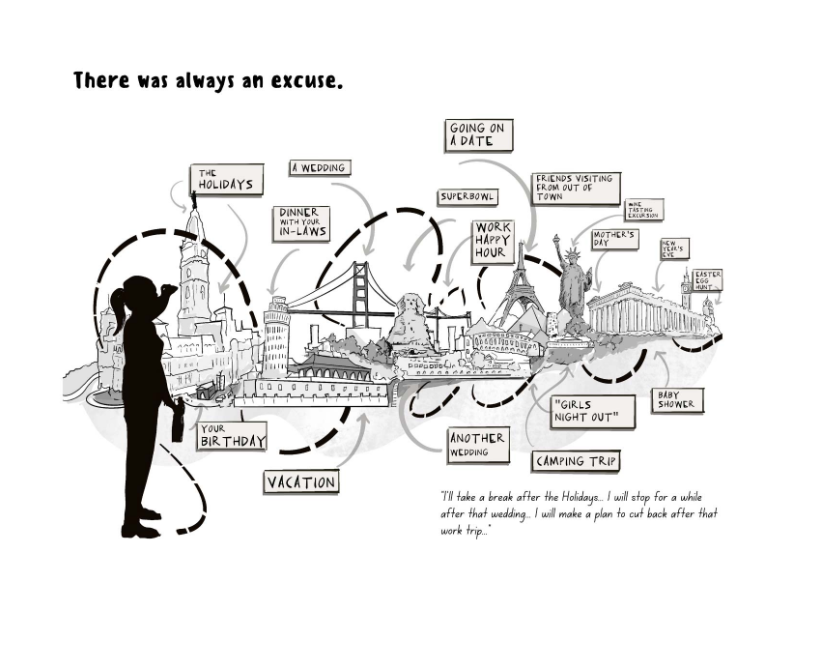
These factors at play, coupled with the pressure to fit in, can make excessive drinking a difficult conversation to broach.“It’s a very taboo topic,” Adams said.
And when it does come up, said Stephanie Garbarino, a transplant hepatologist at Duke Health, it’s often surprising how many patients are unaware how their drinking affects their health.
“Often, they didn’t know there was anything wrong with what they’re doing,” she said. She is more frequently seeing younger patients with liver disease, including men and women in their 20s and 30s.
And public health and addiction experts fear that alcohol-related liver disease among women will become a costly issue for the nation to address. Women accounted for 29% of all costs associated with the disease in the U.S. in 2022 and are expected to account for 43% by 2040, estimated a new analysis published in the American Journal of Gastroenterology in February.
National dietary guidelines advise women to drink no more than one alcoholic drink a day. Those guidelines are up for a five-year review next year by the USDA and HHS, which has called a special committee to examine, among other questions, the relationship between alcohol consumption and cancer risks. The report will be made public in 2025.
When Canada published guidance in 2023 advising that drinking any more than two alcoholic beverages a week carried health risks, Koob sparked backlash when his comments to the Daily Mail suggested that U.S. guidelines might move in the same direction. The CDC report published in February suggested that an increase in alcohol taxes could help reduce excessive alcohol use and deaths. Koob’s office would not comment on such policies.
It’s a topic close to Adkins’ heart. She now works as a coach to help others — mostly women — stop drinking, and said the pandemic prompted her to publish a book about her near-death experience from liver failure. And while Adkins lives with cirrhosis, this September will mark 10 years since her last drink.
“The amazing thing is, you can’t get much worse from where I got,” said Adkins. “My hope is really to change the narrative.”
Aerobic + Resistance (do both)
Conclusions: In adults with overweight or obesity, aerobic exercise alone or combined resistance plus aerobic exercise, but not resistance exercise alone, improved composite CVD risk profile compared with the control.
Aerobic, resistance, or combined exercise training and cardiovascular risk profile in overweight or obese adults: the CardioRACE trial – European Heart Journal https://doi.org/10.1093/eurheartj/ehad827
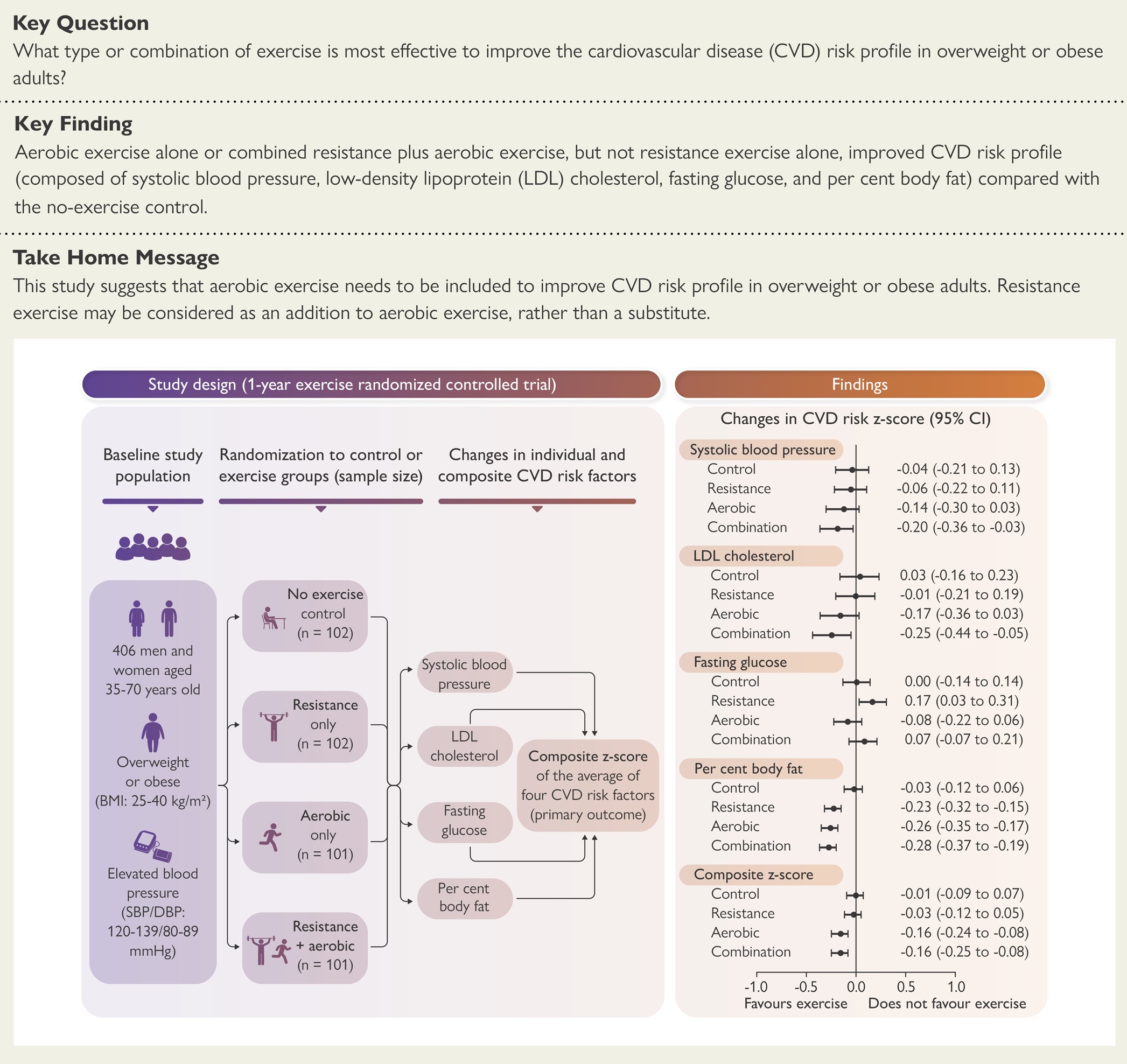
Effects of 1-year resistance, aerobic, or combined exercise training on cardiovascular disease (CVD) risk profile: the CardioRACE trial. Aerobic exercise alone or combined aerobic plus resistance exercise, but not resistance exercise alone, improved CVD risk profile (composite Z-score) compared with no-exercise control (Z-score values below 0 indicate favourable changes in CVD risk factors). BMI, body mass index; CI, confidence interval; CVD, cardiovascular disease; DBP, diastolic blood pressure; SBP, systolic blood pressure.
 lifeunderwriter.net
You must be logged in to post a comment.