Rosanne M. Leipzig is a geriatrician and author of the book, Honest Aging: An Insider’s Guide to the Second Half of Life. Click here for the podcast: https://www.kevinmd.com/2023/06/unlocking-the-secrets-to-aging-well-podcast.html
Survival strategies
Random Thoughts on Retirement – aka The Dot Project

Again, you can’t connect the dots looking forward; you can only connect them looking backward. So you have to trust that the dots will somehow connect in your future. You have to trust in something — your gut, destiny, life, karma, whatever. This approach has never let me down, and it has made all the difference in my life.
Steve Jobs
While writing random retirement thoughts the other day I noticed the similarities between A Plan is Not a Strategy – Update 08.03.22 and my Dot Project. Harvard Prof Robert Martin discusses how planning and strategy are different and that “integrative choices” collectively become strategy. These integrative choices are significant decisions you have made or choose to make that have life altering consequences. I come from a humble background and tend to shy away from BIG FANCY WORDS used by intellectuals and others who want to appear smarter than they truly are. So for me these choices or life decisions are Dots.
Dots. Big Dots. Little Dots. Even Do Nothing Dots where you decide not to do something are Dots. The decision not to do something can be as important to life outcomes as a decision to do something. The problem as Jobs tells it is true. You can only connect your Dots when looking backwards.
I started my Dot Project writing six years ago and got as far as jotting down Dots in my journal as writing prompts. So far I’ve documented about a dozen Dots but never got around to actually writing anything about them. Until today. I’ve reached the point in life where I am able to look backwards and Connect My Dots. My hope is the reader will find these insights to be useful in your own journey. My second hope is that my children and their children find my Dot Project and learn a tad bit more about where they came from.
The Dot Project and Random Thoughts on Retirement are one and the same. Next up – Save as Much as You Can Because Whatever You Manage to Save Will Never Be Enough – Random Thoughts on Retirement.
More Random Thoughts on Retirement – June 2023
Another quiet Sunday and I’m thinking about retirement (again). Writers read a lot. I’ll typically have quite a number of books started in various stages of completion. Recently I started reading the first in a series of books titled The Write Quotes: The Writing Life. The quotes paint similarities of thoughts and experiences and are amazing. You realize you are never alone in any of life’s adventures.
Since 2021, more than 1.5 million seniors have reentered the workforce. There were about 10.6 million people ages 65 to 74 employed in 2020, according to 2021 data from the U.S. Labor Department.
That number is expected to increase.
Retiring from retirement: Whether for financial reasons or boredom, a growing number of older adults are rejoining the workforce — https://triblive.com/local/valley-news-dispatch/back-to-work-whether-for-financial-reasons-or-boredom-a-growing-number-of-older-adults-are-rejoining-the-workforce/
Just last month I came to the realization that (I am) Flunking Retirement. When 65 rolled around I started collecting a small corporate defined benefit pension. Years ago the monthly amount had a lot more purchasing power than it does now. Still, I feel fortunate to have this income stream.
In yesteryear, the pension was a staple of the American working class experience—reach retirement age and you could expect to live out your years modestly, yet comfortably, off of monthly payments from your former employer. However, since the 1980s, companies offering pensions are a dwindling breed. Instead, most employers offer defined contribution programs such as 401(k) plans. Only a handful of industries (such as the military, public works and education) still offer pension plans to their retirees.
Why Pensions Are Dying And How You Can Create Your Own —https://www.forbes.com/sites/forbesfinancecouncil/2023/06/05/why-pensions-are-dying-and-how-you-can-create-your-own/?sh=4970c87ec9d4
When I reached my US Social Security FRA (full retirement age) I didn’t retire nor start collecting benefits. Delaying social security payments until age 70 translates into about an 8% increase in benefits annually. If you’re healthy and you don’t need the income for necessities, it’s worth the wait.
Working longer is a powerful lever. Social Security benefits claimed at 70 instead of at 62 are at least 76 percent higher, and the additional years of work allow 401(k) assets to increase and reduce the period of time that the assets need to cover. In fact, my research shows that the vast majority of millennials will be fine if they work to age 70. And although that might sound old, it’s historically normal in another sense: Retiring at 70 leaves the ratio of retirement to working years the same as when Social Security was originally introduced.
Millennials and retirement: How bad is it? — https://www.politico.com/agenda/story/2018/06/07/millennials-preparing-for-retirement-000670/
Millennials are not the only generation ill-prepared for retirement.
America’s 65 million Generation Xers (born between 1965 and 1980) are confronted with a new set of financial challenges that are redefining their plans for retirement, just as they enter their final working years, according to Prudential Financial, Inc.’s latest Pulse research survey, “Gen X: Retirement Revised.”
Generation X confronts harsh new reality of retirement: unreadiness — https://news.prudential.com/generation-x-confronts-harsh-new-reality-retirement-unreadiness.htm
Remember A Plan is Not a Strategy – Update 08.03.22? Having a plan for retirement is great but not all plans turn out as planned. My last executive position ended up being my last executive position and trust me, that was not what I planned. It’s a good thing that my strategy worked a lot better than my plans.
Stay tuned for the next installment of my random thoughts on retirement where I will document (finally) the integrative choices I’ve made that comprise my retirement strategy.
Where Are These People Coming From?
Remember Oklahoma’s ‘brain drain’? Here’s what’s happened since it was declared plugged –Richard Mize The Oklahoman May 11, 2023
- “An influx of Texans and Californians. Texans and Californians moved to the Sooner State at historic rates in 2020 and 2021. Oklahoma saw a net gain of about 8,500 Californians and 7,300 Texans in those years. Other states showing increased interest are Colorado and Arizona.”
- “Growing metro areas. Tulsa is growing fast, but Oklahoma City is one of the fastest-growing large cities in America. Oklahoma City recently climbed past Boston to become the nation’s 20th-largest city by population. In recent decades, OKC has spent millions of dollars to remake the city, adding new parks, a streetcar system, and a brand-new basketball arena.”
- “Diverse and robust city economies. Many parts of Oklahoma rely heavily on the energy industry, but not all. Large areas like Tulsa also specialize in services industries, which have seen the most growth nationwide in the past decade. Tulsa’s economy also specializes in key sectors like transportation and warehousing, information technology, professional and business services, and health care.”
- “Where are new Oklahoma residents coming from? The top states moving to Oklahoma are Texas (17.2%), California (15.6%), and Florida (6.4%).
No link to the full article as it’s behind a paywall.
The next question is why are people moving to Oklahoma?
For the Fried Pies, of course – Arbuckle Mountain Fried Pies named the best snack in Oklahoma https://www.oklahoman.com/story/lifestyle/food/2023/05/23/arbuckle-mountain-fried-pies-oklahoma-food-and-wine-best-snacks-us/70248275007/
Or could it be the cost of housing? Cheap Houses and Awe Inspiring Tornadoes
Take Your Vitamins
In the current study, more than 3,500 adults (mostly non-Hispanic white) over age 60 were randomly assigned to take a daily multivitamin supplement or placebo for three years. At the end of each year, participants performed a series of online cognitive assessments at home designed to test memory function of the hippocampus, an area of the brain that is affected by normal aging. The COSMOS-Web study is part of a large clinical trial led by Brigham & Women’s Hospital and Harvard called the COcoa Supplement and Multivitamin Outcomes Study (COSMOS).
By the end of the first year, memory improved for people taking a daily multivitamin, compared with those taking a placebo. The researchers estimate the improvement, which was sustained over the three-year study period, was equivalent to about three years of age-related memory decline. The effect was more pronounced in participants with underlying cardiovascular disease.
Columbia University Irving Medical Center. “Multivitamin improves memory in older adults, study finds.” ScienceDaily. http://www.sciencedaily.com/releases/2023/05/230524181916.htm (accessed May 25, 2023).
Quotes for Today – 05.19.23
“A master in the art of living draws no sharp distinction between his work and his play; his labor and his leisure; his mind and his body; his education and his recreation. He hardly knows which is which. He simply pursues his vision of excellence through whatever he is doing, and leaves others to determine whether he is working or playing. To himself, he always appears to be doing both.”
Lawrence Pearsall Jacks, educator and Unitarian minister.
“I love playing, it’s just part of me now, and it was then, at 13. I had the dream to play drums, and I ended up being that person, and I’m still that person.
Ringo Starr – 82 years young
Like I said, I think (I am) Flunking Retirement
Elder Abuse
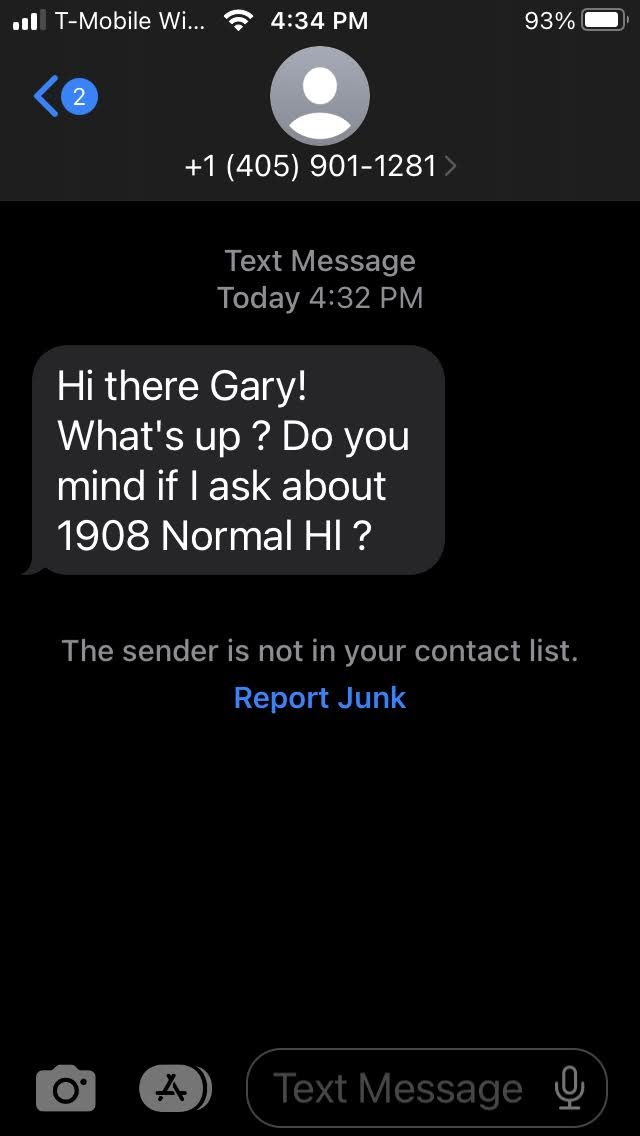
Most of the time I just delete shit like this. Then, unsurprisingly I get another text.
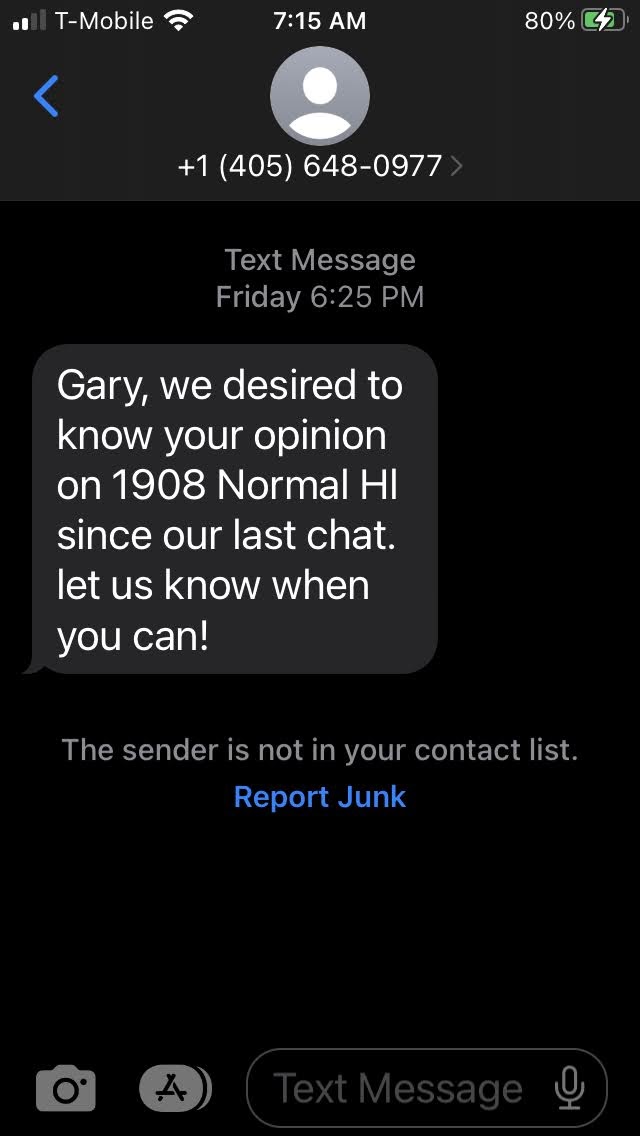
What chat? Why do I feel like I’m being targeted?
HomeVestors, the self-proclaimed “largest homebuyer in the United States,” goes to great lengths to distinguish itself from the hedge funds and YouTube gurus that have taken over large swaths of the real estate investment market. The company says it helps homeowners out of jams — ugly houses and ugly situations — improving lives and communities by taking on properties no one else would buy. Part of that mission is a promise not to take advantage of anyone who doesn’t understand the true value of their home, even as franchisees pursue rock-bottom prices…HomeVestors cautions its franchisees never to take advantage of sellers who are unable to understand negotiations. But by the time he left that evening, Evans had a contract to buy the house for roughly two-thirds its value, signed in Casanova’s shaky script.
The Ugly Truth Behind “We Buy Ugly Houses” — https://www.propublica.org/article/ugly-truth-behind-we-buy-ugly-houses
Full disclosure – I have no clue who sent me these text messages and the source may not be HomeVestors.
Please read then share the entire article. You can’t be too safe nowadays.
The more I think about this form of elder abuse the angrier I get. Then again, maybe I did have a conversation about a different property.

This text message was for a property I don’t own.
(I am) Flunking Retirement
Participants with the most positive views of aging were living, on average, 7.5 years longer than those with the most negative views. 90%: the percentage of centenarians who were functionally independent in their 90’s.
People who live long lives can teach us how to live healthy lives.
Flunking Retirement – https://ysph.yale.edu/about-school-of-public-health/communications-public-relations/publications/public-health-magazine/article/flunking-retirement/
The source article is an interview with two Yale alumni who are still working at the age of 82. Both are youngsters when compared to…Willie who just turned 90 and still working.
Diet Until Proven Otherwise
Plant foods, high in fiber, can reduce the contact of potential carcinogens with cells lining the digestive tract. The fiber causes food to travel faster through a person’s digestive system. This also reduces intestinal cells’ contact with bile acids, which can promote cancer growth. Fruits, vegetables, whole grains, and legumes also provide phytonutrients and antioxidants, which can help repair damaged cells and reduce cancer risk.
Why poor diets are contributing to a surge in colorectal cancer cases among young people — https://www.kevinmd.com/2023/04/why-poor-diets-are-contributing-to-a-surge-in-colorectal-cancer-cases-among-young-people.html
Life is short and science takes too long.
Change your diet. If you have any changes in your bowel habits, talk to your physician.
Take a Break – 04.19.23 (let’s do some brain remodeling)
A study led by the UNIGE, HES-SO Geneva, and EPFL revealed that music practice and active listening could prevent working memory decline. Such activities promoted brain plasticity, they were associated with grey matter volume increase. Positive impacts have also been measured on working memory. This study was conducted among 132 healthy retirees from 62 to 78 years of age. One of the conditions for participation was that they had not taken any music lessons for more than six months in their lives…The participants were randomly assigned to two groups, regardless of their motivation to play an instrument. The second group had active listening lessons, which focused on instrument recognition and analysis of musical properties in a wide range of musical styles. The classes lasted one hour. Participants in both groups were required to do homework for half an hour a day.”
After six months, we found common effects for both interventions. Neuroimaging revealed an increase in grey matter in four brain regions involved in high-level cognitive functioning in all participants, including cerebellum areas involved in working memory. Their performance increased by 6% and this result was directly correlated to the plasticity of the cerebellum,” says Clara James, last author of the study, a privat-docent at the Faculty of Psychology and Educational Sciences of UNIGE, and full professor at the Geneva School of Health Sciences
Université de Genève. “How music can prevent cognitive decline.” ScienceDaily. http://www.sciencedaily.com/releases/2023/04/230417142520.htm (accessed April 18, 2023).
Journal Reference – Damien Marie, Cécile A.H. Müller, Eckart Altenmüller, Dimitri Van De Ville, Kristin Jünemann, Daniel S. Scholz, Tillmann H.C. Krüger, Florian Worschech, Matthias Kliegel, Christopher Sinke, Clara E. James. Music interventions in 132 healthy older adults enhance cerebellar grey matter and auditory working memory, despite general brain atrophy. Neuroimage: Reports, 2023; 3 (2): 100166 DOI: 10.1016/j.ynirp.2023.100166
I could feel my brain grey matter volume increasing when listening to this album.


You must be logged in to post a comment.