Justice Department Slaps Supplement Maker With Criminal Charges

These supplements have been linked to dozens adverse health events reported to the FDA such as increased blood pressure, racing heart, liver damage, stroke, seizure and death. During 2014, the agency issued seven recalls and more than 30 public notifications about these products. It also maintains an online list of tainted weight-loss products.

Source: Justice Department Slaps Supplement Maker With Criminal Charges

“Sorry, this dude’s not Preferred.”

“But he’s a good friend, healthy, works out all the time>”

“Does he pump iron?”

“Yeah, why?”

“Does he take any supplements?”

“I don’t know, why?”

“Because his liver enzymes are abnormal and if he’s taking anything tell him to stop.”

“Do you think…”

“I’m not a doctor.”

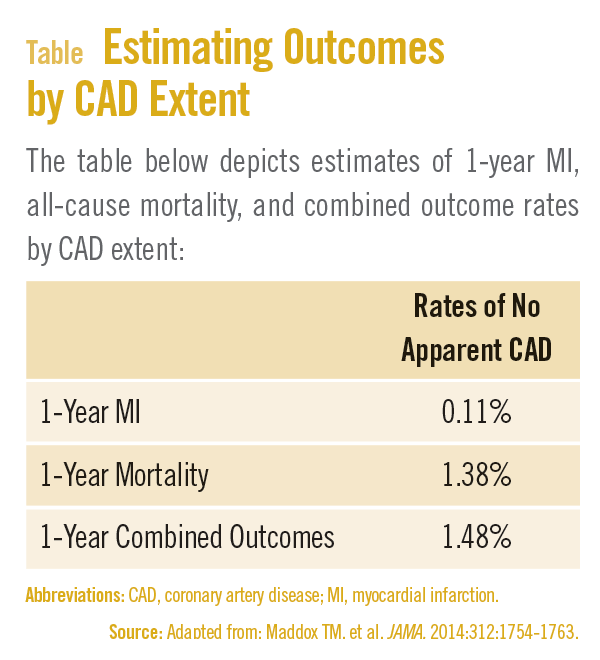
Non-Obstructive CAD & Heart Attack Risks | Physician’s Weekly for Medical News, Journals & Articles

Physician’s Weekly provides news & information online and at the point-of-care to hospitals, oncology centers & physician group practices, including specialty editions for Surgery, Emergency Departments, Oncology & Primary Care.

Source: Non-Obstructive CAD & Heart Attack Risks | Physician’s Weekly for Medical News, Journals & Articles

Opioid Abuse & Mortality Trends – Physician’s Weekly for Medical News, Journals & Articles

Physician’s Weekly provides news & information online and at the point-of-care to hospitals, oncology centers & physician group practices, including specialty editions for Surgery, Emergency Departments, Oncology & Primary Care.

Source: CME: Opioid Abuse & Mortality Trends | Physician’s Weekly for Medical News, Journals & Articles

Will someone please explain to me why as an industry we continue to test life insurance applicants for cocaine but choose to ignore other drugs of abuse?

A Blunt Discussion About Marijuana: Drug Has Risks, Benefits

A family physician and a patient provided their perspectives on the risks and benefits of medical marijuana during the 2015 Family Medicine Experience in Denver.

Source: A Blunt Discussion About Marijuana: Drug Has Risks, Benefits

According to a 2013 survey(www.samhsa.gov) by the Substance Abuse and Mental Health Services Administration, 5.7 million Americans use marijuana daily, up from 3.1 million in 2006. Nineteen percent of Americans ages 18-25 indicated in the same poll that they had used marijuana in the past month. The drug is linked to nearly 500,000 ER visits annually.

Alternative Dementia Screening Tests | Physician’s Weekly

Alternative Dementia Screening Tests | News Brief


Chinese investigators suggest that there are multiples alternatives to the Mini-Mental State Examination that have comparable diagnostic capabilities for detecting dementia. The Mini-Cog test and the Addenbrooke’s Cognitive Examination-Revised were deemed the most effective alternative screening tests for dementia. The Montreal Cognitive Assessment was determined to be the optimal alternative for detecting mild cognitive impairment.

Source: JAMA Internal Medicine, September 2015.

Source: Alternative Dementia Screening Tests | Physician’s Weekly

Dig Deeper – PCSK9 Inhibitors

I’ve cut and pasted an email from Health After 50, a free newsletter from Scientific American.  My first thought was dig deeper.  The uninformed masses might take this information to their physician and start creating demand for these drugs.  Would you be surprised that the cost could be as high as $1000.00 per month?

In The Debate About Cost And Efficacy, PCSK9 Inhibitors May Be The Biggest Challenge Yet

PCSK9 Inhibitors: The Needle, the Cost, the Barriers | Medpage Today

There are still some highly effective generic statins where $10.00 buys you a 90 day supply.  There are OTC options to help with muscle pain and cramps.  You have to ask what good will these new drugs do if no one can afford them?

God Bless America.  We now have PCSK9 (proprotein convertase subtilisin/kexin 9) inhibitors.

The Promising Alternative to Statins

Every so often medication comes along that sends the world of medicine’s collective heart aflutter. Cholesterol-lowering newcomers alirocumab (Praluent) and evolocumab (Repatha) are the current favorites.

Both medications are part of a new class of drugs called PCSK9 inhibitors. As the “inhibitor” in the name implies, these drugs work by inhibiting proprotein convertase subtilisin/kexin 9, a protein that makes it more difficult for the liver to remove cholesterol. By blocking this substance, the medication is able to lower the LDL cholesterol circulating in the blood. In clinical trials, PCSK9 inhibitors have been shown to lower LDL levels significantly beyond what can be achieved with statin drugs, which have been the standard cholesterol-lowering therapy for more than two decades. And they did so without the most common side effect of statins: muscle pain.