
Yikes. https://jamanetwork.com/journals/jama/fullarticle/2842972

Weight-loss drugs draw thousands of lawsuits alleging serious harm – https://www.usatoday.com/story/news/nation/2026/01/28/glp-1-weight-loss-drug-lawsuits-side-effects/87611067007/
Yikes.
Key findings
Data from the National Vital Statistics System
- Life expectancy for the U.S. population was 79.0 years in 2024, an increase of 0.6 year from 2023.
- The age-adjusted death rate decreased 3.8% from 750.5 deaths per 100,000 U.S. standard population in 2023 to 722.1 in 2024.
- Age-specific death rates decreased from 2023 to 2024 for all age groups 1 year and older except for the 5–14 age group.
- Suicide replaced COVID-19 as the 10th leading cause of death, and heart disease, cancer, and unintentional injuries remained the top 3 leading causes in 2024.
- The infant mortality rate did not change significantly from 2023 (560.2 infant deaths per 100,000 live births) to 2024 (552.5).
Mortality in the United States, 2024
“We see cases where people take a GLP-1 medication and become so severely malnourished that they need to be hospitalized,” said Rebecca Boswell, PhD, director of Penn Medicine Princeton Center for Eating Disorders, in Philadelphia. “It’s not uncommon.” The Scary Health Risk That Can Sneak Up on GLP-1 Users – Medscape – January 19, 2026. https://www.medscape.com/viewarticle/scary-health-risk-can-sneak-glp-1-users-2026a10001pi
Yikes.
People return to their baseline weight and lose all cardiometabolic benefits in less than 2 years after stopping semaglutide or tirzepatide, a new meta-analysis found. Weight Regain, Health Benefit Loss Rapid When GLP-1s Stopped – Medscape – January 08, 2026. https://www.medscape.com/viewarticle/weight-regain-health-benefit-loss-rapid-when-glp-1s-stopped-2026a10000kr?
YIKES.
You see, cures are passée. Cures kill markets. Getting the population properly hooked on a pharmaceutical treatment for a ‘chronic’ condition is where the serious money is. “Our core insight was simple and grim: it’s far easier—and infinitely more profitable—to convince healthy people that they’re sick than to develop genuine cures for the truly ill.“
Twenty years later, the hustle is bigger, slicker, and more dangerous than ever. Watching that hustle unfold with weight loss drugs feels weirdly ominous, like watching a slow-moving train wreck you can’t peel your eyes off of. You know there’ll be carnage and bodies, vast fortunes won and lost, and humanity left just a little bit poorer. We have often documented the pharmaceutical industry’s proven ability to create enormously lucrative markets overnight, by inventing and selling diseases. Now watch as all that ingenuity and energy gets pointed at one of the biggest problems bewitching humanity: human fatness. The Seven Deadly Sins of Weight Loss Drugs – https://brownstone.org/articles/the-seven-deadly-sins-of-weight-loss-drugs/
YIKES!
This will not end well.
Complications? What Complications? (just another GLP-1 receptor agonist post)

YIKES
Nate Smith at the 1:40 mark.
Wow.
Just a few days ago I posted READ THIS! (if you can). Then I came across this:
A conservative colleague said the use of AI to create addiction and device dependency was evil. That is an understatement. These kids rely on ChatGPT not just for information but also to make choices, and for many, that seems to extend to every aspect of their lives. Sam Altman makes clear in video clips below that this extreme loss of independence, of personal autonomy, is deliberate.
That means unless these kids can find a way to break free, they are cognitive serfs that can be told to do anything. How to vote. Whether to sign up to die in a hopeless war. Whether to take a job in a unsafe meatpacking plant and risk loss of limbs.
This widespread abuse is far worse than what the Sacklers and other opioid peddlers did to mainly working class pain victims, or what the British did to China in the Opium Wars. At least with opioid addiction, it is possible for the victims to recover even if the withdrawal process is painful. The evidence is mounting that even for adults, regular use of AI diminishes reasoning skills and attention spans.
These children are being turned into automatons, incapable of independent thought and action. It’s widely known in developmental psychology that if certain patterning does not happen at critical ages, the deficit is permanent. Kittens needing visual input in their first few days or they are blind. Kids who don’t crawl having coordination issues as adults due to missing important movement patterning. Less dramatic versions are not being able to make sounds in foreign languages if you have not heard and practiced them when young.
These young AI addicts are set to be permanently damaged. This is tech bros creating something as permanent and harmful as fetal alcohol syndrome on a mass basis. And they clearly know what they are doing, witness how they raise their children on completely different lines. “We Are Watching Critical Thinking Disappear in Real Time” Due to AI Addiction: 40% of Kids Can’t Read, Teachers Quitting in Droves – https://www.nakedcapitalism.com/2026/01/we-are-watching-critical-thinking-disappear-in-real-time-due-to-ai-addiction-40-of-kids-cant-read-teachers-quitting-in-droves.html
Thanks for sharing Yves. But as one of your readers noted,
If we teach kids to think they won’t do what they’re told!
Physical activity consistently emerges as the most important factor influencing both absolute physical capacity and the rate of age-related decline. Our longitudinal data are consistent with previous studies showing that regular physical activity can attenuate the decline in physical performance [17, 32–37]. Individuals who were physically active in their leisure time at age 16 maintained higher aerobic capacity, muscular endurance and muscle power throughout the observation period. This emphasizes the importance of early intervention to establish positive exercise habits in adolescence and early adulthood, as these patterns appear to have long-term benefits for physical function. Encouragingly, our results show that transitioning from physical inactivity to activity at any age significantly improves performance in all fitness modalities studied. These findings contradict the assumption that early inactivity irreversibly impairs physical performance. Rather, taking up regular physical activity leads to measurable improvements in performance even in later decades of life. This finding is of particular importance for clinical practice, as physical activity is still the only evidence-based intervention to reduce the risk of sarcopenia [2, 38]. Recent large population studies also show that an active lifestyle is beneficial at any age [13, 39, 40]. Rise and Fall of Physical Capacity in a General Population: A 47-Year Longitudinal Study – https://onlinelibrary.wiley.com/doi/10.1002/jcsm.70134
Text above in bold are my highlights.
Despite the documented limitations this is a very strong study.
I’ve been doing my home based virtual physical therapy for nearly a year. I’m trying to get to the gym at least twice a week. I don’t walk as much as I used to but…
Keep moving.
The power of PATHWEIGH is that it puts patients and their primary care provider on the same page…It all started with signage placed in clinics that notified patients that if they wanted to make an appointment to specifically talk about weight management, all they had to do was approach the desk and ask for it. That request automatically triggered a mechanism in the patient’s electronic health record that sent them a survey that after completion would flow into the provider’s notes. Instead of spending so much time typing and talking about the patient’s history, the scheduled visit could be centered around solutions. PATHWEIGH: A Model Changing Weight Management For All – https://news.cuanschutz.edu/medicine/pathweigh-pilot-research
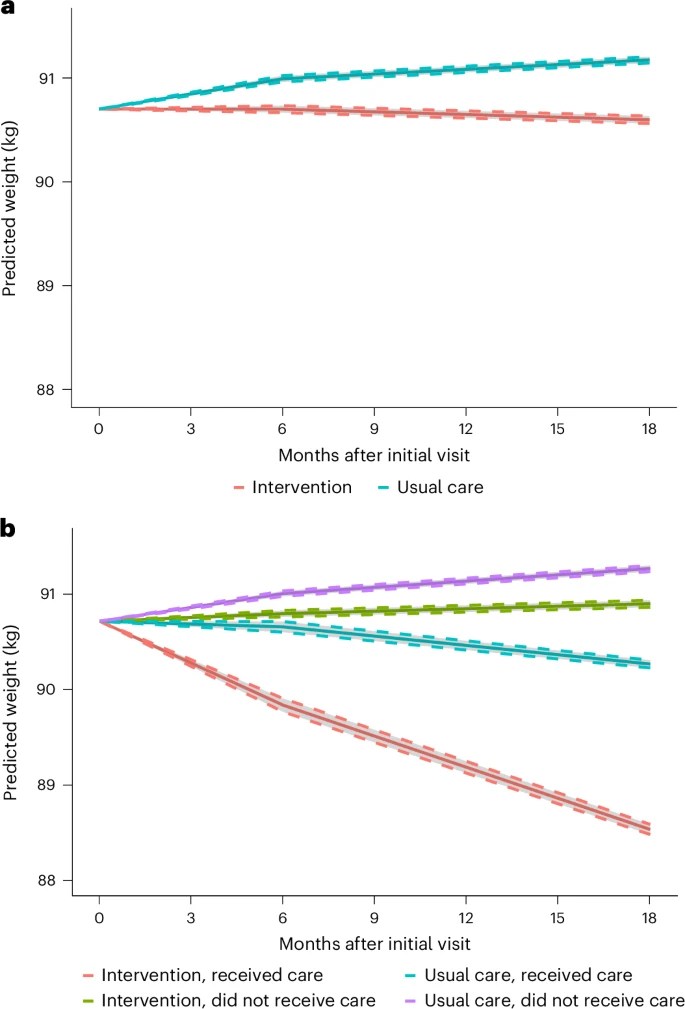
Implementation and effectiveness of a care process to prioritize weight management in primary care: a stepped-wedge cluster-randomized trial – https://www.nature.com/articles/s41591-025-04051-5#Sec1
As Pepperdine University literature professor Jessica Hooten Wilson told Fortune in a recent interview, “it’s not even an inability to critically think. It’s an inability to read sentences.” Gen Z Arriving at College Unable to Read https://futurism.com/future-society/gen-z-literacy-reading
I no longer wonder why I still have a job.
Yikes.
 lifeunderwriter.net
You must be logged in to post a comment.