A hard lesson in understanding you cannot do whatever you want anywhere you want on this planet.
Author: SupremeCmdr
Untreated Sleep Apnea Boosts Risk of Heart Disease, Stroke | Medpage Today
Untreated Sleep Apnea Boosts Risk of Heart Disease, Stroke | Medpage Today.
Compared with OSA-negative patients, untreated OSA was associated with an 86% higher mortality risk (adjusted hazard ratio 1.86, 95% CI 1.81 to 1.91), and treated OSA was associated with a 35% higher mortality risk (aHR 1.35, 95% CI 1.21 to 1.51), wrote Miklos Z. Molnar, MD, PhD, of the University of Tennessee Health Science Center in Memphis, and colleagues, in the journal Thorax.
Untreated OSA also was associated with a 3.5 times higher risk of incident coronary heart disease (aHR 3.54, 95% CI 3.40 to 3.69), and a 3.5 times higher risk of incident strokes (aHR 3.48, 95% CI 3.28 to 3.64), while treated OSA was associated with a threefold higher risk of incident CHD (aHR 3.06, 95% CI 2.62 to 3.56) and 3.5-fold higher risk of incident strokes (aHR 3.50, 95% CI 2.92 to 4.19). The risk of incident kidney disease also was significantly higher in untreated (aHR 2.27, 95% CI 2.19 to 2.36) and treated OSA (aHR 2.79, 95% CI 2.48 to 3.13).
PodMed – Johns Hopkins 06.06.15 | Medpage Today
The #1 Problem Among College Students Is Now Anxiety – Business Pundit
“They can’t tolerate discomfort or having to struggle,” Dan Jones, director of counseling and psychological services at Appalachian State University in Boone, North Carolina, told the New York Times. “A primary symptom is worrying, and they don’t have the ability to soothe themselves.” In 2010, a national study showed that nearly half of college students seeking counseling had serious mental illness. Those students outnumbered a 2000 study by 100%.
via The #1 Problem Among College Students Is Now Anxiety – Business Pundit.
Anxious Students Strain College Mental Health Centers – NYTimes.com.
More Venlafaxine please.
Mother Nature’s Drunken, Venomous Mistake: The Platypus

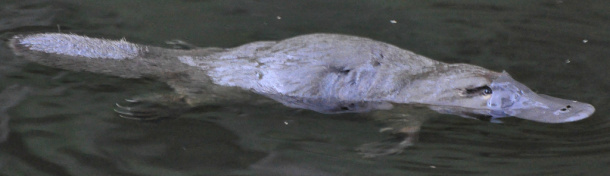 Platypus by LongRoadPhotography (CC BY-NC-ND 2.0)
The platypus, where to start? The Australian mammal (Ornithorhynchus anatinus) has the bill of a duck, a tail of a beaver, the waterproof body of an otter, and flat clawed webbed feet. Did I mention it lays eggs, yet lactates? It’s a freak show. Some say they are the Swiss Army Knife of animals and others will claim they are proof that Mother Nature has a sense of humor. As a scientist I’m a bit more pragmatic, and take the platypus as absolute proof that even Mother Nature will go to work drunk off her ass.
She eventually sobered up, and felt bad about what she created. So to atone for her transgression she gifted the poor platypus with venom. That’s right, the platypus is venomous. That ever-so-cute half duck, half beaver, half snake thing combines to make one and a half cans of whoop ass.
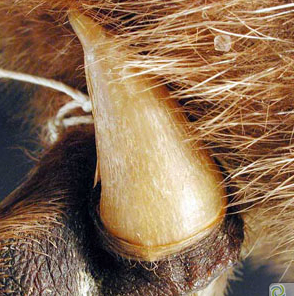 Platypus Spur…
View original post 735 more words
Vital Signs: Melanoma Incidence and Mortality Trends and Projections — United States, 1982–2030
Young Adults Living at Home

Are we spending too much on college?
I’ll keep my thoughts and opinions on this topic to myself.
Robot Master Chef Cooks 2,000 Recipes, Cleans Up, Does the Dishes – Industry Tap
Robot Master Chef Cooks 2,000 Recipes, Cleans Up, Does the Dishes – Industry Tap.
Watch the video. Amazing.
HT – Mish
Watch the scariest robot in the world jump over stuff automatically
Star Wars coming to this galaxy soon.


You must be logged in to post a comment.