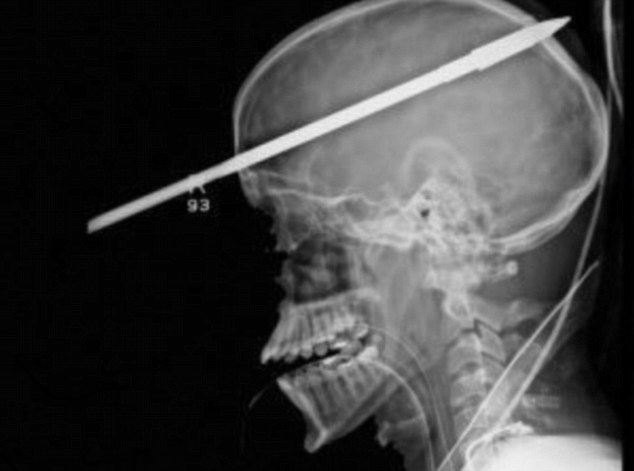
Photo by Chris Morrow
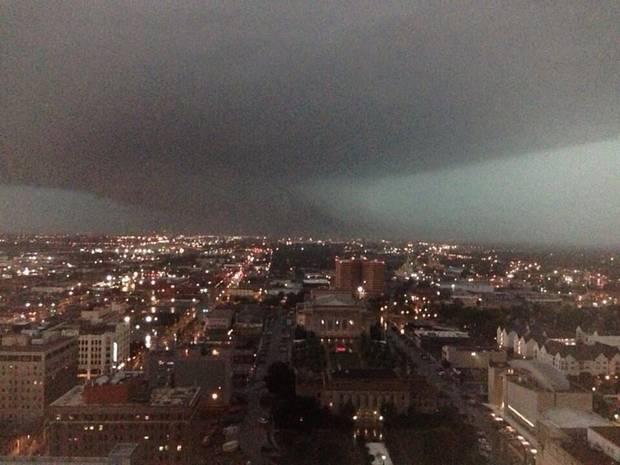
It was another rough day out here in Oklahoma.
A total of 117 deaths were reported on Red Cross mortality forms. The source of information for the mortality forms was a medical examiner/coroner for 94 (80.3%) cases and the family of the decedent for 10 (8.5%) cases (Table). Most deaths occurred in New York (53 [45.3%]) and New Jersey (34 [29.1%]); the other deaths occurred in Pennsylvania, West Virginia, Connecticut, and Maryland. The deaths occurred during October 28–November 29, 2012 (Figure 1). Approximately half of the deaths (60 [51.3%]) occurred on the first 2 days of the storm’s landfall, with a peak of 37 deaths on October 30, 2012.
Decedents ranged in age from 1 to 94 years (mean: 60 years, median: 65 years); 60.7% were male, and 53.8% were white. Of the 117 deaths, 67 (57.3%) were classified as directly related deaths, and 38 (32.5%) were indirectly related to the storm. Of the directly related deaths, the most common mechanism was drowning (40 [59.7%]), followed by trauma from being crushed, cut, or struck (19 [28.4%]). Poisoning was the most common indirectly related cause of death; of the 10 poisonings, nine were caused by carbon monoxide. Most directly related deaths occurred during the first few days of the storm, whereas indirectly related deaths continued from the day before the storm into the middle of November.
Comparing the 40 drowning deaths to all Sandy-related deaths, the age, sex, and race distributions of decedents were similar (Table). The majority of drowning deaths (29 [72.5%]) also occurred in the initial phase of the storm, during October 29–31. Twenty-one (52.5%) drowning deaths occurred in the decedent’s home, and 11 (27.5%) occurred outside; one person drowned in a flooded commercial building lobby, and another person drowned while intentionally swimming off a storm-affected beach. For six deaths, circumstances of the drowning were not available. The location of drowning deaths by state was significantly different (p<0.05) compared with all Sandy-related deaths. The majority of drowning deaths (32 [80.0%]) occurred in New York, whereas deaths in New York accounted for only 27.3% of nondrowning deaths. Twenty decedents drowned in flooded homes in New York, and home addresses for 18 (90.0%) of them were located in Evacuation Zone A (Figure 2); the other two decedents’ homes were in or near areas of flooding and near Evacuation Zone A. Notes written by Red Cross volunteers on these 20 deaths captured decedents’ reasons for not evacuating, such as “afraid of looters,” “thought Hurricane Irene was mild,” and “unable to leave because did not have transportation.”
via Deaths Associated with Hurricane Sandy — October–November 2012.
And while we’re on the topic of nasty weather…
During 2003–2010, the U.S. oil and gas extraction industry (onshore and offshore, combined) had a collective fatality rate seven times higher than for all U.S. workers (27.1 versus 3.8 deaths per 100,000 workers).
via Fatal Injuries in Offshore Oil and Gas Operations — United States, 2003–2010.
$5 per thousand.
Pilot ejected when small airplane dove near Chattanooga; body recovered – U.S. News.
EAA – EAA Experimenter – FAA’s Zodiac 601/650 Aircraft Report.
This post is for diehard underwriters only. How unusual is it for a pilot to be ejected from his/her aircraft while aloft? According to various news reports, the plane dove, the canopy came off, and the pilot ejected. The first link is to a short story covering the accident. The second link takes you to an eye-opening, well researched article on accidents involving the Zodiac 601. Plenty of information for the next phone call from a life insurance agent who asks,
“Why did you rate him $5.00 per thousand?”
Answer: He wasn’t wearing a seat belt and the plane he flies has a tendency to break apart while in flight.
Zorbing – effectively throwing yourself down a slope in a giant ball – was invented in New Zealand in 2000 and is now a popular extreme adventure sport around the world.
via BBC News – Russia investigates horrific ‘zorb’ ride death.
Email me or post a comment if you have a good source for Zorbing accident and mortality statistics.
Case Reports
A man aged 50 years arrived at the ED with abdominal pain that had begun after eating steak at a backyard barbeque. Computed tomography (CT) scan of the abdomen and pelvis revealed a linear object extending through the wall of a loop of small intestine into the omentum (Figure). Laparotomy was performed to remove the foreign body, which appeared to be a wire bristle from a grill-cleaning brush. The patient fully recovered and was discharged the next day.
Five more patients visited the ED during August 2011–June 2012 after inadvertent ingestion of a wire bristle that had become dislodged from a grill-cleaning brush and embedded in food. In all of the cases, the bristles were initially identified by radiographs of the neck or CT scans of the abdomen and pelvis, and their origin was confirmed after removal (Table). Patient interviews revealed a common history of recent ingestion of grilled meat. After definitive treatment, all six patients recovered fully.
Severe pain on swallowing was the chief symptom in three of the six patients. In all three of these patients, a wire bristle from a grill-cleaning brush was found in the neck. The three included a woman aged 46 years and two men aged 50 and 64 years (Table). The three initially were evaluated with plain radiography, which identified the foreign object in each patient. One who was initially evaluated with plain radiography then underwent CT for precise localization. All three were treated successfully with laryngoscopic removal of the wire bristle.
Severe abdominal pain was the chief symptom of the other patients, who were three men aged 31, 35, and 50 years (Table). These patients were evaluated primarily with intravenous contrast-enhanced CT of the abdomen and pelvis. In two patients, the wire bristle was noted lodged within the omentum adjacent to a loop of small intestine. In one patient, the wire bristle was located within the sigmoid colon, indenting the bladder. Two patients underwent emergency abdominal surgery to retrieve the foreign object and repair the intestine. In one patient, the wire had not perforated the intestine and was removed via colonoscopy.
Tomorrow is July 4 and many grills will be fired up for the holiday. I thought this article was particularly well timed.

Oops.
Image courtesy of University of Miami-Jackson Memorial Hospital.
Exposure to chemical dispersants BP used in the Gulf of Mexico oil spill left a commercial diver with seizures, unable to walk and going blind – and two members of his dive team committed suicide, the man claims in Harris County Court.
via Horrific Injuries Linked to BP Dispersant Corexit.
HT – naked capitalism.
Welcome to the USGS – U.S. Geological Survey.
I would like to thank one and all who expressed concern for our well-being this past week. The most recent earthquake was a 4.7 in magnitude and came in the midst of severe thunderstorm and flash flooding activity. I heard a loud bang that was immediately followed by walls shaking in the house. Fortunately I reside around 60 miles from the epicenter of the recent quakes. Still OK in OK.
You must be logged in to post a comment.