The Dark Side of Tik Tok – Updated

In the latest health fad to alarm and exasperate medical experts, people on TikTok have cheerily “hopped on the borax train” and are drinking and soaking in the toxic cleaning product based on false claims that it can reduce inflammation, treat arthritis, and “detoxify” the body.

Borax is the new Tide Pods, and poison control experts are facepalming — https://arstechnica.com/health/2023/07/borax-is-the-new-tide-pods-and-poison-control-experts-are-facepalming/?comments=1&comments-page=1

Natural selection at its finest.

Good article on Vox. Why TikTokers are drinking laundry detergent https://www.vox.com/technology/2023/7/29/23811639/tiktok-borax-challenge-dangerous-laundry-detergent

The Dark Side of Pickleball

It’s a new national obsession, the fastest-growing sport in the U.S. And by the end of 2023, it’s expected to yield roughly 67,000 emergency department visits, 366,000 outpatient visits, 8,800 outpatient surgeries, 4,700 hospitalizations, and 20,000 post-acute injury episodes. All told, UBS Group AG financial analysts have forecast that the direct medical costs of pickleball will top $377 million this year alone, mostly due to wrist, lower leg, head, or lower trunk injuries…

Felice de Jong, PhD, a 67-year-old scientist who lives in Nellysford, VA, explained that when she first heard the name “pickleball,” she thought it would be a “piece of cake, like playing tiddlywinks.” Because she had spent a lifetime being active, she dove right in after only a few lessons, badly twisted her ankle, developed tennis elbow, and was forced to lay off the paddle for a few weeks before returning to the court. 

As Injuries from Pickleball Surge, Here’s How to Play Safely — https://www.webmd.com/fitness-exercise/news/20230724/heres-how-to-play-pickleball-safely?src=RSS_PUBLIC

I have a 12 court facility located at the public golf course 2 miles from the house.

I’m tempted. Just need to make sure my health insurance premiums are paid and up to date.

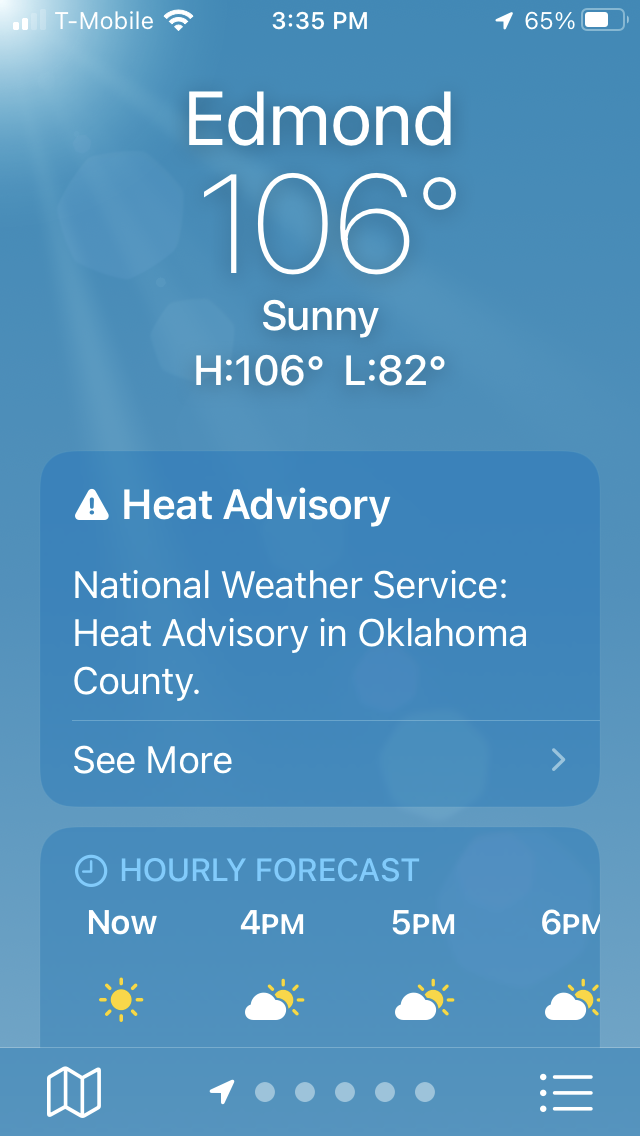
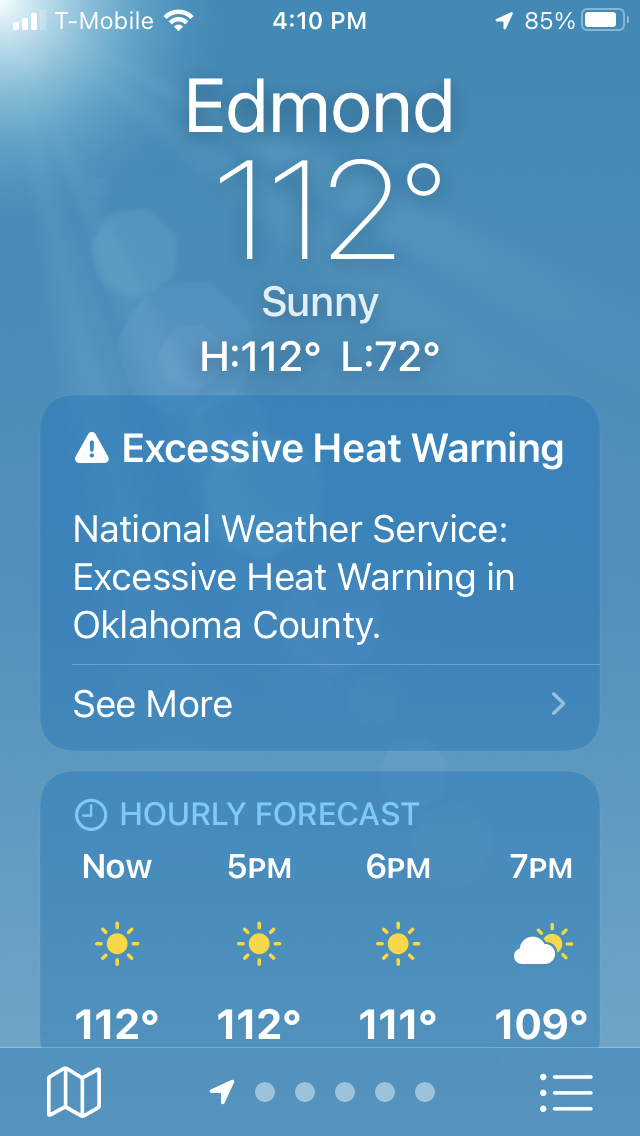
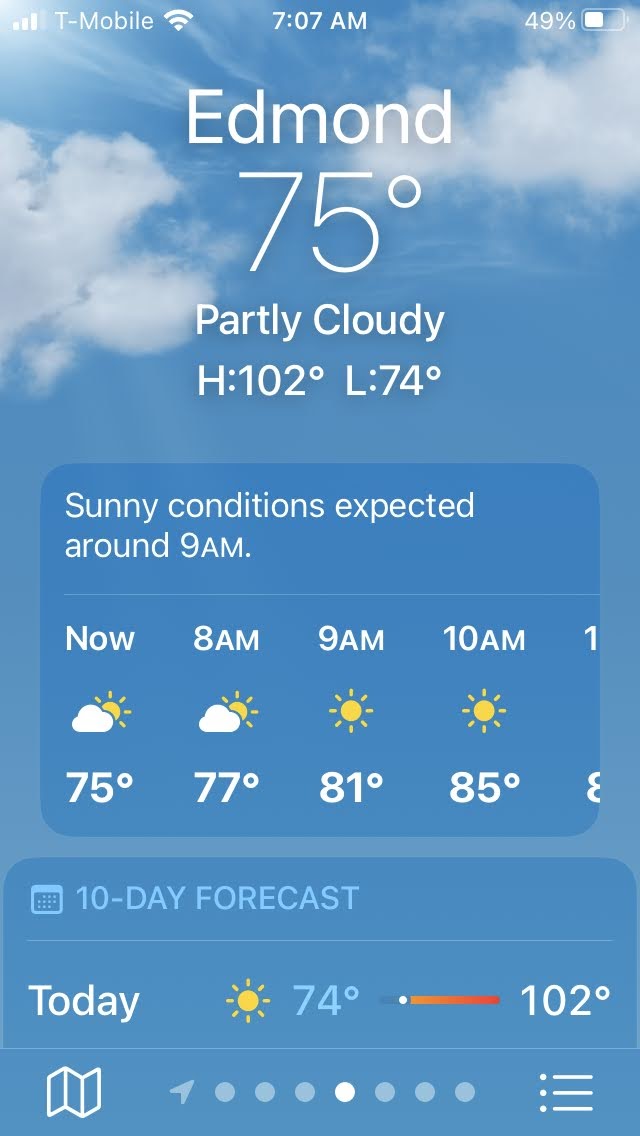
Too Hot To Blog

How the day began…

Then this happened…

And of course, advice from the Oklahoma Department of Wildlife Conservation on staying hydrated…

Which generates the highest of intellectual conversations…

The Wind Chill Hit Minus 108 at New Hampshire’s Mount Washington — smithsonianmag.com

The 6,288-foot summit endured record-breaking conditions brought by an Arctic air mass. The mountain in north-central New Hampshire stands 6,288 feet tall and often experiences dramatic weather. But meteorologists say this weekend’s powerful winds and chilly temperatures—which dipped to as low as minus 47 degrees—were unparalleled. The previous record-low wind chill at Mount Washington was minus 102.7 degrees in 2004.

The Wind Chill Hit Minus 108 at New Hampshire’s Mount Washington — Latest articles | smithsonianmag.com

Fatal Fungi

This lethal lineup of mushrooms contains amatoxins, which include alpha, beta, and gamma amanitin. Amatoxin poisoning accounts for more than 90 percent of all deaths resulting from mushroom poisoning worldwide. Part of what makes them so deadly is that they can easily be confused with other, completely edible mushrooms. Death caps, for instance, can look much like straw and Gypsy mushrooms. The various destroying angels can be mistaken for button, meadow, and horse mushrooms. In Cleveland, Gholam recently treated a patient who had eaten a deadly Amanita mushroom he found in his yard after a plant identification app on his phone identified the mushroom as an edible variety. It almost killed him.

The mushrooms’ amatoxins are easily absorbed through the gastrointestinal tracts once they’ve been eaten. From there, the toxins head to the kidneys and, in particular, the liver, which is one of the most important organs in the body for making proteins. Amatoxins work by blocking a key enzyme involved in making new proteins, called RNA polymerase type II. In the liver, blocking this enzyme causes a cascade of trouble that results in cell death and tissue necrosis. While some of the toxin ultimately gets flushed in urine, some gets transported out of the liver with bile acids, where they end up back in the intestines for the process to begin again—in what’s called an enterohepatic cycle.

After ingestion, symptoms only appear six to 24 hours later, once significant damage has accumulated. Then the poisoning proceeds through three distinct phases. First, there’s gastrointestinal distress—marked by excruciating abdominal pain, nausea, vomiting, diarrhea, and blood in the urine—and can sometimes be accompanied by rapid heartbeat, low blood sugar, and dehydration. All that can last for 12 to 36 hours. Then, there’s the second, “latent” phase, when symptoms quiet down as liver and kidney damage set in at about 72 hours. In this phase, a person may be lulled into thinking they’re in the clear, potentially causing them to decline emergency medical care that could save their life.

In the three-to-five days after ingestion, things go downhill, with abrupt liver and multi-organ failure. Some patients end up needing liver transplants. Fatality rates vary but sometimes range between 10 and 20 percent, though some studies have found higher rates.

There are no specific treatments for amatoxin poisoning.

Ohio foragers are accidentally poisoning themselves with lethal mushrooms — https://arstechnica.com/science/2022/10/ohio-foragers-are-accidentally-poisoning-themselves-with-lethal-mushrooms/

“…a plant identification app on his phone identified the mushroom as an edible variety.”

Go ahead and search for the phrase “mushroom identification app” in your favorite search engine.

Foraging for wild mushrooms is a perfect example of you don’t know what you don’t know even if an app on your phone leads to believe you know.

Drive By Truckers

Up to one-third of crashes of large trucks are attributable to sleepiness, and large truck crashes result in more than 4,000 deaths annually. For each occupant of a truck who is killed, 6 to 7 occupants of other vehicles are killed.

Obstructive sleep apnea (OSA) is a sleep-related breathing disorder that is characterized by repetitive episodes of complete or partial upper airway obstruction during sleep.1 OSA is common among adults,2,3 and it is particularly common in commercial operators.4–8 Untreated OSA leads to increased morbidity and mortality, as well as high costs related to crashes, health care use, absenteeism, and lost productivity.9–11 A systematic review and meta-analysis commissioned by the Federal Motor Carrier Safety Administration (FMCSA) shows that drivers with OSA have a crash risk that is between 21% and 489% higher than comparable drivers without OSA.12 A 2013 meta-analysis of more than 25,000 individuals who were enrolled in 12 studies shows that OSA was associated with an increased risk for cardiovascular disease (relative risk: 1.79), fatal and nonfatal stroke (relative risk: 2.15), and death from all causes (relative risk: 1.92).13

Obstructive sleep apnea screening, diagnosis, and treatment in the transportation industry – https://jcsm.aasm.org/doi/10.5664/jcsm.9672

Number of Children Hospitalized for E-scooter Injuries Surge from 2011-2020

Authors of the abstract, “National Trends in Pediatric e-Scooter Injury,” found hundreds of e-scooter injuries between 2011-2020. The rate of hospital admittance for patients increased from fewer than 1 out of every 20 e-scooter injuries in 2011 to 1 out of every 8 requiring admittance into a hospital for care in 2020…

Researchers examined a national database of pediatric e-scooter injuries that were seen in emergency departments at over 100 US hospitals from 2011-2020 to find out what kinds of injuries children were sustaining and if any trends existed. Over 10% of all patients had a head injury, including a concussion, skull fractures, and internal bleeding. The most common injuries were arm fractures (27%), followed by minor abrasions (22%) and lacerations needing stitches (17%). The average age was 11.1 years and 59% of patients were male. Admittance to a hospital rose from 4.2% in 2011 to 12.9% in 2020.

American Academy of Pediatrics. “Number of children hospitalized for E-scooter injuries surge from 2011-2020: During 10-year study, all e-scooter injuries rose, including head injuries and injuries requiring hospitalization.” ScienceDaily. http://www.sciencedaily.com/releases/2022/10/221007085739.htm (accessed October 7, 2022).

An Algorithm Put This Article in My News Feed

Photo by Egor Kamelev on Pexels.com

In a survival situation, you probably wouldn’t make it on bugs alone, despite what some sites would have you believe. But insects could certainly be an important part of what keeps you alive. Bugs are highly nutritious, with lots of proteins and vitamins and modest amounts of fat. Here are the things you should know.

9 Bugs to Eat in a Survival Situation (And 4 You Want to Avoid) — https://www.fieldandstream.com/story/survival/insects-to-eat-in-survival-situation/

Faithful followers know I have two blogs, this one and http://garyskitchen.net. The latter is more or less devoted to food. I debated whether to post this article link here or there. I decided here because my professional life is devoted to understanding what kills people. Obviously getting lost while hiking and running out of food can lead to an early expiration date.

The article was fun to read. You’ll enjoy it too unless you’re a conspiracy theorist.

Insect consumption has been highlighted by the UN’s Food and Agriculture Organization as an important tool in addressing food insecurity for a growing global population. And since agriculture is the second-largest greenhouse gas emitter after the energy sector, insect eating presents a compelling climate solution, too – crickets, for example, can provide the same amount of protein as cows for less than 0.1% of the emissions.

Meaty, cheesy, coconutty: a chef’s quest to prove insects taste delicious — https://www.theguardian.com/environment/2022/sep/09/insects-food-menu?amp;amp;amp

Hmm…maybe I should have posted this on https://garyskitchen.net