Cannabis and Impaired Brain Development

The adolescent brain is particularly vulnerable to cannabis, especially today’s higher-potency products, which put teens at risk for impaired brain development; mental health issues, including psychosis; and cannabis use disorder (CUD).  That was the message delivered by Yasmin Hurd, PhD, director of the Addiction Institute at Mount Sinai in New York, during a May 6 press briefing at the American Psychiatric Association (APA) 2024 annual meeting

“We’re actually in historic times in that we now have highly concentrated, highly potent cannabis products that are administered in various routes,” Hurd told reporters. Tetrahydrocannabinol (THC) concentrations in cannabis products have increased over the years, from around 2%-4% to 15%-24% now, Hurd noted. High-Potency Cannabis Tied to Impaired Brain Development, Psychosis, CUD – Medscape – May 13, 2024. https://www.medscape.com/viewarticle/high-potency-cannabis-tied-impaired-brain-development-2024a1000935

Earlier posts on this topic:

Marijuana is Too Strong (THC turbocharged)

Cannabis Use and Psychosis Risk

Cannabis Use and Psychosis Risk (Aussie Version)

Reefer Madness

Marijuana is Too Strong (THC turbocharged)

For some, it can be dangerous. In the past few years, reports have swelled of people, especially teens, experiencing short- and long-term “marijuana-induced psychosis,” with consequences including hospitalizations for chronic vomiting and auditory hallucinations of talking birds. Multiple studies have drawn a link between heavy use of high-potency marijuana, in particular, and the development of psychological disorders, including schizophrenia, although a causal connection hasn’t been proved. “It’s entirely possible that this new kind of cannabis—very strong, used in these very intensive patterns—could do permanent brain damage to teenagers because that’s when the brain is developing a lot,” Keith Humphreys, a Stanford psychiatry professor and a former drug-policy adviser to the Obama administration, told me. Humphreys stressed that the share of people who have isolated psychotic episodes on weed will be “much larger” than the number of people who end up permanently altered. But even a temporary bout of psychosis is pretty bad. Marijuana Is Too Strong Nowhttps://www.theatlantic.com/ideas/archive/2024/08/high-potency-marijuana-regulation/679639/

Cannabis Use and Psychosis Risk (Aussie Version)

Professor Emmerson says Queensland’s Metro North Health — Australia’s largest public health service, based in north Brisbane and the surrounding region — is seeing increased presentations of psychosis due to medicinal cannabis.”The Metro North early psychosis service reports 10 per cent of their new presentations — so these are kids aged 16 to 21 — are people who’ve ended up on medicinal cannabis and are becoming psychotic,” the Brisbane-based psychiatrist says.

Doctors warn of significant increase in people hospitalized with psychosis after being prescribed medicinal cannabishttps://www.abc.net.au/news/2024-07-21/medicinal-cannabis-psychosis-harm-risk-prescription-marijuana/104116952

Cannabis Use and Psychosis Risk

The investigators found that cannabis use was significantly associated with psychotic disorders during adolescence (adjusted hazard ratio [aHR], 11.2; 95% CI, 4.6 to 27.3), but not during young adulthood (aHR, 1.3; 95% CI, 0.6 to 2.6). Adolescents who used cannabis also had a substantially higher risk for hospitalizations and emergency department visits (aHR, 26.7; 95% CI, 7.7 to 92.8), while there was no substantial risk observed in young adulthood (aHR, 1.8; 95% CI, 0.6 to 5.4). Growing Evidence Supports the Link Between Cannabis Use and Psychosis Risk https://www.psychiatryadvisor.com/news/cannabis-use-and-psychosis-risk/

Have you read the book The Dangerous Truth About Today’s Marijuana by Laura Stack? https://johnnysambassadors.org/book/

If you have small children I highly recommend this book.

Drink Less Alcohol When You Get To My Age

Many people don’t realize that both men and women develop an increased sensitivity and a decreased tolerance to alcohol as they get older. It’s important to pay attention to this issue because research has shown that alcohol use has been increasing among people ages 65 and older in recent years—and the size of the older adult population is expanding rapidly now that people are living longer, notes George Koob, a neuroscientist and director of the National Institute on Alcohol Abuse and Alcoholism. “People are largely unaware of the physiological changes [related to aging] that lead to higher blood alcohol levels and bigger impairments in behavior and cognition.” Why your alcohol tolerance diminishes as you agehttps://www.nationalgeographic.com/science/article/alcohol-age-tolerance?rid=BA5F7BEC25AE320E1B6791799E955700&cmpid=org=ngp::mc=crm-email::src=ngp::cmp=editorial::add=Health_20240702

Yes I am sipping some bourbon as I write this post.

Why do you ask?

On a serious note, good article with plenty of links for more information. READ IT.

Daily Marijuana Use Now Exceeds Daily Alcohol Use

Reported cannabis use declined to a nadir in 1992, with partial recovery through 2008, and substantial increases since then, particularly for measures of more intensive use. Between 2008 and 2022, the per capita rate of reporting past-year use increased by 120%, and days of use reported per capita increased by 218% (in absolute terms from the annual equivalent of 2.3 to 8.1 billion days per year). From 1992 to 2022, there was a 15-fold increase in the per capita rate of reporting daily or near daily use. Whereas the 1992 survey recorded 10 times as many daily or near daily alcohol as cannabis users (8.9 vs. 0.9 M), the 2022 survey, for the first time, recorded more daily and near daily users of cannabis than alcohol (17.7 vs. 14.7 M). Far more people drink, but high-frequency drinking is less common. In 2022, the median drinker reported drinking on 4–5 days in the past month, versus 15–16 days in the past month for cannabis. In 2022, past-month cannabis consumers were almost four times as likely to report daily or near daily use (42.3% vs. 10.9%) and 7.4 times more likely to report daily use (28.2% vs. 3.8%).

Long-term trends in cannabis use in the United States parallel corresponding changes in cannabis policy, with declines during periods of greater restriction and growth during periods of policy liberalization. A growing share of cannabis consumers report daily or near daily use, and their numbers now exceed the number of daily and near daily drinkers. Changes in self-reported cannabis use in the United States from 1979 to 2022https://doi.org/10.1111/add.16519

Fentanyl Facts

In 2022, according to provisional data from the Centers for Disease Control and Prevention (CDC), close to 83,000 people died from opioid overdoses in the United States, the majority from fentanyl and other highly potent synthetic substances. A Yale Medicine addiction medicine specialist discusses how the synthetic opioid became a problemhttps://www.yalemedicine.org/news/fentanyl-driving-overdoses

Meanwhile in Oklahoma…

Go here https://facingfentanylnow.org/fentanyl-facts/ for the facts.

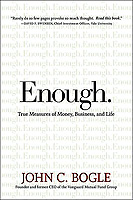
Enough

In the pursuit of “fine” to “great,” we chase products. Through no fault of our own, we fall prey to messaging from social media users, algorithms, and expert marketers, urging us that this shampoo or this rug will shift the scales toward enoughness. “This is how the marketplace continues to work,” says Brooke Erin Duffy, an associate professor of communication at Cornell University, “which is by amplifying our inadequacies and insecurities.”

Baked into these social platforms is a natural ecosystem for comparison. In the past, people weighed themselves against celebrities in the media and those within their immediate social circles, Duffy says. Now, we can compare ourselves to the idealized version of millions of strangers online — who may be perpetuating an aesthetic trend inspiring us to buy in order to participate.

How to be enough
Our obsession with self-improvement is making us miserable. https://www.vox.com/the-highlight/24091379/how-to-be-enough-habituation-hedonic-treadmill-comparison

How to be enough.

How to have enough.

Know when enough is enough.

You’re welcome.