More Women Are Drinking Themselves Sick – KFF Health News

Republished from kffhealthnews.org


When Karla Adkins looked in the rear view mirror of her car one morning nearly 10 years ago, she noticed the whites of her eyes had turned yellow.

She was 36 at the time and working as a physician liaison for a hospital system on the South Carolina coast, where she helped build relationships among doctors. Privately, she had struggled with heavy drinking since her early 20s, long believing that alcohol helped calm her anxieties. She understood that the yellowing of her eyes was evidence of jaundice. Even so, the prospect of being diagnosed with alcohol-related liver disease wasn’t her first concern.

“Honestly, the No. 1 fear for me was someone telling me I could never drink again,” said Adkins, who lives in Pawleys Island, a coastal town about 30 miles south of Myrtle Beach.

But the drinking had caught up with her: Within 48 hours of that moment in front of the rearview mirror, she was hospitalized, facing liver failure. “It was super fast,” Adkins said.

A portrait of Karla Adkins. She is standing outside on a beach and smiles at the camera.
After years of heavy drinking to ease her anxiety, Karla Adkins nearly died from liver failure 10 years ago. “You can’t get much worse from where I got,” says Adkins. She now works as a coach to help people change their relationship with alcohol and published a book about her health ordeal.(Allison Duff)

Historically, alcohol use disorder has disproportionately affected men. But recent data from the Centers for Disease Control and Prevention on deaths from excessive drinking shows that rates among women are climbing faster than they are among men. The Biden administration considers this trend alarming, with one new estimate predicting women will account for close to half of alcohol-associated liver disease costs in the U.S. by 2040, a $66 billion total price tag.

It’s a high-priority topic for the Department of Health and Human Services and the Department of Agriculture, which together will release updated national dietary guidelines next year. But with marketing for alcoholic beverages increasingly geared toward women, and social drinking already a huge part of American culture, change isn’t something everyone may be ready to raise a glass to.

“This is a touchy topic,” said Rachel Sayko Adams, a research associate professor at the Boston University School of Public Health. “There is no safe level of alcohol use,” she said. “That’s, like, new information that people didn’t want to know.”

Over the past 50 years, women have increasingly entered the workforce and delayed motherhood, which likely has contributed to the problem as women historically drank less when they became mothers.

“Parenthood tended to be this protective factor,” but that’s not always the case anymore, said Adams, who studies addiction.

More than 600,000 people in the U.S. died from causes related to alcohol from 1999 to 2020, according to research published in JAMA Network Open last year, positioning alcohol among the leading causes of preventable death in this country behind tobacco, poor diet and physical inactivity, and illegal drugs.

The World Health Organization and various studies have found that no amount of alcohol is safe for human health. Even light drinking has been linked to health concerns, like hypertension and coronary artery disease and an increased risk of breast and other cancers.

More recently, the covid-19 pandemic “significantly exacerbated” binge-drinking, said George Koob, director of the National Institute on Alcohol Abuse and Alcoholism at the National Institutes of Health, as people used alcohol to cope with stress. That is particularly true of women, who are more likely to drink alcohol because of stress than men, he said.

But women are also frequently the focus of gender-targeted advertising for alcoholic beverages. The growth of rosé sales and low-calorie wines, for example, has exploded in recent years. New research published by the International Journal of Drug Policy in February found that the “pinking of products is a tactic commonly used by the alcohol industry to target the female market.”

Also at play is the emergence of a phenomenon largely perpetuated by women on social media that makes light of drinking to deal with the difficulties of motherhood. The misperception of “mommy wine culture,” said Adams, is that “if you can drink in a normal way, a moderate way, if you can handle your alcohol, you’re fine.”

And while it’s unclear to what extent memes and online videos influence women’s drinking habits, the topic merits further study, said Adams, who with colleagues last year found that women without children at age 35 are still at the highest risk for binge-drinking and alcohol use disorder symptoms among all age groups of women. But over the past two decades, the research concluded, the risk is escalating for both childless women and mothers.
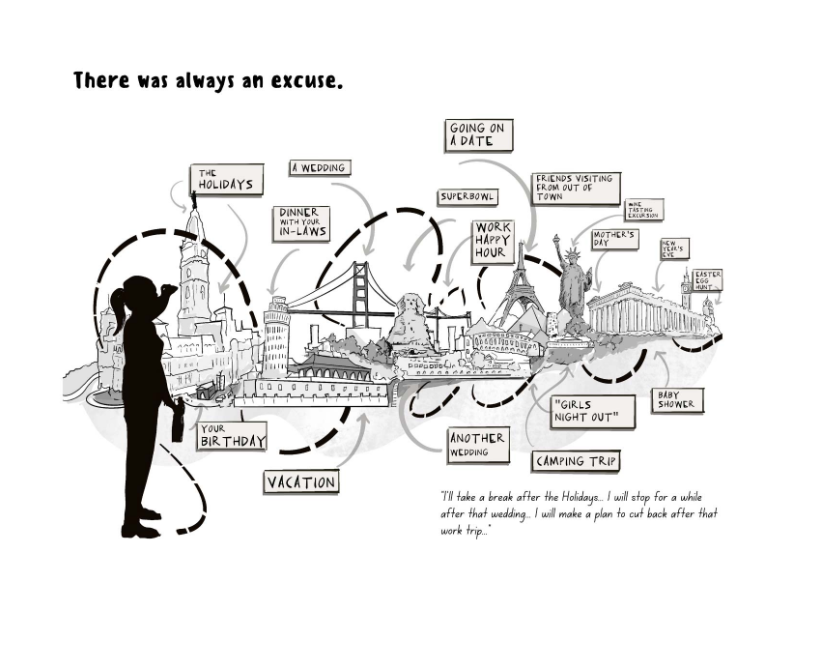
A black and white cartoon that visualizes reasons why there's "always an excuse" to have a drink. The illustration is set up like a flowchart, and lists reasons such as: "the holidays, a wedding, dinner with your in-laws, vacation, your birthday, work happy hour, girls night out, baby shower," and more.
Research indicates stress is one of the main reasons that people misuse alcohol. Experts also say unique burdens lead many mothers to rely on alcohol. “It’s a vulnerable group,” says Rachel Sayko Adams, a research associate professor at the Boston University School of Public Health.(Chrissie Bonner)

These factors at play, coupled with the pressure to fit in, can make excessive drinking a difficult conversation to broach.“It’s a very taboo topic,” Adams said.

And when it does come up, said Stephanie Garbarino, a transplant hepatologist at Duke Health, it’s often surprising how many patients are unaware how their drinking affects their health.

“Often, they didn’t know there was anything wrong with what they’re doing,” she said. She is more frequently seeing younger patients with liver disease, including men and women in their 20s and 30s.

And public health and addiction experts fear that alcohol-related liver disease among women will become a costly issue for the nation to address. Women accounted for 29% of all costs associated with the disease in the U.S. in 2022 and are expected to account for 43% by 2040, estimated a new analysis published in the American Journal of Gastroenterology in February.

National dietary guidelines advise women to drink no more than one alcoholic drink a day. Those guidelines are up for a five-year review next year by the USDA and HHS, which has called a special committee to examine, among other questions, the relationship between alcohol consumption and cancer risks. The report will be made public in 2025.

When Canada published guidance in 2023 advising that drinking any more than two alcoholic beverages a week carried health risks, Koob sparked backlash when his comments to the Daily Mail suggested that U.S. guidelines might move in the same direction. The CDC report published in February suggested that an increase in alcohol taxes could help reduce excessive alcohol use and deaths. Koob’s office would not comment on such policies.

It’s a topic close to Adkins’ heart. She now works as a coach to help others — mostly women — stop drinking, and said the pandemic prompted her to publish a book about her near-death experience from liver failure. And while Adkins lives with cirrhosis, this September will mark 10 years since her last drink.

“The amazing thing is, you can’t get much worse from where I got,” said Adkins. “My hope is really to change the narrative.”

Trends in Behavioral Health Medications

Nurse practitioners had the largest increases in prescribing incident prescriptions across the 5 drug classes. This is consistent with a study that found that behavioral health visits among Medicare beneficiaries conducted by psychiatric behavioral health nurse practitioners increased by 162%, whereas those by psychiatrists decreased by 6% from 2011 to 2019.35 Our study, based on incident prescription data, suggests an increasing contribution of nurse practitioners initiating medication treatment of behavioral health conditions compared with other health care practitioners.

Chai G, Xu J, Goyal S, et al. Trends in Incident Prescriptions for Behavioral Health Medications in the US, 2018-2022. JAMA Psychiatry. Published online January 10, 2024. doi:10.1001/jamapsychiatry.2023.5045 — https://jamanetwork.com/journals/jamapsychiatry/fullarticle/2813980

Welcome to our new world of self-diagnosed ADHD, online pill mills, and “shortages” of prescription medications.

The past couple of decades have seen a continuous increase in attention deficit hyperactivity disorder (ADHD) diagnoses. National population surveys reflect an increase in the prevalence from 6.1% to 10.2% in the 20-year period from 1997 to 2016 and experts continue to debate and disagree on the causes for this trend.1

ADHD Diagnostic Trends: Increased Recognition or Overdiagnosis? Mo Med. 2022 Sep-Oct; 119(5): 467–473.– https://www.ncbi.nlm.nih.gov/pmc/articles/PMC9616454/

Too Old To Grow Up?

Percentage change in the leading health conditions affecting millennials in the United States from 2014 to 2018 — https://www.statista.com/statistics/1276447/percentage-change-of-the-leading-conditions-affecting-millennials

I was doing my usual Saturday morning routine, catching up on whatever was catching my attention and I came across this Scary Chart looking for ADHD incidence in Millennials. Whoa…check out the early CAD percentage increase.

Scary Charts – 01.19.24

Counsellor Hilarie Cash, the co-founder of reSTART Life, a residential treatment center for tech addiction, told The Epoch Times that screen use is classified as problematic when it starts eating into time necessary for normal human functioning…

Ms. Cash, whose program to treat people struggling with addiction to internet pornography and video games began in the 1990s, has observed a worrying trend. While her earlier clients also experienced major upheaval due to their screen addictions, they had sufficient life skills. In contrast, many of her clients today lack necessary life skills, such as knowing how to cook, maintain personal hygiene, hold down a conversation, make meaningful relationships, keep a job, etc. These people are more challenging to treat.

The Silent Epidemic Eating Away Americans’ Minds — https://www.theepochtimes.com/health/the-silent-epidemic-eating-away-americans-minds-5560857

I see this every day. People cannot drive a car responsibly, process a restaurant meal order correctly, make the correct change when presented with cash not credit, and cannot tell you what time it is unless the clock has a digital readout.

We. Are. Doomed.

Scary Charts – 08.13.23 (and yet another Dark Side of Tik Tok)

APC indicates annual percentage change. This study of alcohol-related mortality in the US suggests there has been a significantly higher rate of increase in deaths among female individuals in recent years.

Trends in Alcohol-Related Deaths by Sex in the US, 1999-2020 — http://10.1001/jamanetworkopen.2023.26346

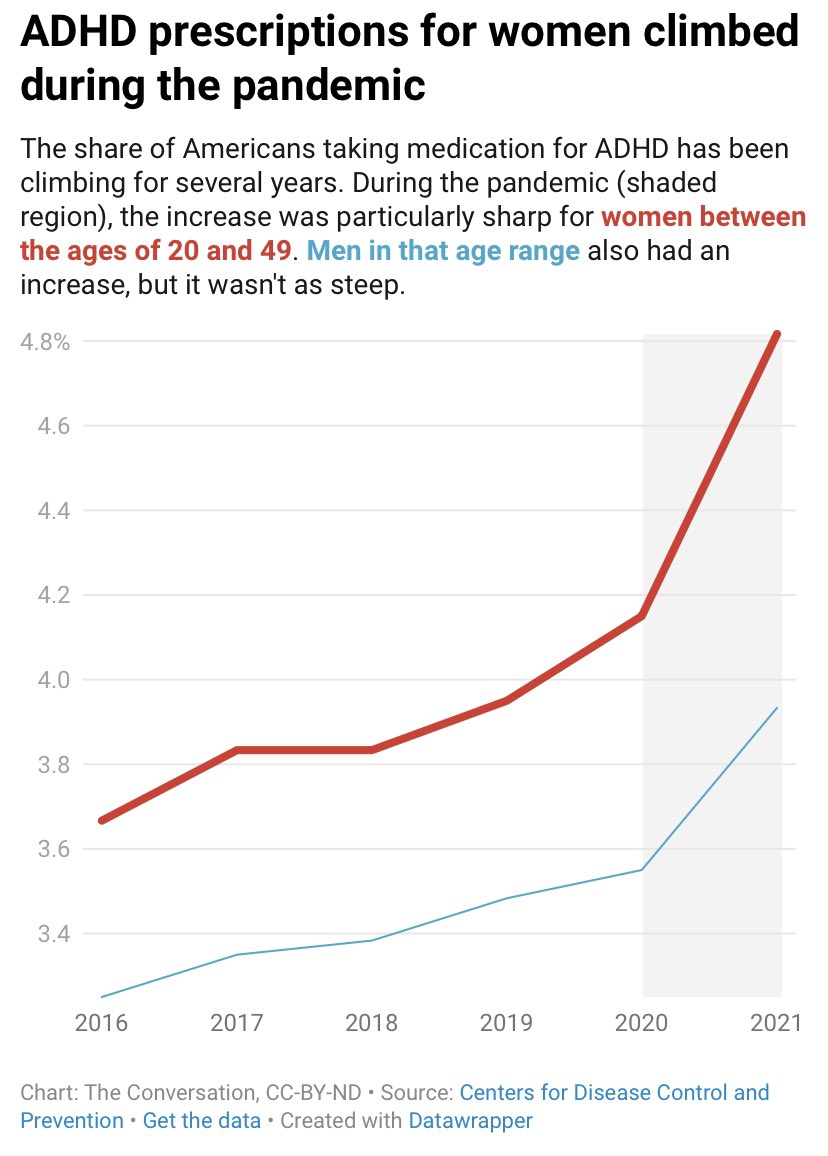
In March 2023, the U.S. Centers for Disease Control and Prevention reported an unprecedented spike in stimulant prescriptions between 2020 and 2021. Perhaps most surprising was that the demographic showing the greatest increases in stimulant use – an increase of almost 20% in one year – were in women in their 20s and 30s…

But while the internet exploded with ADHD content, researchers in Canada began sorting #ADHD TikTok videos into categories based on their accuracy and helpfulness. They reported something important: A majority of #ADHD content was misleading. Only 21% of the posts provided useful and accurate information.

More adults than ever have been seeking ADHD medications – an ADHD expert explains what could be driving the trendhttps://theconversation.com/more-adults-than-ever-have-been-seeking-adhd-medications-an-adhd-expert-explains-what-could-be-driving-the-trend-206052

Alcohol AND amphetamines. Self-diagnosed ADHD. SMH.

Scary Charts – 07.16.23

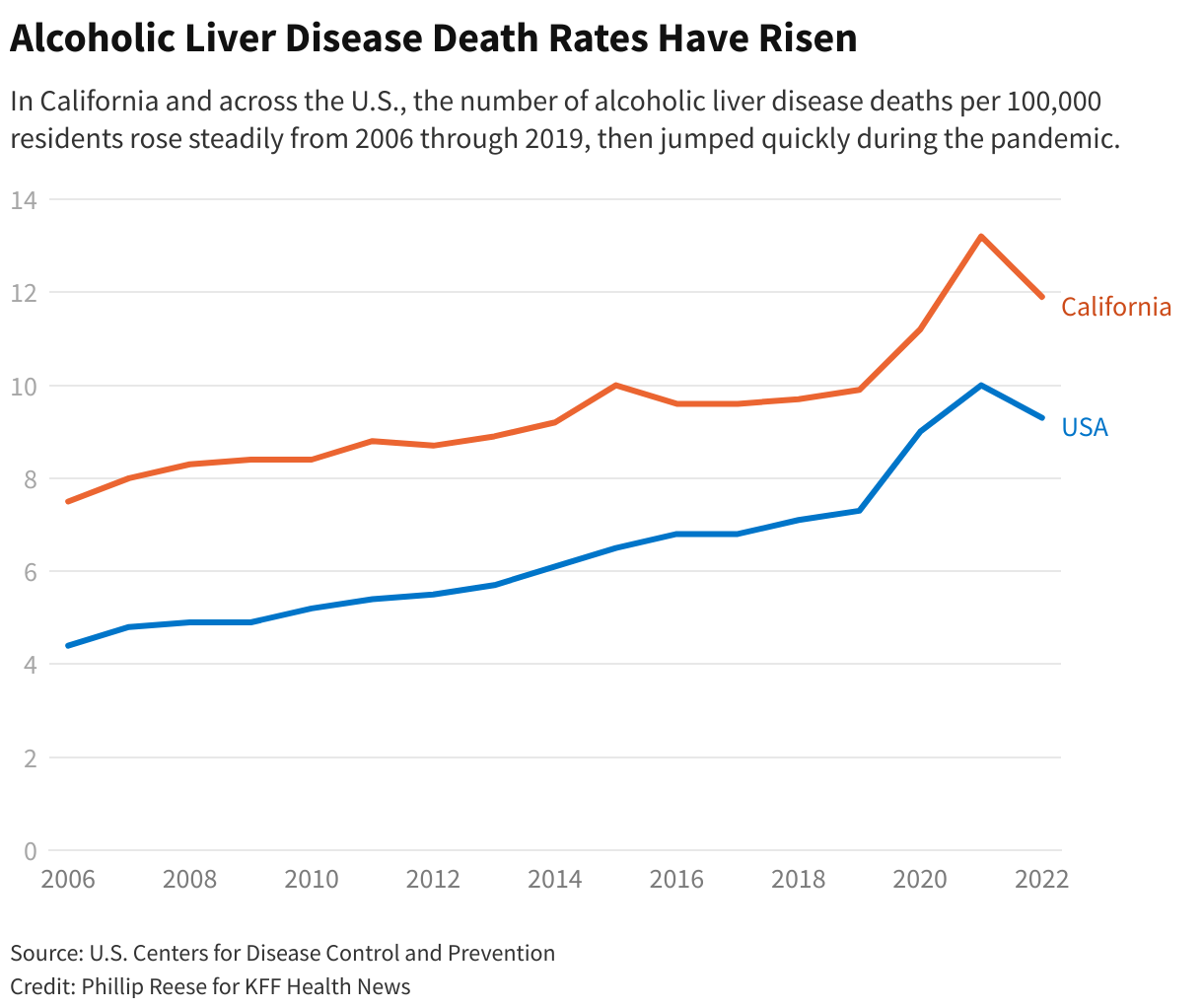
Note the Pandemic Bump. Overall trend lines for both CA and USA still heading north.

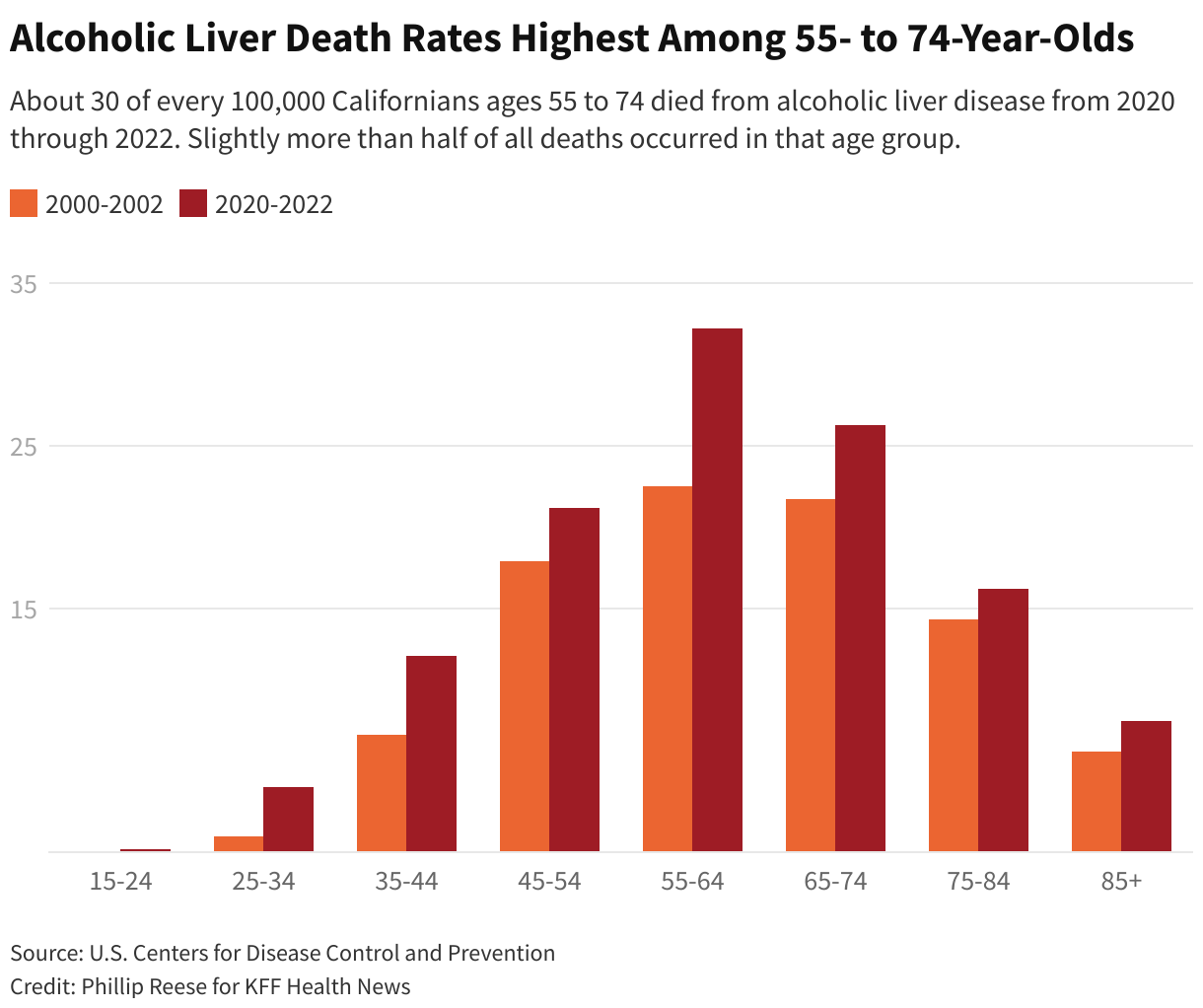
CA only. USA death rates probably show a similar pattern.

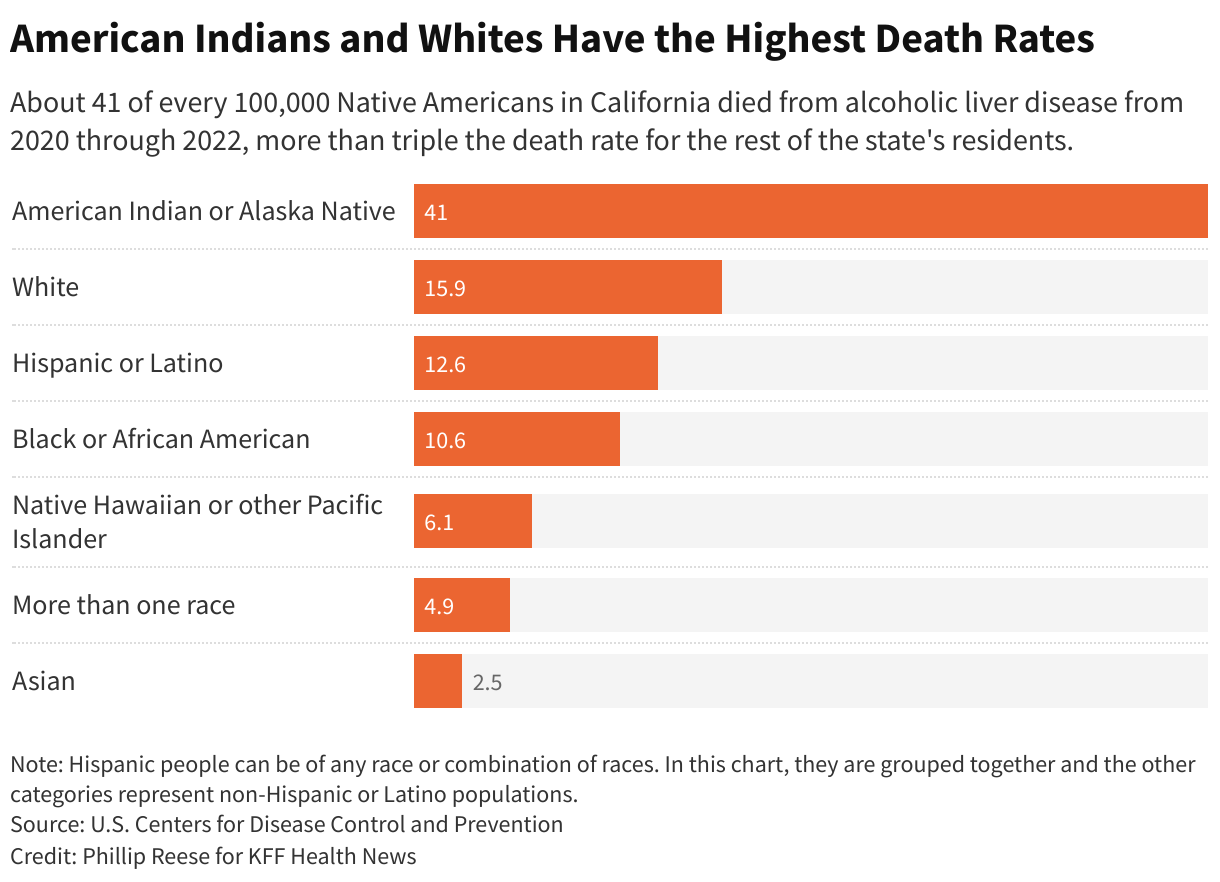
CA statistics. NOTE the ASIAN RATE.

Excessive drinking during the covid-19 pandemic increased alcoholic liver disease deaths so much that the condition killed more Californians than car accidents or breast cancer, a KFF Health News analysis has found. Lockdowns made people feel isolated, depressed, and anxious, leading some to increase their alcohol intake. Alcohol sales rose during the pandemic, with especially large jumps in the consumption of spirits.

Excessive Drinking During the Pandemic Increased Alcoholic Liver Disease Death Rates — https://kffhealthnews.org/news/article/excessive-drinking-during-the-pandemic-increased-alcoholic-liver-disease-death-rates/

Yes it’s Sunday morning and I’m thinking about single malt Scotch because I ran out.

Take Home Lesson for UW Professionals

The highest mortality rates were Gen X and Boomers.

Memo to Self

Think before you drink.

New Wonder Drug! Treat Diabetes, Obesity AND Addiction – (yup another GLP-1 receptor agonist post)

Previous research has found that activating GLP-1 receptors in rats’ brain causes the animals to eat less of a high-sugar chow, which they would normally prefer over a less delicious but healthier bland meal when given the option. This suggests that GLP-1 makes unhealthy food less rewarding. Schmidt’s team found the same to be true with cocaine: rats that received a GLP-1 agonist took less cocaine when it was offered. The researchers are now repeating the experiments in rats addicted to opioids or fentanyl. Several other studies have shown that GLP-1 agonists cause rats to drink less alcohol and produce less dopamine when they do drink, suggesting that the activity is no longer as pleasurable.

…it’s too early to say whether people recovering from addiction would need to take an GLP-1 agonist for the rest of their lives, like people with diabetes do, or whether these drugs could be short-term treatments that curb cravings long enough for people to make lifestyle changes to stay sober. People who stop taking semaglutide for weight loss quickly gain the weight back, and study animals that stop taking it return to alcohol and drug use, but “I don’t think we know enough yet” in humans, Simmons says.

Could New Weight-Loss Drugs like Ozempic Treat Addiction? — https://www.scientificamerican.com/article/could-new-weight-loss-drugs-like-ozempic-treat-addiction1/

The rest of this post is a repost of April Fools 2023 (this is a GLP-1 receptor agonist post). Enjoy!

Ozempic and a similar drug, Wegovy, are weekly shots you give yourself that cause the body to produce insulin. Insulin lowers blood sugar, slows digestion and makes people feel full. Carter-Williams tried it and was amazed.

“You are not hungry,” she says. “Like, I actually have to set timers to make sure that I do eat, because otherwise you actually forget to eat.”

‘You forget to eat’: How Ozempic went from diabetes medicine to blockbuster diet drug https://www.npr.org/2023/04/01/1166781510/ozempic-weight-loss-drug-big-business

Everyone wants the easy way out. I sometimes forget to eat but not because of a miracle drug. You wonder if those of us wanting to lose weight know you can’t stop taking this drug once you start it.

Patients discontinuing the use of weight-loss drugs such as Wegovy risk regaining their original body weight in about five years, a Novo Nordisk official said on Wednesday.

Novo Nordisk Says Stopping Obesity Drug May Cause Full Weight Regain in 5 Years–https://www.medscape.com/viewarticle/990267?src=rss

Side effects?

Just a few https://www.wegovy.com/taking-wegovy/side-effects.html

  • Possible thyroid tumors, including cancer.
  • Inflammation of your pancreas (pancreatitis)
  • Gallbladder problems
  • Increased risk of low blood sugar (hypoglycemia) in patients with type 2 diabetes, especially those who also take medicines for type 2 diabetes such as sulfonylureas or insulin
  • Kidney problems (kidney failure)
  • Serious allergic reactions
  • Change in vision in people with type 2 diabetes.
  • Increased heart rate
  • Depression or thoughts of suicide.

So if you want to lose weight by taking a GLP-1 receptor agonist remember the risks of side effects including the real possibility of having to take a drug that costs up to $1600.00 a month for the rest of your life.

Good luck with that.

As an FYI this drug class is being investigated by the EU for a small number of cases reporting suicidal ideation https://www.latimes.com/business/story/2023-07-10/ozempic-weight-loss-drugs-probed-over-reports-of-suicidal-thoughts.

But we already knew this.

Just Another WFH Saturday

I’m actually not WFH (working from home) today but reading about WFH. And I learned some new things about the world today. One of my favorite tidbits of unsolicited advice comes in the form of this question:

Do you live to work or work to live?

As Gartner research shows, workers want a more “human value proposition,” with 65% of survey respondents agreeing that the pandemic made them rethink the role that work should have in their lives. For all of our talk for decades about work-life balance, people finally feel in their bones what that means. The big question has shifted from “How does life fit into work?” to “How does work fit into life?”

How to Motivate Employees When Their Priorities Have Changed — https://hbr.org/2023/05/how-to-motivate-employees-when-their-priorities-have-changed

Nice to see others coming around to my way of thinking. The strongest motivation I had to establishing a WFH life was to not have work dominate my entire life. Not once have I felt lonely working in my home office. But apparently some WFH people get lonely.

When I first made the switch to working remotely, I was elated. I had been commuting for years, which regularly constituted 12 or more hours stuck in traffic each week and resulted in incalculable levels of stress and frustration. When I began working from home, in addition to regaining my lost commuting hours, I loved my new ability to focus on my work without the distraction of an open-plan office environment.

However, as time progressed, I started to feel lonely. I was able to laser-focus on my work, but my interactions with others were driven solely by virtual meeting agendas or email. I noticed I was becoming less enthused and more withdrawn. I spent too much time scrolling social media because I was silently craving connection with others. I was slowly but steadily becoming isolated.

Is Your Remote Job Making You Lonely? — https://hbr.org/2023/05/is-your-remote-job-making-you-lonely

Maybe you should turn your camera on during meetings.

A recent survey of 4,200 work-from-home employees found that 49% report a positive impact from engagement when their cameras are on during online meetings, and only 10% felt disengagement from turning on cameras. As leaders are figuring out hybrid and remote work, they are facing the challenge of deciding whether to encourage employees to keep their cameras on during meetings. This decision has a significant impact on communication, engagement and trust-building within the team. I can attest to that from my experience helping 21 organizations transition to long-term hybrid work arrangements.

The Pros and Cons of ‘Cameras On’ During Virtual Meetings — https://www.entrepreneur.com/leadership/the-pros-and-cons-of-cameras-on-during-virtual-meetings/450959

Then again, there may be a good reason why people have their cameras off.

May 2022 study by the Federal Reserve Bank of Atlanta estimates that the number of working age Americans (25 to 54 years old) with substance use disorders has risen by 23% since pre-pandemic, to 27 million. A figure that’s about one in six of people who were employed around the time of the study. It’s caused a 9% to 26% drop in labor force participation that Karen Kopecky, one of the authors of the report, says continues today.Drug recovery firm Sierra Tucson concluded from a November 2021 survey that about 20% of US workers admitted to using recreational drugs while working remotely, and also to being under the influence during virtual meetings. Digital recovery clinic Quit Genius found in August 2022 that one in five believe that substance use has affected their work performance, also according to a survey.

Remote workers with substance use disorders face ‘rude awakening’ in return-to-office mandates — https://fortune.com/2023/05/13/remote-workers-substance-use-disorders-return-to-office-mandates/

OK, enough about WFH. Time to get back to thinking about retirement because (I am) Flunking Retirement.