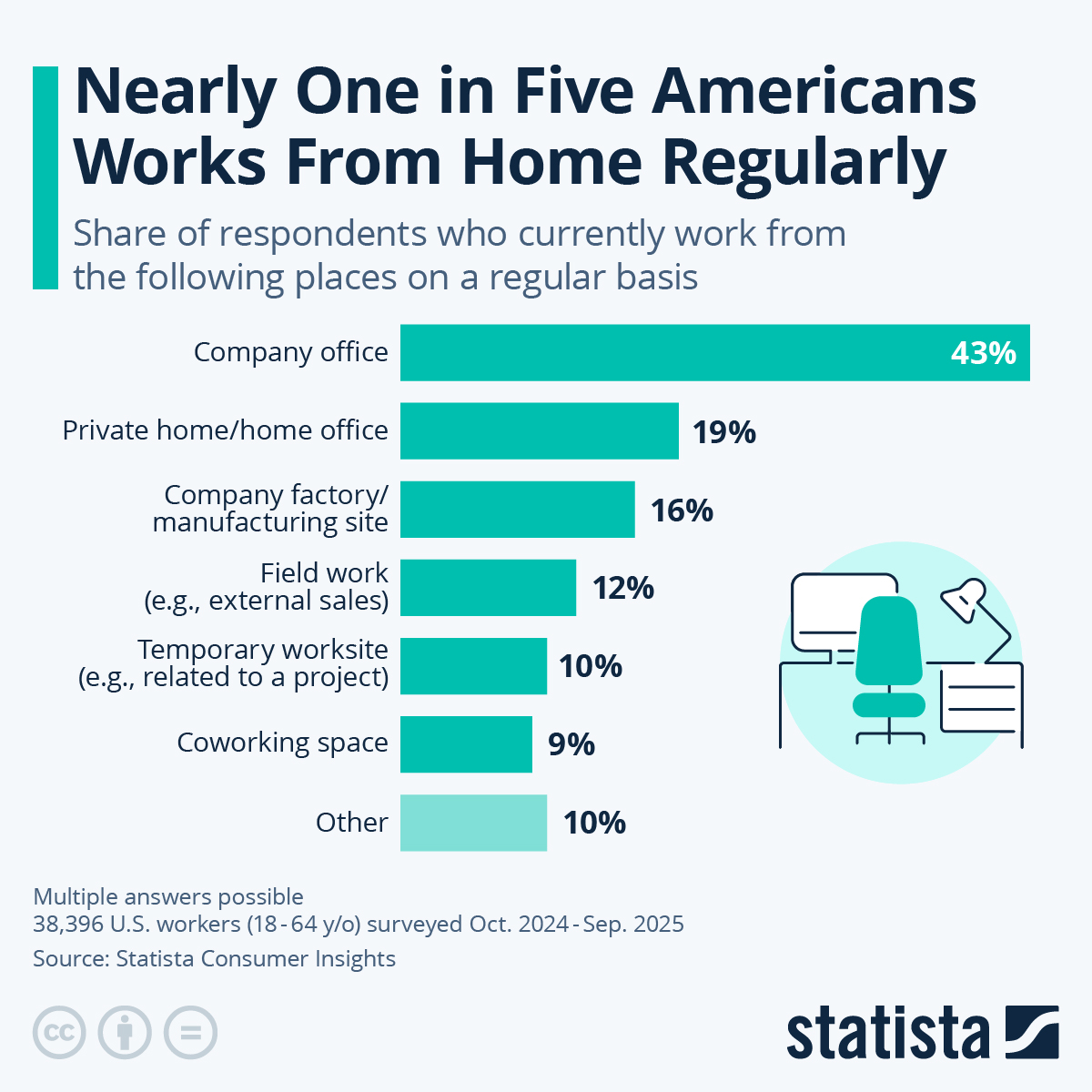
Nearly One in Five Americans Works From Home Regularly – https://www.statista.com/chart/35389/regular-remote-and-home-office-work/
I started writing my journal in 2005. One of the best things about keeping a journal is the ability to verify if memories from the past are accurate or the made up, mashups your brain creates as memories. Here’s my entry on Monday July 24 2006:
A 4:00 PM meeting with the Division head with an HR rep present is never a good thing. I immediately thought to myself:
“This is gonna suck.”
And it did, big time. I got whacked today.
And that’s how my WFH life began. When my work from home situation arises in conversation most are surprised to learn I’ve been WFH this long. I’m surprised how long I’ve been working from home!
I am convinced due to having a low stress working environment, better diet (NO office snacks/free food/lunches out), no commute, along with a host of other variables I just might be increasing my lifespan. I do know I get plenty of sleep on a regular routine basis.
Short sleep duration (< 7 h per night) was associated with a 14% increase in mortality risk compared to the reference of 7–8 h, with a pooled hazard ratio of 1.14 (95% CI 1.10 to 1.18). Conversely, long sleep duration (≥ 9 h per night) was associated with a 34% higher risk of mortality, with a hazard ratio of 1.34 (95% CI 1.26 to 1.42). Sex-specific analyses indicated that both short and long sleep durations significantly elevated mortality risk in men and women, although the effect was more pronounced for long sleep duration in women. Both short and long sleep durations are associated with increased all-cause mortality, though the degree of risk varies by sex. Imbalanced sleep increases mortality risk by 14–34%: a meta-analysis – Ungvari, Z., Fekete, M., Varga, P. et al. Imbalanced sleep increases mortality risk by 14–34%: a meta-analysis. GeroScience 47, 4545–4566 (2025). https://doi.org/10.1007/s11357-025-01592-y

 lifeunderwriter.net
You must be logged in to post a comment.