Scary Charts – 08.19.23 (just a few loosely connected stories)

Every employee probably knows the difference between productive work and what a new report by software company Slack calls performative work – merely looking but not actually being busy. The data in the release shows that workers in some Asian countries – namely India, Japan and Singapore – seem to spend more time appearing to be working than employees in other places.

While Indians spent 43 percent of time in performative work, that number was 37 and 36 percent in Japan and Singapore, respectively. For comparison, U.S. respondents and those from Germany said they only appeared busy for 28 and 29 percent of the time. One outlier in Asia was South Korea, also with a low of 28 percent of work hours spent in “pretend mode”.

Who’s Only Looking Busy at Work? — https://www.statista.com/chart/30591/performative-productive-work/

And now we have a new productivity mantra…

Now that you’ve taken a break and worked on the root causes of your problem, it’s time to embrace a whole new mindset around work, money, and success. This is going to sound radical, but I want you to give yourself permission to achieve less.

The latest productivity mantra that we all need: ‘Achieve less’ — https://fortune.com/2023/08/16/latest-productivity-mantra-achieve-less-careers-mental-health-stress/

But The Boss may not agree with this new mantra…

While the debate over productivity in a remote office setting continues, one Australian woman is fighting back against her employer after being accused of not typing enough while working remotely.

Remote Employee Fired for ‘Low Keystroke Activity’ During Working Hours After 18 Years of Employment — https://www.entrepreneur.com/business-news/remote-worker-fired-for-low-keystroke-activity/457578

There’s a new description of the ideal job…

A lazy-girl job is any job that can be done from home within the standard 9-to-5 and has undemanding tasks and easygoing managers.. the jobs pay enough money ($60,000 to $80,000) for a young adult to live off but not feel pressure to work above their contracted hours.”

The term was coined in May 2023 by Gabrielle Judge, a 26-year-old career influencer. Judge told The Wall Street Journal that she was aware the word lazy would have a negative connotation, but she wanted to spark a conversation. “Lazy-girl jobs aren’t roles where you can slack off,” she said, “but career paths where your work-life balance should feel so awesome that you almost feel like you’re being lazy.”

Lazy-Girl Jobs Are Trending with Gen Z—Here’s How to Find One — https://www.rd.com/article/lazy-girl-jobs/

“Lazy-girl job” is one of the worse uses of the English language I’ve encountered because the use of the word “lazy” is bad. Really bad. The definition of any job done from home with undemanding tasks and easygoing managers is also bad. Really, really bad. A friend once told me the key to his success. With most jobs and careers the majority of us will be average performers (think bell curve). All you need to do to put yourself on the path to success is to be a little better than average. This lazy girl job thing is cultural acceptance of average or worse than average.

Working hard is not a guarantee of success. But not working hard is a guarantee of failure.

Scary Charts – 06.12.23

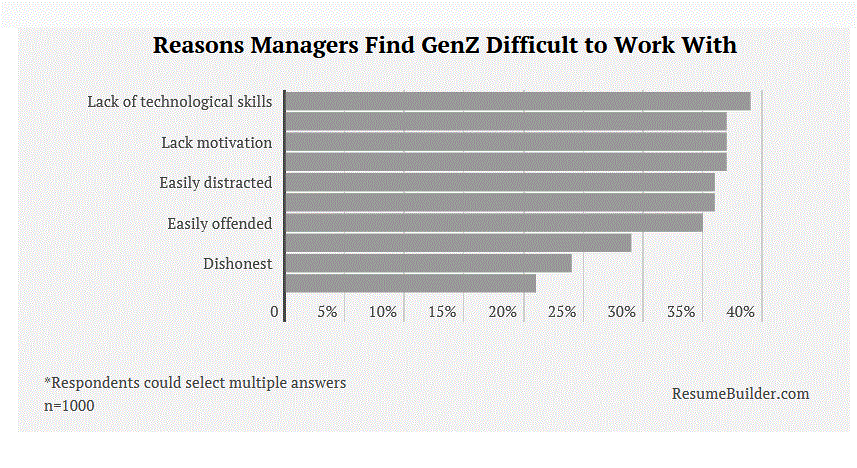
Source: 3 in 4 managers find it difficult to work with GenZ — https://www.resumebuilder.com/3-in-4-managers-find-it-difficult-to-work-with-genz/

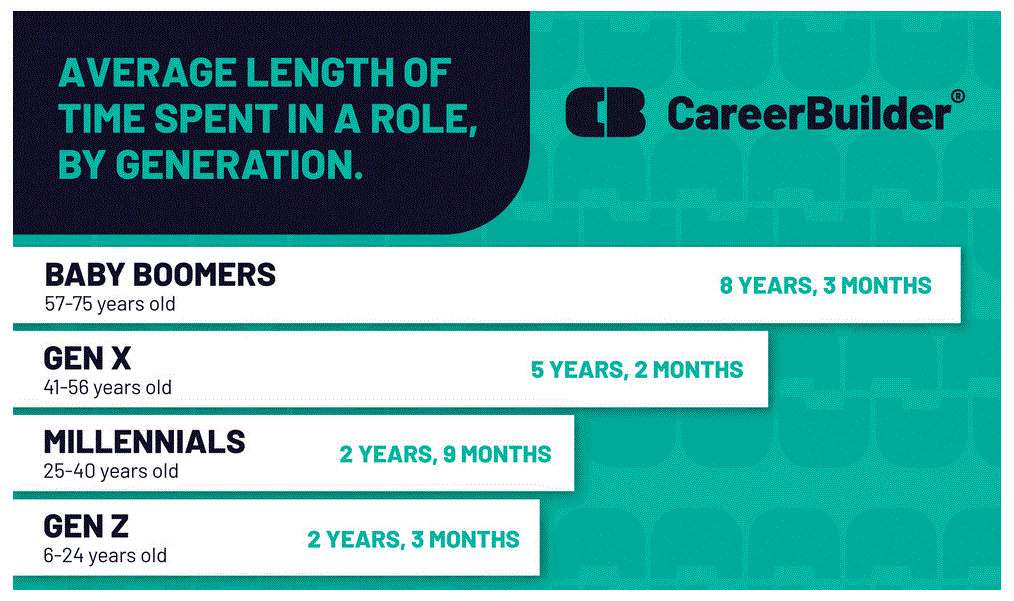
Source: Millennials or Gen Z: who’s doing the most job-hopping — https://www.careerbuilder.com/advice/blog/how-long-should-you-stay-in-a-job

There’s no malicious intent here. I’m not playing generational war games. Any relationship you see between these two survey results could simply be spurious.

Or not.

Elder Abuse

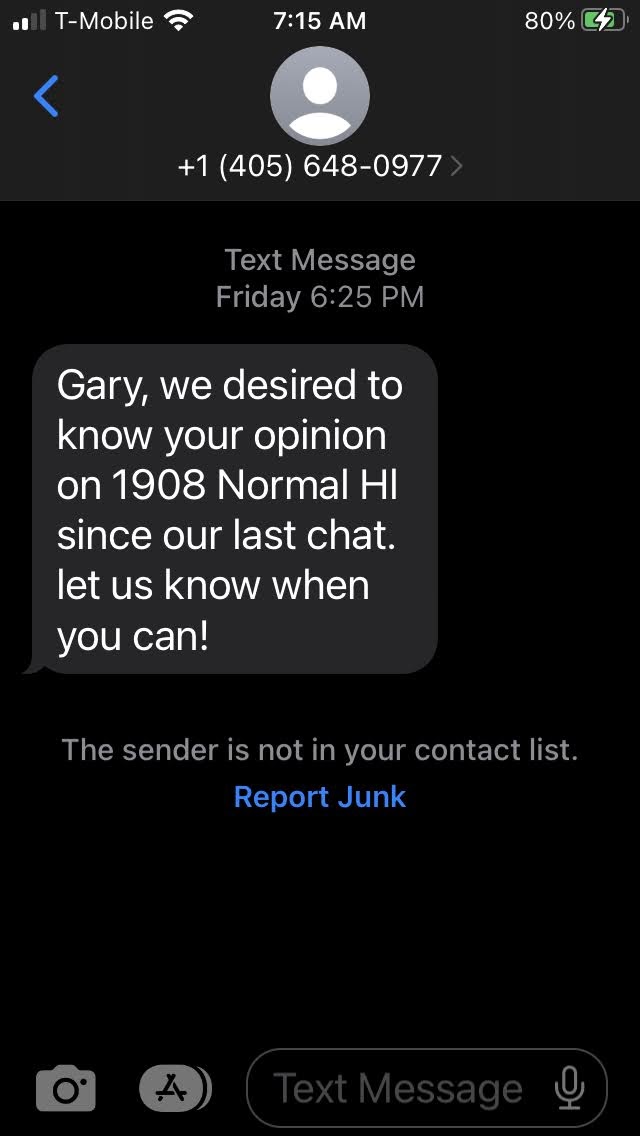
Most of the time I just delete shit like this. Then, unsurprisingly I get another text.

What chat? Why do I feel like I’m being targeted?

HomeVestors, the self-proclaimed “largest homebuyer in the United States,” goes to great lengths to distinguish itself from the hedge funds and YouTube gurus that have taken over large swaths of the real estate investment market. The company says it helps homeowners out of jams — ugly houses and ugly situations — improving lives and communities by taking on properties no one else would buy. Part of that mission is a promise not to take advantage of anyone who doesn’t understand the true value of their home, even as franchisees pursue rock-bottom prices…HomeVestors cautions its franchisees never to take advantage of sellers who are unable to understand negotiations. But by the time he left that evening, Evans had a contract to buy the house for roughly two-thirds its value, signed in Casanova’s shaky script.

The Ugly Truth Behind “We Buy Ugly Houses” — https://www.propublica.org/article/ugly-truth-behind-we-buy-ugly-houses

Full disclosure – I have no clue who sent me these text messages and the source may not be HomeVestors.

Please read then share the entire article. You can’t be too safe nowadays.

The more I think about this form of elder abuse the angrier I get. Then again, maybe I did have a conversation about a different property.

This text message was for a property I don’t own.

Just Another WFH Saturday

I’m actually not WFH (working from home) today but reading about WFH. And I learned some new things about the world today. One of my favorite tidbits of unsolicited advice comes in the form of this question:

Do you live to work or work to live?

As Gartner research shows, workers want a more “human value proposition,” with 65% of survey respondents agreeing that the pandemic made them rethink the role that work should have in their lives. For all of our talk for decades about work-life balance, people finally feel in their bones what that means. The big question has shifted from “How does life fit into work?” to “How does work fit into life?”

How to Motivate Employees When Their Priorities Have Changed — https://hbr.org/2023/05/how-to-motivate-employees-when-their-priorities-have-changed

Nice to see others coming around to my way of thinking. The strongest motivation I had to establishing a WFH life was to not have work dominate my entire life. Not once have I felt lonely working in my home office. But apparently some WFH people get lonely.

When I first made the switch to working remotely, I was elated. I had been commuting for years, which regularly constituted 12 or more hours stuck in traffic each week and resulted in incalculable levels of stress and frustration. When I began working from home, in addition to regaining my lost commuting hours, I loved my new ability to focus on my work without the distraction of an open-plan office environment.

However, as time progressed, I started to feel lonely. I was able to laser-focus on my work, but my interactions with others were driven solely by virtual meeting agendas or email. I noticed I was becoming less enthused and more withdrawn. I spent too much time scrolling social media because I was silently craving connection with others. I was slowly but steadily becoming isolated.

Is Your Remote Job Making You Lonely? — https://hbr.org/2023/05/is-your-remote-job-making-you-lonely

Maybe you should turn your camera on during meetings.

A recent survey of 4,200 work-from-home employees found that 49% report a positive impact from engagement when their cameras are on during online meetings, and only 10% felt disengagement from turning on cameras. As leaders are figuring out hybrid and remote work, they are facing the challenge of deciding whether to encourage employees to keep their cameras on during meetings. This decision has a significant impact on communication, engagement and trust-building within the team. I can attest to that from my experience helping 21 organizations transition to long-term hybrid work arrangements.

The Pros and Cons of ‘Cameras On’ During Virtual Meetings — https://www.entrepreneur.com/leadership/the-pros-and-cons-of-cameras-on-during-virtual-meetings/450959

Then again, there may be a good reason why people have their cameras off.

May 2022 study by the Federal Reserve Bank of Atlanta estimates that the number of working age Americans (25 to 54 years old) with substance use disorders has risen by 23% since pre-pandemic, to 27 million. A figure that’s about one in six of people who were employed around the time of the study. It’s caused a 9% to 26% drop in labor force participation that Karen Kopecky, one of the authors of the report, says continues today.Drug recovery firm Sierra Tucson concluded from a November 2021 survey that about 20% of US workers admitted to using recreational drugs while working remotely, and also to being under the influence during virtual meetings. Digital recovery clinic Quit Genius found in August 2022 that one in five believe that substance use has affected their work performance, also according to a survey.

Remote workers with substance use disorders face ‘rude awakening’ in return-to-office mandates — https://fortune.com/2023/05/13/remote-workers-substance-use-disorders-return-to-office-mandates/

OK, enough about WFH. Time to get back to thinking about retirement because (I am) Flunking Retirement.

(I am) Flunking Retirement

Participants with the most positive views of aging were living, on average, 7.5 years longer than those with the most negative views. 90%: the percentage of centenarians who were functionally independent in their 90’s.

People who live long lives can teach us how to live healthy lives.

Flunking Retirement – https://ysph.yale.edu/about-school-of-public-health/communications-public-relations/publications/public-health-magazine/article/flunking-retirement/

The source article is an interview with two Yale alumni who are still working at the age of 82. Both are youngsters when compared to…Willie who just turned 90 and still working.

Scary Charts 04.11.23

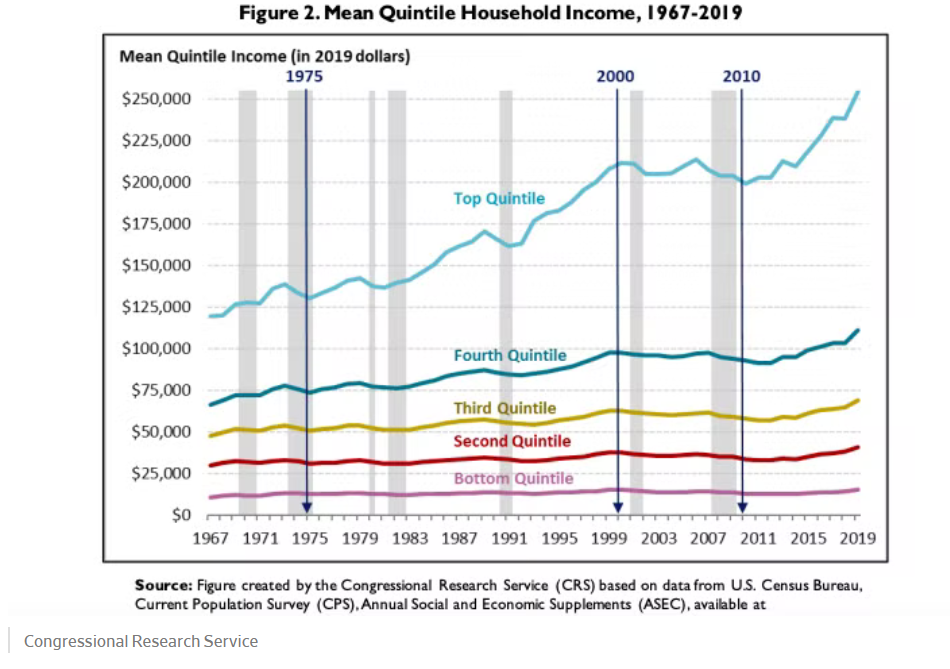
Per the Economic Policy Institute, wages in 2021 “rose fastest for the top 1% of earners (up 9.4%) and top 0.1% (up 18.5%), while those in the bottom 90% saw their real earnings fall 0.2% between 2020 and 2021.”

I Would Love to Have Enough Time and Money to Go to an Office to Work All Day — https://slate.com/business/2023/03/steven-rattner-new-york-times-remote-work-commute-child-care.html

The source article is about WFH vs RTO (work from home vs return to office) and is worth reading.

Kaiser Permanente $4.5B loss in 2022

Nonprofit hospital and health plan operator Kaiser Permanente on Friday posted a $4.5 billion net loss in 2022, compared to a $8.1 billion net gain in 2021, as the integrated system struggled with billions of dollars in investment losses, a rise in care volume and ongoing labor shortages.

Kaiser’s $4.5B loss in 2022 driven by labor expenses, investment losses — https://www.healthcaredive.com/news/kaiser-reports-13b-operating-loss-2022-driven-by-expenses-inflation/642595/

Yikes.