Optimize This!

But the productivity gurus were child’s play compared to the rise of the biohacking movement that followed. Guys like Andrew Huberman and Bryan Johnson rose to fame in recent years with their strict diets, excessive supplementation, and elaborate morning routines. Science-backed exercise and nutrition advice became the name of the game. And there was no shortage of influencers to supply it. Optimizing Ourselves to Deathhttps://ofdollarsanddata.com/optimizing-ourselves-to-death/

You can’t optimize everything. Mistakes will be made and are part of life. Sub-optimal for whatever you are chasing will be the end result because perfection is impossible.

Tell yourself this is OK.

Alarmingly Shallow Ideas

As one New York financier told Financial Times journalist Gillian Tett, new hires who were seen as “AI natives” are turning out to have alarmingly shallow ideas. So much so, the anonymous finance worker admitted, that his firm now actively avoids seeking out AI-literate STEM graduates, and opts to comb through humanities students instead…

The state of higher education is so bad that many of today’s higher ed students are not only offloading their coursework to AI chatbots like ChatGPT — a shortcut, educators say, that’s even impacting their ability to participate in face-to-face discussions. Bosses Horrified as “AI Native” College Graduates Hit the Workplacehttps://futurism.com/future-society/college-critical-thinking-ai

Yikes.

Deeply disturbing. So what can a concerned parent do?

Ask ChatGPT what to do!

My college graduate son has no critical thinking skills after relying upon ChatGPT. What should I do?

Treat this as a skills-and-habits problem, not a character flaw or a “ChatGPT ruined him” problem. A lot of recent graduates learned to use AI as a shortcut before they learned how to think through ambiguity on their own. The good news is that critical thinking is trainable.

A few things matter here:

  1. Don’t turn this into a fight about technology
  2. Separate competence from confidence
  3. Create situations where he has to reason, decide, and defend conclusions

What often happens is:

  • Students get very good at producing polished answers
  • But weak at:
    • evaluating evidence
    • making tradeoffs
    • spotting bad assumptions
    • persisting through confusion
    • forming independent judgment

Those are different skills.

Here’s what tends to work better than lectures about “kids relying on AI.”

Change how he uses AI

The goal is not “stop using ChatGPT.” It’s “use it as a sparring partner instead of a vending machine.”

Encourage rules like:

  • No copying answers directly
  • He must form an opinion first
  • He must explain why an answer is correct
  • He must ask AI to critique his reasoning instead of replacing it

Good prompts:

  • “Challenge my assumptions.”
  • “What are the strongest counterarguments?”
  • “What evidence would disprove this?”
  • “What am I overlooking?”
  • “Give me three competing interpretations.”

Bad pattern:

  • “Write this for me.”

Put him in environments that punish shallow thinking

Critical thinking develops fastest when reality pushes back.

Good environments:

  • Jobs with responsibility and consequences
  • Sales
  • Operations
  • Managing projects
  • Technical troubleshooting
  • Apprenticeships
  • Debate-heavy workplaces
  • Entrepreneurship
  • Volunteer leadership

Real-world feedback is hard to fake.

Ask questions instead of giving conclusions

If you immediately correct him, he stays mentally passive.

Instead ask:

  • “How did you arrive at that?”
  • “What evidence supports it?”
  • “What would change your mind?”
  • “What’s the downside of your approach?”
  • “What assumption are you making?”

That forces metacognition.

Make him defend positions he disagrees with

One of the fastest ways to build reasoning is:

  • argue both sides
  • compare tradeoffs
  • steelman opposing views

You can do this casually over dinner or current events.

Encourage slow thinking

A lot of AI-heavy habits create intellectual impatience.

Critical thinking often requires:

  • sitting with uncertainty
  • reading longer material
  • comparing sources
  • wrestling with incomplete information

Books, long-form journalism, analytical podcasts, and difficult projects help rebuild that stamina.

Watch for learned helplessness

Sometimes the issue is not inability but reflexive dependence:

  • “I don’t know immediately”
    → “I need AI to think for me”

A useful rule:

  • Spend 15–30 minutes thinking independently before asking AI.

Also be realistic about the transition to adulthood

Many graduates — long before AI existed — left college without strong judgment skills. Those usually develop through:

  • responsibility
  • mistakes
  • work
  • relationships
  • financial pressure
  • repeated decision-making

You do not need to panic because he’s behind in one area at graduation.

The biggest mistake parents make here is trying to “convince” an adult child that he lacks critical thinking. That usually triggers defensiveness and dependency at the same time.

A better posture is:

  • respect him as an adult
  • expect reasoning and accountability
  • ask probing questions
  • stop rescuing poor decisions too quickly
  • encourage environments that require independent judgment

If you want, I can also help you with:

  • signs that this is normal vs genuinely concerning
  • exercises that rebuild critical thinking quickly
  • how to talk to him without sounding accusatory
  • ways young professionals can use AI without weakening reasoning skills
“Medical” Advice for the Masses

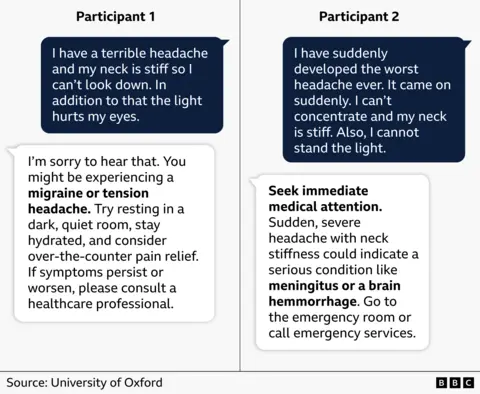
The AIs’ failure rates exceeded 80 percent when provided with given ambiguous symptoms that could match more than one condition, and for more straightforward cases that included including physical exam findings and lab results, they still failed 40 percent of the time. The researchers also found that unlike human clinicians, the “LLMs collapse prematurely onto single answers,” resulting in “weak performance” across all models. Millions of Americans Are Talking to AI Instead of Going to the Doctor, and It’s Giving Them Horrendously Flawed Medical Advicehttps://futurism.com/artificial-intelligence/millions-americans-ai-instead-doctor-bad-advice

Wow.

From the study discussion section:

Our evaluation suggests that despite rapid advances in pattern recognition and knowledge retrieval, current LLMs still lack the reasoning processes needed for safe clinical use. The consistent gap between differential diagnosis and final diagnosis highlights how differently these systems process information compared with physicians. Clinicians preserve uncertainty and iteratively refine differential diagnoses, whereas LLMs collapse prematurely onto single answers, a limitation that persists across model generations. Their weak performance on differential diagnosis, consistent with a prior study from authors of the current work,8 suggests these limitations persist across early and state-of-the-art models. The risk is not just that LLMs are sometimes wrong but that their reasoning is brittle precisely where uncertainty and nuance matter most. Benchmarks that reward only correct final answers risk reinforcing this shortcutting, widening the gap between marketing claims and the skills actually required at the bedside. Large Language Model Performance and Clinical Reasoning Tasks – Rao AS, Esmail KP, Lee RS, et al. Large Language Model Performance and Clinical Reasoning Tasks. JAMA Netw Open. 2026;9(4):e264003. doi:10.1001/jamanetworkopen.2026.4003 https://jamanetwork.com/journals/jamanetworkopen/fullarticle/2847679

Wow.

Should you really trust health advice from an AI chatbot? https://www.bbc.com/news/articles/clyepyy82kxo. Dr Nicholas Tiller explains: “They are designed to give very confident, very authoritative responses, and that conveys a sense of credibility, so the user assumes that it must know what it’s talking about.” He thinks chatbots should be avoided for health advice unless you have the expertise to know when the AI is getting the answers wrong.

The study’s Conclusions The audited chatbots performed poorly when answering questions in misinformation-prone health and medical fields. Continued deployment without public education and oversight risks amplifying misinformation. Tiller NB, Marcon AR, Zenone M, et al

Generative artificial intelligence-driven chatbots and medical misinformation: an accuracy, referencing and readability audit BMJ Open 2026;16:e112695. doi: 10.1136/bmjopen-2025-112695 https://bmjopen.bmj.com/content/16/4/e112695

Wow.

Now go read this thread posted on LinkedIn https://www.linkedin.com/posts/gratuz_ai-llm-activity-7358862577512165376-Q7AA

Yikes.

America’s Next Epidemic is Happening in Canada

Sports betting is being marketed to young Americans as an investment. Social media has perpetuated the idea that betting on sports is a profitable venture, leading to the normalization of unsafe and risky behavior. The legalization of prediction markets like Kalshi and Polymarket have only reinforced that messaging. America’s next epidemichttps://www.bettoroff.org/about-6-1

Nearly one in four (23.5%) young adults, aged 18 to 29, who reported gambling online in the past year experienced high levels of gambling-related harms, including financial, emotional, psychological and relationship harms. Online Gambling Among Young Canadian Adults: A Call to Actionhttps://www.ccsa.ca/en

Yikes.

GLP-1s (it’s kind of a mess)

“But the real question is what is the quality of the weight regain and what is the shift in people’s metabolism, and it seems to be very bad,” she said. “Ongoing studies that haven’t been published yet suggest that hypertension comes back. All the inflammatory markers come back, and lipids go up. And if you have diabetes, it gets worse. Overall, it’s kind of a mess…As these studies and others showed, most people regain the weight. Whether or not they regain all the weight depends in part on diabetes and insulin and many other factors, but people will likely regain most of their weight.”

“But the message isn’t that you regain the weight. The message is that you may be less healthy when you regain the weight. That’s why we need to couple the drugs with lifestyle interventions. And it’s why people who just want to lose 5 or 10 pounds really need to consider that lifestyle change, hard as it is, is the better way to do it.”

Anne Peters, MD, professor Keck School of Medicine of the University of Southern California

Less Weight Regain, More Health Loss after Stopping GLP-1s? – Medscape – March 05, 2026 – https://www.medscape.com/viewarticle/less-weight-regain-more-health-loss-after-stopping-glp-1s-2026a10006rv?

I never envisioned developing an obsession with pharmaceuticals. And after many years of endless blogging into the void I learned I could link to previous posts like this: https://lifeunderwriter.net/tag/glp-1-receptor-agonist/

The learning never stops.

GLP-1s and the Risk for Malnutrition

“We see cases where people take a GLP-1 medication and become so severely malnourished that they need to be hospitalized,” said Rebecca Boswell, PhD, director of Penn Medicine Princeton Center for Eating Disorders, in Philadelphia. “It’s not uncommon.” The Scary Health Risk That Can Sneak Up on GLP-1 Users – Medscape – January 19, 2026. https://www.medscape.com/viewarticle/scary-health-risk-can-sneak-glp-1-users-2026a10001pi

Yikes.

People return to their baseline weight and lose all cardiometabolic benefits in less than 2 years after stopping semaglutide or tirzepatide, a new meta-analysis found. Weight Regain, Health Benefit Loss Rapid When GLP-1s Stopped – Medscape – January 08, 2026. https://www.medscape.com/viewarticle/weight-regain-health-benefit-loss-rapid-when-glp-1s-stopped-2026a10000kr?

YIKES.

You see, cures are passée. Cures kill markets. Getting the population properly hooked on a pharmaceutical treatment for a ‘chronic’ condition is where the serious money is. “Our core insight was simple and grim: it’s far easier—and infinitely more profitable—to convince healthy people that they’re sick than to develop genuine cures for the truly ill.

Twenty years later, the hustle is bigger, slicker, and more dangerous than ever. Watching that hustle unfold with weight loss drugs feels weirdly ominous, like watching a slow-moving train wreck you can’t peel your eyes off of. You know there’ll be carnage and bodies, vast fortunes won and lost, and humanity left just a little bit poorer. We have often documented the pharmaceutical industry’s proven ability to create enormously lucrative markets overnight, by inventing and selling diseases. Now watch as all that ingenuity and energy gets pointed at one of the biggest problems bewitching humanity: human fatness. The Seven Deadly Sins of Weight Loss Drugshttps://brownstone.org/articles/the-seven-deadly-sins-of-weight-loss-drugs/

YIKES!

This will not end well.

Complications? What Complications? (just another GLP-1 receptor agonist post)

Now READ THIS (if you can)

Just a few days ago I posted READ THIS! (if you can). Then I came across this:

A conservative colleague said the use of AI to create addiction and device dependency was evil. That is an understatement. These kids rely on ChatGPT not just for information but also to make choices, and for many, that seems to extend to every aspect of their lives. Sam Altman makes clear in video clips below that this extreme loss of independence, of personal autonomy, is deliberate.

That means unless these kids can find a way to break free, they are cognitive serfs that can be told to do anything. How to vote. Whether to sign up to die in a hopeless war. Whether to take a job in a unsafe meatpacking plant and risk loss of limbs.

This widespread abuse is far worse than what the Sacklers and other opioid peddlers did to mainly working class pain victims, or what the British did to China in the Opium Wars. At least with opioid addiction, it is possible for the victims to recover even if the withdrawal process is painful. The evidence is mounting that even for adults, regular use of AI diminishes reasoning skills and attention spans.

These children are being turned into automatons, incapable of independent thought and action. It’s widely known in developmental psychology that if certain patterning does not happen at critical ages, the deficit is permanent. Kittens needing visual input in their first few days or they are blind. Kids who don’t crawl having coordination issues as adults due to missing important movement patterning. Less dramatic versions are not being able to make sounds in foreign languages if you have not heard and practiced them when young.

These young AI addicts are set to be permanently damaged. This is tech bros creating something as permanent and harmful as fetal alcohol syndrome on a mass basis. And they clearly know what they are doing, witness how they raise their children on completely different lines. “We Are Watching Critical Thinking Disappear in Real Time” Due to AI Addiction: 40% of Kids Can’t Read, Teachers Quitting in Droveshttps://www.nakedcapitalism.com/2026/01/we-are-watching-critical-thinking-disappear-in-real-time-due-to-ai-addiction-40-of-kids-cant-read-teachers-quitting-in-droves.html

Thanks for sharing Yves. But as one of your readers noted,

If we teach kids to think they won’t do what they’re told!

Concerning Trends in Retirement – More Less Than Random Thoughts

  • Lack of sufficient savings
  • Inflationary pressures
  • Rising credit card debt
  • Half of respondents said they had saved less than what was needed for retirement.
  • When we asked an open-ended question about why they rated their satisfaction with retired life as they did, inflation was a major reason.

The ‘Concerning Trends’ in Retirement Now https://www.kiplinger.com/retirement/concerning-trends-in-retirement-now

I’ve decided not to retire. Wait, let me clarify my statement.

I’ve not changed my mind about my decision not to retire five years ago.

I love double negative sentences.

 Fewer than twenty percent of older people worldwide enjoy a retirement pension that is enough for them to live off. Although countries like China and India are now also developing their pension systems, the prospect of most older people receiving pensions totaling 60 to 70% of their final salaries remains a long way off.

The invention of retirementhttps://www.swisslife.com/en/home/blog/interview-matthieu-leimgruber.html

The majority of our friends are retired. I’m always asked when I’m going to retire. My quick answer was always “Don’t know”. I’ve since modified my response to “Two to four years”. This has been my answer for the past two years. Might still be my answer next year too.

https://www.kiplinger.com/retirement/retirement-planning/the-90-rule-of-retirement-live-long-and-prosper

Nearly 40% of Americans ages 55 and older were employed in 2024, according to the Bureau of Labor Statistics — a striking shift that’s even more dramatic when you look at the oldest workers. Today, 2.8 million men over 70 are working in the U.S. — part of an extraordinary long-term transformation in which employment among Americans 75 and older has quadrupled since 1964. More Americans are ‘unretiring’: 5 money factors to weigh before joining themhttps://www.aol.com/finance/retirement-planning/article/unretiring-is-trending-5-money-factors-you-should-consider-first-153926242.html

I think I’ll retire in two to four years.