Think Again About Outsourcing Your Thinking 2.0 (if you can)

Michael Gerlich, head of the Centre for Strategic Corporate Foresight and Sustainability at SBS Swiss Business School, began studying the impact of generative AI on critical thinking because he noticed the quality of classroom discussions decline. Sometimes he’d set his students a group exercise, and rather than talk to one another they continued to sit in silence, consulting their laptops. He spoke to other lecturers, who had noticed something similar. Gerlich recently conducted a study, involving 666 people of various ages, and found those who used AI more frequently scored lower on critical thinking. (As he notes, to date his work only provides evidence for a correlation between the two: it’s possible that people with lower critical thinking abilities are more likely to trust AI, for example.) Like many researchers, Gerlich believes that, used in the right way, AI can make us cleverer and more creative – but the way most people use it produces bland, unimaginative, factually questionable work. Are we living in a golden age of stupidity?https://www.theguardian.com/technology/2025/oct/18/are-we-living-in-a-golden-age-of-stupidity-technology

Yikes.

Scary Charts 12.01.24

Office CMBS Delinquency Rate Spikes to 10.4%, Just Below Worst of Financial Crisis Meltdown. Fastest 2-Year Spike Everhttps://wolfstreet.com/2024/11/30/office-cmbs-delinquency-rate-spikes-to-10-4-just-below-worst-of-financial-crisis-cre-meltdown-fastest-2-year-spike-ever/

Yikes.

The world’s worst countries for binge-drinking https://www.statista.com/chart/5357/the-worlds-worst-countries-for-binge-drinking/

Yikes.

Which Lifestyle Changes Can Make You Live Longer?https://www.statista.com/chart/31766/reduction-in-the-risk-of-premature-death-after-age-40-when-sticking-to-the-lifestyle-factors/

Yikes.

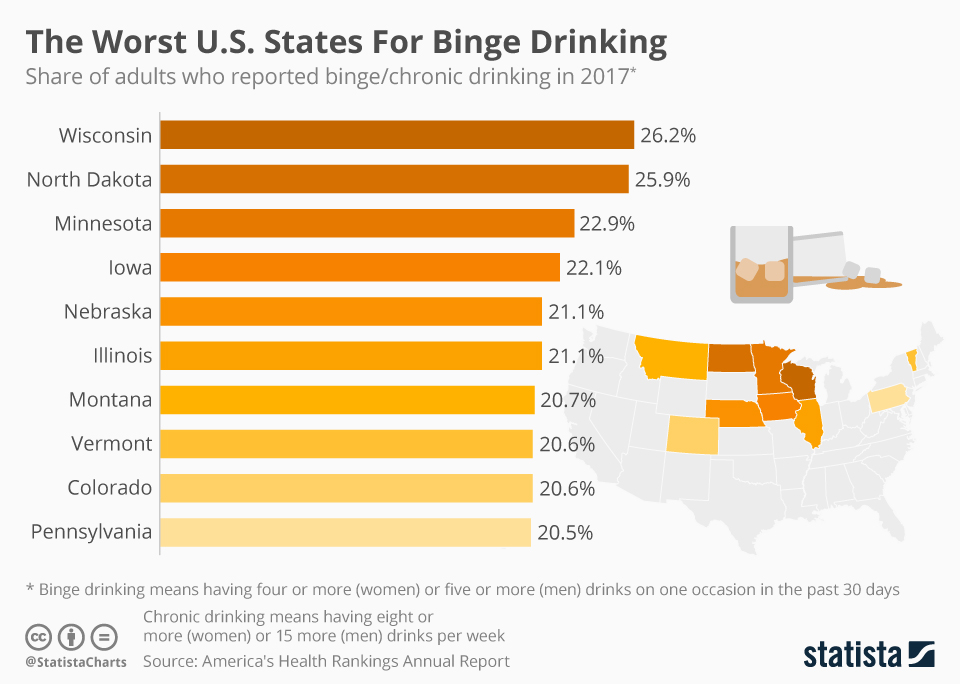
The Worst U.S. States For Binge Drinkinghttps://www.statista.com/chart/12345/the-worst-us-states-for-binge-drinking/

Yikes. But a great day for Scary Charts!

A Broad Range of Flexible Retirement Arrangements

A Phased Retirement Program

Emory University is one of the few employers that offers a phased retirement program. Here’s a breakdown of how its program works:

  • The phased retirement commitment must be for a defined duration, spanning a minimum of six months to a maximum of three years.
  • Throughout this period, you’ll adjust your work hours, reducing them by anywhere from 10% to 50%, while maintaining a minimum of 20 hours per week.
  • By participating, you agree to retire at the end of the specified time frame.
  • Your pay will be adjusted to reflect the reduced workload during phased retirement.

Source: Phased Retirement: What Does It Mean And How Does It Work? — https://www.thepennyhoarder.com/retirement/phased-retirement/

Sign me up (when I’m ready).

Genius Marketing Stuff

I post things online because I find them interesting. Sometimes I post things online as a part of my collection of Electronic Sticky Notes, a reminder to myself to try a new recipe like https://spainonafork.com/my-mothers-lentil-stew-with-sweet-potatoes-recipe or as in this case a reminder to go back and listen to the entire interview when I have time. The first five minutes of this video taught me something I never knew about product positioning. The interview is over an hour long so I want to watch and listen in bite size chunks.

The Best Retirement Letter Ever

My favorite excerpt from the letter:

Let’s be honest, some people in academia are horrible, arrogant, selfish and narcissistic. And no matter how much the people at the top say they deal with bad behaviour, the nasty folk do have an annoying habit of getting promoted. The way in which academia selects and rewards particular skill sets produces an over-concentration of people who are low on empathy. I’ve met a lot of those ‘special’ colleagues over the years (no names mentioned obviously). I will not miss them one jot. They create a toxic working environment , dominate the discourse, ride roughshod over the rules, and cause a great deal of harm to others and get away scot-free. They’ve done me significant mental damage, but I can now happily forget them and move on with life.

My recommendation to anyone starting out in academia is stand your ground, challenge these energy vampires and politely make it clear that you don’t want to play their stupid toxic games. They really don’t have the power that they want you to believe they have, even though the system tends to promote them to roles that are beyond their emotional competence to fulfill. Pity them for the lack of other things to do with their lives. And, remember that 98% of what we do as academics is of no importance at all out there in the real world, so when a self-entitled colleague insists that their work on their favourite gene is earth-shattering; more important than anything you could ever do; and a good reason for their career to be advanced faster than yours; just smile and ignore them. Do your own thing, at your own pace. Have a life outside the university and remember that it’s just a job.

https://journalofhumannutritionanddieteticseditor.wordpress.com/2023/11/27/thats-it/

Scary Charts – 08.19.23 (just a few loosely connected stories)

Every employee probably knows the difference between productive work and what a new report by software company Slack calls performative work – merely looking but not actually being busy. The data in the release shows that workers in some Asian countries – namely India, Japan and Singapore – seem to spend more time appearing to be working than employees in other places.

While Indians spent 43 percent of time in performative work, that number was 37 and 36 percent in Japan and Singapore, respectively. For comparison, U.S. respondents and those from Germany said they only appeared busy for 28 and 29 percent of the time. One outlier in Asia was South Korea, also with a low of 28 percent of work hours spent in “pretend mode”.

Who’s Only Looking Busy at Work? — https://www.statista.com/chart/30591/performative-productive-work/

And now we have a new productivity mantra…

Now that you’ve taken a break and worked on the root causes of your problem, it’s time to embrace a whole new mindset around work, money, and success. This is going to sound radical, but I want you to give yourself permission to achieve less.

The latest productivity mantra that we all need: ‘Achieve less’ — https://fortune.com/2023/08/16/latest-productivity-mantra-achieve-less-careers-mental-health-stress/

But The Boss may not agree with this new mantra…

While the debate over productivity in a remote office setting continues, one Australian woman is fighting back against her employer after being accused of not typing enough while working remotely.

Remote Employee Fired for ‘Low Keystroke Activity’ During Working Hours After 18 Years of Employment — https://www.entrepreneur.com/business-news/remote-worker-fired-for-low-keystroke-activity/457578

There’s a new description of the ideal job…

A lazy-girl job is any job that can be done from home within the standard 9-to-5 and has undemanding tasks and easygoing managers.. the jobs pay enough money ($60,000 to $80,000) for a young adult to live off but not feel pressure to work above their contracted hours.”

The term was coined in May 2023 by Gabrielle Judge, a 26-year-old career influencer. Judge told The Wall Street Journal that she was aware the word lazy would have a negative connotation, but she wanted to spark a conversation. “Lazy-girl jobs aren’t roles where you can slack off,” she said, “but career paths where your work-life balance should feel so awesome that you almost feel like you’re being lazy.”

Lazy-Girl Jobs Are Trending with Gen Z—Here’s How to Find One — https://www.rd.com/article/lazy-girl-jobs/

“Lazy-girl job” is one of the worse uses of the English language I’ve encountered because the use of the word “lazy” is bad. Really bad. The definition of any job done from home with undemanding tasks and easygoing managers is also bad. Really, really bad. A friend once told me the key to his success. With most jobs and careers the majority of us will be average performers (think bell curve). All you need to do to put yourself on the path to success is to be a little better than average. This lazy girl job thing is cultural acceptance of average or worse than average.

Working hard is not a guarantee of success. But not working hard is a guarantee of failure.