This will cure the infection…permanently.
Medical News
Can Postchallenge Glucose, Fasting Glucose and A1c Predict T2DM?
RESULTS Incidence of diabetes during the follow-up was 17.1%. Two of three of the cases of newly diagnosed diabetes were predicted by a raise in ≥1 of the markers. Elevated A1C, IGT, or IFG preceded diabetes in 32.8, 40.6, and 21.9%, respectively. CVD was predicted by an intermediate and diabetic range of 2-h glucose but only by diabetic A1C levels in women.
CONCLUSIONS A1C predicted 10-year risk of type 2 diabetes at a range of A1C 5.7–6.4% but CVD only in women at A1C ≥6.5%.
Binge Drinking and HTN
Binge Drinking, Hypertension a Deadly Combo
The report is published in the Aug. 19 online edition of Stroke.
For the study, Ohrr’s team collected data on 6,100 men and women living in a farming community. The researchers followed these people for almost 21 years.
The participants were divided into four groups: nondrinkers, non-binge drinkers, moderate binge drinkers (defined as having six or more drinks on one occasion), and heavy binge drinkers (defined as having 12 or more drinks on one occasion).
Among the men with high blood pressure, 17.8 percent were moderate binge drinkers, and 3.9 percent were heavy binge drinkers (a percentage similar to the men with normal blood pressure). As for the women, there were too few who said they were binge drinkers to be able to draw conclusions, the researchers said.
Ohrr’s group found that compared with nondrinkers, the risk of stroke among men with high blood pressure was increased threefold. If these men drank six or more drinks at one time, their risk for stroke increased fourfold, and with 12 drinks or more, the risk rose 12-fold.
Black Rice Coming Soon?
Black Rice May Be Cheap Source of Antioxidants
I admit it. I didn’t know black rice even existed.
Risks and Benefits of ARBs and ACEis
There are three links in this article to the original comparative effectiveness review, a clinician guide, and a consumer guide.
Good training stuff for your newbies.
HTN Treatment, J-Curve Effect and Stroke
Lower T2DM Risk With Veggies
Medical News: Green Veggies Cut Diabetes Risk – in Endocrinology, Diabetes from MedPage Today
Increasing the daily intake of green leafy vegetables could significantly reduce the risk of type 2 diabetes, a British meta-analysis found.
Consuming 1.35 servings of these vegetables per day was associated with a 14% reduction in risk compared with consuming only 0.2 servings (HR 0.86, 95% CI 0.77 to 0.96, P=0.01), according to Patrice Carter, a PhD student at the University of Leicester, and colleagues.
Ethnic Group Differences in SLE
Medical News: CV Events Early in Minorities With SLE – in Rheumatology, Lupus from MedPage Today
Again a reminder for our readers: we do not use ethnic backgrounds when classifying mortality risk.
But do read this article and tuck it away in your memory bank.
GoLytely No More…(maybe)
Medical News: CT Colonography Boosts High-Risk Yield – in Oncology, Colon Cancer from MedPage Today
CT colonography identified almost 80% more high-risk lesions compared with optical screening by adding extracolonic findings, a review of more than 2,000 cases showed.
Scary Chart of the Day – 08.19.10
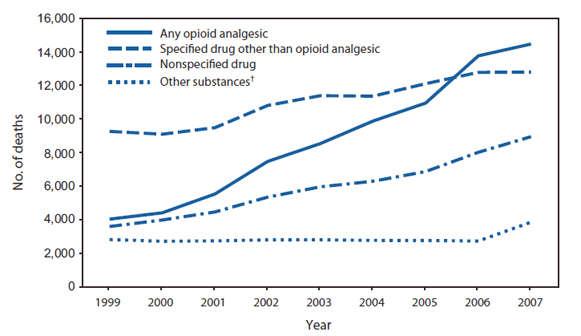
Pretty ugly looking trend
From 1999 to 2007, the number of U.S. poisoning deaths involving any opioid analgesic (e.g., oxycodone, methadone, or hydrocodone) more than tripled, from 4,041 to 14,459, or 36% of the 40,059 total poisoning deaths in 2007. In 1999, opioid analgesics were involved in 20% of the 19,741 poisoning deaths. During 1999–2007, the number of poisoning deaths involving specified drugs other than opioid analgesics increased from 9,262 to 12,790, and the number involving nonspecified drugs increased from 3,608 to 8,947.


You must be logged in to post a comment.