Peptides Explained

Your Local Epidemiologist (YLE) is founded and operated by Dr. Katelyn Jetelina, MPH PhD—an epidemiologist, wife, and mom of two little girls.

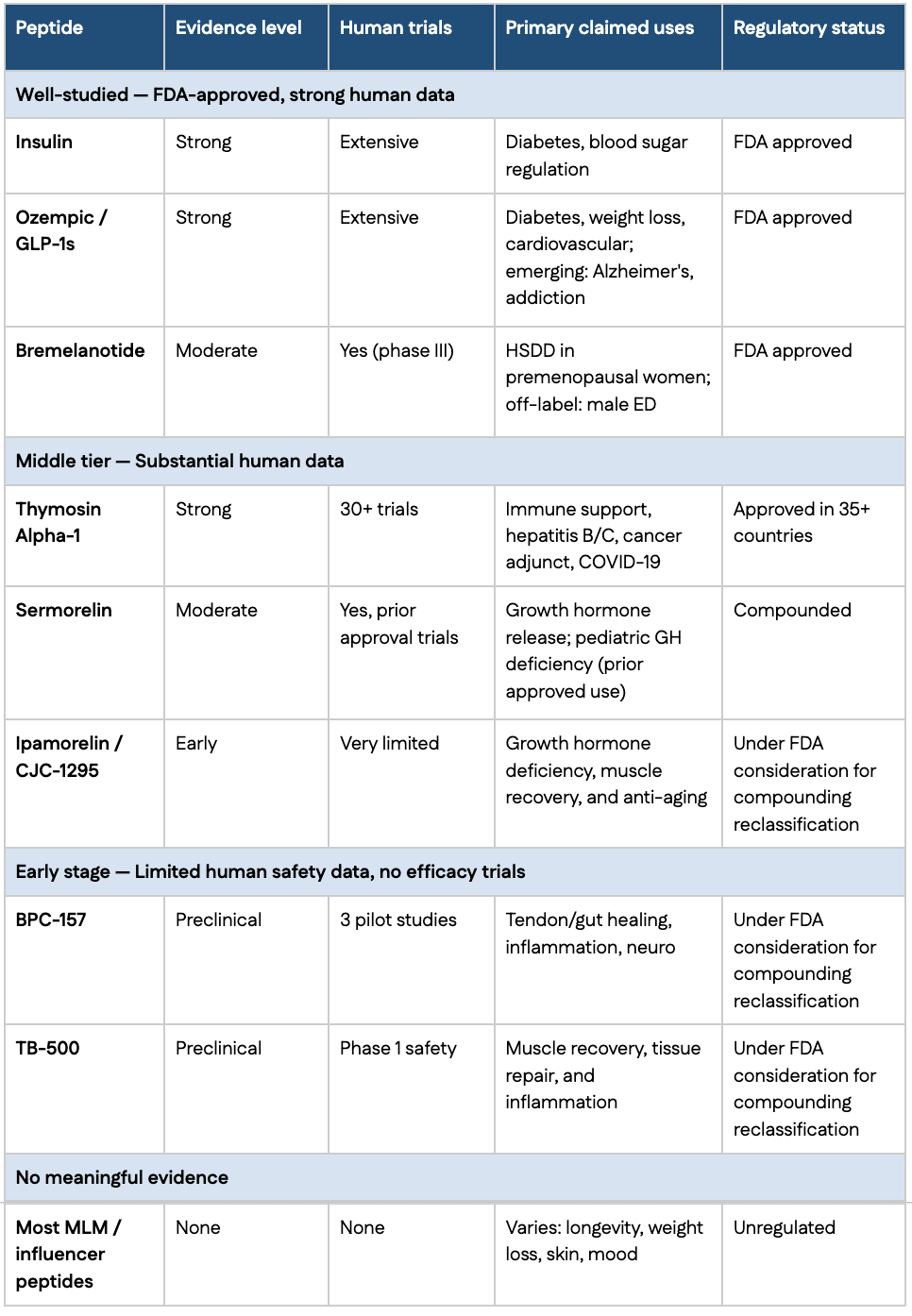
The people currently using these compounds are, in effect, running an uncontrolled experiment on themselves. Peptides, explained: Answers to your top questionshttps://yourlocalepidemiologist.substack.com/p/peptides-explained-answers-to-your?

An uncontrolled experiment on themselves.

Yikes.

Yogurt and CSBMs (Complete Spontaneous Bowel Movements)

In a randomized controlled trial, the probiotic Bifidobacterium animalis subsp. lactis—used in many probiotic products, including Dannon’s Activia yogurts—did nothing to improve bowel health in people with constipation, according to data from a randomized triple-blind placebo-controlled clinical trial published Wednesday in JAMA Network Open. Popular gut probiotic completely craps out in randomized controlled trialhttps://arstechnica.com/health/2024/10/popular-gut-probiotic-completely-craps-out-in-randomized-controlled-trial/

Here’s a lesson in the need to read the original study. I found this statement from the researchers:

The 2 study groups were very similar with respect to baseline characteristics. The participants had a low dietary fiber intake (9 g/d), which is in line with observations by others (11.7 g/d) and well below recommended levels (25.0 g/d).14 This may be a contributing factor to the bowel movement problems experienced by the participants. Eight-Week Supplementation With Bifidobacterium lactis HN019 and Functional Constipationhttps://jamanetwork.com/journals/jamanetworkopen/fullarticle/2824333

IMO the low dietary fiber intake in this shitting study leads me to think the entire study results were…crappy.

BTW yesterday I had two CSBMs. That’s what I get for eating a bowl of black eye peas http://garyskitchen.net/2022/01/16/vegetarian-badass-black-eyed-peas-2022/ and a baked sweet potato in the same day.

SIDD, SIRD, MOD, AND MARD – DM2 Subgroups

Type 2 diabetes (T2D) was recently reclassified into severe insulin-deficient diabetes (SIDD), severe insulin-resistant diabetes (SIRD), mild obesity-related diabetes (MOD), and mild age-related diabetes (MARD), which have different risk of complications. We explored whether DNA methylation differs between these subgroups and whether subgroup-unique methylation risk scores (MRSs) predict diabetic complications.

Novel Subgroups of Type 2 Diabetes Display Different Epigenetic Patterns That Associate With Future Diabetic Complications — https://doi.org/10.2337/dc21-2489

More acronyms!