For optimal health, the waist should measure less than 40 inches for men and 35 inches for women.
Obesity
Across The Globe Our Diets Are Making Us Sicker – NPR
The good news: fewer hungry people around the world. The bad news: Increased consumption of processed foods is pushing up global rates of overweight and obesity.
Source: Across The Globe, Our Diets Are Making Us Sicker, Report Finds : The Salt : NPR
Type 2 Diabetes Remission Rates After Laparoscopic Gastric Bypass and Gastric Banding: Results of the Longitudinal Assessment of Bariatric Surgery Study | Diabetes Care
CONCLUSIONS – Diabetes remission up to 3 years after RYGBP and LAGB was proportionally higher with increasing postsurgical weight loss. However, the nearly twofold greater weight loss–adjusted likelihood of diabetes remission in subjects undergoing RYGBP than LAGB suggests unique mechanisms contributing to improved glucose metabolism beyond weight loss after RYGBP.
Adverse Events Common After Roux-en-Y Gastric Bypass | Medpage Today
Majority of patients reported symptoms, but also improved well-being
Source: Adverse Events Common After Roux-en-Y Gastric Bypass | Medpage Today
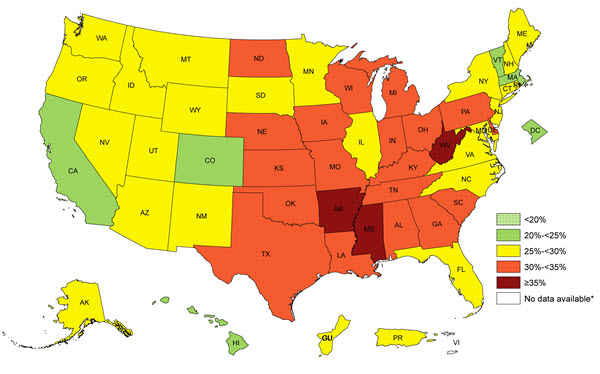
Obesity Prevalence Maps 2014 – CDC
Weight Loss May Be Fleeting With Lap Sleeve Gastrectomy | Medpage Today
Weight Loss May Be Fleeting With Lap Sleeve Gastrectomy | Medpage Today.
Cost of Gastric Sleeve Surgery – 2015 Price Survey.
Two links presented without the usual snide comments.
Obese Patients Unlikely to Return to Normal Weight | Medpage Today
Of those who did achieve 5% weight loss, 53% regained the weight within 2 years and 78% had regained it within 5 years, according to the study.
via Obese Patients Unlikely to Return to Normal Weight | Medpage Today.
Daily Weigh-Ins Keep Dieters on Track – MedicineNet
Daily Weigh-Ins Keep Dieters on Track – MedicineNet.
Journal of Obesity — An Open Access Journal.
A two-year Cornell University study found that tracking the results of daily weight checks on a chart helped people lose weight and keep it off.
Sometimes I forget but I try to weigh myself every day. I keep a log on a Google Sheet. It is a daily reminder of whether I’ve been good or bad. Bad behavior is not hard to recognize. Too many restaurant meals, too much animal protein, ice cream, pizza, beer, etc. Good behavior is harder but achievable. Grilled chicken on mixed greens, choosing the smaller burrito rather than the giant version, more plant based meals, less beer.
Periodic weigh-in’s work. It’s part of the routine ever since losing over 200 pounds. Boom.
American Institute for Cancer Research (AICR): CRU: Report: Obesity and 3 Daily Alcoholic Drinks Increase Liver Cancer Risk
The report also reaffirms the clear link between alcohol consumption and liver cancer, and for the first time quantifies the amount at which risk for liver cancer rises. “We now have a little more precision on the alcohol-liver cancer link,” said Hursting. “Getting above three drinks a day seems to dramatically impact the tumorigenic process and increase risk.”
More coffee! Less beer!
Alcoholism after gastric bypass: Is it in your mind or gut? » Scienceline
In 2012, a large study published in the Journal of the American Medical Association reported that the percentage of patients abusing alcohol increased from 7.6 percent before surgery to 9.6 percent two years after surgery — that’s potentially an additional 2,000 alcoholics each year in the United States. Since then, a growing body of evidence has corroborated these findings. The longest-running study suggests the effect persists even a decade after surgery.
via Alcoholism after gastric bypass: Is it in your mind or gut? » Scienceline.
 lifeunderwriter.net
You must be logged in to post a comment.