My Fat Cells Have a Memory

Even after drastic weight loss, the body’s fat cells carry the ‘memory’ of obesity, research1 shows — a finding that might help to explain why it can be hard to stay trim after a weight-loss programme.

This memory arises because the experience of obesity leads to changes in the epigenome — a set of chemical tags that can be added to or removed from cells’ DNA and proteins that help to dial gene activity up or down. For fat cells, the shift in gene activity seems to render them incapable of their normal function. This impairment, as well as the changes in gene activity, can linger long after weight has dropped to healthy levels, a study published today in Nature reports.

Fat cells have a ‘memory’ of obesity — hinting at why it’s hard to keep weight off – www.nature.com/articles/d41586-024-03614-9

For the geeks, here’s a link to the original study – https://doi.org/10.1038/s41586-024-08165-7

Even without this study I already knew my fat cells have a memory because they are constantly trying to make me gain weight.

GLP-1 – Compounded or Brand-Name?

Caroline Apovian, MD, co-director of the Center for Weight Management and Wellness at Brigham and Women’s Hospital and professor of medicine at Harvard Medical School, Boston.

“Doctors who are obesity medicine specialists like myself in academic centers do not prescribe compounded semaglutide or tirzepatide,” she said.

Many of the compounded prescriptions, she said, come from telehealth virtual–only companies interested in profits.

GLP-1 Prescribing Decisions: Compounded or Brand-Name? – Medscape – November 14, 2024https://www.medscape.com/viewarticle/glp-1-prescribing-decisions-compounded-or-brand-name-2024a1000krd?

To be clear, all of my GLP-1 posts are not anti-pharma. If you can afford these medications and they work for you on your weight loss journey that’s great. Just be aware of the possible side effects and the fact these medications are for life. You will regain all that you’ve lost if you stop taking the drug.

Here’s the link to Complications? What Complications? (just another GLP-1 receptor agonist post)

Dietary Approaches to Obesity Treatment

There is no single diet that can universally fit everyone for weight loss benefit.

Parmar RM, Can AS. Dietary Approaches to Obesity Treatment. [Updated 2023 Mar 11]. In: StatPearls [Internet]. Treasure Island (FL): StatPearls Publishing; 2024 Jan-. Available from: https://www.ncbi.nlm.nih.gov/books/NBK574576/https://www.ncbi.nlm.nih.gov/books/NBK574576/

Words of Wisdom from a former 370 pound human.

What worked for me may not work for you.

Keep searching for what works for you.

Find the differences that make a difference.

Good luck.

Sensational yet Obvious! Time Restricted Eating Works!

Photo by Tim Mossholder on Pexels.com

In a randomized-controlled trial, people who followed a time-restricted diet lost about the same amount of weight as people who ate the same diet without the time restriction, according to a study published Friday in Annals of Internal Medicine…nutrition experts Krista Varady and Vanessa Oddo of the University of Illinois wrote in an editorial accompanying the study. “Using a controlled feeding design, Maruthur and colleagues show that TRE is effective for weight loss, simply because it helps people eat less.” It’s cutting calories—not intermittent fasting—that drops weight — https://arstechnica.com/science/2024/04/its-cutting-calories-not-intermittent-fasting-that-drops-weight-study-suggests/

You learn something old every day.

Complications? What Complications? (just another GLP-1 receptor agonist post)

Adverse events are common in those using GLP-1 agonists, but the vast majority of these are minor. GI adverse effects are most common (20-70% of patients). Greater rate of GI effects with higher doses.

  • Most common problems: nausea (overall most common), vomiting, and diarrhea. Others included abdominal pain, dyspepsia, and constipation.
  • Symptoms are typically more severe within the first four weeks of therapy or with sudden escalation of therapy and tend to decrease over time.
  • Thought to be due to reduced gastric emptying and activation of centers involved in appetite regulation and nausea.
  • Severe diarrhea and vomiting may lead to volume loss, dehydration, and hypotension (not common).
  • There is an association with pancreatitis. GLP-1 agonists may stimulate pancreatic islet beta cells and exocrine duct cells leading to overgrowth and smaller duct size, which increase the pancreatic weight and risk of ductal occlusion.
    • Retrospective study published in 2022 of 81,752 adverse events associated with GLP-1 agonist therapy found an increased risk of pancreatitis, particularly with liraglutide (ROR 32.67; 95% CI 29.44-36.25). 2023 observational study found increased risk of pancreatitis (adjusted HR of 9.09, 95% CI 1.25-66).
  • Other GI issues include gallbladder and biliary tract disease (usually after 26 weeks of therapy and included cholelithiasis, cholecystitis, cholangitis), elevated LFTs, hepatitis, liver injury.
emDOCs Podcast – Episode 94: GLP-1 Agonist Complications — https://www.emdocs.net/?s=glp-1

But I Lost 25 pounds!

New Wonder Drug! Treat Diabetes, Obesity AND Addiction – (yup another GLP-1 receptor agonist post)

Why People Stop Using Drugs Like Ozempic – Wired (yet another GLP-1 receptor agonist post)

What the Scientists Who Pioneered Weight-Loss Drugs Want You to Know – Wired Magazine

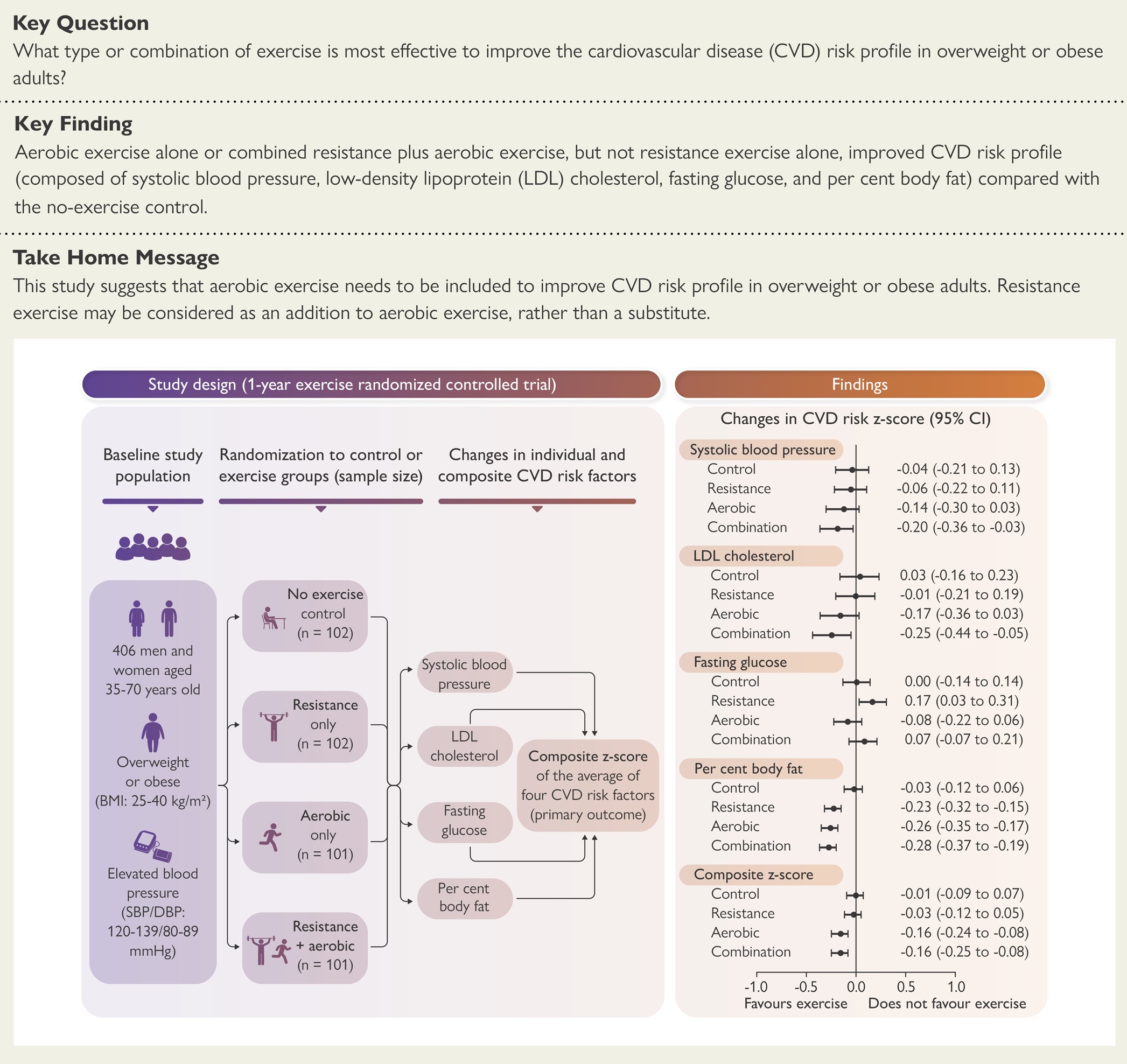
Aerobic + Resistance (do both)

Conclusions: In adults with overweight or obesity, aerobic exercise alone or combined resistance plus aerobic exercise, but not resistance exercise alone, improved composite CVD risk profile compared with the control.

Aerobic, resistance, or combined exercise training and cardiovascular risk profile in overweight or obese adults: the CardioRACE trial – European Heart Journal https://doi.org/10.1093/eurheartj/ehad827

Effects of 1-year resistance, aerobic, or combined exercise training on cardiovascular disease (CVD) risk profile: the CardioRACE trial. Aerobic exercise alone or combined aerobic plus resistance exercise, but not resistance exercise alone, improved CVD risk profile (composite Z-score) compared with no-exercise control (Z-score values below 0 indicate favourable changes in CVD risk factors). BMI, body mass index; CI, confidence interval; CVD, cardiovascular disease; DBP, diastolic blood pressure; SBP, systolic blood pressure.

Cannabis and Arrhythmia Risk, Stroke and Race, Why Weight Loss Drugs Stop Working

Within 180 days, 42 medical cannabis users and 107 control participants developed arrhythmia, most commonly atrial fibrillation/flutter. Medical cannabis users had a slightly elevated risk for new-onset arrhythmia compared with nonusers (180-day absolute risk, 0.8% vs 0.4%). The 180-day risk ratio with cannabis use was 2.07 (95% CI, 1.34-2.80), and the 1-year risk ratio was 1.36 (95% CI, 1.00-1.73). Adults with cancer or cardiometabolic disease had the highest risk for arrhythmia with cannabis use (180-day absolute risk difference, 1.1% and 0.8%).

Medical Cannabis for Chronic Pain Tied to Arrhythmia Risk – Medscape – January 12, 2024 — https://www.medscape.com/viewarticle/medical-cannabis-chronic-pain-tied-arrhythmia-risk

The overall incidence of stroke and ischemic stroke (IS) decreased among both White and Black people over the past two decades, results of an updated analysis of stroke trends in a representative US population showed.

However, the study showed persistent racial disparities, with incident stroke rates 50%-80% higher in Black people than in their White counterparts. Incident stroke also occurred at an earlier age in Black patients than in White patients (mean age, 62 years vs 71 years, respectively).

The findings were published online on January 10, 2024, in Neurology.

New Data on Stroke Incidence Rates by Race – Medscape – January 12, 2024 — https://www.medscape.com/viewarticle/new-data-stroke-incidence-rates-race

And my favorite Saturday morning medical update…

But studies also have shown that once people stop taking these drugs — either by choice, because of shortage, or lack of access — they regain most, if not all, the weight they lost. Arguably more frustrating is the fact that those who continue on the drug eventually reach a plateau, at which point, the body seemingly stubbornly refuses to lose more weight. Essentially, it stabilizes at its set point, said Fatima Cody Stanford, MD, MPH, MPA, MBA, an obesity medicine physician at Massachusetts General Hospital and associate professor at Harvard Medical School in Boston.

Every study of weight loss drugs done over the past 40 years or so shows a plateau, Stanford told Medscape Medical News. “If you look at the phentermine/topiramate studies, there’s a plateau. If you look at the bupropion/naltrexone studies, there’s a plateau. Or if we look at bariatric surgery, there’s a plateau. And it’s the same for the newer GLP-1 drugs.”

The reason? “It really depends on where the body gets to,” Stanford said. “The body knows what it needs to do to maintain itself, and the brain knows where it’s supposed to be. And when you lose weight and reach what you feel is a lower set point, the body resists.”When the body goes below its set point, the hunger hormone ghrelin, which is housed in the brain, gets reactivated and gradually starts to reemerge, she explained. GLP-1, which is housed in the distal portion of the small intestine and in the colon, also starts to reemerge over time.

Why Do GLP-1 Drugs Stop Working, and What to Do About It? – Medscape – January 12, 2024 — https://www.medscape.com/viewarticle/why-do-glp-1-drugs-stop-working-and-what-do-about-it

That’s it for this Saturday. Time to go to the Y and read a book later.

But I Lost 25 pounds!

The recent analysis in JAMA focused on serious stomach disorders and GLP-1 agonists.

Researchers in Canada compared safety outcomes for GLP-1 agonists and bupropion-naltrexone, an older class of weight-loss medication. The retrospective analysis included 4144 people with obesity who were prescribed liraglutide, 613 prescribed semaglutide, and 654 prescribed the older treatment. People with a diabetes code in their health record were excluded from the study.

The GLP-1 group had a 9 times greater risk of pancreatitis, a 4 times greater risk of bowel obstruction, and a more than 3 times greater risk of gastroparesis, which causes stomach paralysis. The absolute risks in the GLP-1 group, however, were all about 1% or less per year of GLP-1 use. And semaglutide and liraglutide were not associated with biliary disease, which affects the gallbladder and bile production.

As Semaglutide’s Popularity Soars, Rare but Serious Adverse Effects Are Emerging — https://jamanetwork.com/journals/jama/fullarticle/2812192

Sorry, but as a reasonably normal human who lost >200 pounds without surgery or drugs I just don’t get it. We all want the easy way out I guess.