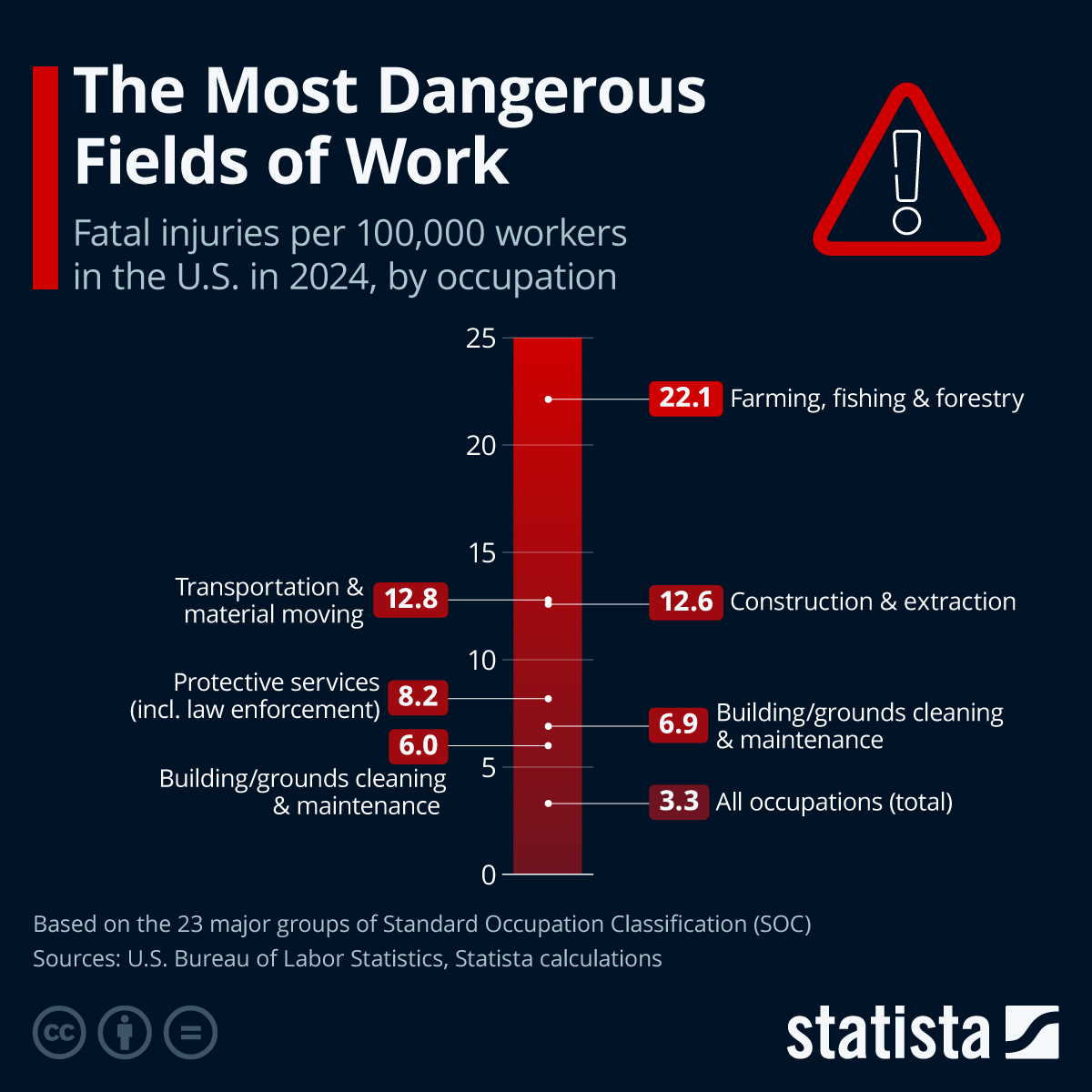
occupational risk
Random Thoughts on Retirement and Longevity – Can Remote Work Delay Retirement?
The mortality impact is interesting
The Journal of Epidemiology and Community Health found that those who worked just a year beyond retirement age had a 9% to 11% lower risk of dying during the 18 years the research covered, regardless of health. Could Remote Work Delay Your Retirement? – https://www.kiplinger.com/retirement/retirement-planning/could-remote-work-delay-your-retirement
If you only eat “superfoods” will you have a long life?
“There is no single secret to living a long, healthy life.” Salvatore Di Somma, MD. Sanford Burnham Prebys. “A long and ongoing look at the secrets of human longevity and healthy aging.” ScienceDaily – https://www.sciencedaily.com/releases/2025/05/250505171023.htm
Coffee
All coffee types decrease the risk of adverse clinical outcomes in chronic liver disease: a UK Biobank study
Kennedy, O.J., Fallowfield, J.A., Poole, R. et al. BMC Public Health 21, 970 (2021) – https://bmcpublichealth.biomedcentral.com/articles/10.1186/s12889-021-10991
Movement is medicine
Being consistently physically active in adulthood is linked to a 30–40% lower risk of death from any cause in later life, while upping levels from below those recommended for health is still associated with a 20–25% lower risk, finds a pooled data analysis of the available evidence, published online in the British Journal of Sports Medicine. It’s never too late: Just moving more could add years to your life — https://www.sciencedaily.com/releases/2025/07/250711224321.htm
Whiskey
University of California neurologist Claudia Kawas and her team have been studying the lifestyle habits of people who live until their 90s. The group has been researching people of this age group for some 15 years – and they have found that those who drank two units of alcohol every day were less likely to die prematurely.“I have no explanation for it, but I do firmly believe that modest drinking improves longevity,” Kawas said. – Whiskey makes you live a longer, healthier life — https://www.irishcentral.com/culture/food-drink/whiskey-live-longer-healthier
Loneliness
Now, however, new research is calling into question this long-held belief and, surprisingly, found that loneliness may not be quite the threat that we all once thought it was. In fact, the problem may be one of confusing cause and effect. The Surprising Truth About Loneliness and Longevity — https://www.kiplinger.com/retirement/the-surprising-truth-about-loneliness-and-longevity
Loneliness is pervasive in home care settings across the 3 countries; however, its association with mortality differs from reports for the general population. Loneliness was not associated with an increased risk of death after adjusting for health-related covariates. The causal order between changes in health, loneliness, and mortality is unclear. For example, loneliness may be a consequence of those health changes rather than their cause. Cross-National Evidence on Risk of Death Associated with Loneliness: A Survival Analysis of 1-Year All-Cause Mortality among Older Adult Home Care Recipients in Canada, Finland, and Aotearoa | New Zealand — https://www.sciencedirect.com/science/article/pii/S152586102500204X
Ugh… Kids These Days!
While cocaine was once the drug of choice, bankers are now reportedly turning to the ADHD medication for work days that can last as long as 22 hours, along with nicotine patches and energy drinks. 90-hour-a-week Wall Street bankers snorting lines of Adderall at their desks – https://www.telegraph.co.uk/world-news/2024/12/15/90-hour-a-week-wall-street-bankers-snorting-adderall-desks/
It never ceases to amaze this Old Underwriter how people manage to find creative ways to kill themselves.
Welcome to the Company – Let Me Show You Your New Office

Image credit – Herman Miller
I want one for my home office.
Another Reason to Exercise (your brain)
Group-based trajectory modeling identified four groups of distinct occupational cognitive demands according to the degree of routine tasks in the participants occupations during their 30s, 40s, 50s and 60s. The researchers analyzed the link between these trajectory groups and clinically diagnosed MCI and dementia in participants in the HUNT4 70+ Study (2017-19). Additionally, the researchers accounted for important dementia risk factors such as age, gender, educational level, income, overall health, and lifestyle habits from assessments made in 1984-86 and 1995-97. Within age groupings the researchers looked at such occupations as primary school teacher, salesperson, nurse and caregiver, office cleaner, civil engineer, and mechanic, among others.
After adjusting for age, sex, and education, the group with low occupational cognitive demands (the high RTI group) had a 37 percent higher risk of dementia compared to the group with high occupational cognitive demands. Occupations That Are Cognitively Stimulating May Be Protective Against Later-life Dementia — https://www.publichealth.columbia.edu/news/occupations-are-cognitively-stimulating-may-be-protective-against-later-life-dementia
Link to the study abstract – https://www.neurology.org/doi/10.1212/WNL.0000000000209353
I hope my spouse doesn’t read this or she’ll never let me retire.
Scary Charts – 08.20.23
There were 464 workplace fatalities from unintentional overdoses due to non-medical use of drugs or alcohol in 2021. This is a 19.6-percent increase from 2020 when there were 388 fatalities and is the ninth consecutive annual increase. Unintentional overdoses from non-medical use of drugs include overdoses from stimulants such as methamphetamine and from narcotics such as fentanyl.
Unintentional overdoses rose for the ninth consecutive year in 2021– https://www.bls.gov/opub/ted/2023/unintentional-overdoses-rose-for-the-ninth-consecutive-year-in-2021.htm
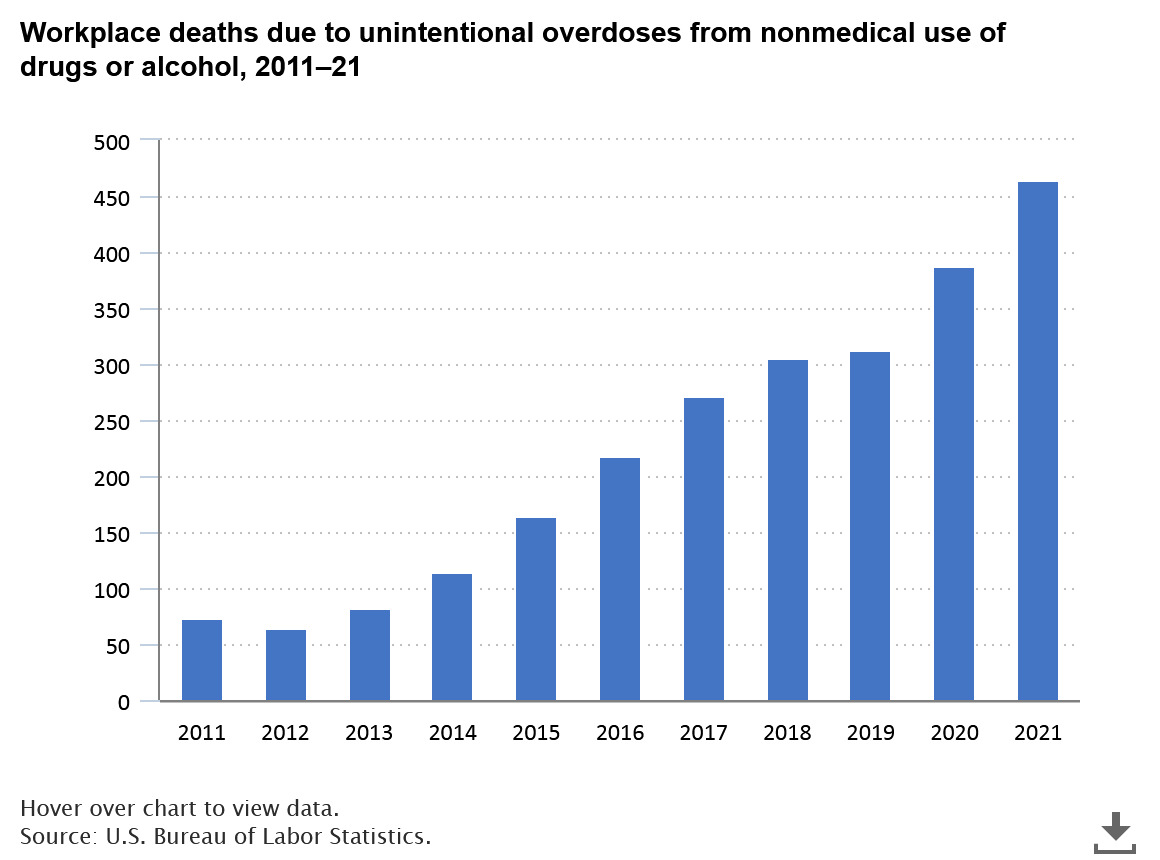
Source: Bureau of Labor Statistics, U.S. Department of Labor, The Economics Daily, Unintentional overdoses rose for the ninth consecutive year in 2021 at https://www.bls.gov/opub/ted/2023/unintentional-overdoses-rose-for-the-ninth-consecutive-year-in-2021.htm (visited August 20, 2023).
Drive By Truckers 2.0
Total drug violations reported into the clearinghouse in 2022, including positive tests and refusals to take a drug test, increased 18% to 69,668 compared with last year’s 59,011, according to the most recent statistics released this week by the Federal Motor Carrier Safety Administration. That rate almost doubled the 9.2% annual increase in drug violations reported in 2021. Much of the increase can be attributed to violations related to marijuana, the substance identified most in positive tests. Marijuana violations increased 31.6% in 2022 compared with 2021, to 40,916. That compares to a 5.3% increase between 2020 and 2021.
Truckers’ positive drug tests up 18% in 2022 — https://www.freightwaves.com/news/truckers-positive-drug-tests-up-18-in-2022
At least binge drinking prevalence is just 19%
Truck drivers have been reported as a highly vulnerable working population due to different risk factors [16,17,18] including hypertension, fatigue [19], obstructive sleep apnea (OSA) and sleep deprivation [20,21], and insufficient physical activity [22]. Other risk factors are exposure to diesel exhaust and risk of developing lung cancer [23], poor diet, obesity, dyslipidemia, and other metabolic disorders [24]. Furthermore, they are prone to risky behaviors and lifestyles such as smoking, drinking, using psychoactive substances, and having casual sexual contacts [25].
Patterns of Harmful Alcohol Consumption among Truck Drivers: Implications for Occupational Health and Work Safety from a Systematic Review and Meta-Analysis — Int J Environ Res Public Health. 2018 Jun; 15(6): 1121.
Published online 2018 May 30. doi: 10.3390/ijerph15061121
I ask them why the industry has a 90 percent attrition rate within the first year. All instantly respond: “No money.” They describe a predatory apprenticeship system that conspires against new drivers seeking to enter the profession. The industry is made up of thousands of mostly small-fleet owners—95 percent of them with 20 trucks or fewer—but dominated by about two dozen giant companies that serve as its gatekeepers. These megacarriers often house schools where some 400,000 new truckers receive commercial driver’s licenses annually. The companies entice people with promises of financial plenty, even as they ensnare them in “training contracts”—binding agreements that require them to drive for the company at below-market wages for a year in exchange for training or else be hit with an exorbitant fee for that training, to be paid off at high interest. Many drivers stick around for the full year to avoid those fees, enduring what amounts to debt peonage.
“I have panic attacks,” he says. “That’s why I drink.”
Life as a 21st-Century Trucker — https://www.wired.com/story/life-as-a-21st-century-trucker/
For the first post in this series see Drive By Truckers.
Drive By Truckers
Up to one-third of crashes of large trucks are attributable to sleepiness, and large truck crashes result in more than 4,000 deaths annually. For each occupant of a truck who is killed, 6 to 7 occupants of other vehicles are killed.
Obstructive sleep apnea (OSA) is a sleep-related breathing disorder that is characterized by repetitive episodes of complete or partial upper airway obstruction during sleep.1 OSA is common among adults,2,3 and it is particularly common in commercial operators.4–8 Untreated OSA leads to increased morbidity and mortality, as well as high costs related to crashes, health care use, absenteeism, and lost productivity.9–11 A systematic review and meta-analysis commissioned by the Federal Motor Carrier Safety Administration (FMCSA) shows that drivers with OSA have a crash risk that is between 21% and 489% higher than comparable drivers without OSA.12 A 2013 meta-analysis of more than 25,000 individuals who were enrolled in 12 studies shows that OSA was associated with an increased risk for cardiovascular disease (relative risk: 1.79), fatal and nonfatal stroke (relative risk: 2.15), and death from all causes (relative risk: 1.92).13
Obstructive sleep apnea screening, diagnosis, and treatment in the transportation industry – https://jcsm.aasm.org/doi/10.5664/jcsm.9672
The Labor Force Refuses to Grow – Age Discrimination?
Ageism?
Ageism is a real problem. And it could also be responsible for the low labor force getting stuck at this level. Boomers are now between around 56 and 76. This is a huge generation. And in tech, when the hiring manager is 32, and you’re 56, it’s tough getting that job. And when you’re 62, it’s even tougher just to get anyone’s attention. Some succeed. But many don’t.
Many of these people, often with a superb job history, may never get a job in their field again. Many of them made enough money to where they don’t have to work. They’d like to work, but it’s tough getting ignored or rejected time after time because of age.
And they give up “actively” looking for a job, and thereby they’re removed from the labor force. They were dropped from the labor force due to ageism, not because they wanted to retire. And they might tell everyone, after they give up looking, that they’re “retired,” when in fact, they’d love to work in their field but are locked out.
I Want to Add a Word about Ageism in this Bizarre Labor Market and How it Hits Labor Force & Unemployment Numbers — https://wolfstreet.com/2022/07/08/i-want-to-add-a-word-about-ageism-in-this-bizarre-labor-market-and-how-it-hits-labor-force-unemployment-numbers/
The entire post from Mr. Wolf is worth reading. Obviously there is no data to support ageism as one of the causes for the lack of labor force growth. But it certainly is an interesting hunch.
At last count there were 240 comments on this article.
Okay, Houston, we’ve had a problem here. https://www.nasa.gov/feature/50-years-ago-houston-we-ve-had-a-problem
Midlife Crisis? Just Another U Shaped Curve
Subsequent research discovered that this age-related U-shape in job satisfaction is part of a much broader phenomenon. A similar midlife nadir is detectable in measures of people’s overall life satisfaction and has been found in more than 50 countries. On average, life satisfaction is high when people are young, then starts to decline in the early 30s, bottoming out between the mid-40s and mid-50s before increasing again to levels as high as during young adulthood. And this U-curve occurs across the entire socio-economic spectrum, hitting senior-level executives as well as blue-collar workers and stay-at-home parents. It affects childless couples as well as single people or parents of four. In short, a mid-career crisis does not discriminate.
Why So Many of Us Experience a Midlife Crisis Harvard Business Review Hannes Schwandt — https://getpocket.com/explore/item/why-so-many-of-us-experience-a-midlife-crisis?utm_source=pocket-newtab
This post originally appeared on Harvard Business Review and was published April 20, 2015. A link popped up on my browser webpage.
U shaped curves are everywhere.
 lifeunderwriter.net
You must be logged in to post a comment.