Conference presentation highlights here: https://www.obesityweek.medfyle.com/
Every week is obesity week (unfortunately). This Obesity Week was a conference. One of my earlier posts on Diabesity was the first time I heard this term used.
Conference presentation highlights here: https://www.obesityweek.medfyle.com/
Every week is obesity week (unfortunately). This Obesity Week was a conference. One of my earlier posts on Diabesity was the first time I heard this term used.
In a 2010 review published in Clinical Toxicology, an international team of researchers labeled colchicine a drug with a “dark side” and laid out the three stages of poisoning: The first is a gastrointestinal phase, the first 24 hours after the poisoning, in which damage to gastrointestinal mucosa leads to nausea, vomiting, diarrhea, abdominal discomfort. It might look like severe food poisoning or cholera. Then there’s the second, multi-organ phase, from one to seven days after poisoning, in which the toxic effects spread around the body. There can be a variety of multi-organ dysfunction and metabolic derangements. Death often takes the form of faltering cardiovascular function and cardiac arrhythmia or arrest, but respiratory distress, liver failure, kidney failure, brain swelling, and secondary sepsis can also occur. For the lucky, the third phase is the recovery phase, which can last from seven to 21 days after the poisoning. In this phase, failing organs rebound, but patients might experience alopecia (hair loss) and other complications, including delirium, stupor and coma, convulsions, adrenal hemorrhage, and pancreatitis. In some rare cases, patients’ skin blisters and peels off…
Connor Bowman, 30, was arrested last Friday and charged Monday with second-degree murder in the death of Betty Bowman, 32, who worked as a pharmacist at the Mayo Clinic.
In an investigation that followed her suspicious death on August 20, police learned that the two were having marital problems, including a deteriorating relationship and infidelity, and were talking about a divorce. They also learned that Connor Bowman was in debt and stood to gain $500,000 in life insurance upon his wife’s demise.
Poison expert allegedly poisoned wife—with a shockingly toxic gout drug — https://arstechnica.com/health/2023/10/poison-expert-allegedly-poisoned-wife-with-a-shockingly-toxic-gout-drug/
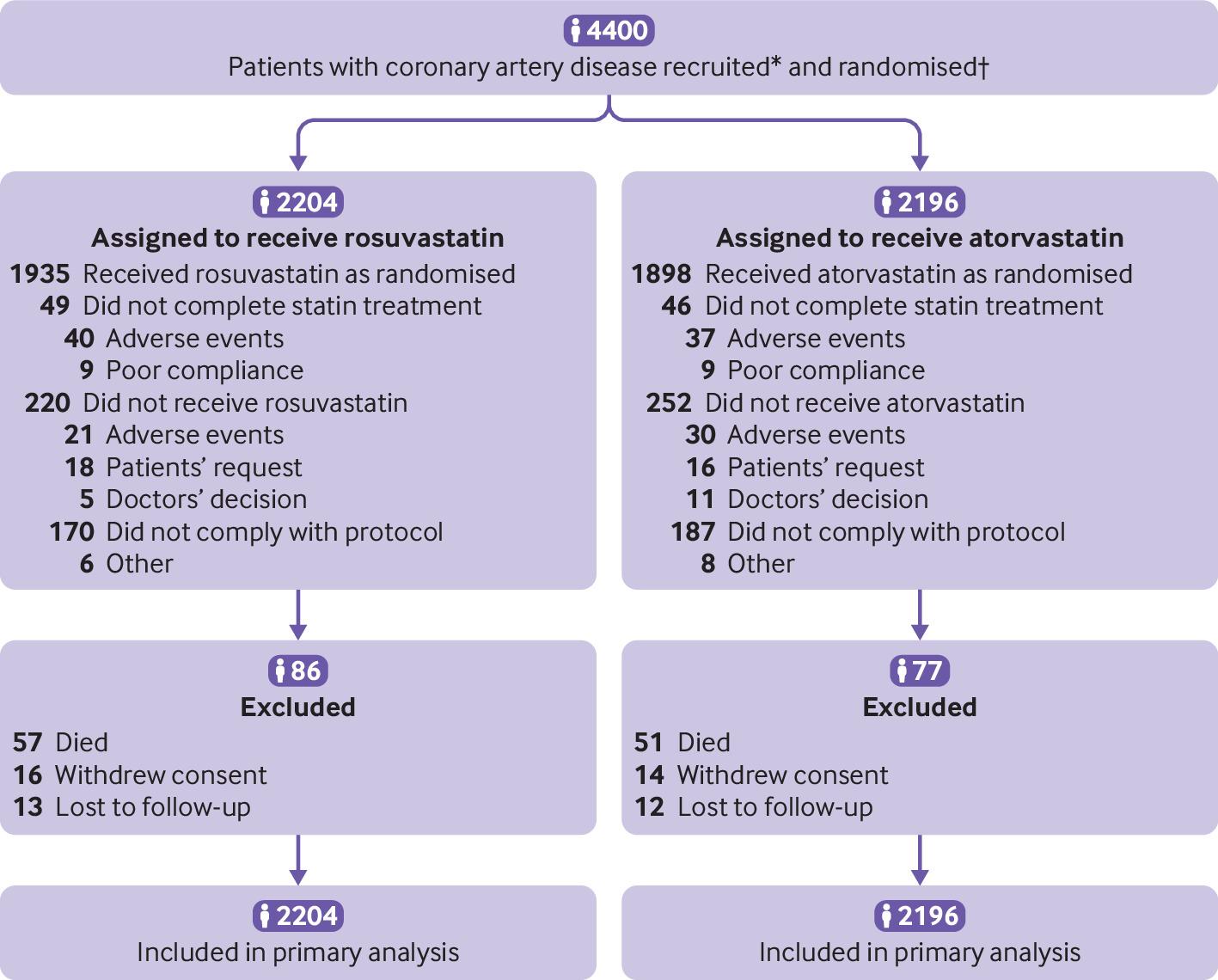
In people with coronary artery disease, rosuvastatin and atorvastatin showed comparable efficacy in terms of a composite of all cause death, myocardial infarction, stroke, or any coronary revascularisation within three years
Rosuvastatin was associated with greater efficacy in reducing LDL cholesterol levels, but it incurred a higher risk of new onset diabetes mellitus requiring antidiabetics and cataract surgery than atorvastatin
Rosuvastatin versus atorvastatin treatment in adults with coronary artery disease: secondary analysis of the randomised LODESTAR trial – BMJ 2023;383:e075837 — https://doi.org/10.1136/bmj-2023-075837

APC indicates annual percentage change. This study of alcohol-related mortality in the US suggests there has been a significantly higher rate of increase in deaths among female individuals in recent years.
Trends in Alcohol-Related Deaths by Sex in the US, 1999-2020 — http://10.1001/jamanetworkopen.2023.26346
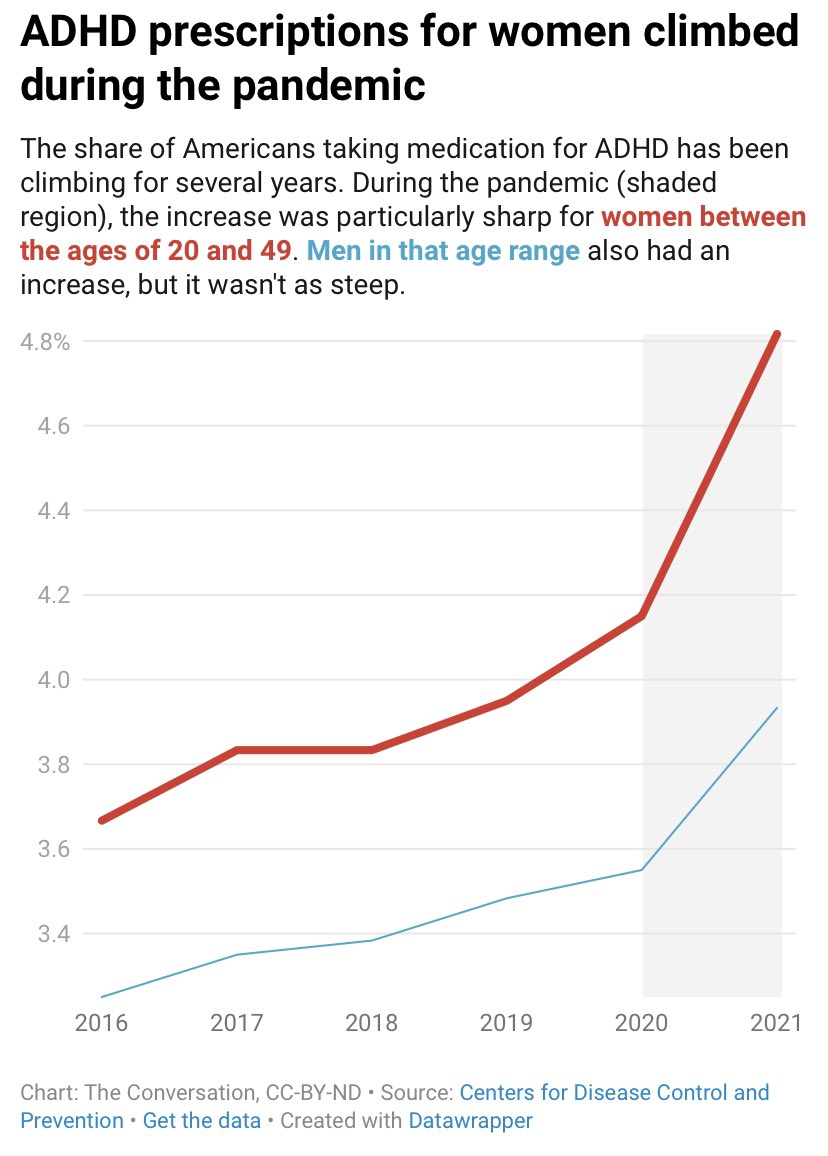
In March 2023, the U.S. Centers for Disease Control and Prevention reported an unprecedented spike in stimulant prescriptions between 2020 and 2021. Perhaps most surprising was that the demographic showing the greatest increases in stimulant use – an increase of almost 20% in one year – were in women in their 20s and 30s…
But while the internet exploded with ADHD content, researchers in Canada began sorting #ADHD TikTok videos into categories based on their accuracy and helpfulness. They reported something important: A majority of #ADHD content was misleading. Only 21% of the posts provided useful and accurate information.
More adults than ever have been seeking ADHD medications – an ADHD expert explains what could be driving the trend — https://theconversation.com/more-adults-than-ever-have-been-seeking-adhd-medications-an-adhd-expert-explains-what-could-be-driving-the-trend-206052
Alcohol AND amphetamines. Self-diagnosed ADHD. SMH.
Previous research has found that activating GLP-1 receptors in rats’ brain causes the animals to eat less of a high-sugar chow, which they would normally prefer over a less delicious but healthier bland meal when given the option. This suggests that GLP-1 makes unhealthy food less rewarding. Schmidt’s team found the same to be true with cocaine: rats that received a GLP-1 agonist took less cocaine when it was offered. The researchers are now repeating the experiments in rats addicted to opioids or fentanyl. Several other studies have shown that GLP-1 agonists cause rats to drink less alcohol and produce less dopamine when they do drink, suggesting that the activity is no longer as pleasurable.
…it’s too early to say whether people recovering from addiction would need to take an GLP-1 agonist for the rest of their lives, like people with diabetes do, or whether these drugs could be short-term treatments that curb cravings long enough for people to make lifestyle changes to stay sober. People who stop taking semaglutide for weight loss quickly gain the weight back, and study animals that stop taking it return to alcohol and drug use, but “I don’t think we know enough yet” in humans, Simmons says.
Could New Weight-Loss Drugs like Ozempic Treat Addiction? — https://www.scientificamerican.com/article/could-new-weight-loss-drugs-like-ozempic-treat-addiction1/
The rest of this post is a repost of April Fools 2023 (this is a GLP-1 receptor agonist post). Enjoy!
Ozempic and a similar drug, Wegovy, are weekly shots you give yourself that cause the body to produce insulin. Insulin lowers blood sugar, slows digestion and makes people feel full. Carter-Williams tried it and was amazed.
“You are not hungry,” she says. “Like, I actually have to set timers to make sure that I do eat, because otherwise you actually forget to eat.”
‘You forget to eat’: How Ozempic went from diabetes medicine to blockbuster diet drug https://www.npr.org/2023/04/01/1166781510/ozempic-weight-loss-drug-big-business
Everyone wants the easy way out. I sometimes forget to eat but not because of a miracle drug. You wonder if those of us wanting to lose weight know you can’t stop taking this drug once you start it.
Patients discontinuing the use of weight-loss drugs such as Wegovy risk regaining their original body weight in about five years, a Novo Nordisk official said on Wednesday.
Novo Nordisk Says Stopping Obesity Drug May Cause Full Weight Regain in 5 Years–https://www.medscape.com/viewarticle/990267?src=rss
Side effects?
Just a few https://www.wegovy.com/taking-wegovy/side-effects.html
- Possible thyroid tumors, including cancer.
- Inflammation of your pancreas (pancreatitis)
- Gallbladder problems
- Increased risk of low blood sugar (hypoglycemia) in patients with type 2 diabetes, especially those who also take medicines for type 2 diabetes such as sulfonylureas or insulin
- Kidney problems (kidney failure)
- Serious allergic reactions
- Change in vision in people with type 2 diabetes.
- Increased heart rate
- Depression or thoughts of suicide.
So if you want to lose weight by taking a GLP-1 receptor agonist remember the risks of side effects including the real possibility of having to take a drug that costs up to $1600.00 a month for the rest of your life.
Good luck with that.
As an FYI this drug class is being investigated by the EU for a small number of cases reporting suicidal ideation https://www.latimes.com/business/story/2023-07-10/ozempic-weight-loss-drugs-probed-over-reports-of-suicidal-thoughts.
But we already knew this.
One study looked at GLP-1 RAs prescribed in the UK between 2009 and 2017. Out of the 589 patients who started taking a GLP-RA, 45 percent stopped taking the drug within 12 months, and 65 percent within 24 months. The same group of scientists also looked at people taking GLP-1 RAs in the US across a similar period of time. That study included a much larger group of diabetes patients but found that people quit taking the drugs at a similar rate as in the UK. Within 12 months, 47 percent of patients stopped taking their GLP-1 AR; after 24 months that figure was 70 percent. On average, people in that study spent around 13 months using the drug before they stopped taking it.
Why People Stop Using Drugs Like Ozempic —https://www.wired.com/story/ozempic-wegovy-quitting-weight-loss/?utm_source=pocket-newtab
For my last GLP-1 RA post see Tirzepatide Reduces Appetite, Energy Intake, and Fat Mass in People With Type 2 Diabetes — https://doi.org/10.2337/dc22-1710
To reduce the number of clicks the rest of this post is a repost of April Fools 2023 (this is a GLP-1 receptor agonist post). Enjoy!
Ozempic and a similar drug, Wegovy, are weekly shots you give yourself that cause the body to produce insulin. Insulin lowers blood sugar, slows digestion and makes people feel full. Carter-Williams tried it and was amazed.
“You are not hungry,” she says. “Like, I actually have to set timers to make sure that I do eat, because otherwise you actually forget to eat.”
‘You forget to eat’: How Ozempic went from diabetes medicine to blockbuster diet drug https://www.npr.org/2023/04/01/1166781510/ozempic-weight-loss-drug-big-business
Everyone wants the easy way out. I sometimes forget to eat but not because of a miracle drug. You wonder if those of us wanting to lose weight know you can’t stop taking this drug once you start it.
Patients discontinuing the use of weight-loss drugs such as Wegovy risk regaining their original body weight in about five years, a Novo Nordisk official said on Wednesday.
Novo Nordisk Says Stopping Obesity Drug May Cause Full Weight Regain in 5 Years–https://www.medscape.com/viewarticle/990267?src=rss
Side effects?
Just a few https://www.wegovy.com/taking-wegovy/side-effects.html
- Possible thyroid tumors, including cancer.
- Inflammation of your pancreas (pancreatitis)
- Gallbladder problems
- Increased risk of low blood sugar (hypoglycemia) in patients with type 2 diabetes, especially those who also take medicines for type 2 diabetes such as sulfonylureas or insulin
- Kidney problems (kidney failure)
- Serious allergic reactions
- Change in vision in people with type 2 diabetes.
- Increased heart rate
- Depression or thoughts of suicide.
So if you want to lose weight by taking a GLP-1 receptor agonist remember the risks of side effects including the real possibility of having to take a drug that costs up to $1600.00 a month for the rest of your life.
Good luck with that. This joke’s on you.
As an FYI this drug class is being investigated by the EU for a small number of cases reporting suicidal ideation https://www.latimes.com/business/story/2023-07-10/ozempic-weight-loss-drugs-probed-over-reports-of-suicidal-thoughts.
But we already knew this.

Published Online: June 24, 2023. doi:10.1001/jama.2023.9696
What happens is that you lose your appetite and also the pleasure of eating, and so I think there’s a price to be paid when you do that. If you like food, then that pleasure is gone. The craving for food for some people is taken away when they take GLP-1 drugs.
So you don’t eat through GLP-1 therapy because you’ve lost interest in food. That may eventually be a problem, that once you’ve been on this for a year or two, life is so miserably boring that you can’t stand it any longer and you have to go back to your old life.
What the Scientists Who Pioneered Weight-Loss Drugs Want You to Know – https://www.wired.com/story/obesity-drugs-researcher-interview-ozempic-wegovy/
Just another GLP-1 receptor agonist post. See Tirzepatide (another GLP-1 receptor agonist post) for more on the new miracle weight loss drugs that were originally developed to treat duodenal ulcer disease (bet you thought it was diabetes).
The entire article is worth reading.

Tirzepatide Reduces Appetite, Energy Intake, and Fat Mass in People With Type 2 Diabetes — https://doi.org/10.2337/dc22-1710
To reduce the number of clicks the rest of this post is a repost of April Fools 2023 (this is a GLP-1 receptor agonist post). Enjoy!
Ozempic and a similar drug, Wegovy, are weekly shots you give yourself that cause the body to produce insulin. Insulin lowers blood sugar, slows digestion and makes people feel full. Carter-Williams tried it and was amazed.
“You are not hungry,” she says. “Like, I actually have to set timers to make sure that I do eat, because otherwise you actually forget to eat.”
‘You forget to eat’: How Ozempic went from diabetes medicine to blockbuster diet drug https://www.npr.org/2023/04/01/1166781510/ozempic-weight-loss-drug-big-business
Everyone wants the easy way out. I sometimes forget to eat but not because of a miracle drug. You wonder if those of us wanting to lose weight know you can’t stop taking this drug once you start it.
Patients discontinuing the use of weight-loss drugs such as Wegovy risk regaining their original body weight in about five years, a Novo Nordisk official said on Wednesday.
Novo Nordisk Says Stopping Obesity Drug May Cause Full Weight Regain in 5 Years–https://www.medscape.com/viewarticle/990267?src=rss
Side effects?
Just a few https://www.wegovy.com/taking-wegovy/side-effects.html
- Possible thyroid tumors, including cancer.
- Inflammation of your pancreas (pancreatitis)
- Gallbladder problems
- Increased risk of low blood sugar (hypoglycemia) in patients with type 2 diabetes, especially those who also take medicines for type 2 diabetes such as sulfonylureas or insulin
- Kidney problems (kidney failure)
- Serious allergic reactions
- Change in vision in people with type 2 diabetes.
- Increased heart rate
- Depression or thoughts of suicide.
So if you want to lose weight by taking a GLP-1 receptor agonist remember the risks of side effects including the real possibility of having to take a drug that costs up to $1600.00 a month for the rest of your life.
Good luck with that. This joke’s on you.
 lifeunderwriter.net
You must be logged in to post a comment.