In The Anxious Generation: How the Great Rewiring of Childhood Is Causing an Epidemic of Mental Illness, social psychologist and author Jonathan Haidt lays out his argument that smartphones and social media are the key driver of the decline in youth mental health seen in many countries since the early 2010s.
The early 2010s were crucial, Haidt argues, because that was when smartphones really began to transform childhood into something unrecognizable. In June 2010, Apple introduced its first front-facing camera, and a few months later Instagram launched on the App Store. For Haidt, this was a fateful combination. Children were suddenly always online, always on display, and connected in ways that were often detrimental to their well-being. The result was a “tidal wave” of anxiety, depression, and self-harm, mostly affecting young girls.In Haidt’s telling, though, smartphones are only part of the problem. He thinks that children in the West are prevented from developing healthily thanks to a culture of “safetyism” that keeps children indoors, shelters them from risks, and replaces rough-and-tumble free play with adult-directed organized sports or—even worse—video games. For evidence of safetyism in action, Haidt contrasts a picture of a 1970s playground merry-go-round, (“the greatest piece of playground equipment ever invented”) with a modern set of play equipment designed with safety in mind and, thus, giving children less opportunity to learn from risky play.
Next steps? Go back online, find a venture capital backed mental health provider, take a quiz, get a diagnosis that confirms your self-diagnosis, have drugs sent to you in the mail.
Nurse practitioners had the largest increases in prescribing incident prescriptions across the 5 drug classes. This is consistent with a study that found that behavioral health visits among Medicare beneficiaries conducted by psychiatric behavioral health nurse practitioners increased by 162%, whereas those by psychiatrists decreased by 6% from 2011 to 2019.35 Our study, based on incident prescription data, suggests an increasing contribution of nurse practitioners initiating medication treatment of behavioral health conditions compared with other health care practitioners.
Chai G, Xu J, Goyal S, et al. Trends in Incident Prescriptions for Behavioral Health Medications in the US, 2018-2022. JAMA Psychiatry. Published online January 10, 2024. doi:10.1001/jamapsychiatry.2023.5045 — https://jamanetwork.com/journals/jamapsychiatry/fullarticle/2813980
Welcome to our new world of self-diagnosed ADHD, online pill mills, and “shortages” of prescription medications.
The past couple of decades have seen a continuous increase in attention deficit hyperactivity disorder (ADHD) diagnoses. National population surveys reflect an increase in the prevalence from 6.1% to 10.2% in the 20-year period from 1997 to 2016 and experts continue to debate and disagree on the causes for this trend.1
I was doing my usual Saturday morning routine, catching up on whatever was catching my attention and I came across this Scary Chart looking for ADHD incidence in Millennials. Whoa…check out the early CAD percentage increase.
Adverse events are common in those using GLP-1 agonists, but the vast majority of these are minor. GI adverse effects are most common (20-70% of patients). Greater rate of GI effects with higher doses.
Most common problems: nausea (overall most common), vomiting, and diarrhea. Others included abdominal pain, dyspepsia, and constipation.
Symptoms are typically more severe within the first four weeks of therapy or with sudden escalation of therapy and tend to decrease over time.
Thought to be due to reduced gastric emptying and activation of centers involved in appetite regulation and nausea.
Severe diarrhea and vomiting may lead to volume loss, dehydration, and hypotension (not common).
There is an association with pancreatitis. GLP-1 agonists may stimulate pancreatic islet beta cells and exocrine duct cells leading to overgrowth and smaller duct size, which increase the pancreatic weight and risk of ductal occlusion.
Retrospective study published in 2022 of 81,752 adverse events associated with GLP-1 agonist therapy found an increased risk of pancreatitis, particularly with liraglutide (ROR 32.67; 95% CI 29.44-36.25). 2023 observational study found increased risk of pancreatitis (adjusted HR of 9.09, 95% CI 1.25-66).
Other GI issues include gallbladder and biliary tract disease (usually after 26 weeks of therapy and included cholelithiasis, cholecystitis, cholangitis), elevated LFTs, hepatitis, liver injury.
Within 180 days, 42 medical cannabis users and 107 control participants developed arrhythmia, most commonly atrial fibrillation/flutter. Medical cannabis users had a slightly elevated risk for new-onset arrhythmia compared with nonusers (180-day absolute risk, 0.8% vs 0.4%). The 180-day risk ratio with cannabis use was 2.07 (95% CI, 1.34-2.80), and the 1-year risk ratio was 1.36 (95% CI, 1.00-1.73). Adults with cancer or cardiometabolic disease had the highest risk for arrhythmia with cannabis use (180-day absolute risk difference, 1.1% and 0.8%).
The overall incidence of stroke and ischemic stroke (IS) decreased among both White and Black people over the past two decades, results of an updated analysis of stroke trends in a representative US population showed.
However, the study showed persistent racial disparities, with incident stroke rates 50%-80% higher in Black people than in their White counterparts. Incident stroke also occurred at an earlier age in Black patients than in White patients (mean age, 62 years vs 71 years, respectively).
The findings were published online on January 10, 2024, in Neurology.
But studies also have shown that once people stop taking these drugs — either by choice, because of shortage, or lack of access — they regain most, if not all, the weight they lost. Arguably more frustrating is the fact that those who continue on the drug eventually reach a plateau, at which point, the body seemingly stubbornly refuses to lose more weight. Essentially, it stabilizes at its set point, said Fatima Cody Stanford, MD, MPH, MPA, MBA, an obesity medicine physician at Massachusetts General Hospital and associate professor at Harvard Medical School in Boston.
Every study of weight loss drugs done over the past 40 years or so shows a plateau, Stanford told Medscape Medical News. “If you look at the phentermine/topiramate studies, there’s a plateau. If you look at the bupropion/naltrexone studies, there’s a plateau. Or if we look at bariatric surgery, there’s a plateau. And it’s the same for the newer GLP-1 drugs.”
The reason? “It really depends on where the body gets to,” Stanford said. “The body knows what it needs to do to maintain itself, and the brain knows where it’s supposed to be. And when you lose weight and reach what you feel is a lower set point, the body resists.”When the body goes below its set point, the hunger hormone ghrelin, which is housed in the brain, gets reactivated and gradually starts to reemerge, she explained. GLP-1, which is housed in the distal portion of the small intestine and in the colon, also starts to reemerge over time.
The recent analysis in JAMA focused on serious stomach disorders and GLP-1 agonists.
Researchers in Canada compared safety outcomes for GLP-1 agonists and bupropion-naltrexone, an older class of weight-loss medication. The retrospective analysis included 4144 people with obesity who were prescribed liraglutide, 613 prescribed semaglutide, and 654 prescribed the older treatment. People with a diabetes code in their health record were excluded from the study.
The GLP-1 group had a 9 times greater risk of pancreatitis, a 4 times greater risk of bowel obstruction, and a more than 3 times greater risk of gastroparesis, which causes stomach paralysis. The absolute risks in the GLP-1 group, however, were all about 1% or less per year of GLP-1 use. And semaglutide and liraglutide were not associated with biliary disease, which affects the gallbladder and bile production.
Every week is obesity week (unfortunately). This Obesity Week was a conference. One of my earlier posts on Diabesity was the first time I heard this term used.
In a 2010 review published in Clinical Toxicology, an international team of researchers labeled colchicine a drug with a “dark side” and laid out the three stages of poisoning: The first is a gastrointestinal phase, the first 24 hours after the poisoning, in which damage to gastrointestinal mucosa leads to nausea, vomiting, diarrhea, abdominal discomfort. It might look like severe food poisoning or cholera. Then there’s the second, multi-organ phase, from one to seven days after poisoning, in which the toxic effects spread around the body. There can be a variety of multi-organ dysfunction and metabolic derangements. Death often takes the form of faltering cardiovascular function and cardiac arrhythmia or arrest, but respiratory distress, liver failure, kidney failure, brain swelling, and secondary sepsis can also occur. For the lucky, the third phase is the recovery phase, which can last from seven to 21 days after the poisoning. In this phase, failing organs rebound, but patients might experience alopecia (hair loss) and other complications, including delirium, stupor and coma, convulsions, adrenal hemorrhage, and pancreatitis. In some rare cases, patients’ skin blisters and peels off…
Connor Bowman, 30, was arrested last Friday and charged Monday with second-degree murder in the death of Betty Bowman, 32, who worked as a pharmacist at the Mayo Clinic.
In an investigation that followed her suspicious death on August 20, police learned that the two were having marital problems, including a deteriorating relationship and infidelity, and were talking about a divorce. They also learned that Connor Bowman was in debt and stood to gain $500,000 in life insurance upon his wife’s demise.
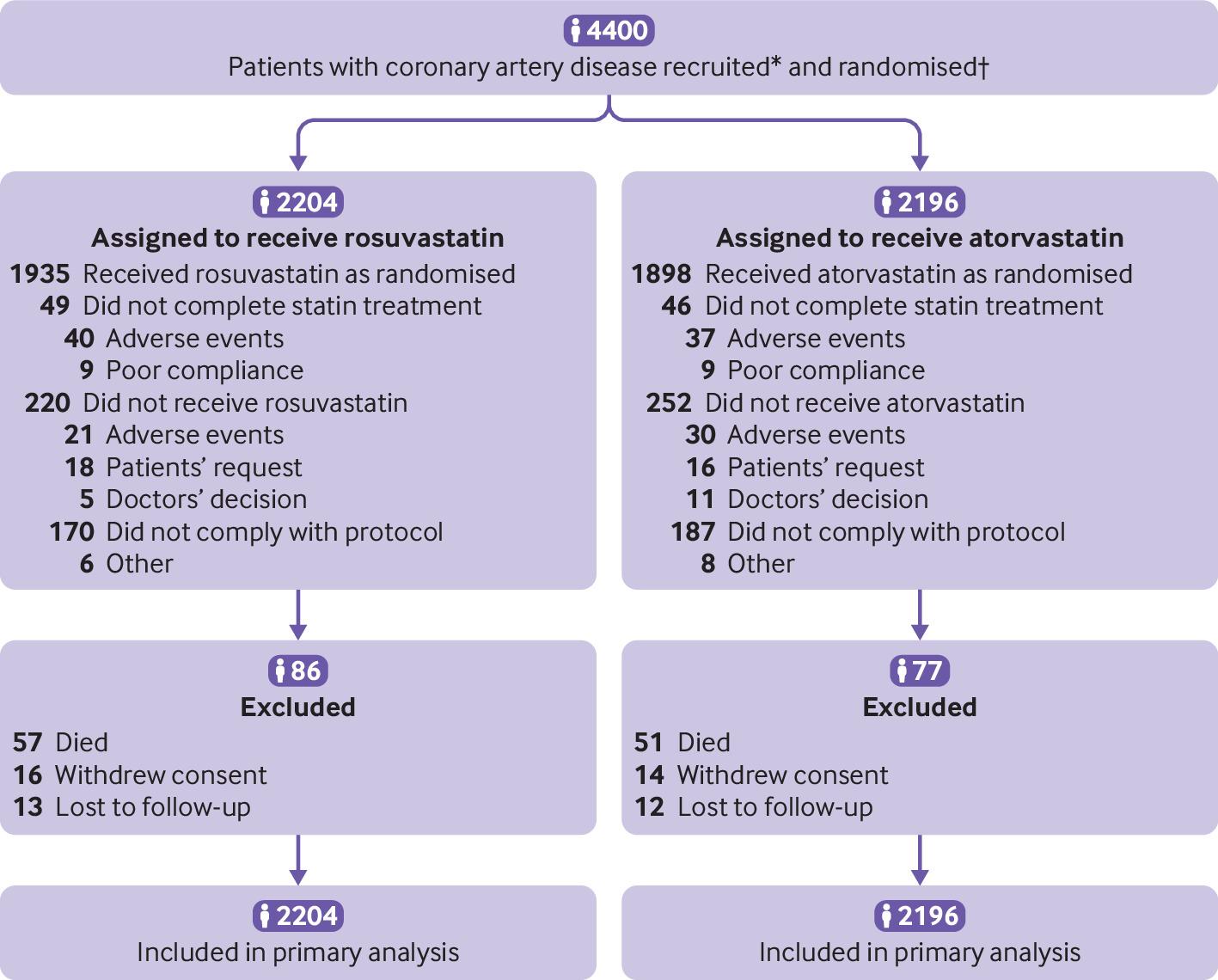
In people with coronary artery disease, rosuvastatin and atorvastatin showed comparable efficacy in terms of a composite of all cause death, myocardial infarction, stroke, or any coronary revascularisation within three years
Rosuvastatin was associated with greater efficacy in reducing LDL cholesterol levels, but it incurred a higher risk of new onset diabetes mellitus requiring antidiabetics and cataract surgery than atorvastatin
Rosuvastatin versus atorvastatin treatment in adults with coronary artery disease: secondary analysis of the randomised LODESTAR trial – BMJ 2023;383:e075837 — https://doi.org/10.1136/bmj-2023-075837




You must be logged in to post a comment.