The investigators found that cannabis use was significantly associated with psychotic disorders during adolescence (adjusted hazard ratio [aHR], 11.2; 95% CI, 4.6 to 27.3), but not during young adulthood (aHR, 1.3; 95% CI, 0.6 to 2.6). Adolescents who used cannabis also had a substantially higher risk for hospitalizations and emergency department visits (aHR, 26.7; 95% CI, 7.7 to 92.8), while there was no substantial risk observed in young adulthood (aHR, 1.8; 95% CI, 0.6 to 5.4). Growing Evidence Supports the Link Between Cannabis Use and Psychosis Risk — https://www.psychiatryadvisor.com/news/cannabis-use-and-psychosis-risk/
In the pursuit of “fine” to “great,” we chase products. Through no fault of our own, we fall prey to messaging from social media users, algorithms, and expert marketers, urging us that this shampoo or this rug will shift the scales toward enoughness. “This is how the marketplace continues to work,” says Brooke Erin Duffy, an associate professor of communication at Cornell University, “which is by amplifying our inadequacies and insecurities.”
Baked into these social platforms is a natural ecosystem for comparison. In the past, people weighed themselves against celebrities in the media and those within their immediate social circles, Duffy says. Now, we can compare ourselves to the idealized version of millions of strangers online — who may be perpetuating an aesthetic trend inspiring us to buy in order to participate.
In The Anxious Generation: How the Great Rewiring of Childhood Is Causing an Epidemic of Mental Illness, social psychologist and author Jonathan Haidt lays out his argument that smartphones and social media are the key driver of the decline in youth mental health seen in many countries since the early 2010s.
The early 2010s were crucial, Haidt argues, because that was when smartphones really began to transform childhood into something unrecognizable. In June 2010, Apple introduced its first front-facing camera, and a few months later Instagram launched on the App Store. For Haidt, this was a fateful combination. Children were suddenly always online, always on display, and connected in ways that were often detrimental to their well-being. The result was a “tidal wave” of anxiety, depression, and self-harm, mostly affecting young girls.In Haidt’s telling, though, smartphones are only part of the problem. He thinks that children in the West are prevented from developing healthily thanks to a culture of “safetyism” that keeps children indoors, shelters them from risks, and replaces rough-and-tumble free play with adult-directed organized sports or—even worse—video games. For evidence of safetyism in action, Haidt contrasts a picture of a 1970s playground merry-go-round, (“the greatest piece of playground equipment ever invented”) with a modern set of play equipment designed with safety in mind and, thus, giving children less opportunity to learn from risky play.
Next steps? Go back online, find a venture capital backed mental health provider, take a quiz, get a diagnosis that confirms your self-diagnosis, have drugs sent to you in the mail.
Nurse practitioners had the largest increases in prescribing incident prescriptions across the 5 drug classes. This is consistent with a study that found that behavioral health visits among Medicare beneficiaries conducted by psychiatric behavioral health nurse practitioners increased by 162%, whereas those by psychiatrists decreased by 6% from 2011 to 2019.35 Our study, based on incident prescription data, suggests an increasing contribution of nurse practitioners initiating medication treatment of behavioral health conditions compared with other health care practitioners.
Chai G, Xu J, Goyal S, et al. Trends in Incident Prescriptions for Behavioral Health Medications in the US, 2018-2022. JAMA Psychiatry. Published online January 10, 2024. doi:10.1001/jamapsychiatry.2023.5045 — https://jamanetwork.com/journals/jamapsychiatry/fullarticle/2813980
Welcome to our new world of self-diagnosed ADHD, online pill mills, and “shortages” of prescription medications.
The past couple of decades have seen a continuous increase in attention deficit hyperactivity disorder (ADHD) diagnoses. National population surveys reflect an increase in the prevalence from 6.1% to 10.2% in the 20-year period from 1997 to 2016 and experts continue to debate and disagree on the causes for this trend.1
I was doing my usual Saturday morning routine, catching up on whatever was catching my attention and I came across this Scary Chart looking for ADHD incidence in Millennials. Whoa…check out the early CAD percentage increase.
Adverse events are common in those using GLP-1 agonists, but the vast majority of these are minor. GI adverse effects are most common (20-70% of patients). Greater rate of GI effects with higher doses.
Most common problems: nausea (overall most common), vomiting, and diarrhea. Others included abdominal pain, dyspepsia, and constipation.
Symptoms are typically more severe within the first four weeks of therapy or with sudden escalation of therapy and tend to decrease over time.
Thought to be due to reduced gastric emptying and activation of centers involved in appetite regulation and nausea.
Severe diarrhea and vomiting may lead to volume loss, dehydration, and hypotension (not common).
There is an association with pancreatitis. GLP-1 agonists may stimulate pancreatic islet beta cells and exocrine duct cells leading to overgrowth and smaller duct size, which increase the pancreatic weight and risk of ductal occlusion.
Retrospective study published in 2022 of 81,752 adverse events associated with GLP-1 agonist therapy found an increased risk of pancreatitis, particularly with liraglutide (ROR 32.67; 95% CI 29.44-36.25). 2023 observational study found increased risk of pancreatitis (adjusted HR of 9.09, 95% CI 1.25-66).
Other GI issues include gallbladder and biliary tract disease (usually after 26 weeks of therapy and included cholelithiasis, cholecystitis, cholangitis), elevated LFTs, hepatitis, liver injury.
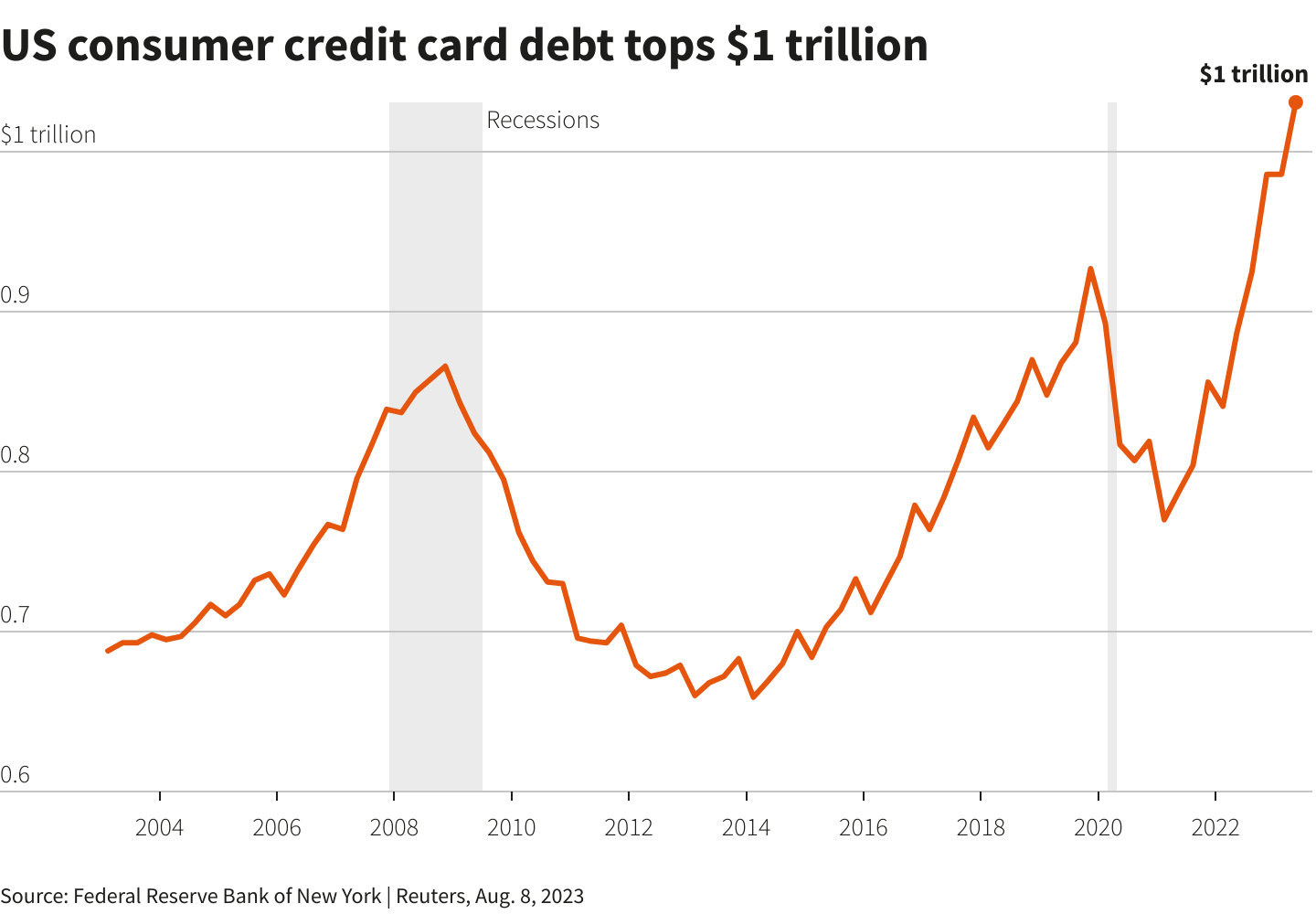
The TikToker touting “generational wealth” isn’t alone in promoting the benefits of slapping a child’s name onto credit card debts. TikTok is flooded with influencers who insist that authorizing minors to use their parents or older relatives’ credit cards will set them up for a bright future.
Many of the videos uploaded to the platform are captioned with the hashtag #generationalwealth and suggest that the authorized credit card user trick is a secret hack used by the wealthy.
Parents, don’t do this. TikTok should not be your source for financial advice.
Instead teach your children to save and invest, to live within their means, to understand the difference between needs and wants, to not become an indentured servant to the banking industry.
Previous research has found that activating GLP-1 receptors in rats’ brain causes the animals to eat less of a high-sugar chow, which they would normally prefer over a less delicious but healthier bland meal when given the option. This suggests that GLP-1 makes unhealthy food less rewarding. Schmidt’s team found the same to be true with cocaine: rats that received a GLP-1 agonist took less cocaine when it was offered. The researchers are now repeating the experiments in rats addicted to opioids or fentanyl. Several other studies have shown that GLP-1 agonists cause rats to drink less alcohol and produce less dopamine when they do drink, suggesting that the activity is no longer as pleasurable.
…it’s too early to say whether people recovering from addiction would need to take an GLP-1 agonist for the rest of their lives, like people with diabetes do, or whether these drugs could be short-term treatments that curb cravings long enough for people to make lifestyle changes to stay sober. People who stop taking semaglutide for weight loss quickly gain the weight back, and study animals that stop taking it return to alcohol and drug use, but “I don’t think we know enough yet” in humans, Simmons says.
Ozempic and a similar drug, Wegovy, are weekly shots you give yourself that cause the body to produce insulin. Insulin lowers blood sugar, slows digestion and makes people feel full. Carter-Williams tried it and was amazed.
“You are not hungry,” she says. “Like, I actually have to set timers to make sure that I do eat, because otherwise you actually forget to eat.”
Everyone wants the easy way out. I sometimes forget to eat but not because of a miracle drug. You wonder if those of us wanting to lose weight know you can’t stop taking this drug once you start it.
Patients discontinuing the use of weight-loss drugs such as Wegovy risk regaining their original body weight in about five years, a Novo Nordisk official said on Wednesday.
Increased risk of low blood sugar (hypoglycemia) in patients with type 2 diabetes, especially those who also take medicines for type 2 diabetes such as sulfonylureas or insulin
Kidney problems (kidney failure)
Serious allergic reactions
Change in vision in people with type 2 diabetes.
Increased heart rate
Depression or thoughts of suicide.
So if you want to lose weight by taking a GLP-1 receptor agonist remember the risks of side effects including the real possibility of having to take a drug that costs up to $1600.00 a month for the rest of your life.




 lifeunderwriter.net
You must be logged in to post a comment.