Individuals who visited the ER for substance-induced psychosis had a 160% greater risk of developing a schizophrenia spectrum disorder (SSD) compared with the general population, new research shows. Three years after an initial ER visit, 18.5% of those with substance-induced psychosis were diagnosed with an SSD. Cannabis-induced psychosis was associated with the greatest risk.
Eve Bender. Substance-Induced Psychosis Tied to Schizophrenia Risk – Medscape – Oct 04, 2023 – https://www.medscape.com/viewarticle/997093
Psych
A Perspective on Mental Health Issues
Here’s the full post so you don’t have to go to X.
I am profoundly, profoundly concerned about the psychological health of both children and adults in this country. A culture overemphasizing emotional safety has robbed people of their opportunities for growth. Many people experience these opportunities as a threat, remaining permanently infantile, afraid, and unable and unwilling to cope with adversity as a result. Indeed the culture itself rather than encouraging resilience, persuades people that even minor inconveniences are personal affronts and even signs of systemic injustice visited upon them. As people begin experiencing everything that falls outside of their narrow box of predictable experience as a form of threat to be neutralized, not only are they personally deprived of growth opportunities, but they create a culture of mistrust, rigidity, and sterility, which in turn reduces in society as a whole availability of the kinds of messy experiences that are critically important for self-discovery, personal growth, and psychological resilience. The outcome is a society of the over-socialized, of the outraged, of the rule-abiding, of the sterile, and ultimately of the psychologically unwell, of the poorly adapted with scant psychological reserve for problems, crises, or even just interesting experiences that fall outside the norm but which in just days or weeks can provide the equivalent of years of life experience. By protecting everyone, we have destroyed the normal maturation process that is a central to creating psychologically well-functioning adults. The fruits of this are, well, that many young adults are now thoroughly psycho-pathological and unable to deal healthily with the normal stresses of life. I cannot be the only one to observe this and it disturbs me beyond words.
Kevin Bass PhD MS – posted on X 10.15.23
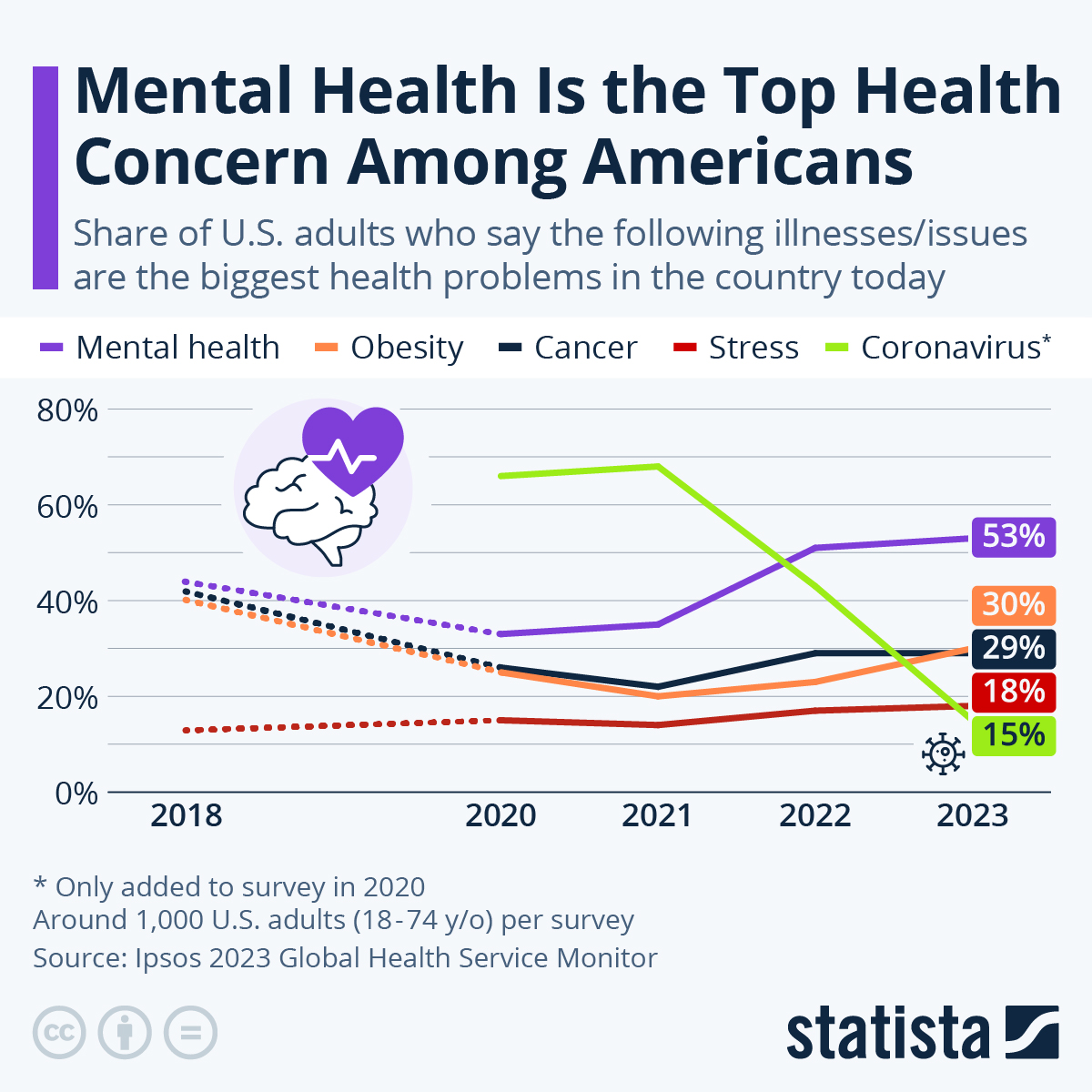
Scary Charts – 10.12.23

People who think positively about aging are more likely to recover memory
A new study has found that older persons with mild cognitive impairment (MCI), a common type of memory loss, were 30% more likely to regain normal cognition if they had taken in positive beliefs about aging from their culture, compared to those who had taken in negative beliefs.
Yale School of Public Health. “People who think positively about aging are more likely to recover memory.” ScienceDaily. http://www.sciencedaily.com/releases/2023/04/230412131116.htm (accessed April 18, 2023).
Journal Reference – Becca R. Levy, Martin D. Slade. Role of Positive Age Beliefs in Recovery From Mild Cognitive Impairment Among Older Persons. JAMA Network Open, 2023; 6 (4): e237707 DOI: 10.1001/jamanetworkopen.2023.7707
I cannot believe how wonderful the aging process is said no one ever.
Depression and Accelerated Biological Aging
“These patients show evidence of accelerated biological aging, and poor physical and brain health,” which are the main drivers of this association, says Breno Diniz, a UConn School of Medicine geriatric psychiatrist and author of the study, which appears in Nature Mental Health on March 22.
Diniz and colleagues from several other institutions looked at 426 people with late-in-life depression. They measured the levels of proteins associated with aging in each person’s blood. When a cell gets old, it begins to function differently, less efficiently, than a “young” cell. It often produces proteins that promote inflammation or other unhealthy conditions, and those proteins can be measured in the blood. Diniz and the other researchers compared the levels of these proteins with measures of the participants’ physical health, medical problems, brain function, and the severity of their depression.
University of Connecticut. “Depressed, and aging fast: Older adults with late-in-life-depression age biologically older than their chronological peers..” ScienceDaily. http://www.sciencedaily.com/releases/2023/03/230322190947.htm (accessed March 25, 2023).
Journal Reference:
Johanna Seitz-Holland, Benoit H. Mulsant, Charles F. Reynolds III, Daniel M. Blumberger, Jordan F. Karp, Meryl A. Butters, Ana Paula Mendes-Silva, Erica L. Vieira, George Tseng, Eric J. Lenze, Breno S. Diniz. Major depression, physical health and molecular senescence markers abnormalities. Nature Mental Health, 2023; 1 (3): 200 DOI: 10.1038/s44220-023-00033-z
Treatment Resistant Geriatric Depression
Reefer Madness
ADVERTISEMENT
Violence associated with psychosis has also been well-documented. Marijuana use may be associated with increased impulsivity on the same day and the following day relative to days when marijuana was not used. It is also associated with increased hostile behaviors and perceptions of hostility in others on the same day compared to days when marijuana was not used. Cannabis use disorder appears to increase the risk of aggression towards others, particularly among youths. There is also evidence of a moderate association between cannabis use and physical violence.
Psychosis can be caused by various conditions, including licit and illicit substances, particularly cannabis. Cannabis has a higher conversion rate to psychosis than other substances. 32 percent of patients with substance-induced psychosis convert to either bipolar or schizophrenia-spectrum disorders, with the highest conversion rate found with cannabis-induced psychosis (47 percent). There is debate about the causal relationship between cannabis and psychosis. However, this can be demonstrated using Bradford-Hill criteria. Despite this, psychosis is often multifactorial in many instances. Cannabis exposure increases the risk of psychosis, from transient psychotic states to chronic recurrent psychosis. In individuals with established psychosis, cannabis has a negative impact on the course and expression of the illness.
The dark side of cannabis: increased risk of psychosis — https://www.kevinmd.com/2023/01/the-dark-side-of-cannabis-increased-risk-of-psychosis.html
But really, Does Marijuana Have Any Bad Side Effects?
You must be joking about Cannabis and Psychosis, right?
Marijuana and hallucinogen use among young adults reached all-time high in 2021
Anxiety Disorders

Anxiety Disorders – A Review JAMA. 2022;328(24):2431-2445. doi:10.1001/jama.2022.22744 – https://jamanetwork.com/journals/jama/article-abstract/2799904
Unhealthful Eating – Pandemic Style
Mindless eating and snacking;
Increased food consumption;
Generalized decrease in appetite or dietary intake;
Eating to cope;
Pandemic-related reductions in dietary intake;
And, a re-emergence or marked increase in eating disorder symptoms.
Approximately 8% of those studied reported extreme unhealthy weight control behaviors, 53% had less extreme unhealthy weight control behaviors and 14% reported binge eating. The study revealed that these outcomes were significantly associated with poorer stress management, greater depressive symptoms and moderate or extreme financial difficulties.
University of Minnesota Medical School. “COVID-19 pandemic has been linked with six unhealthy eating behaviors: Study shows a slight increase in eating disorders, one of the deadliest psychiatric health concerns.” ScienceDaily. http://www.sciencedaily.com/releases/2021/04/210412114740.htm (accessed May 1, 2021).
Pandemic or no pandemic at times I am guilty of number one on the list. I found the absolute best pita crackers, crispy and salty, and…
Got Kids? READ THIS
Beyond just online platforms, the new survey finds that the vast majority of teens have access to digital devices, such as smartphones (95%), desktop or laptop computers (90%) and gaming consoles (80%). And the study shows there has been an uptick in daily teen internet users, from 92% in 2014-15 to 97% today. In addition, the share of teens who say they are online almost constantly has roughly doubled since 2014-15 (46% now and 24% then).These are some of the findings from an online survey of 1,316 teens conducted by the Pew Research Center from April 14 to May 4, 2022
Teens, Social Media and Technology 2022 — https://www.pewresearch.org/internet/2022/08/10/teens-social-media-and-technology-2022/
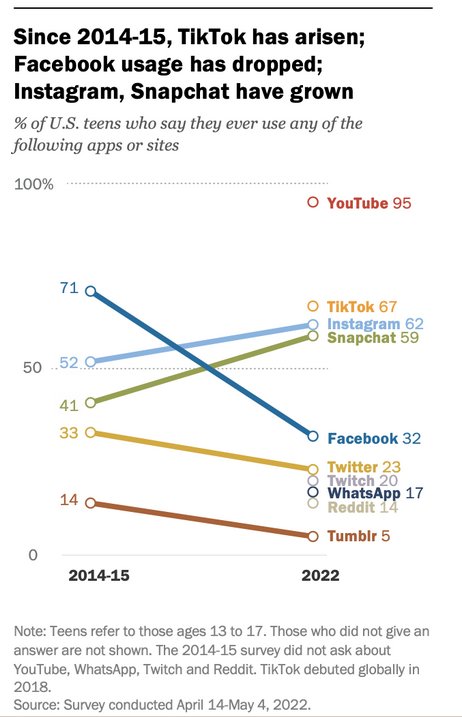

Remember my earlier post I Thought I Told You To Put That Phone Down! This earlier post has additional links to other posts on the topic of social media addiction.
Technology addictions, also commonly known as digital addictions or internet addictions, are often overlooked due to the acceptance that society has placed on using digital devices. Technology addictions often go unnoticed by loved ones because the addicted individual may appear as though they are tending to something important such as work-related tasks on their digital device, when in reality hiding behind the screen is something extraneous. When a technological problem does develop and is noticed it is often not viewed as being an imminent risk akin to an addiction to alcohol or drugs because not only is it more acceptable, but it is also not viewed as being acute or deadly. Despite these beliefs, pathological technology use can indeed be pervasive and detrimental to one’s health and well being. In a growing digital age there is a rapid expansion of digital use and subsequent potential for problematic pathological technology use to ensue.
https://www.familyaddictionspecialist.com/blog/the-6-most-common-types-of-technology-addiction
The link provided above is neither an endorsement or evidence of a previous or existing patient-therapist relationship.
Although I will admit to a quasi-addiction to You Tube for new music.


You must be logged in to post a comment.