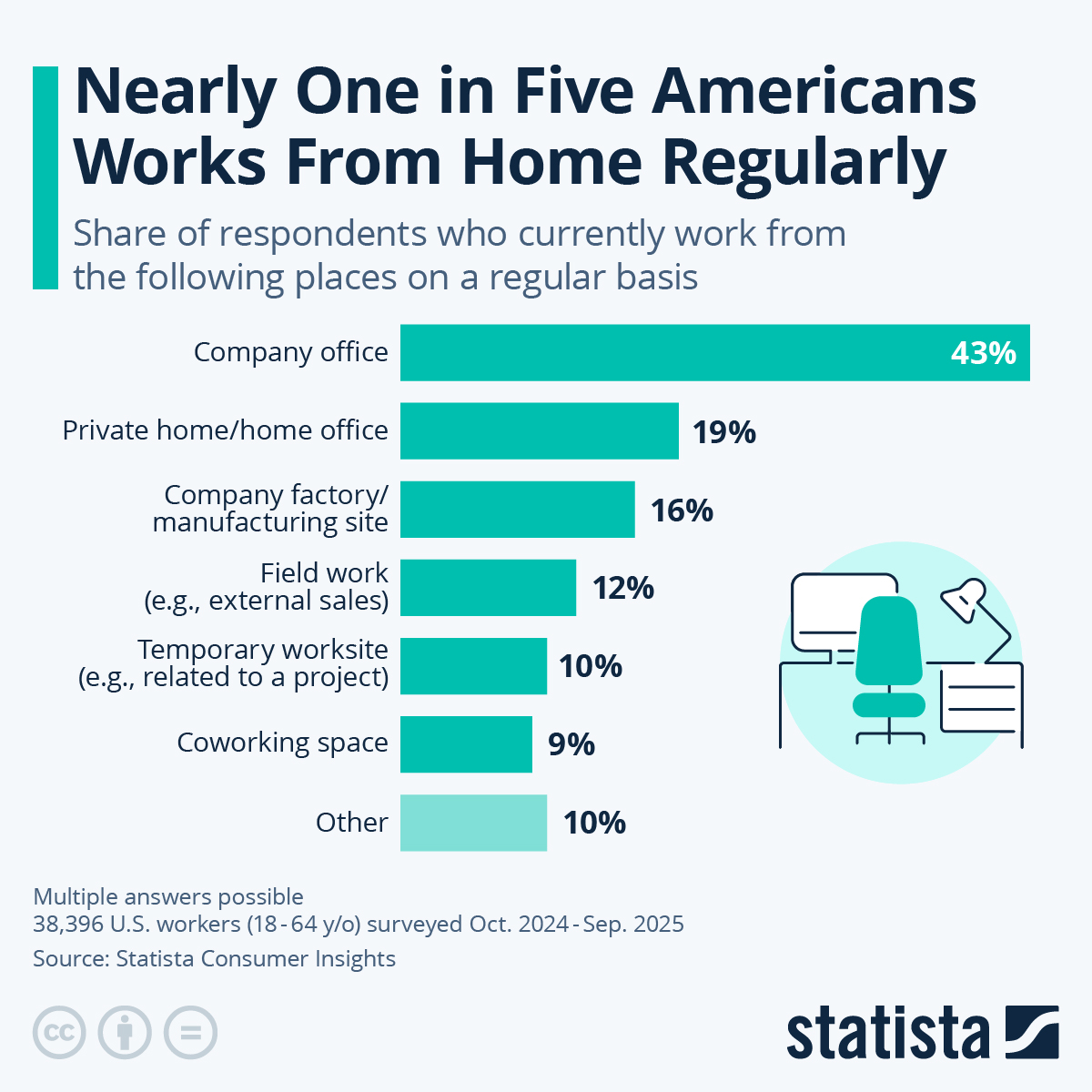
Remote Work – Not The Norm

Nearly One in Five Americans Works From Home Regularlyhttps://www.statista.com/chart/35389/regular-remote-and-home-office-work/

I started writing my journal in 2005. One of the best things about keeping a journal is the ability to verify if memories from the past are accurate or the made up, mashups your brain creates as memories. Here’s my entry on Monday July 24 2006:

A 4:00 PM meeting with the Division head with an HR rep present is never a good thing. I immediately thought to myself:

“This is gonna suck.”

And it did, big time. I got whacked today.

And that’s how my WFH life began. When my work from home situation arises in conversation most are surprised to learn I’ve been WFH this long. I’m surprised how long I’ve been working from home!

I am convinced due to having a low stress working environment, better diet (NO office snacks/free food/lunches out), no commute, along with a host of other variables I just might be increasing my lifespan. I do know I get plenty of sleep on a regular routine basis.

Short sleep duration (< 7 h per night) was associated with a 14% increase in mortality risk compared to the reference of 7–8 h, with a pooled hazard ratio of 1.14 (95% CI 1.10 to 1.18). Conversely, long sleep duration (≥ 9 h per night) was associated with a 34% higher risk of mortality, with a hazard ratio of 1.34 (95% CI 1.26 to 1.42). Sex-specific analyses indicated that both short and long sleep durations significantly elevated mortality risk in men and women, although the effect was more pronounced for long sleep duration in women. Both short and long sleep durations are associated with increased all-cause mortality, though the degree of risk varies by sex. Imbalanced sleep increases mortality risk by 14–34%: a meta-analysis – Ungvari, Z., Fekete, M., Varga, P. et al. Imbalanced sleep increases mortality risk by 14–34%: a meta-analysis. GeroScience 47, 4545–4566 (2025). https://doi.org/10.1007/s11357-025-01592-y

Just Another WFH Saturday

I’m actually not WFH (working from home) today but reading about WFH. And I learned some new things about the world today. One of my favorite tidbits of unsolicited advice comes in the form of this question:

Do you live to work or work to live?

As Gartner research shows, workers want a more “human value proposition,” with 65% of survey respondents agreeing that the pandemic made them rethink the role that work should have in their lives. For all of our talk for decades about work-life balance, people finally feel in their bones what that means. The big question has shifted from “How does life fit into work?” to “How does work fit into life?”

How to Motivate Employees When Their Priorities Have Changed — https://hbr.org/2023/05/how-to-motivate-employees-when-their-priorities-have-changed

Nice to see others coming around to my way of thinking. The strongest motivation I had to establishing a WFH life was to not have work dominate my entire life. Not once have I felt lonely working in my home office. But apparently some WFH people get lonely.

When I first made the switch to working remotely, I was elated. I had been commuting for years, which regularly constituted 12 or more hours stuck in traffic each week and resulted in incalculable levels of stress and frustration. When I began working from home, in addition to regaining my lost commuting hours, I loved my new ability to focus on my work without the distraction of an open-plan office environment.

However, as time progressed, I started to feel lonely. I was able to laser-focus on my work, but my interactions with others were driven solely by virtual meeting agendas or email. I noticed I was becoming less enthused and more withdrawn. I spent too much time scrolling social media because I was silently craving connection with others. I was slowly but steadily becoming isolated.

Is Your Remote Job Making You Lonely? — https://hbr.org/2023/05/is-your-remote-job-making-you-lonely

Maybe you should turn your camera on during meetings.

A recent survey of 4,200 work-from-home employees found that 49% report a positive impact from engagement when their cameras are on during online meetings, and only 10% felt disengagement from turning on cameras. As leaders are figuring out hybrid and remote work, they are facing the challenge of deciding whether to encourage employees to keep their cameras on during meetings. This decision has a significant impact on communication, engagement and trust-building within the team. I can attest to that from my experience helping 21 organizations transition to long-term hybrid work arrangements.

The Pros and Cons of ‘Cameras On’ During Virtual Meetings — https://www.entrepreneur.com/leadership/the-pros-and-cons-of-cameras-on-during-virtual-meetings/450959

Then again, there may be a good reason why people have their cameras off.

May 2022 study by the Federal Reserve Bank of Atlanta estimates that the number of working age Americans (25 to 54 years old) with substance use disorders has risen by 23% since pre-pandemic, to 27 million. A figure that’s about one in six of people who were employed around the time of the study. It’s caused a 9% to 26% drop in labor force participation that Karen Kopecky, one of the authors of the report, says continues today.Drug recovery firm Sierra Tucson concluded from a November 2021 survey that about 20% of US workers admitted to using recreational drugs while working remotely, and also to being under the influence during virtual meetings. Digital recovery clinic Quit Genius found in August 2022 that one in five believe that substance use has affected their work performance, also according to a survey.

Remote workers with substance use disorders face ‘rude awakening’ in return-to-office mandates — https://fortune.com/2023/05/13/remote-workers-substance-use-disorders-return-to-office-mandates/

OK, enough about WFH. Time to get back to thinking about retirement because (I am) Flunking Retirement.

Management Alert – Do Not Ignore This Survey

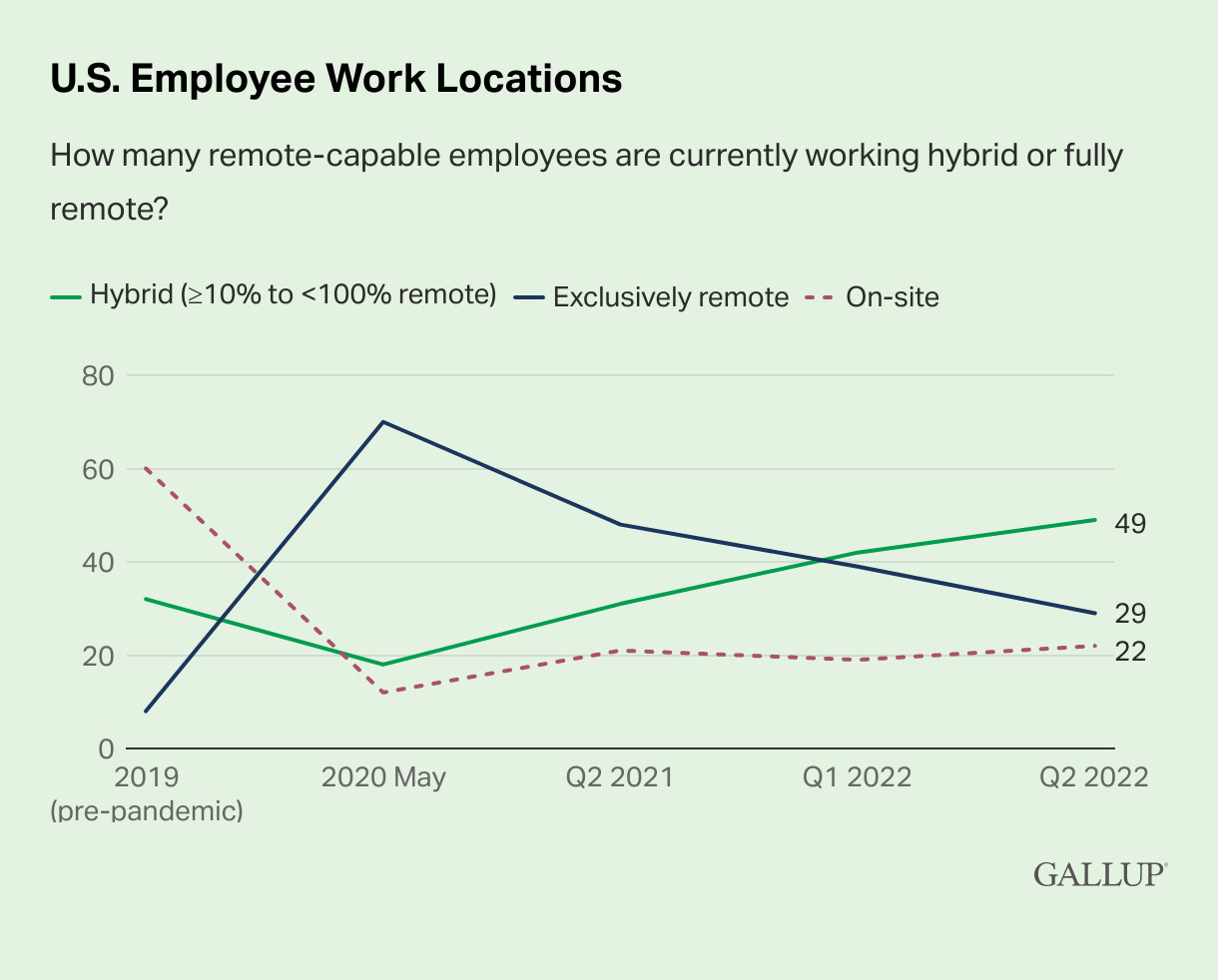
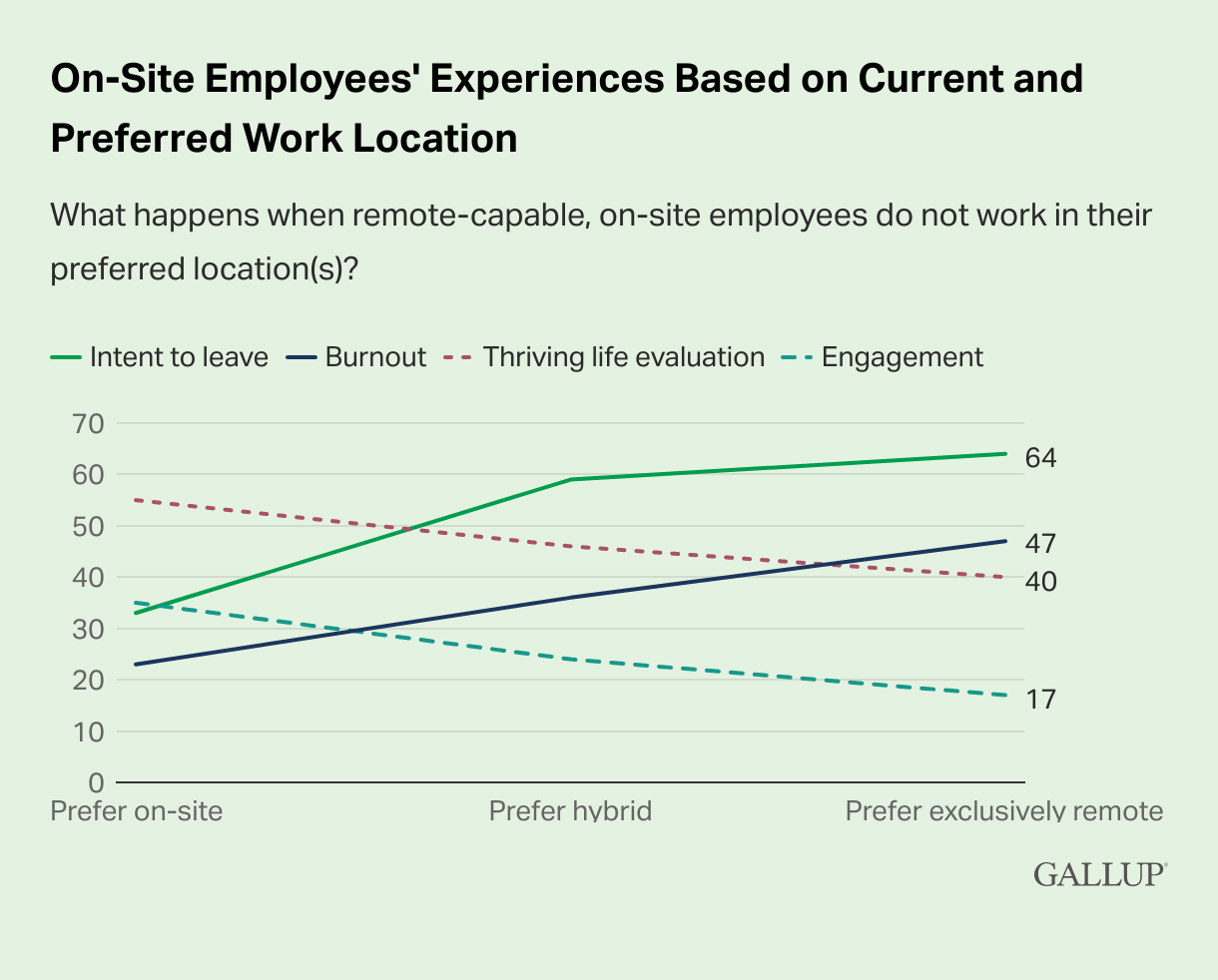
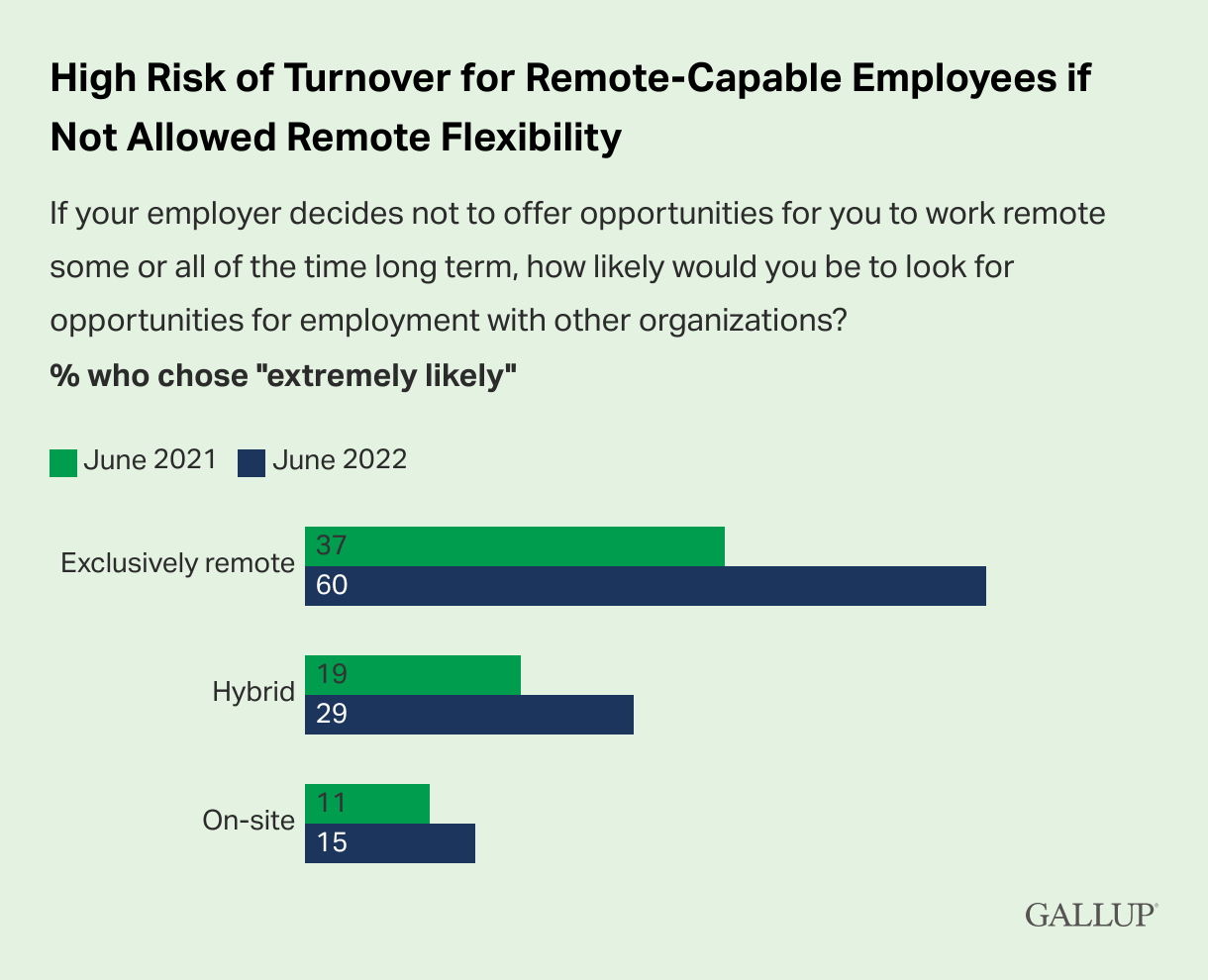
A mere 6% want to work entirely on-site going forward. Doesn’t it seem that traditional management and workplace practices are broken if more than 90% of 70 million employees say they don’t want to come back to the office full time?

Returning to the Office: The Current, Preferred and Future State of Remote Work — https://www.gallup.com/workplace/397751/returning-office-current-preferred-future-state-remote-work.aspx

I work in a profession that is perfectly suited for WFH. I’ve worked from home since 2006. Aside from losing most of my social skills…

Going Back to the Office? (You Can’t. Not now. Not Ever)

People with talent and high-value skills, like most technology workers, aren’t returning to traditional offices.

How to lure employees back to the office? You can’t. Not now. Not ever. — https://www.zdnet.com/article/they-really-arent-going-back-work-from-home-is-here-to-stay/

I started working from home in 2006. I love reading articles on topics I already know a lot about.

The future of knowledge work will be a hybrid. A small percentage (like myself) will WFH 100% of the time and an even smaller percentage will work in an office 100% of the time. Most will travel to their offices a few times a month and WFH the rest of the time.

I drove a 2006 Ford Taurus for nearly 15 years and didn’t pass 80,000 miles. (short commute)

My business casual attire consists of jeans and a tee shirt.

Coffee is cheaper and tastes a lot better than office coffee too.

Need Retirement Income? – (Life Underwriters Need Not Worry)

The total number of life insurance policies sold rose 8% in the first six months of the year and marked the highest such growth since 1983, LIMRA said. And there were other indicators in that same data that pointed to positive signs: Total U.S. life insurance premium increased 21% in the second quarter 2021, the largest year-over-year increase since third quarter 1987; in addition, it was up 18% for the first half of 2021 compared to the prior year.

Life Insurance Sales Are Up, But for How Long? — https://news.ambest.com/articlecontent.aspx?refnum=313837&altsrc=2

I know who you are and I know what you want. If you are looking for ransom, I can tell you I don’t have very much money. But what I do have are a very particular set of skills; skills I have acquired over a very long career. Skills that are currently in short supply. Skills that I can and will take to the highest bidder.

The Supreme Commander

I last posted about my upcoming retirement in More Retirement Income Ahead!

I need to start referring to my upcoming retirement as What Retirement?

Nationwide Moves To Permanent Work-From-Home Strategy

“We’ve been investing in our technological capabilities for years, and those investments really paid off when we needed to transition quickly to a 98 percent work-from-home model,” said Nationwide CEO Kirt Walker.

I’ve been working from home for nearly 14 years.  Social distancing comes naturally to me at this point in time.  It’s interesting to me a virus will be remembered as the Gladwell tipping point for showing the corporate world  a better way of working.

98% permanent WFH!

Be Proactive – Be Prepared

Marler Clark is a law firm in Seattle Washington.  Outstandingly proactive and quoted here for my readers to view.

I especially liked the generous financial contribution to the employees and the last item on the list to stock in your pantry.

Here is what I sent my staff late last week:

All, see symptoms below – if you are sick, please stay home.

https://www.cdc.gov/coronavirus/2019-ncov/about/symptoms.html

I have asked Chris and Michelle to give me some ideas on recommendations on how to responsibly deal with this from a medical issue.  We will give you all our thoughts early next week.

All, please email to Leslie all your contact information and a close contact too.  Leslie, please share that with all.

All, please let me know if anyone needs any technology to work from home if necessary if this becomes a bigger problem.  Think about what you might need to work from home for an extended period of time.  What do you need to effectively do your job from home – computer, paper, pens, etc.?  COVID-19 is not an excuse to work from home, but I want to be prepared and sensible.

Also, let’s look at travel schedules over the coming months to see if there are alternatives.  Please shoot me your travel over the next 30-60 days.

All, take a hard look at your cases – what deadlines might be impacted by Court and other office closures, etc.  I want us to be proactive and think ahead.  I do not want deadlines missed.

Finally, not to be a “prepper,” but Kelli, please drop $2,500 (pre-tax) into everyone’s account on Monday to be used as they see fit to prepare for some disruptions.  I have not thought of exactly what those needs might be, but there are probably a few websites that have suggestions.

Here are some ideas for being prepared for home:

All medications (over the counter *ibuprofen* , allergy, cold etc and prescriptions )

All household products you will need for two weeks (toilet paper, soap, paper towels, laundry detergent, cleaning supplies, etc)

Supply of water for two weeks

Food for two weeks

         ⁃        Chicken broth

         ⁃        Beans

         ⁃        Onions

         ⁃        Garlic

         ⁃        Potatoes – sweet, Yukon, etc

         ⁃        Pasta

         ⁃        Canned tomatoes

         ⁃        Steel cut oats

         ⁃        Peanut butter

         ⁃        Bread *freezer*

         ⁃        Eggs

         ⁃        Frozen meat

         ⁃        Canned fish

         ⁃        Jerky or dried meat

         ⁃        Dried nuts and fruit

         ⁃        Popcorn

         ⁃        Chocolate

         ⁃        Wine/booze of choice

Link to the full article post.