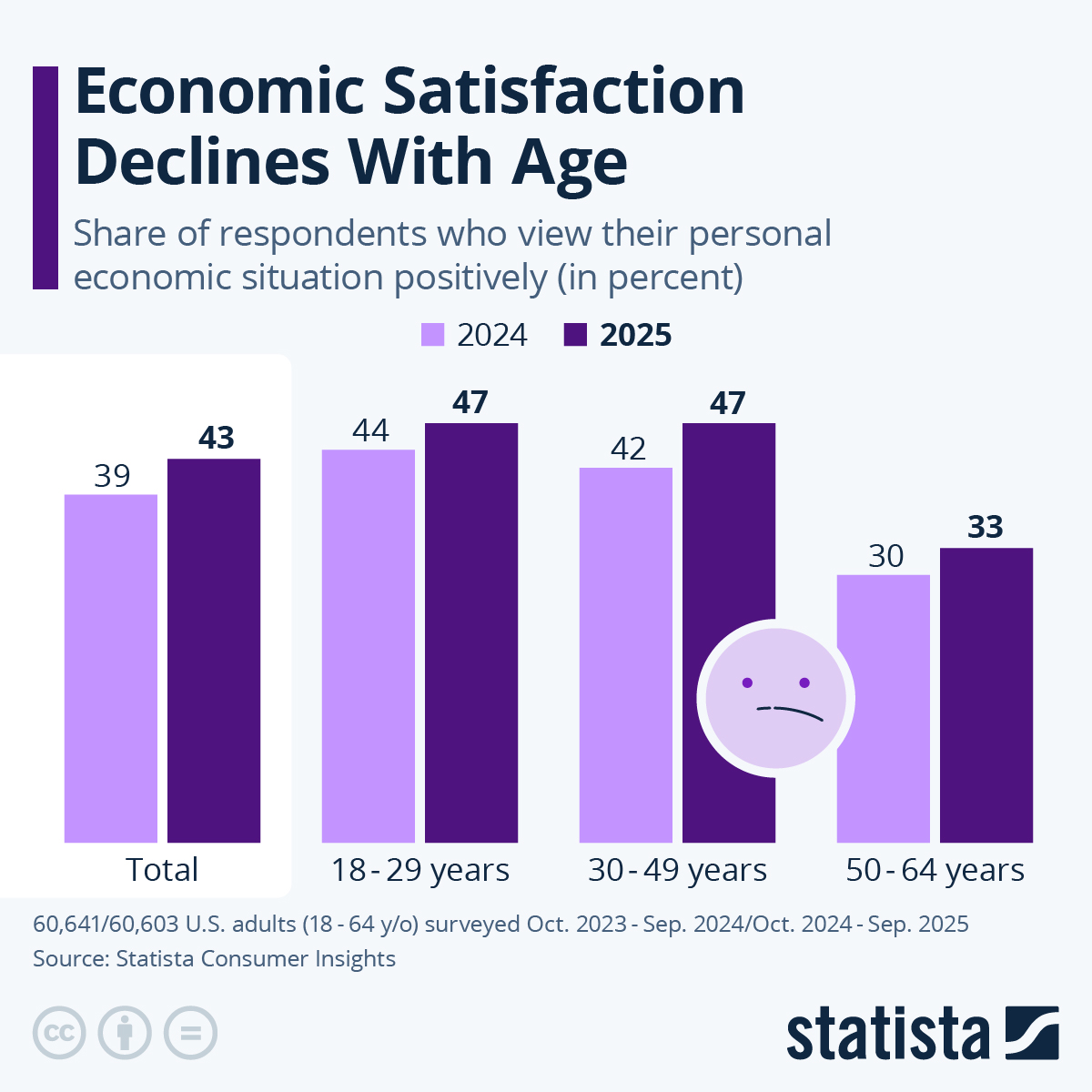
Are you familiar with the self-fulfilling prophecy in psychology/sociology? Simply stated a self-fulfilling prophecy occurs when what you believe about your future causes it to happen. When you believe something will become true, you’ll act to make it a reality. Look at the chart above. Looks like around 50% of the survey respondents under the age of 50 will never achieve their American Dream.
They will make choices and act in ways to ensure they will never achieve the American Dream.
I briefly considered medical school when I was in my 20’s. I never considered medical school when I was in my 60’s. Wonderful story. A very impressive human being.
Retirement doesn’t just raise financial concerns – it can also mean feeling unmoored and irrelevant
Published: August 29, 2024 8:49am EDT
Author
Marianne Janack John Stewart Kennedy Professor of Philosophy, Hamilton College
Disclosure statement
Marianne Janack does not work for, consult, own shares in or receive funding from any company or organization that would benefit from this article, and has disclosed no relevant affiliations beyond their academic appointment.
But this might not be the biggest problem that potential retirees face. The deeper issues of meaning, relevance and identity that retirement can bring to the fore are more significant to some workers.
Work has become central to the modern American identity, as journalist Derek Thompson bemoans in The Atlantic. And some theorists have argued that work shapes what we are. For most people, as business ethicist Al Gini argues, one’s work – which is usually also one’s job – means more than a paycheck. Work can structure our friendships, our understandings of ourselves and others, our ideas about free time, our forms of entertainment – indeed our lives.
I teach a philosophy course about the self, and I find that most of my students think of the problems of identity without thinking about how a job will make them into a particular kind of person. They think mostly about the prestige and pay that come with certain jobs, or about where jobs are located. But when we get to existentialist philosophers such as Jean-Paul Sartre and Simone de Beauvoir, I often urge them to think about what it means to say, as the existentialists do, that “you are what you do.”
Don’t let yourself be misled. Understand issues with help from experts
How you spend 40 years of your life, I tell them, for at least 40 hours each week – the time many people spend at their jobs – is not just a financial decision. And I have come to see that retirement isn’t just a financial decision, either, as I consider that next phase of my life.
Usefulness, tools and freedom
For Greek and Roman philosophers, leisure was more noble than work. The life of the craftsperson, artisan – or even that of the university professor or the lawyer – was to be avoided if wealth made that possible.
The good life was a life not driven by the necessity of producing goods or making money. Work, Aristotle thought, was an obstacle to the achievement of the particular forms of excellence characteristic of human life, like thought, contemplation and study – activities that express the particular character of human beings and are done for their own sake.
And so, one might surmise, retirement would be something that would allow people the kind of leisure that is essential to human excellence. But contemporary retirement does not seem to encourage leisure devoted to developing human excellence, partly because it follows a long period of making oneself into an object – something that is not free.
German philosopher Immanuel Kant distinguished between the value of objects and of subjects by the idea of “use.” Objects are not free: They are meant to be used, like tools – their value is tied to their usefulness. But rational beings like humans, who are subjects, are more than their use value – they are valuable in their own right, unlike tools.
And yet, much of contemporary work culture encourages workers to think of themselves and their value in terms of their use value, a change that would have made both Kant and the ancient Greek and Roman philosophers wonder why people didn’t retire as soon as they could.
But as one of my colleagues said when I asked him about retirement: “If I’m not a college professor, then what am I?” Another friend, who retired at 59, told me that she does not like to describe herself as retired, even though she is. “Retired implies useless,” she said.
So retiring is not just giving up a way of making money; it is a deeply existential issue, one that challenges one’s idea of oneself, one’s place in the world, and one’s usefulness.
One might want to say, with Kant and the ancients, that those of us who have tangled up our identities with our jobs have made ourselves into tools, and we should throw off our shackles by retiring as soon as possible. And perhaps from the outside perspective, that’s true.
But from the participant perspective, it’s harder to resist the ways in which what we have done has made us what we are. Rather than worry about our finances, we should worry, as we think about retirement, more about what the good life for creatures like us – those who are now free from our jobs – should be.
At the age of fifty I began the process of becoming what I wanted to be. I had known for a long time that I was a teacher and that the vehicle for my teaching would be in my writing. I also came to the conclusion I would never be compensated well enough through writing to support myself and my family. So I got good at something else.
That something else has and continues to provide a good living.
What I do is who I am and who I am is what I do. No existential crisis here.
The researchers found that people in the high resiliency group were less anxious and depressed, less prone to judge, and had activity in regions of the brain associated with emotional regulation and better cognition compared to the group with low resiliency. “When a stressor happens, often we go to this aroused fight or flight response, and this impairs the breaks in your brain,” Gupta said. “But the highly resilient individuals in the study were found to be better at regulating their emotions, less likely to catastrophize, and keep a level head,” added Desiree Delgadillo, postdoctoral researcher and one of the first authors.
The high resiliency group also had different microbiome activity than the low resiliency group. Namely, the high resiliency group’s microbiomes excreted metabolites and exhibited gene activity associated with low inflammation and a strong and healthy gut barrier. A weak gut barrier, otherwise known as a leaky gut, is caused by inflammation and impairs the gut barrier’s ability to absorb essential nutrients needed by the body while blocking toxins from entering the gut.
Resilience is the capacity to remain flexible and adaptable while facing life’s challenges. It is a complex concept involving traits, environmental factors, and a learned capacity that comes from experience. https://positivepsychology.com/what-is-resilience/
Ben Carlson is a smart man. His short list of unexciting, non-sexy and generally boring bits of investment advice inspired me to add my own generally boring bits of non solicited quasi-investment advice. And in no particular order of importance here they are.
Live beneath your means.
Pay yourself first (save, save, save some more).
Invest in your health (diet, exercise, etc).
Invest in your brain, be a lifelong learner.
Connect with family and friends (social media doesn’t count).
Find your purpose.
Work hard. Hard work is no guarantee of success but the lack of hard work guarantees failure.
A happy fulfilling life is more than just the money or your net worth.
In the pursuit of “fine” to “great,” we chase products. Through no fault of our own, we fall prey to messaging from social media users, algorithms, and expert marketers, urging us that this shampoo or this rug will shift the scales toward enoughness. “This is how the marketplace continues to work,” says Brooke Erin Duffy, an associate professor of communication at Cornell University, “which is by amplifying our inadequacies and insecurities.”
Baked into these social platforms is a natural ecosystem for comparison. In the past, people weighed themselves against celebrities in the media and those within their immediate social circles, Duffy says. Now, we can compare ourselves to the idealized version of millions of strangers online — who may be perpetuating an aesthetic trend inspiring us to buy in order to participate.
You must be logged in to post a comment.