
The State of the Canadian Debt Slaves, and How They Compare to the American Debt Slaves
Tick…tick…tick…
Thank you Dr. Pearson.
About 16% of lesions were missed, and approximately 5% of clinically important prostate cancers (>5 mm, Gleason score > 3+3) were underestimated on MP MRI, according to Baris Turkbey, MD, of the Molecular Imaging Program at the National Cancer Institute in Bethesda, Maryland, and colleagues. Overall, prostate cancer size was underestimated by at least 30% in eight (8%) of 100 patients. Their study was published online October 20 in Radiology.
The study, for which Dr Gunn was lead author, was a survey of 59 radiologists and 100 primary care physicians at Massachusetts General Hospital (MGH), which he undertook during his training there (J Am Coll Radiol. 2013;10:122-127).
Both groups of doctors were asked to consider hypothetical radiology reports and interpret the statistical likelihood (0% to 25%, 26% to 50%, and so on) of the presence of metastatic disease based on the terms used in the report.
The modifying terms were “diagnostic for,” “represents,” “likely represents,” “probably,” “consistent with,” “compatible with,” “concerning for,” “suspicious for,” “may represent,” and “cannot exclude.”
Source: Jargon Muddies Radiology Reports, Including About Cancers
The article comments are priceless. For example, Dr. Mark Walters writes:
Clear as mud.
In the Jackson Heart Study (JHS), we examined the association of diabetes with abdominal aortic calcification (AAC) among African Americans. Among included individuals (n = 1,664), the mean age was 57 (± 11) years, 69% were female, and 18.3% had diabetes (based on fasting blood glucose [FBG], HbA1c, use of glucose-lowering medications, or physician diagnosis). The median AAC and coronary artery calcification (CAC) scores were 904.15 (interquartile range 0–1093.10) and 0 (0–96.19), respectively. The prevalence of any AAC or CAC was 69% and 49%, respectively. Individuals with diabetes were older, had higher BMI, had higher systolic blood pressure and prevalence of hypertension, had lower HDL levels, were less affluent or physically active, had poorer nutritional intake, and had higher levels of hs-CRP.
Source: Diabetes Care
Source: Study Finds Sharp Rise in Colon Cancer and Rectal Cancer Rates Among Young Adults
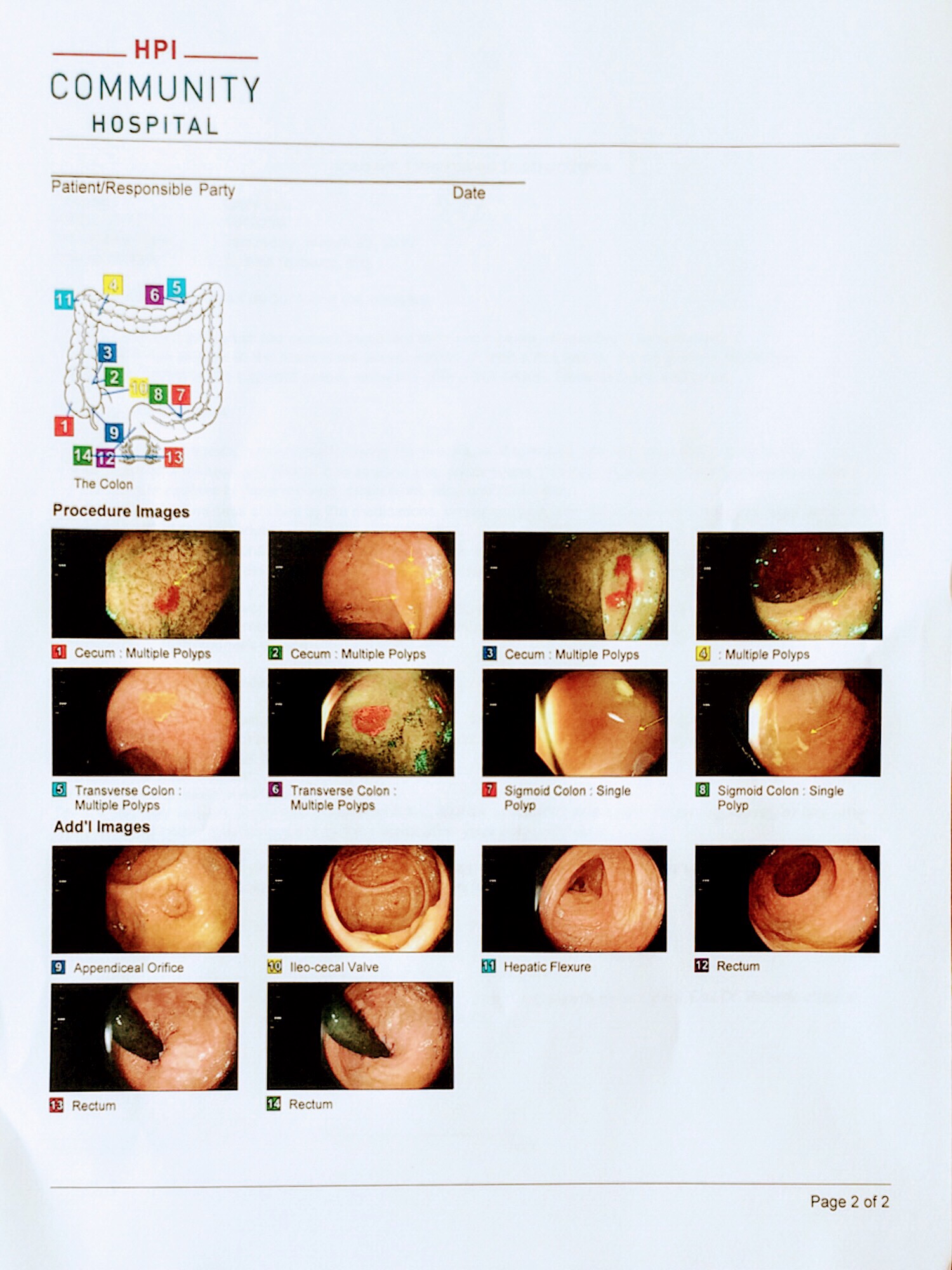
This was the coolest colonoscopy report I’ve ever seen. I just had to share.
Conclusions: Our findings suggest that left ventricular longitudinal relaxation velocity declines as a part of healthy aging and is largely prognostically benign. The use of age-based normative values when considering an elderly population improves the risk discrimination of diastolic measures for incident HF or death.
Prognostically benign!
Almost twice as sensitive as TRUS-biopsy for detecting aggressive prostate cancer
Source: MRI Can Rule Out Need for Biopsy in Men with High PSA | Medpage Today
 lifeunderwriter.net