Hospital Administrators 2.0
Any Polyp Type Raises CRC Risk
A finding of any type of polyp in the colon increases the risk for colorectal cancer (CRC), according to new findings from a large Swedish study.
At 10 years, the cumulative colorectal cancer incidence was 1.6% among patients with hyperplastic polyps, 2.5% among those with sessile serrated polyps, 2.7% for tubular adenomas, 5.1% for tubulovillous adenomas, and 8.6% for villous adenomas, as compared with 2.1% for the control group.
However, a higher risk for colorectal-related death was only observed in patients with sessile serrated polyps, tubulovillous adenomas, or villous adenomas.
The study was published online March 16 in Lancet Gastroenterology & Hepatology.
Boldface sections are mine.
I had my first virtual visit with my physician yesterday. I mentioned that I was postponing my colonoscopy this year for pandemic reasons. She said that’s fine, don’t worry about it. I read this article today. Now I know why I’m on a three year callback.
Hospital Administrators
Creepy Data – Tracking Movement With Cell Phone Data
What Retirement?
Coronavirus Shock Is Destroying Americans’ Retirement Dreams
For older people, the coronavirus crisis has been an appalling shock. Many can’t travel or see grandchildren. Even buying groceries is a risk. Their life savings are melting as the global economy shuts down and financial markets plummet. The pain may be particularly acute in the U.S., where Americans rely on a retirement system that was broken well before a pandemic dashed it to pieces.
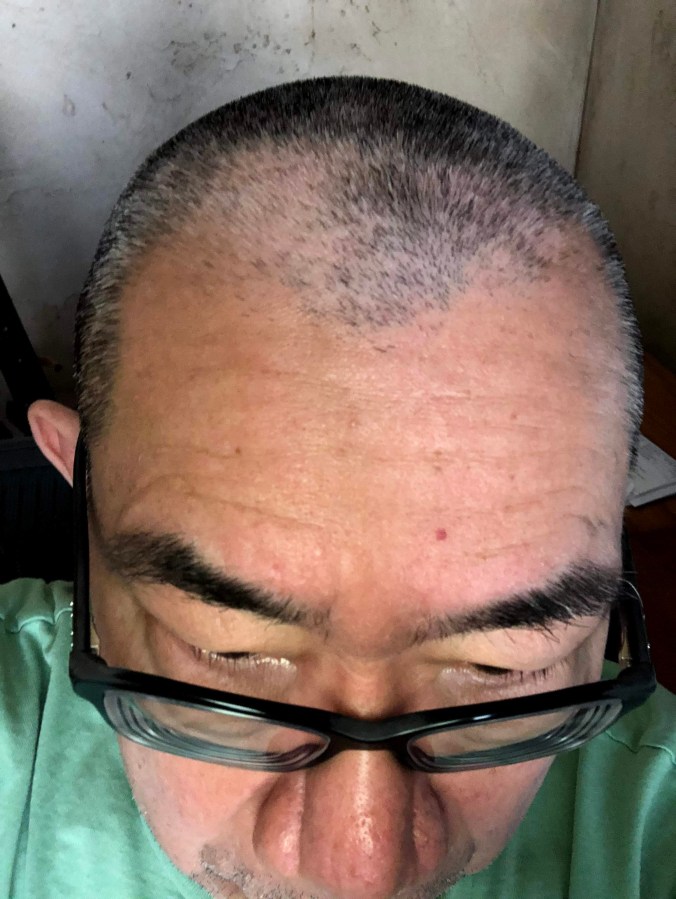
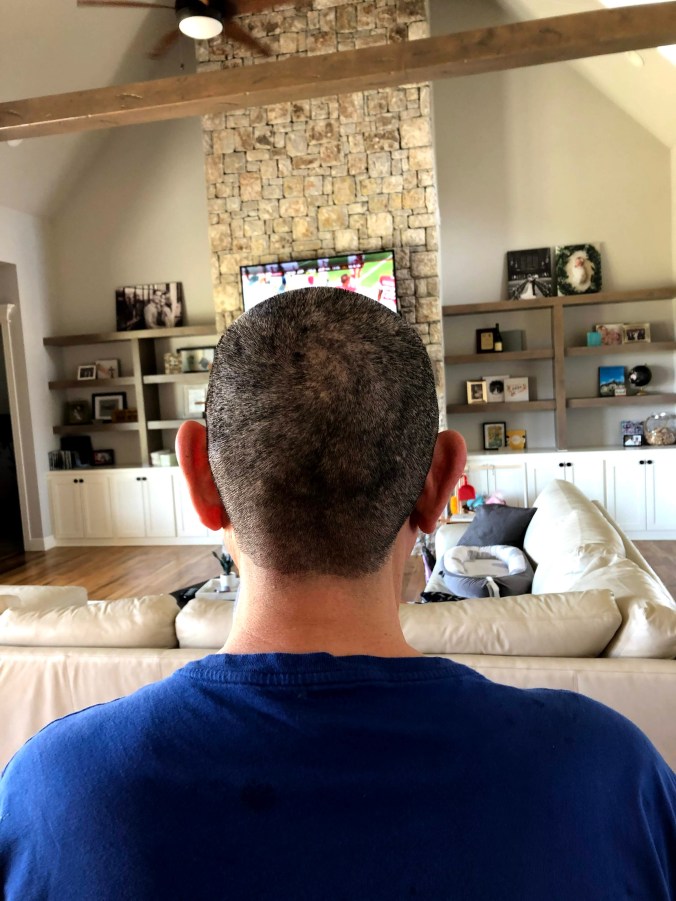
Covid-19 Buzz Cut – Day One – 03.29.20
I am back in my home office learning and sharing about shelter in place. Yesterday my son helped me cut my hair. He’s been cutting his own hair since medical school. As the doctor inspected my work he said,
“You missed a few spots.”
So he finished up what I started.
Today I researched “essential” businesses.
Barbershops are not considered “essential”
I expected this hence the shelter in place buzz cut.
Yes, it’s real short. Top view.
Backside view.
What does “Shelter in Place” mean?
The following advice is from from the OKC government website.
What does “Shelter in Place” mean?
The “Shelter in Place” emergency order is effective from 11:59 p.m. Saturday, March 28 through April 16.
In general, it’s simple:
Stay home. Exceptions are below on this list.
- You can shop for groceries, medicine, gas, repairs, and other essential goods and services. “Shelter in Place” emergency order is effective from 11:59 p.m. Saturday, March 28 through April 16.
- You can go to a restaurant for takeout or drive-thru service.
- You can go to the doctor and take care of other essential needs.
- You can exercise outside, including on sidewalks, trails and in public parks. You can enjoy outdoor activities like long walks, bike rides and fishing. Green spaces in parks are open. But all playgrounds are closed. City-owned golf courses, fitness courts, dog parks, recreation center and sport courts (basketball, tennis, volleyball, etc.) are closed.
- You can go to work in an essential job. You can also do business with someone working in an essential job. Those jobs are defined by the State of Oklahoma, using a federal list and one provided by the Governor. Find out more at okcommerce.gov/covid19.
- You can drive, bike, walk and take transit. You don’t need special ID or a permit. Police aren’t asking people to prove why they’re outside their home.
- You can work from home if you work in a job defined by the State as non-essential. You can also work with someone doing a non-essential job from home. Even if it’s an essential job, employers are encouraged to allow employees to work from home if possible.
- Staff are allowed on site even at closed non-essential businesses for basic tasks like maintenance and security.
- You can check on someone in need.
- You can donate at blood drives, volunteer at food banks and participate in other disaster response activities.
- Staff can be at faith-based sites to record or broadcast services.
- Stay 6 feet away from others, for your safety and theirs.
- Wash your hands before you leave your house, and as soon as you get home.
- You can call 911 if you have specific information about someone violating the order. Police may investigate. Officers will ask for voluntary compliance, but may use discretion to issue citations if necessary.
A violation of the City proclamation’s terms would be a class “b” misdemeanor under City Code, punishable by up to 6 months in jail and a fine of up to $750.
Visit covid19.okc.gov for the latest local news, updates and guidance on COVID-19.
Remember that all of this IS NOT ABOUT YOU! Please stay at home except for essential trips as defined above. And if you are a #Covidiot the least you can do is stay off of social media with your uninformed opinions and conspiracy theories.
This is real.
Covid-19 for the general medicine doctor
via Covid-19 for the general medicine doctor
Dr. Sean – many thanks for your excellent post with even more excellent commentary and links. Wonderful!
In case the link above does not work try the link below.
https://sean9n.wordpress.com/covid19/
Cardiac Injury Common in COVID-19, Tied to Increased Mortality Risk
Cardiac Injury Common in COVID-19, Tied to Increased Mortality Risk
After adjustment for confounders, including acute respiratory distress syndrome, cardiac injury remained a significant predictor of mortality.
 lifeunderwriter.net
You must be logged in to post a comment.