Too Old To Grow Up
Diet Until Proven Otherwise
According to a study published in BMC Medicine, men who ate the most plant-based foods had a 22 percent reduced risk of colon cancer, compared with those who ate the least. Eating a plant-based diet increases consumption of fiber and antioxidants associated with cancer prevention, while simultaneously avoiding the compounds in animal products linked to cancer risk. It has long been known that people who avoid meat are at reduced risk.
The power of nutrition in cancer prevention — https://www.kevinmd.com/2024/02/the-power-of-nutrition-in-cancer-prevention.html
Also schedule that colonoscopy you’ve been putting off.
Anorexia
Anorexia has one of the highest mortality rates of any psychiatric illness. People with anorexia are 18 times as likely to die from suicide as their peers. Fewer than half of those with anorexia make a full recovery.
Opinion: Anorexia Should Never Be Considered a Terminal Illness — https://undark.org/2024/02/08/opinion-anorexia-terminal-illness/
It May Look Like I’m Not Doing Anything But I’m Actually in Default Mode
The default mode was one of the first brain networks characterized by science. It consists of a handful of brain regions, including a few at the front of the brain, like the dorsal and ventral medial prefrontal cortices, and others scattered throughout the organ, like the posterior cingulate cortex, the precuneus and the angular gyrus. These regions are associated with memory, experience replay, prediction, action consideration, reward/punishment and information integration…
According to research, the effects of the default mode network include mind wandering, remembering past experiences, thinking about others’ mental states, envisioning the future and processing language. While this may seem like a grab bag of unrelated aspects of cognition, Vinod Menon, the director of the Stanford Cognitive & Systems Neuroscience Laboratory, recently theorized that all of these functions may be helpful in constructing an internal narrative. In his view, the default mode network helps you think about who you are in relation to others, recall your past experiences and then wrap up all of that into a coherent self-narrative.
What Your Brain Is Doing When You’re Not Doing Anything — https://www.quantamagazine.org/what-your-brain-is-doing-when-youre-not-doing-anything-20240205
Great article.
Complications? What Complications? (just another GLP-1 receptor agonist post)
Adverse events are common in those using GLP-1 agonists, but the vast majority of these are minor. GI adverse effects are most common (20-70% of patients). Greater rate of GI effects with higher doses.
emDOCs Podcast – Episode 94: GLP-1 Agonist Complications — https://www.emdocs.net/?s=glp-1
- Most common problems: nausea (overall most common), vomiting, and diarrhea. Others included abdominal pain, dyspepsia, and constipation.
- Symptoms are typically more severe within the first four weeks of therapy or with sudden escalation of therapy and tend to decrease over time.
- Thought to be due to reduced gastric emptying and activation of centers involved in appetite regulation and nausea.
- Severe diarrhea and vomiting may lead to volume loss, dehydration, and hypotension (not common).
- There is an association with pancreatitis. GLP-1 agonists may stimulate pancreatic islet beta cells and exocrine duct cells leading to overgrowth and smaller duct size, which increase the pancreatic weight and risk of ductal occlusion.
- Retrospective study published in 2022 of 81,752 adverse events associated with GLP-1 agonist therapy found an increased risk of pancreatitis, particularly with liraglutide (ROR 32.67; 95% CI 29.44-36.25). 2023 observational study found increased risk of pancreatitis (adjusted HR of 9.09, 95% CI 1.25-66).
- Other GI issues include gallbladder and biliary tract disease (usually after 26 weeks of therapy and included cholelithiasis, cholecystitis, cholangitis), elevated LFTs, hepatitis, liver injury.
New Wonder Drug! Treat Diabetes, Obesity AND Addiction – (yup another GLP-1 receptor agonist post)
Why People Stop Using Drugs Like Ozempic – Wired (yet another GLP-1 receptor agonist post)
What the Scientists Who Pioneered Weight-Loss Drugs Want You to Know – Wired Magazine
My YouTube Algorithm Advertisements

I am not very handy.

The algorithm thinks I need an electric vehicle. But just in case the target doesn’t want to spend that much…

How about a cheap cruise?

Or a cheap Tiny Home?

New bathtub?

AND my favorite ad…

Seriously???
Undiagnosed Cirrhosis and Hepatic Encephalopathy in Dementia
The findings of this cohort study suggest that, in a national veterans cohort of patients with dementia, 5% to 10% of the patients have laboratory values suggestive of possible undiagnosed cirrhosis that could implicate HE as a contributor to overall cognitive impairment. Patients in this study with possibly undiagnosed cirrhosis were more likely to be of races other than White, Hispanic, and urban-dwelling, and more likely to have AUD and viral hepatitis. These percentages of affected patients were corroborated with medical records review of 2 separate validation cohorts. In conclusion, FIB-4 should be considered as a screening tool to detect cirrhosis and potential HE in older veterans with dementia. Those with high scores (eg, >2.67) should be considered for further evaluation and treatment.
Undiagnosed Cirrhosis and Hepatic Encephalopathy in a National Cohort of Veterans With Dementia — JAMA Netw Open. 2024;7(1):e2353965. doi:10.1001/jamanetworkopen.2023.53965 — https://jamanetwork.com/journals/jamanetworkopen/fullarticle/2814346
Aerobic + Resistance (do both)
Conclusions: In adults with overweight or obesity, aerobic exercise alone or combined resistance plus aerobic exercise, but not resistance exercise alone, improved composite CVD risk profile compared with the control.
Aerobic, resistance, or combined exercise training and cardiovascular risk profile in overweight or obese adults: the CardioRACE trial – European Heart Journal https://doi.org/10.1093/eurheartj/ehad827
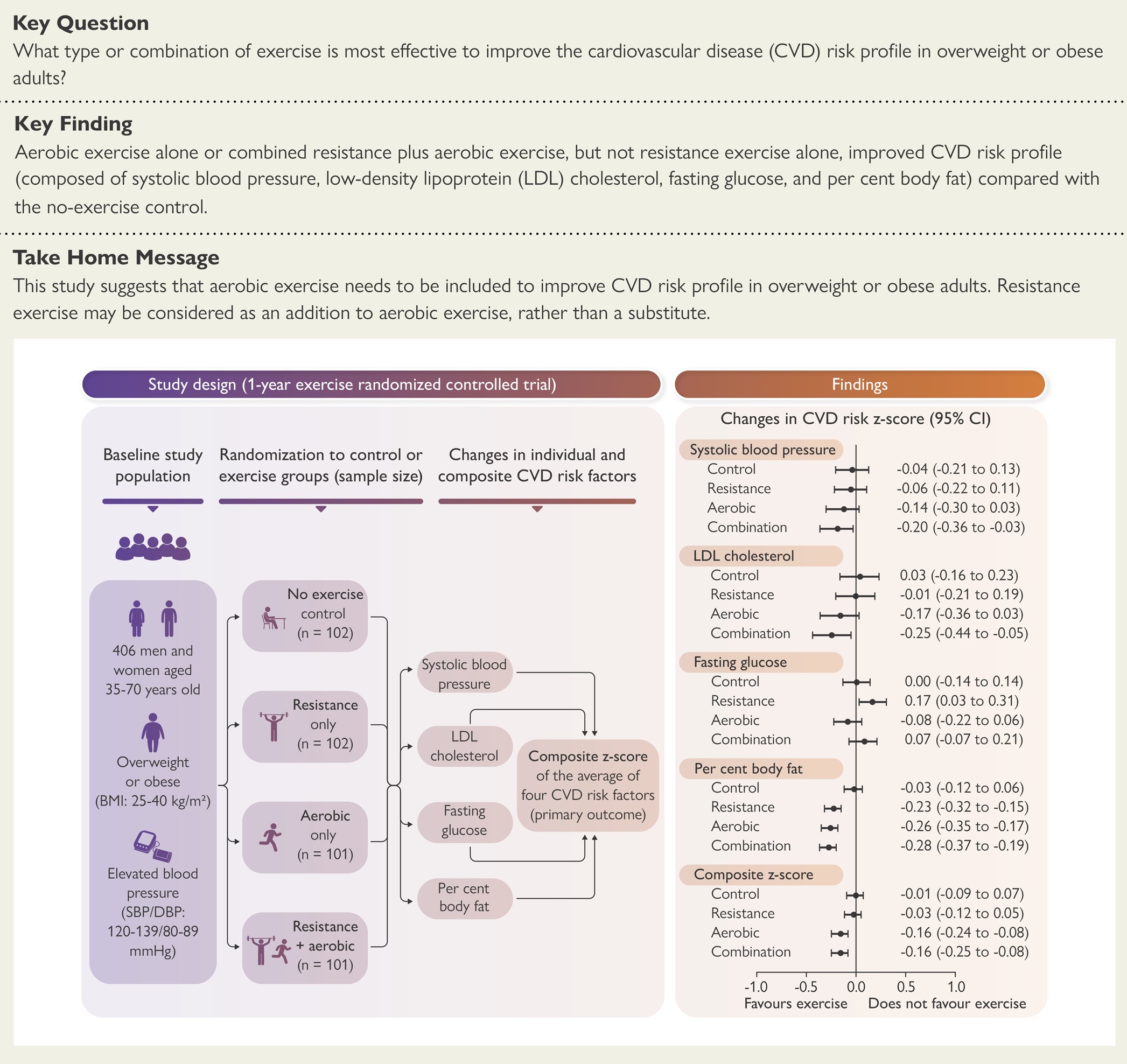
Effects of 1-year resistance, aerobic, or combined exercise training on cardiovascular disease (CVD) risk profile: the CardioRACE trial. Aerobic exercise alone or combined aerobic plus resistance exercise, but not resistance exercise alone, improved CVD risk profile (composite Z-score) compared with no-exercise control (Z-score values below 0 indicate favourable changes in CVD risk factors). BMI, body mass index; CI, confidence interval; CVD, cardiovascular disease; DBP, diastolic blood pressure; SBP, systolic blood pressure.
Falling Iguana Advisory for Florida

 lifeunderwriter.net
You must be logged in to post a comment.