
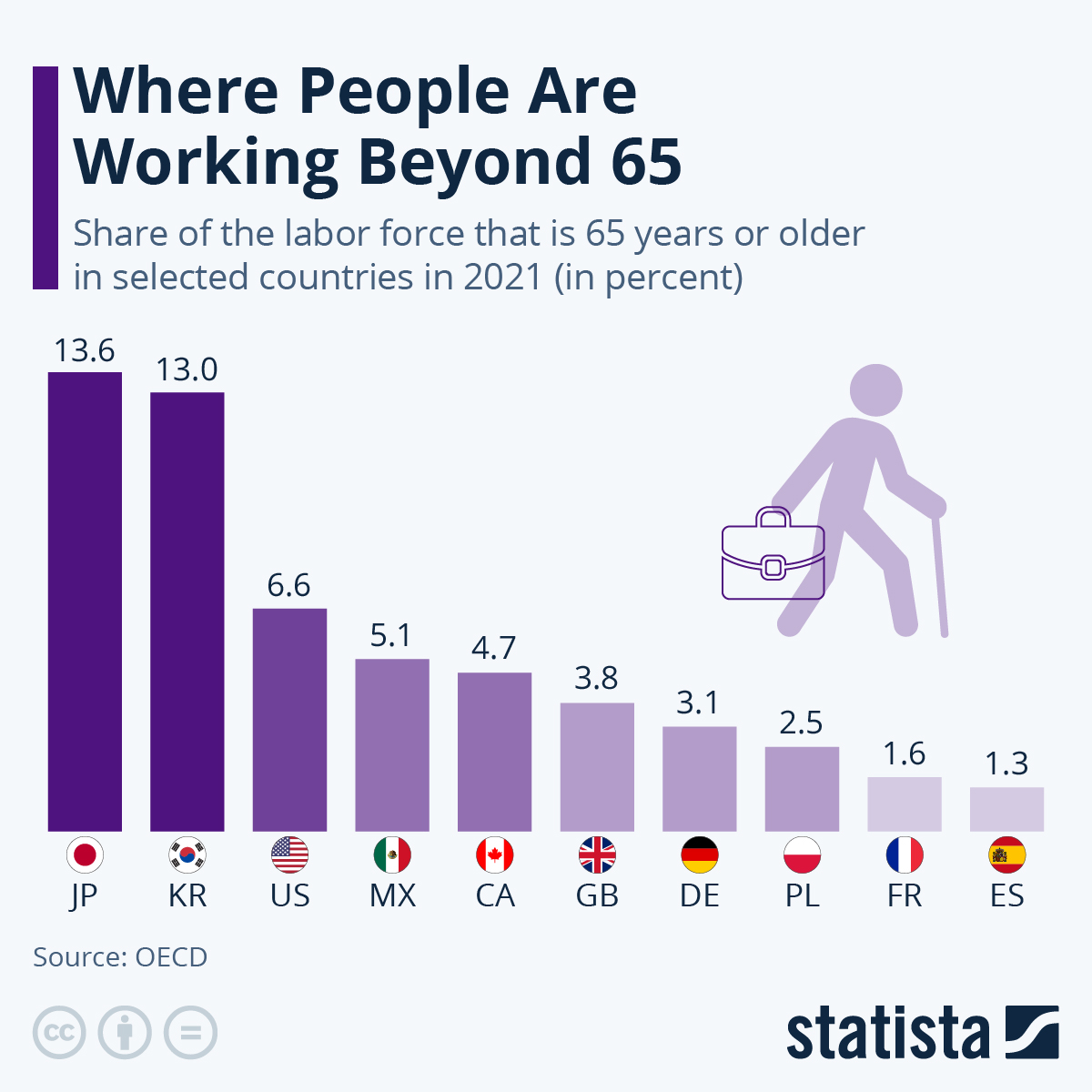
Source: https://www.gzeromedia.com/the-graphic-truth-no-country-for-old-men

Deaths of Despair — Benjamin Studebaker
Yikes!

I’ve co-authored a paper for Journal of Medical Humanities on the deaths of despair crisis. You can read it here: https://doi.org/10.1007/s10912-023-09795-0 It’s an honor to have worked with Daniel George, Peter Stirling, Megan Wright, and Cindy Cain on this piece. In it, I suggest despair is rooted in what I call the Five A’s – […]
Deaths of Despair — Benjamin Studebaker
Yikes!
Per the Economic Policy Institute, wages in 2021 “rose fastest for the top 1% of earners (up 9.4%) and top 0.1% (up 18.5%), while those in the bottom 90% saw their real earnings fall 0.2% between 2020 and 2021.”
I Would Love to Have Enough Time and Money to Go to an Office to Work All Day — https://slate.com/business/2023/03/steven-rattner-new-york-times-remote-work-commute-child-care.html
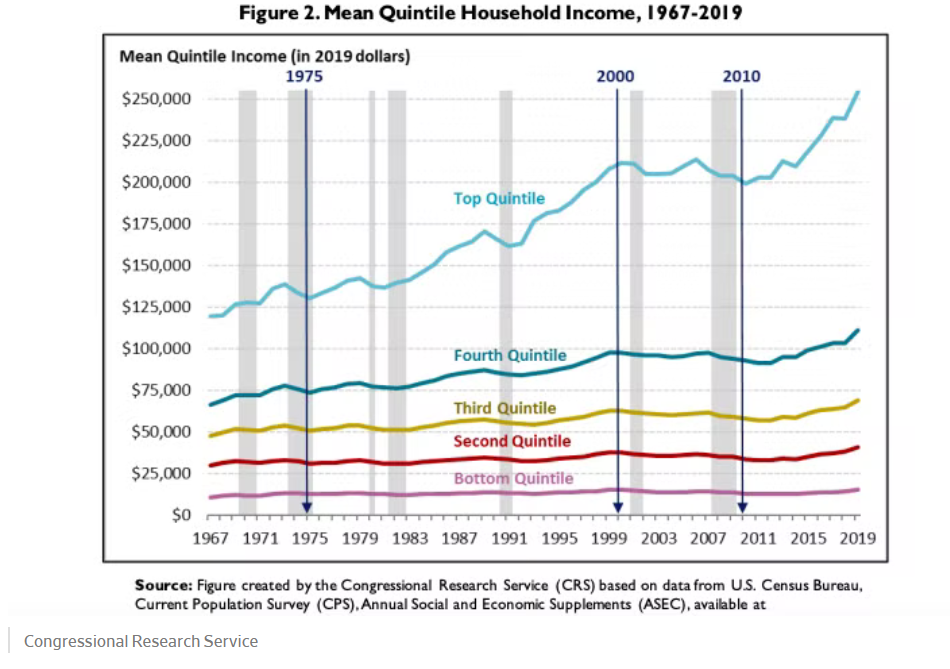
The source article is about WFH vs RTO (work from home vs return to office) and is worth reading.
And in another universe, far far away…
Total drug violations reported into the clearinghouse in 2022, including positive tests and refusals to take a drug test, increased 18% to 69,668 compared with last year’s 59,011, according to the most recent statistics released this week by the Federal Motor Carrier Safety Administration. That rate almost doubled the 9.2% annual increase in drug violations reported in 2021. Much of the increase can be attributed to violations related to marijuana, the substance identified most in positive tests. Marijuana violations increased 31.6% in 2022 compared with 2021, to 40,916. That compares to a 5.3% increase between 2020 and 2021.
Truckers’ positive drug tests up 18% in 2022 — https://www.freightwaves.com/news/truckers-positive-drug-tests-up-18-in-2022
At least binge drinking prevalence is just 19%
Truck drivers have been reported as a highly vulnerable working population due to different risk factors [16,17,18] including hypertension, fatigue [19], obstructive sleep apnea (OSA) and sleep deprivation [20,21], and insufficient physical activity [22]. Other risk factors are exposure to diesel exhaust and risk of developing lung cancer [23], poor diet, obesity, dyslipidemia, and other metabolic disorders [24]. Furthermore, they are prone to risky behaviors and lifestyles such as smoking, drinking, using psychoactive substances, and having casual sexual contacts [25].
Patterns of Harmful Alcohol Consumption among Truck Drivers: Implications for Occupational Health and Work Safety from a Systematic Review and Meta-Analysis — Int J Environ Res Public Health. 2018 Jun; 15(6): 1121.
Published online 2018 May 30. doi: 10.3390/ijerph15061121
I ask them why the industry has a 90 percent attrition rate within the first year. All instantly respond: “No money.” They describe a predatory apprenticeship system that conspires against new drivers seeking to enter the profession. The industry is made up of thousands of mostly small-fleet owners—95 percent of them with 20 trucks or fewer—but dominated by about two dozen giant companies that serve as its gatekeepers. These megacarriers often house schools where some 400,000 new truckers receive commercial driver’s licenses annually. The companies entice people with promises of financial plenty, even as they ensnare them in “training contracts”—binding agreements that require them to drive for the company at below-market wages for a year in exchange for training or else be hit with an exorbitant fee for that training, to be paid off at high interest. Many drivers stick around for the full year to avoid those fees, enduring what amounts to debt peonage.
“I have panic attacks,” he says. “That’s why I drink.”
Life as a 21st-Century Trucker — https://www.wired.com/story/life-as-a-21st-century-trucker/
For the first post in this series see Drive By Truckers.
Ozempic and a similar drug, Wegovy, are weekly shots you give yourself that cause the body to produce insulin. Insulin lowers blood sugar, slows digestion and makes people feel full. Carter-Williams tried it and was amazed.
“You are not hungry,” she says. “Like, I actually have to set timers to make sure that I do eat, because otherwise you actually forget to eat.”
‘You forget to eat’: How Ozempic went from diabetes medicine to blockbuster diet drug https://www.npr.org/2023/04/01/1166781510/ozempic-weight-loss-drug-big-business
Everyone wants the easy way out. I sometimes forget to eat but not because of a miracle drug. You wonder if those of us wanting to lose weight know you can’t stop taking this drug once you start it.
Patients discontinuing the use of weight-loss drugs such as Wegovy risk regaining their original body weight in about five years, a Novo Nordisk official said on Wednesday.
Novo Nordisk Says Stopping Obesity Drug May Cause Full Weight Regain in 5 Years–https://www.medscape.com/viewarticle/990267?src=rss
Side effects?
Just a few https://www.wegovy.com/taking-wegovy/side-effects.html
- Possible thyroid tumors, including cancer.
- Inflammation of your pancreas (pancreatitis)
- Gallbladder problems
- Increased risk of low blood sugar (hypoglycemia) in patients with type 2 diabetes, especially those who also take medicines for type 2 diabetes such as sulfonylureas or insulin
- Kidney problems (kidney failure)
- Serious allergic reactions
- Change in vision in people with type 2 diabetes.
- Increased heart rate
- Depression or thoughts of suicide.
So if you want to lose weight by taking a GLP-1 receptor agonist remember the risks of side effects including the real possibility of having to take a drug that costs up to $1600.00 a month for the rest of your life.
Good luck with that. This joke’s on you.
The researchers used data from the US Centers for Disease Control and Prevention (CDC) to calculate annual overdose deaths from 2002 to 2021 among people aged 65 and older.
Overall, they found that fatal overdoses quadrupled from 1060 in 2002 (three per 100,000) to 6702 (12 per 100,000) in 2021, with the highest rates in Blacks (30.9 per 100,000).
In 2021, about 13% of overdoses were intentional, 83% were unintentional, 4% were undetermined, and less than 1% were homicide. Older women accounted for 57% of intentional overdoses and 29% of accidental overdoses.
Sharp Rise in Drug Overdose Deaths in Seniors – Medscape – Mar 30, 2023 — https://www.medscape.com/viewarticle/990297?src=rss
Drug overdose persists as a major public health issue in the United States, with more than 101,750 reported fatal overdoses occurring in the 12-month period ending in October 2022, primarily driven by synthetic opioids like illicit fentanyl.
FDA Approves First Over-the-Counter Naloxone Nasal Spray — https://www.fda.gov/news-events/press-announcements/fda-approves-first-over-counter-naloxone-nasal-spray
The researchers put mice on a diet and assessed which circuits in the brain changed. In particular, they examined a group of neurons in the hypothalamus, the AgRP neurons, which are known to control the feeling of hunger. They were able to show that the neuronal pathways that stimulate AgRP neurons sent increased signals when the mice were on a diet. This profound change in the brain could be detected for a long time after the diet.
Max Planck Institute for Biology of Ageing. “Dieting: Brain amplifies signal of hunger synapses: Possible target for drugs to combat the yo-yo effect.” ScienceDaily. http://www.sciencedaily.com/releases/2023/03/230324135218.htm (accessed March 28, 2023).
 lifeunderwriter.net
You must be logged in to post a comment.