Phys Ed: Can Touching Your Toes Test Your Arteries? – Well Blog – NYTimes.com
Should we be adding this simple test to our elderly/senior supplement exam?

Phys Ed: Can Touching Your Toes Test Your Arteries? – Well Blog – NYTimes.com
Should we be adding this simple test to our elderly/senior supplement exam?
The AI/AN population is culturally diverse and spread among approximately 560 federally recognized tribal communities in 34 states and multiple urban areas (2). Health disparities between the AI/AN population and other racial/ethnic populations are well documented (3). Mortality rates and trends for respiratory diseases indicate that AI/ANs are at increased risk for death resulting from pneumonia and influenza (4,5). Although AI/AN death rates varied among the 12 participating states in this study, the aggregate AI/AN H1N1-related death rate from 12 states was four times higher than that of all other racial/ethnic groups combined.
The higher mortality rate among AI/ANs observed in this investigation is consistent with reports of increased influenza-related morbidity and mortality among indigenous populations in other parts of the world during the current H1N1 pandemic and also is consistent with observations from previous pandemics (1,2). After the influenza pandemic of 1918–19, U.S. government investigators reported that influenza-related mortality rates among AI/ANs were four times higher than the rates observed among persons in general urban populations (2).
The factors that produce a higher influenza mortality rate among AI/ANs are unknown but might include higher prevalence of underlying chronic illness such as diabetes. The age-specific prevalence of diabetes in AI/AN adults is two to three times higher than for all U.S. adults (6). In addition, AI/ANs are twice as likely to have unmet medical needs because of cost (7). AI/ANs also have the highest poverty rate (30%), which is twice the national rate and three times the rate for whites among households with children aged <18 years (8), suggesting that delayed access to medical care and living conditions associated with poverty might contribute to their higher influenza mortality rate.
Conclusions – Viewed statistically, mortality in this pandemic compares favourably with 20th century influenza pandemics. A lower population impact than previous pandemics, however, is not a justification for public health inaction.
Brazilian researchers have found three distinct patterns of lung damage in patients who died of the H1N1 pandemic flu.
In the Argentine capital of Buenos Aires, the pandemic H1N1 flu was associated with a pediatric death rate that was 10 times as high as the usual winter flu season toll, researchers said.
Reining in College Costs – BusinessWeek
In the “learning” paradigm, the teacher is not the expert provider of knowledge, but rather a guide who first specifies what students are expected to learn and then lays out pathways they can follow to meet the learning goals. The teacher becomes a supporter, a collaborator, and a coach for students as they learn to evaluate and gather information, test ideas, and explore their application to different issues and problems. Students begin to learn how to develop and pose their own questions and to explore alternative ways of finding and framing answers. So instead of working only to master the subject matter of a course, students are developing the skills to learn on their own. They no longer wait to be taught—they come to realize that, if they are to succeed, they must take a good deal of responsibility for their own learning.
Read this article written by Michael Bassis, President of Westminster College in Salt Lake City, Utah. We need to rethink corporate training methods if you agree with Mr. Bassis’ paradigm shift assessment.
I’m of the opinion the global economic recession will be long and nasty. Read this article if you think the job market in the US is bad. A few years back I posed the following question to an unemployed friend,
“What are you going to do if what you’re looking for doesn’t exist anymore?”
The Coming U.S. Doctor Shortage – BusinessWeek
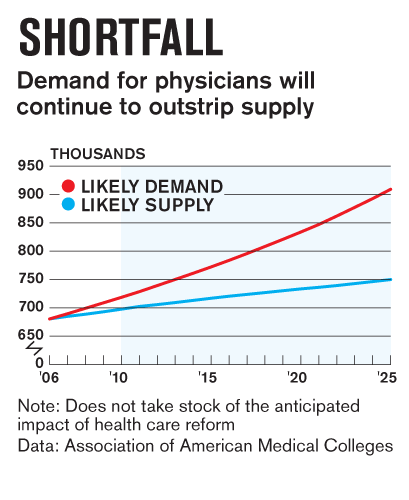
If lack of health care is a public issue, then why is medical school privately funded?
Drinking lots of coffee and tea every day — even decaf — might keep diabetes away, new research shows.
In a meta-analysis of 18 studies, drinking three to four cups of coffee per day was associated with a 25% lower risk of diabetes than drinking two cups or less per day (RR 0.76, 95% CI 0.69 to 0.82), according to Rachel Huxley, PhD, of the George Institute for International Health in Sydney, Australia, and colleagues.
There were similar results for decaf coffee and tea.


You must be logged in to post a comment.