ASCOT-Legacy 20-year follow-up – Long-term Benefits of Atorvastatin

Patients allocated to atorvastatin had a significant reduction in non-fatal myocardial infarction (MI) and fatal coronary heart disease (CHD) events (HR (95% CI) 0.81 (0.69 to 0.94, p=0.006)), total coronary events (0.88 (0.80 to 0.98, p=0.017)) and CV deaths (0.86 (0.74 to 0.99, p=0.048)). No significant reduction in heart failure (HF), strokes, total CV events and all-cause mortality was observed. Long-term benefits of atorvastatin on the incidence of cardiovascular events: the ASCOT-Legacy 20-year follow-uphttps://heart.bmj.com/content/early/2025/03/25/heartjnl-2024-325104

Dr. M. Zann McMahan, thank you.

Heart Attacks Happen in the Young

Dr Ravi Prakash, senior consultant in cardiology at PSRI Hospital, Delhi, said that data from hospitals across India between 2020 and 2023 show that 50% of heart attack patients are below the age of 40. Doctors and researchers are alarmed by the growing number of cardiac arrests among individuals under 40 years of age. Experts attribute this rise to sedentary lifestyle, stress, poor diet, smoking, alcohol consumption, and even genetic factors. 50% of heart attack cases since 2020 among adults below 40https://www.newindianexpress.com/amp/story/xplore/2025/Feb/24/50-of-heart-attack-cases-since-2020-among-adults-below-40

Prevention of MI in young individuals is an important public health problem. Despite being categorized as “low risk” prior to their events, most young individuals who experience an MI have pre-existing risk factors, such as obesity, diabetes, hypertension, and hyperlipidemia. Tobacco use, which occurs in approximately 50% of young adults who experience an MI, remains one of the most important modifiable risk factors. Additionally, substance abuse, tobacco use, diabetes, left ventricular systolic dysfunction, and systemic inflammatory disease are all associated with a worse long-term prognosis in those who experience an MI at a young age. Not All Heart Attacks are Created Equal: Thinking Differently About Acute Myocardial Infarction in the Younghttps://journal.houstonmethodist.org/articles/10.14797/mdcvj.345

Yikes.

Just 2-4 Cups of Fruits and Veggies Does What?

Lowers blood pressure, improves kidney health, improves CVD risk factors.

In a randomized control trial over a five-year period, investigators divided the cohort of 153 patients with hypertension into three groups:

  1. Study participants adding 2-4 cups of base-producing fruits and vegetables in addition to their usual daily food intake
  2. Study participants prescribed NaHCO3 (acid-reducing sodium bicarbonate, which is common baking soda) tablets in two daily doses of 4-5 650 mg tablets
  3. Study participants receiving standard medical care from primary care clinicians

The results of the study show that both fruits and vegetables and NaHCO3 improved kidney health, but only fruits and vegetables, and not NaHCO3, reduced blood pressure and improved indices of cardiovascular disease risk.

The trial supports fruits and vegetables as foundational hypertension treatment to reduce chronic kidney disease progression and cardiovascular disease risk.

Elsevier. “Eating more fruits and vegetables to reduce dietary acid lowers blood pressure and improves kidney and heart health in patients with hypertension.” ScienceDaily. http://www.sciencedaily.com/releases/2024/08/240806131316.htm (accessed August 11, 2024).

Journal Reference:

  1. Nimrit Goraya, Nicolaos E. Madias, Jan Simoni, Maninder Kahlon, Nazan Aksan, Donald E. Wesson. Kidney and Cardiovascular Protection Using Dietary Acid Reduction in Primary Hypertension: A Five-Year, Interventional, Randomized, Control Trial. The American Journal of Medicine, 2024; DOI: 10.1016/j.amjmed.2024.06.006

I had two cups of fruit in my breakfast bowl this morning.

What did you eat for breakfast?

Cannabis Use Linked to Elevated Myocardial Infarction and Stroke Risk

Cannabis use may increase the risk of myocardial infarction and stroke independent of tobacco use, according to recent findings in the Journal of the American Heart Association. Compared with nonusers, daily cannabis consumers had 25% higher odds of myocardial infarction and 42% higher odds of stroke. More frequent use was associated with a greater possibility of adverse cardiovascular outcomes regardless of whether cannabis was smoked, eaten, or vaporized. AMA. 2024;331(14):1172. doi:10.1001/jama.2024.2075 — https://jamanetwork.com/journals/jama/fullarticle/2816618

Statins Raise Diabetes Risk (but CV Benefit Outweighs the Risk)

Statins raise the risks for increased glucose levels and the development of type 2 diabetes among people who don’t have it at baseline, but those risks are outweighed by the cardiovascular benefit, new data suggested.

The meta-analysis of trials in the CTT Collaboration included individual participant data from 19 double-blind randomized, controlled trials with a median follow-up of 4.3 years comparing statins with placebo in a total of 123,940 participants, including 18% who had known type 2 diabetes at randomization. Also analyzed were another four double-blind trials of lower- vs higher-intensity statins involving a total of 30,724 participants followed for a median of 4.9 years, with 15% having diabetes at baseline.

In the 19 trials of low- or moderate-intensity statins vs placebo, statins resulted in a significant 10% increase in new-onset diabetes compared with placebo (rate ratio, 1.10), while high-intensity statins raised the risk by an also significant 36% (1.36). This translated to a mean absolute excess of 0.12% per year of treatment.

Compared with less intensive statin therapy, more intensive statin therapy resulted in a significant 10% proportional increase in new-onset diabetes (1.10), giving an absolute annual excess of 0.22%

In an accompanying editorial, Hertzel C. Gerstein, MD, and Marie Pigeyre, MD, PhD, both of McMaster University and Hamilton Health Sciences, Hamilton, Ontario, Canada, noted that the decreased absolute annual incidence of life-threatening cardiovascular outcomes with statins in people at high risk for type 2 diabetes “clearly exceeds the 0.1%-1.3% per year increased absolute incidence of type 2 diabetes.”

Statins Raise Diabetes Risk, but CV Benefit Outweighs It – Medscape – April 09, 2024. — https://www.medscape.com/viewarticle/statins-raise-diabetes-risk-cv-benefit-outweighs-it
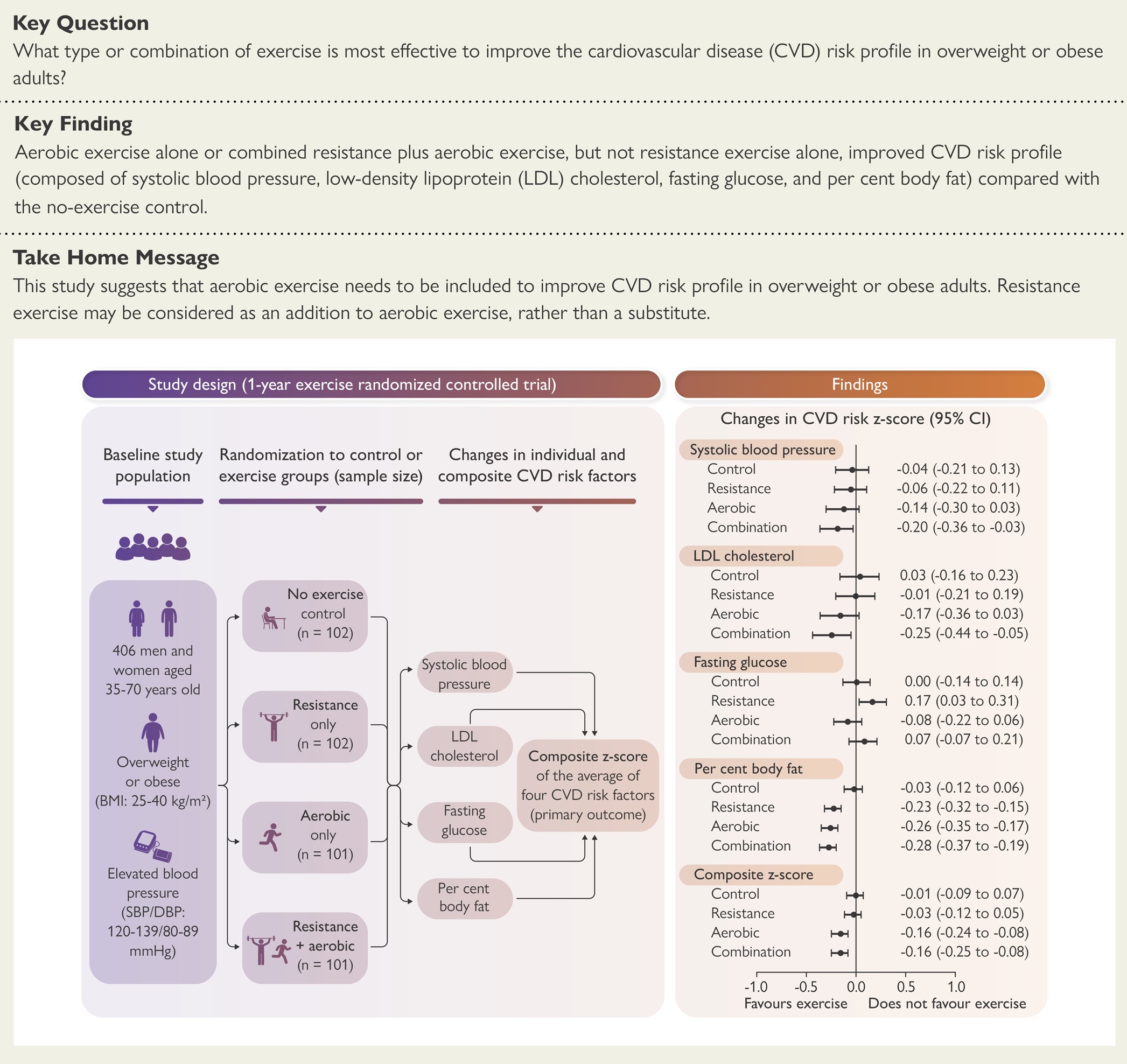
Aerobic + Resistance (do both)

Conclusions: In adults with overweight or obesity, aerobic exercise alone or combined resistance plus aerobic exercise, but not resistance exercise alone, improved composite CVD risk profile compared with the control.

Aerobic, resistance, or combined exercise training and cardiovascular risk profile in overweight or obese adults: the CardioRACE trial – European Heart Journal https://doi.org/10.1093/eurheartj/ehad827

Effects of 1-year resistance, aerobic, or combined exercise training on cardiovascular disease (CVD) risk profile: the CardioRACE trial. Aerobic exercise alone or combined aerobic plus resistance exercise, but not resistance exercise alone, improved CVD risk profile (composite Z-score) compared with no-exercise control (Z-score values below 0 indicate favourable changes in CVD risk factors). BMI, body mass index; CI, confidence interval; CVD, cardiovascular disease; DBP, diastolic blood pressure; SBP, systolic blood pressure.

Popular keto diet may be linked to higher risk of heart disease, cardiac events

The study, presented over the weekend at the American College of Cardiology’s annual scientific session together with the World Congress of Cardiology, found that a keto-like diet may be associated with higher levels of “bad” cholesterol and twice the risk of cardiovascular events such as chest pain, blocked arteries requiring stenting, heart attacks and strokes.

The research team analyzed data from the UK Biobank, a large-scale database with health information from over half a million people living in the United Kingdom who were followed for at least 10 years. Upon enrollment in the biobank, participants completed a self-reported diet questionnaire and had blood drawn to check their cholesterol levels.

“Among the participants on an LCHF diet, we found that those with the highest levels of LDL cholesterol were at the highest risk for a cardiovascular event,” Dr. Iatan said. “Our findings suggest that people who are considering going on an LCHF diet should be aware that doing so could lead to an increase in their levels of LDL cholesterol. Before starting this dietary pattern, they should consult a health care provider. While on the diet, it is recommended they have their cholesterol levels monitored and should try to address other risk factors for heart disease or stroke, such as diabetes, high blood pressure, physical inactivity and smoking.”

Popular keto diet may be linked to higher risk of heart disease, cardiac events — https://www.med.ubc.ca/news/popular-keto-diet-may-be-linked-to-higher-risk-of-heart-disease-cardiac-events/

Statin or Supplements?

So, which is most effective? Researchers at the Cleveland Clinic set out to answer this question by comparing statins to supplements in a clinical trial. They tracked the outcomes of 190 adults, ages 40 to 75. Some participants were given a 5 mg daily dose of rosuvastatin, a statin that is sold under the brand name Crestor for 28 days. Others were given supplements, including fish oil, cinnamon, garlic, turmeric, plant sterols or red yeast rice for the same period.

“What we found was that rosuvastatin lowered LDL cholesterol by almost 38% and that was vastly superior to placebo and any of the six supplements studied in the trial,” study author Luke Laffin, M.D. of the Cleveland Clinic’s Heart, Vascular & Thoracic Institute told NPR. He says this level of reduction is enough to lower the risk of heart attacks and strokes. The findings are published in the Journal of the American College of Cardiology.

Statins vs. supplements: New study finds one is ‘vastly superior’ to cut cholesterol – https://www.npr.org/sections/health-shots/2022/11/06/1134094540/statins-vs-supplements-new-study-finds-one-is-vastly-superior-to-cut-cholesterol

Sometimes diet and exercise alone are not enough to keep cholesterol in check. I currently take a low dose statin 10 mg daily. My test results from 09.27.22: cholesterol 197, HDL 71, LDL 102, triglycerides 69.

Oh, and continuing the theme of full disclosure the thing on my leg Image Challenge – November 2022 was MUD.

Variation in cardiovascular disease risk factors among older adults in the Hunter Community Study cohort: A comparison of diet quality versus polygenic risk score — Journal of Human Nutrition and Dietetics Notes

The study of Reay and colleagues was an analysis of data from a subset (n=1703) of the Hunter Community Study cohort, comprising 3253 Australian men and women aged 55-85 at recruitment (between 2004 and 2007). Across the cohort there were 138 participants self-reporting that they suffered angina, 176 atrial fibrillation, 689 high cholesterol, 758 hypertension, 129 a heart attack and 164 an arterial bypass surgery. The CVD phenotypes data had a large number of missing data points (only 1678 subjects responding).

…the ARFS (Australian Recommended Food Score) data suggest that dietary quality was poor across the whole cohort. In the absence of a wide distribution of diet quality it is difficult to evaluate the relationship of diet with disease endpoints (i.e. without a lot of participants consuming a healthy diet it is impossible to detect the effects of a healthy diet on lipids and CVD outcomes)

Variation in cardiovascular disease risk factors among older adults in the Hunter Community Study cohort: A comparison of diet quality versus polygenic risk score — Journal of Human Nutrition and Dietetics Notes

Study shortcomings noted. I am still planning on stir fried veggies with brown rice and Thai sauce for dinner tonight despite not knowing my exact CVD genetic risk.

Dinner. (There’s a fried egg hiding on the bottom of the bowl).

Don’t Take an Aspirin and Call Me in the Morning — A Country Doctor Writes:

People are asking about the latest US Public Health Service Taskforce on Prevention (USPSTF) recommendation about the use of aspirin to prevent heart disease. It has been a long-standing recommendation for people who already have heart disease. When I turned 50, I started taking a “baby” aspirin. That was their recommendation then. I stopped taking […]

Don’t Take an Aspirin and Call Me in the Morning — A Country Doctor Writes:

Personal Note:

A few years back I was taking 81mg aspirin AND fish oil. I stopped taking the fish oil because every nick, scratch and cut would not stop bleeding and took a long time to clot. Personally I plan on continuing my aspirin therapy at least until my next wellness exam. My physician wanted me to continue aspirin until age 70. We’ll see.