Interesting study without much practical application if you are a mortality risk underwriter.
Interesting study with some practical use if you are a life expectancy underwriter.
Interesting study without much practical application if you are a mortality risk underwriter.
Interesting study with some practical use if you are a life expectancy underwriter.
Yes, I know it is just a couple of little boxes on the medical exam.
A positive screen was defined as any noncalcified nodule at least four millimeters in size or other radiographic finding deemed suspicious for cancer.
A false positive was defined as a positive screen with either a completed negative work-up or at least 12 months follow-up with no cancer diagnosis, the researchers said.
Analysis showed:
* An individual’s cumulative probability of at least one false-positive CT scan was 21% after one screen and 33% after two.
* For chest X-rays, the cumulative probabilities were 9% and 15% after one and two screens, respectively.
* In a multivariate analysis, people over 64 years of age had a 34% increased risk of a false-positive CT scan.
* Of those getting a CT false positive, 6.6% had an invasive diagnostic procedure and 1.6% had major surgery, compared with 4.2% and 1.9%, respectively, for chest X-ray false positives.There are no screening methods for lung cancer that have been shown to reduce death and illness from the disease, which is often only detected in its late stages.
According to the American Cancer Society, the five-year survival rate for localized lung cancer is 49.5%, but that falls to 20.6% for disease that has spread outside the lung and 2.8% if there are distant metastases.
Cardiovascular Disease, Neuropathy, and Retinopathy — Diabetes Care
In a study of 648 apparently healthy individuals, 12% had an elevated total A 1 level (measured in that study) not explained by measurement error or glucose intolerance and remaining in the same range over 3.5 years in 90% of those initially with high and in 68% of those initially with low baseline levels (1). There was no correlation with glucose tolerance, with caloric intake, or with physical activity, but A 1 level was associated with cigarette use and with clinically overt atherosclerosis, leading Dekker to conclude that “factors unrelated to glucose metabolism are the main determinants of A 1” in nondiabetic individuals, perhaps with bearing on risk of what are considered complications of diabetes.
Nothing new here but worth taking a look at for refresher purposes.
Men ages 35 to 44 with the highest grade and stage tumors had an increased risk of death compared with older prostate cancer patients
More than 75% of the cases were in patients between the ages of 20 and 50, and as of May 18, there have been 70 deaths.
I’m still wondering what the cause was of all of the other reported deaths???

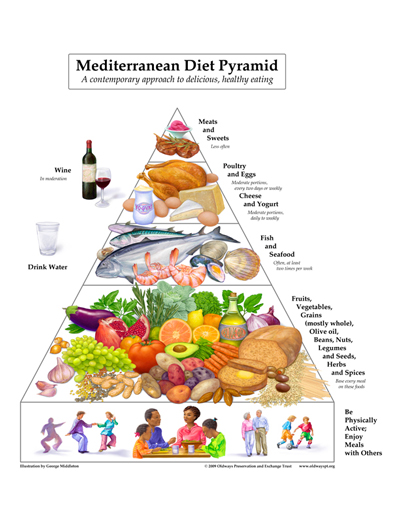
New Med Diet Pyramid courtesy of Oldways
Pepper Component, Capsaicin, Triggers Suicide In Prostate Cancer Cells
Click here to read this article first.
Hot Stuff in a Squeeze Bottle – NYTimes.com
Read this article next.
BBC NEWS | Health | Weight loss link to dementia risk
Small study with interesting findings.
You must be logged in to post a comment.