Ketamine in the UK

Acute harms of ketamine use relate to vulnerability and injuries. Long term use can seriously harm both physical and mental health, diminishing quality of life, affecting personal relationships, and impairing academic or professional performance.9 Ketamine induced uropathy from ulceration and thickening of the bladder is a common and serious complication. In the UK, 27% of regular ketamine users report at least one urological symptom—dysuria, frequency, incontinence, haematuria, or retention—with severity correlated with dose and frequency of use.10 Treatment requires abstinence.11 If abstinence is not achieved, irreversible bladder and kidney damage can occur, requiring urinary tract reconstruction. Long term ketamine use is also associated with “K cramps”—severe abdominal pain. This may be related to liver disease that is similar to primary sclerosing cholangitis but less inflammatory and progressive.12 Acute harms of ketamine use relate to vulnerability and injuries. Long term use can seriously harm both physical and mental health, diminishing quality of life, affecting personal relationships, and impairing academic or professional performance.9 Ketamine induced uropathy from ulceration and thickening of the bladder is a common and serious complication. In the UK, 27% of regular ketamine users report at least one urological symptom—dysuria, frequency, incontinence, haematuria, or retention—with severity correlated with dose and frequency of use.10 Treatment requires abstinence.11 If abstinence is not achieved, irreversible bladder and kidney damage can occur, requiring urinary tract reconstruction. Long term ketamine use is also associated with “K cramps”—severe abdominal pain. This may be related to liver disease that is similar to primary sclerosing cholangitis but less inflammatory and progressive.12Non-prescribed ketamine use is rising in the UKhttps://doi.org/10.1136/bmj.r1167

Yikes.

Update 07.05.25https://www.bbc.com/news/articles/c70r1xdyy59o

Glenmark Pharmaceuticals Recall (check your prescription bottles)

In February, the FDA found problems with cleaning and testing at the plant in Madhya Pradesh, India, which was the subject of a ProPublica investigation last year. The current recalls, listed in an FDA enforcement report last week, cover a wide range of commonly prescribed medicines, including ones that treat epilepsy, diabetes, multiple sclerosis, heart disease and high blood pressure, among other ailments. ​​A full list of the recalled medications is available here. An Indian Drugmaker, Investigated by ProPublica Last Year, Has Recalled Two Dozen Medications Sold to U.S. Patients https://www.propublica.org/article/glenmark-recalls-two-dozen-drugs

Time to bring the pharma supply chain back onshore.

Controlled Substance Prescribing Patterns – Pennsylvania

Rates of psychostimulant (stimulant)-related overdose deaths in the United States have increased substantially since 2010; in 2022, 32% of all overdose deaths involved stimulants. Citation: Hayden S, Murzynski SM, Bolton A, Goetz CT. Controlled Substance Prescribing Patterns Among Fatal Overdose Decedents with an Opioid, Stimulant, or Both Contributing to Death — Pennsylvania, 2017–2022. MMWR Morb Mortal Wkly Rep 2025;74:205–209. DOI: http://dx.doi.org/10.15585/mmwr.mm7412a2

Prescribed stimulants. Read more here – https://www.dea.gov/factsheets/stimulants

Happy Friday!

ASCOT-Legacy 20-year follow-up – Long-term Benefits of Atorvastatin

Patients allocated to atorvastatin had a significant reduction in non-fatal myocardial infarction (MI) and fatal coronary heart disease (CHD) events (HR (95% CI) 0.81 (0.69 to 0.94, p=0.006)), total coronary events (0.88 (0.80 to 0.98, p=0.017)) and CV deaths (0.86 (0.74 to 0.99, p=0.048)). No significant reduction in heart failure (HF), strokes, total CV events and all-cause mortality was observed. Long-term benefits of atorvastatin on the incidence of cardiovascular events: the ASCOT-Legacy 20-year follow-uphttps://heart.bmj.com/content/early/2025/03/25/heartjnl-2024-325104

Dr. M. Zann McMahan, thank you.

Antidepressant Use Associated With Cognitive decline in Patients with Dementia

In this cohort study, use of antidepressants was associated with faster cognitive decline in patients with dementia, in particular SSRIs (i.e., citalopram, sertraline and escitalopram) and mirtazapine. These effects appeared to be more pronounced in patients with more severe dementia. Compared with sertraline, escitalopram presented faster cognitive decline, while citalopram was linked to a slower cognitive decline. Additionally, higher dispensed doses of SSRIs were associated with greater cognitive decline, as well as increased risks of severe dementia, all-cause mortality, and fracture. Our study cannot distinguish whether these findings are due to the antidepressants or the underlying psychiatric indication. Mo, M., Abzhandadze, T., Hoang, M.T. et al. Antidepressant use and cognitive decline in patients with dementia: a national cohort study. BMC Med 23, 82 (2025). https://doi.org/10.1186/s12916-025-03851-3

If I develop dementia no SSRI’s for me please.

Lisdexamfetamine Dimesylate (not just for ADHD anymore)

Llisdexamfetamine dimesylate is currently the only drug to be approved in the USA for the treatment of moderate to severe binge eating disorder (BED) in adult patients. – https://pubmed.ncbi.nlm.nih.gov/29134566/

Just a few side effects BTW.

The prescribing information also includes warnings and precautions regarding serious cardiovascular reactions, blood pressure and heart rate increases, psychiatric adverse reactions, suppression of growth, peripheral vasculopathy (reduced circulation of blood flow to body parts), and serotonin syndrome (a potentially life-threatening overage of serotonin). Please see Vyvanse’s full prescribing information for additional details.

The most common side effects in children, adolescents and/or adults with ADHD taking lisdexamfetamine dimesylate capsules and chewable tablets were anorexia, anxiety, decreased appetite, decreased weight, diarrhea, dizziness, dry mouth, irritability, insomnia, nausea, upper abdominal pain, and vomiting. The most common side effects in adults with BED were dry mouth, insomnia, decreased appetite, increased heart rate, constipation, feeling jittery, and anxiety. https://www.fda.gov/drugs/news-events-human-drugs/fda-approves-multiple-generics-adhd-and-bed-treatment

Take Home Lesson for Life Underwriters

Know your drugs and read the prescription DB reports. You’re welcome.

Compounding Compounds the Problem

Compound pharmacies that bulk produce weight-loss drugs without FDA approval are doing so without that oversight.  And because compounding pharmacies aren’t required to report instances of patient harm involving their medications, problems may go undetected.“It’s kind of like ‘Whack-A-Mole,’” said Al Carter, a pharmacist and executive director at the National Association of Boards of Pharmacy. He said state boards will only investigate when they receive a complaint.“There are bad actors out there, purporting to be compounding pharmacies that are licensed in specific states or have the credentials to be able to compound when in actuality they don’t,” said Carter. “My understanding is most licensed, legitimate pharmacies aren’t compounding” weight-loss medications. ‘Compounded’ weight-loss drugs are a growing problem for state regulatorshttps://stateline.org/2024/07/08/compounded-weight-loss-drugs-are-a-growing-problem-for-state-regulators/

A website sold patients obesity drugs at affordable rates. Now they’re paying the price.https://www.npr.org/2025/02/08/nx-s1-5246124/a-website-sold-patients-obesity-drugs-at-affordable-rates-now-theyre-paying-the-price

“The two main goals of the medication are weight loss and diabetes management, so patients should stay on the lowest dosage possible until they feel like they’ve plateaued,” said Charu Sawhney, DO, MPH, an internal medicine physician with Harbor Health in Round Rock, Texas. When patients move up on the dosage too fast, they’re going to have more trouble, said Sawhney. “This is when we see the most severe side effects like the malnutrition and dehydration that can sometimes land patients in the hospital,” she said. Considerations for Prescribing GLP-1s Get More Complicated – Medscape – February 07, 2025https://www.medscape.com/viewarticle/considerations-prescribing-glp-1s-get-more-complicated

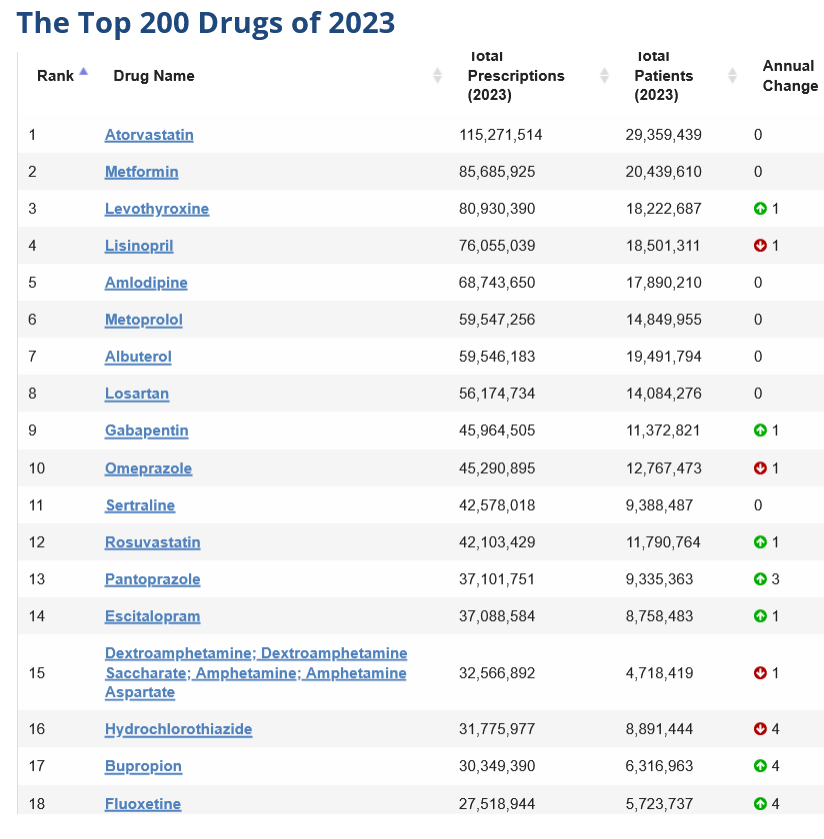
I admit as a Former Fat Man that the world of obesity and now a miracle drug to fight the disease fascinates the hell out of me. Caveat emptor!

Ugh… Kids These Days!

While cocaine was once the drug of choice, bankers are now reportedly turning to the ADHD medication for work days that can last as long as 22 hours, along with nicotine patches and energy drinks. 90-hour-a-week Wall Street bankers snorting lines of Adderall at their deskshttps://www.telegraph.co.uk/world-news/2024/12/15/90-hour-a-week-wall-street-bankers-snorting-adderall-desks/

It never ceases to amaze this Old Underwriter how people manage to find creative ways to kill themselves.

GLP-1 – Compounded or Brand-Name?

Caroline Apovian, MD, co-director of the Center for Weight Management and Wellness at Brigham and Women’s Hospital and professor of medicine at Harvard Medical School, Boston.

“Doctors who are obesity medicine specialists like myself in academic centers do not prescribe compounded semaglutide or tirzepatide,” she said.

Many of the compounded prescriptions, she said, come from telehealth virtual–only companies interested in profits.

GLP-1 Prescribing Decisions: Compounded or Brand-Name? – Medscape – November 14, 2024https://www.medscape.com/viewarticle/glp-1-prescribing-decisions-compounded-or-brand-name-2024a1000krd?

To be clear, all of my GLP-1 posts are not anti-pharma. If you can afford these medications and they work for you on your weight loss journey that’s great. Just be aware of the possible side effects and the fact these medications are for life. You will regain all that you’ve lost if you stop taking the drug.

Here’s the link to Complications? What Complications? (just another GLP-1 receptor agonist post)

Telehealth Company Cerebral Agrees to pay $3.7M fine (and found guilty of nothing)

Telehealth company Cerebral has agreed to pay a fine of more than $3.6 million for allegedly attempting to boost prescriptions of Adderall and other controlled substances, the Department of Justice and Drug Enforcement Administration said Monday. 

Regulators allege Cerebral’s initial visit metric didn’t consider medical literature or whether prescriptions would be clinically appropriate for patients. The company also used financial incentives to spur providers to meet prescribing metrics — and even considered disciplinary measures for those who hadn’t prescribed enough stimulants for ADHD patients, according to a press release.

https://www.healthcaredive.com/news/cerebral-controlled-substance-prescribing-fine-doj-dea/732108/

This company agreed to a fine it was unable to pay so the regulators deferred payment.

Huh?