pharmaceutical
If Your Leg Breaks Stop Taking Biphosphonates
The highlighted bold is me. I keep reading this FDA recommendation just to make sure I understand what they are trying to say. I think the recommendation says the FDA found no cause and effect between the use of biphosphonates and leg fractures so keep taking your medication. But if your leg breaks, your physician will instruct you to stop taking the medication she prescribed for you to help prevent bone loss and fractures.
I’m glad the FDA cleared up this issue, don’t you?
BACKGROUND: Atypical subtrochanteric femur fractures are fractures in the bone just below the hip joint. Diaphyseal femur fractures occur in the long part of the thigh bone. These fractures are very uncommon and appear to account for less than 1% of all hip and femur fractures overall. Although it is not clear if bisphosphonates are the cause, these unusual femur fractures have been predominantly reported in patients taking bisphosphonates.
RECOMMENDATIONS: Patients should continue to take their medication unless told to stop by their healthcare professional. FDA recommends that healthcare professionals should discontinue potent antiresorptive medications (including bisphosphonates) in patients who have evidence of a femoral shaft fracture. See the FDA Drug Safety Communication below for additional information.

Thinking Differently About Medications in the Elderly
Kapvay (clonidine hydrochloride)
Underwriting Quick Notes
Kapvay = brand name
Shionogi = manufacturer
Tygacil (tigecycline) – Increased Mortality Risk
This will cure the infection…permanently.
Liver Enzymes and Statins
I stumbled across this article while evaluating a persistent CPK elevation in an applicant with HLD and other CHD risk factors.
Risks and Benefits of ARBs and ACEis
There are three links in this article to the original comparative effectiveness review, a clinician guide, and a consumer guide.
Good training stuff for your newbies.
Scary Chart of the Day – 08.19.10
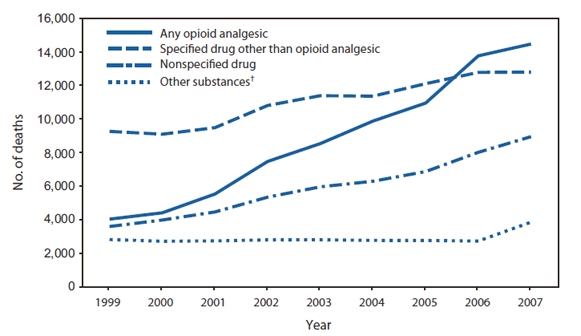
Pretty ugly looking trend
From 1999 to 2007, the number of U.S. poisoning deaths involving any opioid analgesic (e.g., oxycodone, methadone, or hydrocodone) more than tripled, from 4,041 to 14,459, or 36% of the 40,059 total poisoning deaths in 2007. In 1999, opioid analgesics were involved in 20% of the 19,741 poisoning deaths. During 1999–2007, the number of poisoning deaths involving specified drugs other than opioid analgesics increased from 9,262 to 12,790, and the number involving nonspecified drugs increased from 3,608 to 8,947.
Arava (leflunomide) – Watch Those Liver Enzymes
The FDA has expanded the black box warning to the label of the rheumatoid arthritis drug leflunomide (Arava) to include possible fatal liver damage.
The agency received 49 adverse event reports — including instances of jaundice, coagulopathy, encephalopathy, and 14 fatalities — about the drug from August 2002 to May 2009. Of the patients reporting adverse events, 36 were hospitalized.
Metformin May Lower Mortality in T2DM Patients
Medical News: ADA: Mortality Lower with Metformin – in Meeting Coverage, ADA from MedPage Today
A large, multicenter trial found a 24% reduced risk of all-cause mortality among patients on the drug, compared with those not taking it, according to Ronan Roussel, MD, PhD, of Groupe Hospitalier Bichat-Claude Bernard in Paris, and colleagues.
 lifeunderwriter.net
You must be logged in to post a comment.