A key takeaway from the updated guidelines is that the biggest benefits often come from a simple starting point. Transitioning from no resistance training to any regular activity can lead to meaningful improvements. While factors such as load, volume, and frequency can be adjusted, experts say the main priority for most adults should be building a routine they can follow consistently.
Another important shift in the recommendations is the recognition that effective resistance training does not require access to a gym. Exercises using elastic bands, bodyweight movements, or simple at home routines can still produce measurable gains in strength, muscle size, and daily function. McMaster University. “The best strength training plan might be simpler than you think.” ScienceDaily https://www.sciencedaily.com/releases/2026/03/260319074552.htm
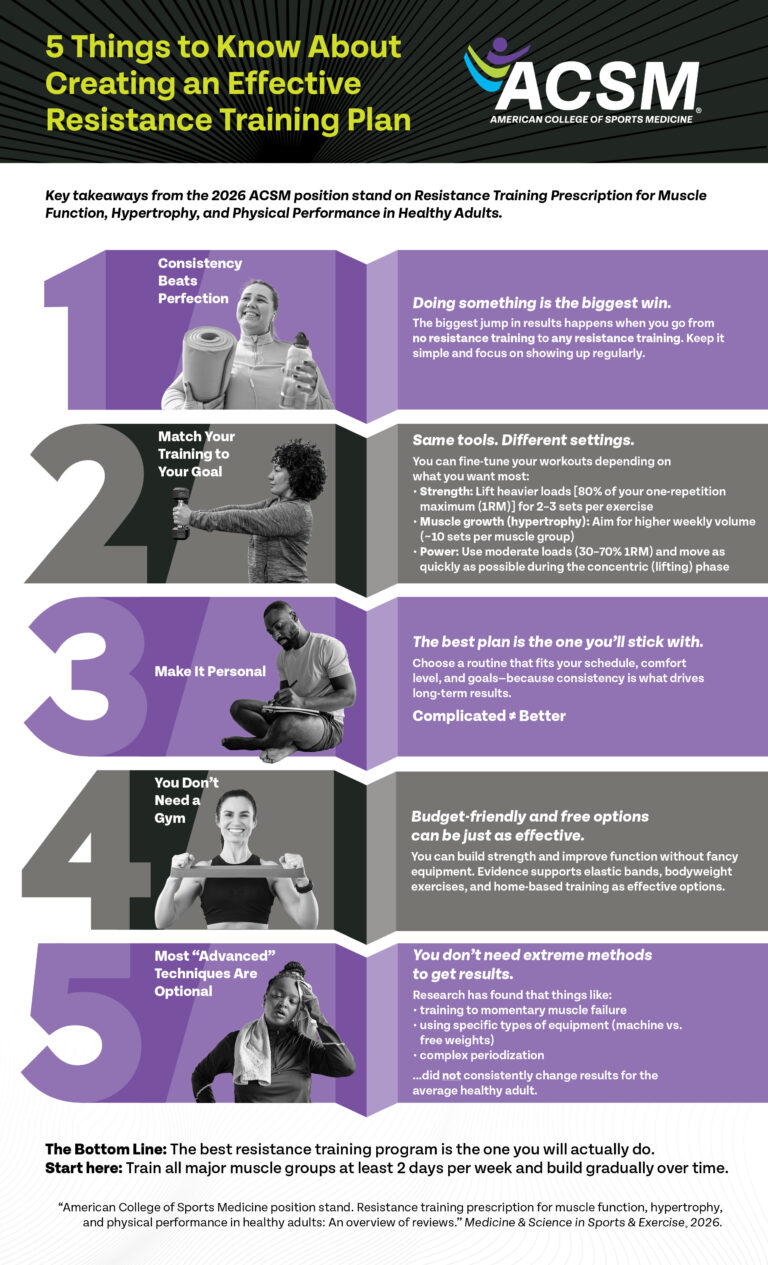
Source: https://acsm.org/resistance-training-guidelines-update-2026/
Resistance is not futile.
 lifeunderwriter.net
You must be logged in to post a comment.