More Random Thoughts on Retirement – The Dot Project May 2024

Again, you can’t connect the dots looking forward; you can only connect them looking backward. So you have to trust that the dots will somehow connect in your future. You have to trust in something — your gut, destiny, life, karma, whatever. This approach has never let me down, and it has made all the difference in my life.

Steve Jobs

Let’s be honest: If you keeled over at 68, it would be a family tragedy—but it wouldn’t be a financial one. At that juncture, all your financial problems would be over, and your family would likely be better off financially because they’d inherit your retirement nest egg, which would probably still be largely intact. Instead, the real financial risk is living to a ripe old age. That raises the question: As you make your retirement plans, shouldn’t you care more about the live version of your future self, rather than the dead one?

Long Oddshttps://humbledollar.com/2024/05/long-odds/

When I wrote Save as Much as You Can Because Whatever You Manage to Save Will Never Be Enough – Random Thoughts on Retirement I started thinking more about the financial side of living too long. Well, it looks like a ton of media outlets are thinking the same thoughts.

Today’s life expectancies hover just below eighty, and if you reach the milestone of seventy they jump to the mid eighties. Due to advances in medicine and healthier lifestyles, reaching your nineties or even 100 is more realistic than ever. How do you ensure that you don’t run out of money? The answer is to start saving more now and plan to work longer. You’re Going to Live Past 90. Congrats! Here’s How to Pay For It.https://www.esquire.com/news-politics/a60647995/how-to-afford-living-to-100/

A Big Dot

A little over four and a half years ago at the tender age of 65 my boss asked me if I was planning on retiring or if I wanted to continue working. I said I wanted to continue working. My FRA (full retirement age) for social security retirement benefits was still nearly a year away and I really didn’t want to collect a reduced benefit. As I connect the dots this decision turned out to be a Big Dot. Covid happened. Then inflation soared and continues to soar making everything cost more. I’m glad I didn’t retire back then and lock in a lower monthly lifetime benefit before the cost of everything went up.

Sometimes things in life work out as planned. Sometimes they don’t. When I decided to stay in the workforce the strategy was to wait until age 70 to collect social security benefits. The math was compelling.

https://www.ssa.gov/benefits/retirement/planner/delayret.html

My focus was simple. All I had to do was stay healthy and stay connected with an employer willing to keep an Old Guy with a particular set of skills on the payroll.

My particular set of skills is understanding what kills people.

The Road to 70 is now just a short trip. Just 10% of people in one survey planned to wait until age 70 to claim Social Security – https://www.cnbc.com/2023/08/08/survey-just-10percent-plan-to-wait-until-age-70-to-claim-social-security.html. Time for another Big Dot related to this Big Dot. I think I’ll keep working for another 3-5 years, contingent upon the same variables of sustained good health and a willing employer. I have about another 30 years to go, so why not do a few more years of work?

Even More Random Thoughts on Retirement – October 2023

Source: https://www.statista.com/chart/31034/change-in-behavior-in-response-to-inflation/

Muscle loss and chronic disease

One of the most important parts of exercise programming, no matter who I am working with, is proper resistance training to build muscle strength. Some amount of age-related loss of muscle function is normal and inevitable. But by incorporating resistance training that is appropriate and safe at any ability level, you can slow down the rate of decline and even prevent some loss of muscle function.

The medical term for a condition that involves age-related loss of muscle function and mass is sarcopenia. Sarcopenia can begin as early as age 40, but it tends to be more common in adults age 60 and older. Sarcopenia is associated with a number of health issues such as increased risk of falling, cardiovascular disease and metabolic disease, among others.

In one of our team’s previous studies, we saw that otherwise healthy individuals with sarcopenia had issues delivering vital nutrients to muscle. This could lead to greater likelihood of various diseases, such as Type 2 diabetes, and slow down recovery from exercise.

Recent estimates suggest that sarcopenia affects 10% to 16% of the elderly population worldwide. But even if a person doesn’t have clinically diagnosed sarcopenia, they may still have some of the underlying symptoms that, if not dealt with, could lead to sarcopenia.

Steep physical decline with age is not inevitable – here’s how strength training can change the trajectoryhttps://theconversation.com/steep-physical-decline-with-age-is-not-inevitable-heres-how-strength-training-can-change-the-trajectory-213131

Reducing overall calorie intake may rejuvenate your muscles and activate biological pathways important for good health, according to researchers. Decreasing calories without depriving the body of essential vitamins and minerals, known as calorie restriction, has long been known to delay the progression of age-related diseases in animal models. This new study suggests the same biological mechanisms may also apply to humans.

NIH/National Institute on Aging. “Calorie restriction in humans builds strong muscle and stimulates healthy aging genes.” ScienceDaily. ScienceDaily, 13 October 2023. https://www.sciencedaily.com/releases/2023/10/231013150733.htm

When I said random thoughts I meant it.

The Biggest Life Event That No One Talks About

Retirement is more than a transition in our relationship with money. It is a major shift in our sense of self. The work that has defined our lives for decades begins to fade from view. Everything about life is different after retirement, down to the minute details of the daily routine. I think it is important to ask yourself, who am I without my job, without my career? And more importantly, how will I spend my time? How will I spend my days, weeks, months, seasons, and years once the routine ends? These are vital questions for anyone contemplating retirement. For many, the allure of endless days on the beach or in the garden loses its luster quite fast. The risk of becoming bored is a real and unexpected risk that many retirees face.

https://blairbellecurve.com/the-biggest-life-event-that-no-one-talks-about/

The endless string of triple digit days has finally ended. I’m so thankful that it’s not Too Hot to Blog and the writing is free and effortless once again. I’m still thinking strategy because having A Plan is Not a Strategy – Update 08.03.22. Yet time and time again the question begs an answer. How will I spend my time in retirement?

As long as I continue working the question doesn’t require an answer.

I guess I’ll keep working.

Thinking About Retirement (or just another fine Saturday Morning)

Andel’s suggestion to anyone contemplating retirement: “Find a new routine that’s meaningful.” He points to people living in the Blue Zones, regions of the world that have been identified to be home to a greater number of residents who’ve reached the age of 100 and beyond. One of the common characteristics among Blue Zone inhabitants is, says Andel, “these people all have purpose.”

Think Retirement Is Smooth Sailing? A Look at Its Potential Effects on the Brain — https://getpocket.com/read/2840794990

The funny thing about life at “retirement age” and still working is you think about retirement a lot.

Since I still work a full time job I have a lot of trouble envisioning what my retirement will look like.

After reading this article and listening to Andel’s short talk I am now scared of retirement.

I need to figure out how to avoid brain rot. But my journal tells me I already have.

My Purpose is to educate others on diet and disease, weight loss and weight management by sharing my personal journey through writing and other teaching activities.

The Myth of Retirement – 11.21.21

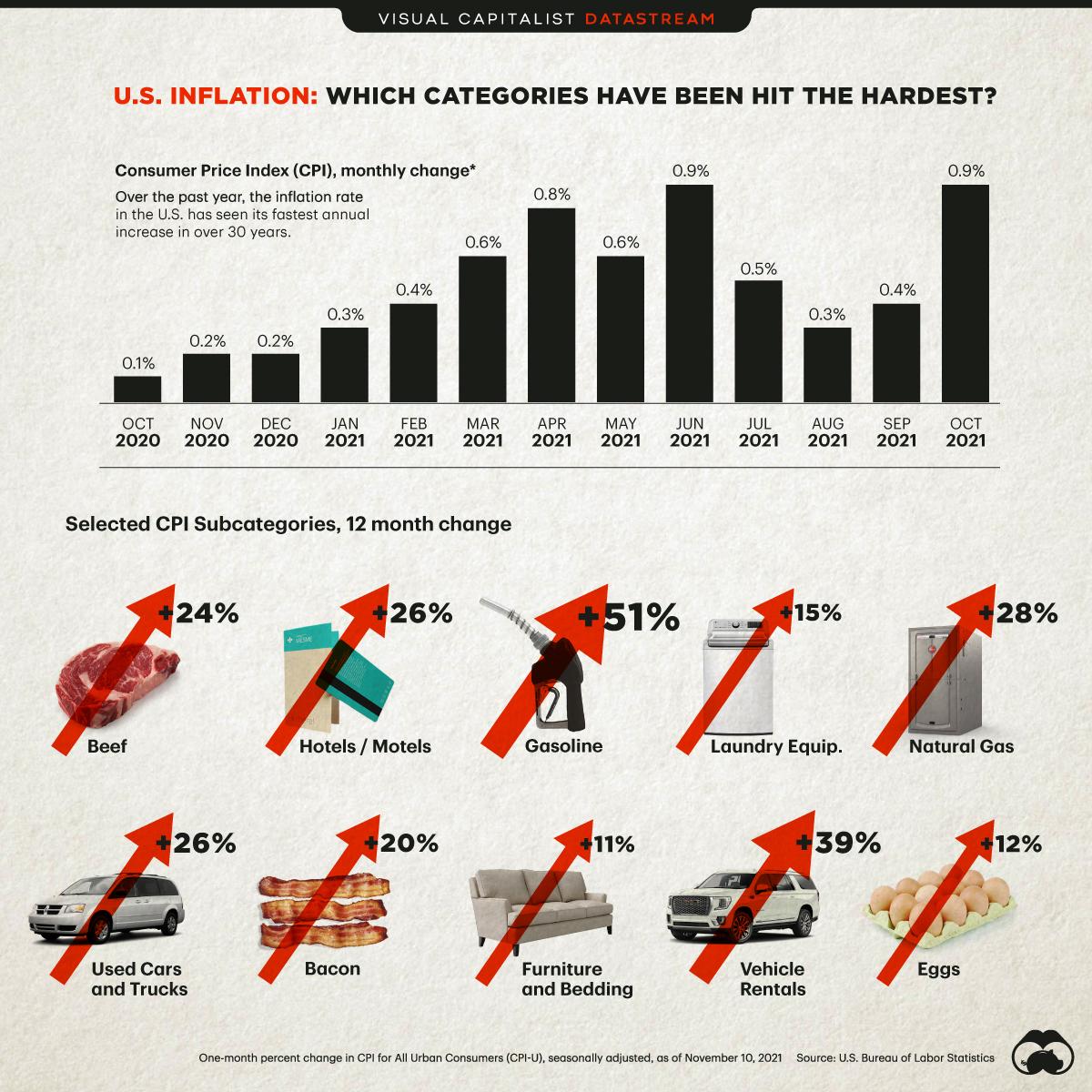
Rising prices inevitably impact the economy as consumers adjust their buying habits. https://www.visualcapitalist.com/u-s-inflation-which-categories-have-been-hit-the-hardest/

I think a lot of Americans who are preparing to retire now are going to have to rethink their plans. Because there’s no way the money that they’ve saved and the income streams that they anticipate receiving are going to be sufficient given the much higher cost of living that we’re going to be experiencing. And this is not just going to be a few percent a year. We’re talking double-digit increases in the cost of living for many, many years in a row.

Peter Schiff, chief global strategist of Euro Pacific Capital

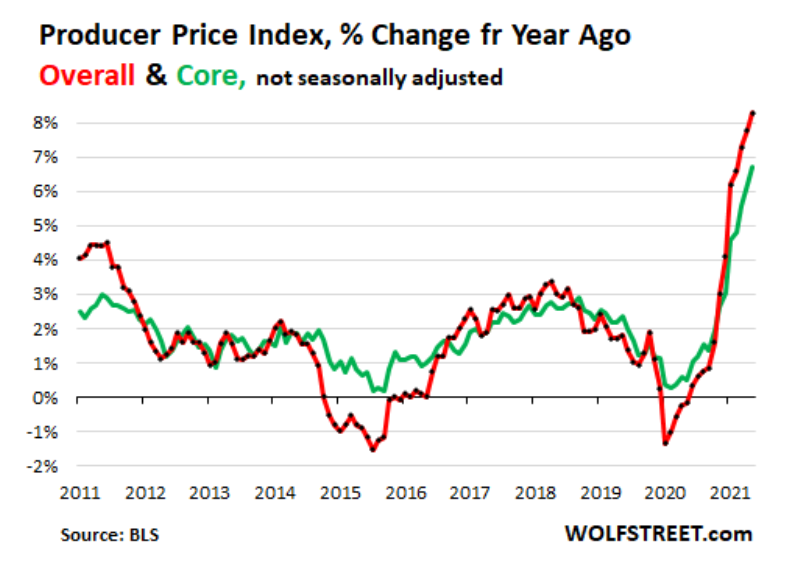
A hedge against inflation in retirement is to keep working. My patented solution is twofold: Build a nest egg while working, and work for as long as possible, either doing what you’ve been doing, or doing something new and interesting and fun. Full-time is great, but even a part-time gig is great, and for all kinds of reasons, not just money, and even if you have plenty of money and don’t need to work.

Wolf Richter

Retirement math now is simple. If you can, work longer and save more.

The SupremeCmdr – The Myth of Retirement

Remember The Lobsterwoman!

Internet Use in Retirement and Cognitive Function

Focusing on a sample of 2,105 older people from Austria, Belgium, Denmark, France, Germany, Italy, Israel, Spain, Sweden and Switzerland who have been retired since 2004, researchers examined retirees’ cognitive function in both 2013 and 2015. They specifically focused on a word recall test, where individuals were asked to recall a list of 10 words immediately, and then again five minutes later.

Results found that, on average, people who used the internet after they retired were able to recall 1.22 extra words in the recall test compared to non-internet users. However, retirees who used the internet were also more likely to be male, younger, better educated, and have been retired for a shorter period. They also appear to be in better health — even though they drink and smoke more.

Lancaster University. “Using internet in retirement boosts cognitive function.” ScienceDaily. http://www.sciencedaily.com/releases/2021/09/210920100910.htm (accessed September 20, 2021).

The Myth of Retirement

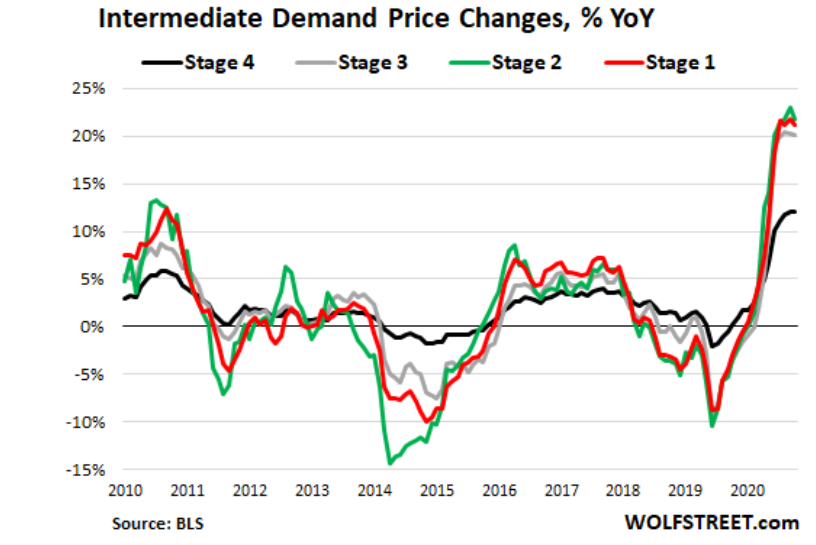
Prices in the three production stages that are the furthest up the pipeline (Stages 1-3, red, green, gray) have all jumped by over 20% year-over-year. Prices at production stage 4 (black), up 12.1% year-over-year, are inputs for final demand prices, which are inputs for consumer prices.

Final demand prices are what consumer prices will encounter pretty soon in their consumer prices. Stage 4 intermediate demand prices will follow. And prices in productions stages 1-3 are further behind, but they’re true whoppers, and they will provide massive pressures on consumer prices for months to come:

Up the Price Pipeline, Inflation Rages at 20% — https://wolfstreet.com/2021/09/10/up-the-price-pipeline-inflation-rages-at-20/#comments

Prior to the 1950’s, there was no such thing as retirement, as the term is used today. A 1950 poll showed that most workers aspired to work for as long as possible. Quitting was for the disabled. Also, remember that in 1935 when the government was determining the appropriate retirement age for social security (65) the average adult male died at age 63.

The Baby Boom generation is also living longer than the generation before it. Chances are a married couple age 65 will have one spouse live into his or her early nineties. That is nearly 30 years of living off of one’s savings and Social Security if one retires at age 65. The math does not work for this many people. For so many to have golden years, there needs to be gold (money) to support them.

Trust Company Oklahoma May 2016 The Retirement Myth — https://www.trustok.com/our-latest-quarterly-newsletter/

Thinking about retirement? I’ve been thinking about retirement for quite some time and the thought of not working doesn’t appeal to me. There will come a time when the 40+ hour workweek will be no longer doable. But for now that time is far off in the future. The math in retirement will not work for the majority. I see inflation all around and my planned retirement income streams and savings will not last as long as hoped if everything costs more. Retirement math now is simple. If you can, work longer and save more.

Biden fires head of Social Security Administration

President Biden on Friday fired Social Security Commissioner Andrew Saul, a holdover from the Trump administration, after Saul refused a request to resign from his position.

Biden fires head of Social Security Administration — https://thehill.com/homenews/administration/562342-biden-fires-head-of-social-security-administration

There will be more changes coming to social security.

Higher taxes, no doubt. But also improved benefits for those in need if I’m reading the Tarot cards correctly.

It’s Time to Revisit Social Security’s Early and Delayed Claiming Formulas

A study by the Center for Retirement Research at Boston College found that the delayed credit is still about right, with the exception of the highest earners, who tend to outlive actuarial averages and reap the highest extra benefit. Conversely, the group hurt the most are low-income filers, who tend to claim earlier and effectively are overcharged for doing so. Moreover, the increase in FRA from 65 to 67, enacted in the reforms of 1983, effectively increased the penalty for earlier files. Claimers with an FRA of 67 will receive five years of early filing reductions rather than three.

It’s Time to Revisit Social Security’s Early and Delayed Claiming Formulas — https://www.morningstar.com/articles/1029357/its-time-to-revisit-social-securitys-early-and-delayed-claiming-formulas

The first sentence from the above paragraph caught my eye. So I went on to the BC website.

People can claim Social Security from 62 to 70, with adjustments to keep lifetime benefits the same, on average, regardless of claiming age. The question is whether the adjustments, set decades ago, are still correct, given the decline in interest rates and increase in life expectancy. For the average worker, the analysis shows that the reduction for claiming early is currently too large while the increase for claiming late is about right.

Higher earners – who live longer and claim later – get a really good deal under the current system.

Are Social Security’s Actuarial Adjustments Still Correct? — https://crr.bc.edu/briefs/are-social-securitys-actuarial-adjustments-still-correct/

People with more money tend to live longer. People who defer claiming social security benefits until beyond FRA (full retirement age) are generally healthier, expect to live longer, and are financially secure enough to delay claiming. If the SSA decides to enhance benefits for early retirees it would be a good thing for a lot of people, especially those who have been severely impacted by the pandemic.

What is the ideal age to retire? Never, according to a neuroscientist — ideas.ted.com


If you want to live a satisfying, long life, neuroscientist Daniel Levitin has some advice for you: Stay busy. What is the ideal age to retire? Never. Even if you’re physically impaired, it’s best to keep working, either in a job or as a volunteer. Lamont Dozier, the co-writer of such iconic songs as “Heat…

via What is the ideal age to retire? Never, according to a neuroscientist — ideas.ted.com