This Is a Post For Old People – Move More, Take Vitamin D, Statins are not Evil

Quotes are taken from summaries of three different studies. Source: Statins, Vitamin D, and Exercise in Older Adults – Medscape – July 26, 2024. https://www.medscape.com/s/viewarticle/statins-vitamin-d-and-exercise-older-adults.

On a personal level I’ve been taking a low dose statin forever, 100 IU Vitamin D3 and a multivitamin daily, need to move more, Fexofenadine prn, and still not a vegan or drive an EV.

The study found that among older adults aged 75-84, initiation of statin therapy led to a 1.2% risk reduction in major CVD over a 5-year period. For older adults aged 85 and greater, initiation of statins had an even larger impact, leading to a 4.4% risk reduction in major CVD over a 5-year period. The study found that there was no significant difference in adverse effects including myopathy or liver dysfunction in both age groups.

For older adults aged 75 or greater, empiric vitamin D supplementation is recommended because of the possible reduction of risk in all-cause mortality in this population. Of note, this was a grade 2 recommendation by the panel, indicating that the benefits of the treatment probably outweigh the risks. The panel stated that vitamin D supplementation could be delivered through fortified foods, multivitamins with vitamin D, or as a separate vitamin D supplement.

The study found that participants who were more sedentary were less likely to age healthfully, with each additional 2 hours of TV watching per day associated with a 12% reduction in likelihood of healthy aging. Light physical activity was associated with a significant increase in healthy aging, with a 6% increase in the likelihood of healthy aging for each additional 2 hours of light activity. Each additional 1 hour of moderate to vigorous activity was associated with a 14% increase in the likelihood of healthy aging. These findings support discussions with patients that behavior change, even in small increments, can be beneficial in healthy aging.
Statins Raise Diabetes Risk (but CV Benefit Outweighs the Risk)

Statins raise the risks for increased glucose levels and the development of type 2 diabetes among people who don’t have it at baseline, but those risks are outweighed by the cardiovascular benefit, new data suggested.

The meta-analysis of trials in the CTT Collaboration included individual participant data from 19 double-blind randomized, controlled trials with a median follow-up of 4.3 years comparing statins with placebo in a total of 123,940 participants, including 18% who had known type 2 diabetes at randomization. Also analyzed were another four double-blind trials of lower- vs higher-intensity statins involving a total of 30,724 participants followed for a median of 4.9 years, with 15% having diabetes at baseline.

In the 19 trials of low- or moderate-intensity statins vs placebo, statins resulted in a significant 10% increase in new-onset diabetes compared with placebo (rate ratio, 1.10), while high-intensity statins raised the risk by an also significant 36% (1.36). This translated to a mean absolute excess of 0.12% per year of treatment.

Compared with less intensive statin therapy, more intensive statin therapy resulted in a significant 10% proportional increase in new-onset diabetes (1.10), giving an absolute annual excess of 0.22%

In an accompanying editorial, Hertzel C. Gerstein, MD, and Marie Pigeyre, MD, PhD, both of McMaster University and Hamilton Health Sciences, Hamilton, Ontario, Canada, noted that the decreased absolute annual incidence of life-threatening cardiovascular outcomes with statins in people at high risk for type 2 diabetes “clearly exceeds the 0.1%-1.3% per year increased absolute incidence of type 2 diabetes.”

Statins Raise Diabetes Risk, but CV Benefit Outweighs It – Medscape – April 09, 2024. — https://www.medscape.com/viewarticle/statins-raise-diabetes-risk-cv-benefit-outweighs-it

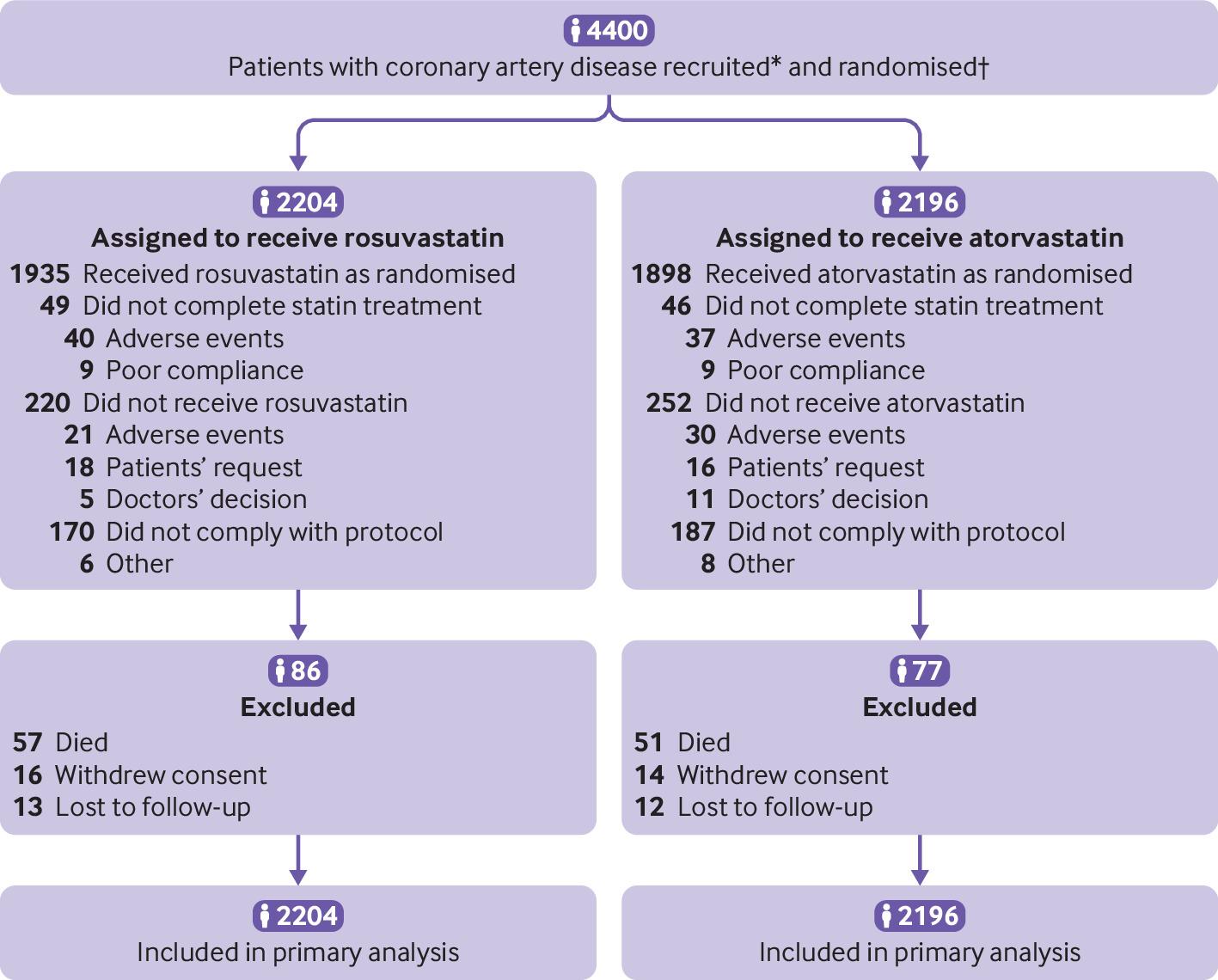
Rosuvastatin vs Atorvastatin in Adults with Coronary Artery Disease

In people with coronary artery disease, rosuvastatin and atorvastatin showed comparable efficacy in terms of a composite of all cause death, myocardial infarction, stroke, or any coronary revascularisation within three years

Rosuvastatin was associated with greater efficacy in reducing LDL cholesterol levels, but it incurred a higher risk of new onset diabetes mellitus requiring antidiabetics and cataract surgery than atorvastatin

Rosuvastatin versus atorvastatin treatment in adults with coronary artery disease: secondary analysis of the randomised LODESTAR trial – BMJ 2023;383:e075837 — https://doi.org/10.1136/bmj-2023-075837

Statin or Supplements?

So, which is most effective? Researchers at the Cleveland Clinic set out to answer this question by comparing statins to supplements in a clinical trial. They tracked the outcomes of 190 adults, ages 40 to 75. Some participants were given a 5 mg daily dose of rosuvastatin, a statin that is sold under the brand name Crestor for 28 days. Others were given supplements, including fish oil, cinnamon, garlic, turmeric, plant sterols or red yeast rice for the same period.

“What we found was that rosuvastatin lowered LDL cholesterol by almost 38% and that was vastly superior to placebo and any of the six supplements studied in the trial,” study author Luke Laffin, M.D. of the Cleveland Clinic’s Heart, Vascular & Thoracic Institute told NPR. He says this level of reduction is enough to lower the risk of heart attacks and strokes. The findings are published in the Journal of the American College of Cardiology.

Statins vs. supplements: New study finds one is ‘vastly superior’ to cut cholesterol – https://www.npr.org/sections/health-shots/2022/11/06/1134094540/statins-vs-supplements-new-study-finds-one-is-vastly-superior-to-cut-cholesterol

Sometimes diet and exercise alone are not enough to keep cholesterol in check. I currently take a low dose statin 10 mg daily. My test results from 09.27.22: cholesterol 197, HDL 71, LDL 102, triglycerides 69.

Oh, and continuing the theme of full disclosure the thing on my leg Image Challenge – November 2022 was MUD.

Statins Can Save Lives

They examined the records of nearly 300,000 adults in the U.S. who had an initial atherosclerotic cardiovascular disease event between 2007 and 2016. These were divided into three groups: coronary heart disease, ischemic stroke or transient ischemic attack, or peripheral artery disease.

When people left the hospital or emergency department in 2007 following a first diagnosis in one of these categories, about half began taking statins within 30 days. By 2016, statin use increased to approximately 60%.

“Based on the guidelines, we hoped to see a much higher uptake among this entire group,” says Dr. Noseworthy. “Statin intolerance was only noted for 4%-5% of the patients, which means as many as 35% of patients are not receiving treatment according to the guidelines.”

Mayo Clinic. “Statins can save lives; are they being used?.” ScienceDaily. http://www.sciencedaily.com/releases/2020/12/201201144030.htm (accessed December 2, 2020) — https://www.sciencedaily.com/releases/2020/12/201201144030.htm

Journal Reference:

Xiaoxi Yao, Nilay D. Shah, Bernard J. Gersh, Francisco Lopez-Jimenez, Peter A. Noseworthy. Assessment of Trends in Statin Therapy for Secondary Prevention of Atherosclerotic Cardiovascular Disease in US Adults From 2007 to 2016. JAMA Network Open, 2020; 3 (11): e2025505 DOI: 10.1001/jamanetworkopen.2020.25505

Statins Are Your COVID-19 Friend: Keep Taking Them — The Skeptical Cardiologist – Updated 09.24.20

Statins remain our safest and most effective drug for primary and secondary prevention of coronary artery disease. However, a cult of statin deniers has taken hold on the internet and their efforts often result in patients inappropriately stopping statins, an outcome which can have lethal consequences. Early in the pandemic a patient of mine in…

Statins Are Your COVID-19 Friend: Keep Taking Them — The Skeptical Cardiologist

Thank you doctor.

Note to my readers: I encourage you to follow the link and read the entire post and the comments to fully understand Dr. Pearson’s message.
And if you’re a statin denier don’t bother reading the full post because we’re not here to engage in an argument or to change your opinion on this medication.

Update

University of California – San Diego. “Statins reduce COVID-19 severity, likely by removing cholesterol that virus uses to infect.” ScienceDaily. http://www.sciencedaily.com/releases/2020/09/200923164603.htm (accessed September 24, 2020).

https://www.sciencedaily.com/releases/2020/09/200923164603.htm

Statin Usage is Linked to a Lower Death Rate in Hospitalized COVID-19 Patients

A new study led by Chinese researchers in collaboration with UCLA’s Dr. Yibin Wang, PhD, has shown that people hospitalized with COVID-19 who took statin drugs were less likely to die and less likely to need mechanical ventilation than those who did not take the cholesterol-lowering drugs. Hospitalized patients taking statins had a 5.2% mortality rate, compared to a 9.4% mortality rate in patients not taking statins from two groups of COVID-19 patients with matching clinic characteristics except statin usage. Statin use also was linked to lower levels of inflammation, and a lower incidence of acute respiratory distress syndrome and admission to intensive care units.

The researchers looked back at the records of 13,981 COVID-19 patients admitted to 21 hospitals in the Hubei Province, China. Of those patients, 1,219 were given statins for an average of 25 days during hospitalization. Among patients with hypertension, 319 used statins combined with ACE inhibitors or ARBs, and 603 used statins combined with other antihypertensive drugs. Researchers analyzed mortality rates as well as secondary outcomes, including the need for mechanical ventilation, admission to intensive care units and acute respiratory distress syndrome. They also measured the levels of three inflammation biomarkers – circulating C reactive protein, interleukin 6 and neutrophil counts – selected to represent the overall status of systemic inflammation in the body.

  Statin Usage is Linked to a Lower Death Rate in Hospitalized COVID-19 Patients


Statins are more effective for those who follow the Mediterranean diet

Science Daily article here.  Study abstract here.

Conclusions

MD lowered the risk of all-cause, cardiovascular and CAD/cerebrovascular mortality CVD patients, net of statins. In the same population, statins reduced CVD death risk only in combination with MD. Low-grade inflammation, rather than lipids, is likely to be on the pathway of the interaction between MD and statins towards mortality risk.