Cognitive Surrender

AI’s Catastrophic Risk Isn’t Rogue Machines, It’s Cognitive Surrender
Evan Liu / Jun 17, 2026

This story was originally published by Tech Policy Press

In the beginning, the Bible says God created man in His own image. “And the LORD God formed man of the dust of the ground,” Genesis tells us, “and breathed into his nostrils the breath of life; and man became a living soul.” In 1818, the English novelist Mary Shelley wrote a new creation myth. “Accursed creator! Why did you form a monster so hideous that even you turned from me in disgust? God, in pity, made man beautiful and alluring, after his own image,” Shelley wrote, “but my form is a filthy type of yours, more horrid even from the very resemblance.”

In 2023, OpenAI’s GPT-4 launched to the public. It purportedly “passed” the bar exam in the 90th percentile and scored higher on the SAT than most of the students. Now, AI writes code, argues philosophy, and generates publishable prose. In some fields, frontier models answer boundary-breaking questions in minutes, not years. The gap between human and machine capability, which took centuries to close in physical labor, closed substantially in some forms of cognitive work within the span of a few years. With generative AI, humanity has flipped the creation myth on its head. We’ve built something that, on certain kinds of problems, exceeds what individual humans can do not through size or strength, but through scale and pattern recognition.

While God obviously made man lesser than Himself, Frankenstein’s monster actually surpassed him in strength and prowess. While intelligent, however, the monster was never able to match Frankenstein’s scientific prowess; when it came to attaining his ultimate goal of companionship, the monster relied on Frankenstein to build his bride. In our new reality of creation, we appear to want to do the reverse. Instead of creating a more physically powerful being, humanity seeks to develop an intelligence that exceeds its own.

What that inversion may cost us is what this essay is about. Rather than ruining us with brutality, AI threatens humanity with temptation, offering an irrefusable fix-all that condemns human effort to obsolescence and denatures the bonds that spur learning and development.

Learning is often driven by inherently pure motives: curiosity, love of craft, or desire for meaning. But people also set out to learn in order to reap future earnings and increase their material utility. No matter the goal, learning is fundamentally an act of faith in the future. To spend three years mastering tax law or organic chemistry or the novels of Henry James is to make a wager: that the future will arrive, that it will resemble the present enough to reward you for acquiring knowledge, that the slow accumulation of competence will eventually be redeemed. Whether preparing for case interviews at McKinsey or bolstering their résumé for graduate school applications, many students today are at least partially motivated by the rewards that their learning might promise.

AI redefines the odds of that wager. It diminishes the economic premium associated with knowledge and skill by removing scarcity from the equation, dismantling the motivation architecture for learning. Beyond the economic consequences, however, AI erodes something harder to quantify: the identity that mastery once conferred. Long hours in the library or the time spent in an apprenticeship formed the foundation of cognitive identities that people would leverage, building their skillset by solving challenging problems and dedicating time and energy to learning. They used to define themselves by their passions, spending years reading, practicing and mastering their fields in order to answer difficult questions. When AI can produce competent analysis in seconds, learning begins to feel unnecessary.

Recent research has begun to describe this shift as“cognitive surrender”: the tendency to adopt AI-generated outputs without a second glance, bypassing the friction of reasoning in favor of outsourcing the work of deliberation. The concern is not that AI makes people less intelligent overnight, but that constant reliance on artificial cognition changes our relationship to effort itself. The student who once wrestled with a difficult text now asks Claude for a summary. The programmer who once debugged line by line now supervises generated code they barely understand. Over time, the muscle of sustained thought weakens through disuse.
Our content delivered to your inbox.
Join our newsletter on issues and ideas at the intersection of tech & democracy

This intellectual reality is already taking shape. In classrooms, students increasingly question whether their work will benefit their futures. Every time that a philosophy student prompts Claude to write a term paper overnight or a computer science student asks Gemini to solve an entire problem set, the sense of futility spreads. I’ve witnessed classmates complete class projects in minutes with a few prompts, removing any struggle or challenge in schoolwork. Groupwork, which used to revolve around intellectual sparring and genuine debate, now boils down to asking ChatGPT for the best path forward. When I write code using AI tools like Gemini or Claude, the sheer volume and speed at which they program leaves me feeling empty and mindless, completely outclassed by these overwhelming models. My skills and insight have been taken out of the equation, making me no more than a supervisor to agents that have less and less need for me. The agency and pride that came from building up projects from scratch no longer exists.

This deterioration of intellectual faith does not occur in a vacuum. It lands on a generation that was already losing faith in the future for reasons that have nothing to do with AI. As the income required to afford a median-priced American home has jumped 70% since 2019, only about one in five Gen Z adults believe the American Dream is “very much alive.” A TransUnion study comparing 22-to-24-year-olds today with millennials at the same age found that Gen Z is earning less, carrying more debt, and experiencing higher delinquency rates, with 14% of Gen Zers describing themselves as “extremely stressed out” about money, compared to 8% of millennials at their age. Most critically, McKinsey’s American Opportunity Survey found that unlike previous generations, Gen Z workers are less likely to expect their period of financial insecurity to ever end, and harbor high levels of doubt about their eventual ability to buy homes or retire at all.

This is the context in which a striking behavioral shift is occurring. Rather than doubling down on conventional wealth-building, a significant portion of young people are making a different calculation entirely. According to Northwestern Mutual’s 2026 Planning & Progress Study, almost a third of Gen Z are risking money on sports betting, prediction markets, and crypto; of those, eight in ten believe these assets offer a faster path to their goals than traditional methods.

The economic theory underlying this behavior is straightforward, even if rarely stated plainly. People discount future rewards relative to present ones. The size of that discount reflects how much one trusts the future—the less they trust the future, the more they favor immediate payoff. A generation that grew up through a global pandemic, a student debt crisis, and a climate emergency has rational cause to apply a heavy discount to any future payoff that requires decades of patient accumulation to realize. The expected value of a small chance at fast wealth looks more attractive not because young people have become reckless, but because they have assessed their odds under the conventional path and found them wanting.

AI does not cause this dynamic, but it accelerates it, and adds a dimension the economic data cannot capture. The gambler still believes in the possibility of winning, betting on some outcome they can still imagine reaching. What AI introduces is something more total: the suspicion that self-investment is inherently a losing proposition. Why spend three years becoming a competent writer, coder, or analyst when the tool that outperforms you is already free, in your pocket, and improving faster than any human can match? In previous eras of technological disruption, competence still mattered because there were other avenues in which humans could pivot to and still contribute to society. When powerful agents are capable of acting faster and more precisely than humans in just about every field imaginable, however, it’s hard to justify developing skills and abilities that will rapidly fall into disuse.

Frankenstein ends with the scientist’s destruction, as his body finally gives out on his quest to destroy his creation. In Shelley’s book, Victor finds reprieve from his inhumane creation in the natural world, seeking solace in the grandness of God’s creation that mitigates his guilt from his demonic offspring. I have found myself needing something similar: not faith exactly, but the suspicion that the chain of creation does not simply terminate with us handing dominion to our machines. “Wherefore I perceive that there is nothing better, than that a man should rejoice in his own works; for that is his portion” (Ecclesiastes 3:22). Perhaps what remains uniquely human is not intelligence, but the choice to find meaning beyond the material world in effort and work. ChatGPT can write this essay, but it cannot derive satisfaction from having written it. What Ecclesiastes terms as the portion, or the private, irreducible fact of having made something with the full weight of your attention and your struggle, remains, for now, ours alone.

Evan Liu is a recent graduate from Harvard University where he studied Applied Mathematics and Economics, with a secondary in Computer Science. He is broadly interested in understanding the economic and cultural impacts of AI as the technology continues to improve.

College Students Are Losing the Ability to Read (and think)

More food for thought (but only if you can read and think):

In a new essay for The Chronicle Higher Education, university-level literature and writing instructor Tyler Jagt recalls how not a single one of his students could get through an assigned 20-page article, something that he had read “without complaint” as an undergraduate a decade ago…“So when a student tells me they ‘kept losing track’ of a 20-page article, I have to acknowledge that they may be describing a measurable neurological condition,” Jagt wrote. “The neural pathways that support sustained attention are built by use, and they atrophy without it. Your body is a use-it-or-lose-it system, and the brain is no exception.” College Students Are Rapidly Losing the Ability to Readhttps://futurism.com/future-society/college-students-losing-ability-read

No surprise then when graduates demonstrate Alarmingly Shallow Ideas.

Do we really want Artificial Intelligence (AI) in the Classroom?

Artificial Intelligence (AI) in the Classroom?

Retraction Note to: Humanities and Social Sciences Communications https://doi.org/10.1057/s41599-025-04787-y, published online 06 May 2025. The Editor has decided to retract this paper owing to concerns regarding discrepancies in the meta-analysis. These issues ultimately undermine the confidence the Editor can place in the validity of the analysis and resulting conclusions. The authors have not responded to correspondence regarding this retraction. Retraction Note: The effect of ChatGPT on students’ learning performance, learning perception, and higher-order thinking: insights from a meta-analysishttps://www.nature.com/articles/s41599-026-07310-z

The jury’s still out on AI’s effectiveness as a learning tool, but research so far paints a grim picture. Using AI chatbots can impair critical thinking, result in lower brain activity during cognitive tasks, and has been linked to memory loss. A Major Paper Claiming AI Is Good for Students Just Got Retracted, Which Is Very Bad News for Advocates of AI in the Classroomhttps://futurism.com/artificial-intelligence/study-ai-good-for-students-retracted

AI’s effectiveness as a learning tool is probably better for people who already know how to think having “learned” stuff the old fashioned way. AI’s effectiveness as a learning tool for some of the younger generations has shown promise in one area known as cheating.

Last year, a survey of some 500 Princeton seniors found that over 27 percent admitted to cheating with an AI model like ChatGPT, while about half said they knew about a violation of the honor code. If those are the numbers at a vaunted Ivy league, just imagine what conditions are like for the rest of the country. Princeton in Shambles Over AI Cheatinghttps://futurism.com/future-society/princeton-shambles-ai-cheating

BTW, the estimated cost of attendance for 2026-27 is $94,624 at Princeton U. https://admission.princeton.edu/cost-aid/fees-payment-options

Maybe the Princeton kids had to cheat because they offloaded too much of their own thinking and by default, didn’t learn how to think.

The risks of using generative artificial intelligence to educate children and teens currently overshadow the benefits, according to a new study by the Brookings Institution’s Center for Universal Education… The report describes a kind of doom loop of AI dependence, where students increasingly off-load their own thinking onto the technology, leading to the kind of cognitive decline or atrophy more commonly associated with aging brains… Rebecca Winthrop, one of the report’s authors and a senior fellow at Brookings, warns, “When kids use generative AI that tells them what the answer is they are not thinking for themselves. They’re not learning to parse truth from fiction. They’re not learning to understand what makes a good argument. They’re not learning about different perspectives in the world because they’re actually not engaging in the material. The risks of AI in schools outweigh the benefitshttps://www.npr.org/2026/01/14/nx-s1-5674741/ai-schools-education?

Your final food for thought.

Alarmingly Shallow Ideas

As one New York financier told Financial Times journalist Gillian Tett, new hires who were seen as “AI natives” are turning out to have alarmingly shallow ideas. So much so, the anonymous finance worker admitted, that his firm now actively avoids seeking out AI-literate STEM graduates, and opts to comb through humanities students instead…

The state of higher education is so bad that many of today’s higher ed students are not only offloading their coursework to AI chatbots like ChatGPT — a shortcut, educators say, that’s even impacting their ability to participate in face-to-face discussions. Bosses Horrified as “AI Native” College Graduates Hit the Workplacehttps://futurism.com/future-society/college-critical-thinking-ai

Yikes.

Deeply disturbing. So what can a concerned parent do?

Ask ChatGPT what to do!

My college graduate son has no critical thinking skills after relying upon ChatGPT. What should I do?

Treat this as a skills-and-habits problem, not a character flaw or a “ChatGPT ruined him” problem. A lot of recent graduates learned to use AI as a shortcut before they learned how to think through ambiguity on their own. The good news is that critical thinking is trainable.

A few things matter here:

  1. Don’t turn this into a fight about technology
  2. Separate competence from confidence
  3. Create situations where he has to reason, decide, and defend conclusions

What often happens is:

  • Students get very good at producing polished answers
  • But weak at:
    • evaluating evidence
    • making tradeoffs
    • spotting bad assumptions
    • persisting through confusion
    • forming independent judgment

Those are different skills.

Here’s what tends to work better than lectures about “kids relying on AI.”

Change how he uses AI

The goal is not “stop using ChatGPT.” It’s “use it as a sparring partner instead of a vending machine.”

Encourage rules like:

  • No copying answers directly
  • He must form an opinion first
  • He must explain why an answer is correct
  • He must ask AI to critique his reasoning instead of replacing it

Good prompts:

  • “Challenge my assumptions.”
  • “What are the strongest counterarguments?”
  • “What evidence would disprove this?”
  • “What am I overlooking?”
  • “Give me three competing interpretations.”

Bad pattern:

  • “Write this for me.”

Put him in environments that punish shallow thinking

Critical thinking develops fastest when reality pushes back.

Good environments:

  • Jobs with responsibility and consequences
  • Sales
  • Operations
  • Managing projects
  • Technical troubleshooting
  • Apprenticeships
  • Debate-heavy workplaces
  • Entrepreneurship
  • Volunteer leadership

Real-world feedback is hard to fake.

Ask questions instead of giving conclusions

If you immediately correct him, he stays mentally passive.

Instead ask:

  • “How did you arrive at that?”
  • “What evidence supports it?”
  • “What would change your mind?”
  • “What’s the downside of your approach?”
  • “What assumption are you making?”

That forces metacognition.

Make him defend positions he disagrees with

One of the fastest ways to build reasoning is:

  • argue both sides
  • compare tradeoffs
  • steelman opposing views

You can do this casually over dinner or current events.

Encourage slow thinking

A lot of AI-heavy habits create intellectual impatience.

Critical thinking often requires:

  • sitting with uncertainty
  • reading longer material
  • comparing sources
  • wrestling with incomplete information

Books, long-form journalism, analytical podcasts, and difficult projects help rebuild that stamina.

Watch for learned helplessness

Sometimes the issue is not inability but reflexive dependence:

  • “I don’t know immediately”
    → “I need AI to think for me”

A useful rule:

  • Spend 15–30 minutes thinking independently before asking AI.

Also be realistic about the transition to adulthood

Many graduates — long before AI existed — left college without strong judgment skills. Those usually develop through:

  • responsibility
  • mistakes
  • work
  • relationships
  • financial pressure
  • repeated decision-making

You do not need to panic because he’s behind in one area at graduation.

The biggest mistake parents make here is trying to “convince” an adult child that he lacks critical thinking. That usually triggers defensiveness and dependency at the same time.

A better posture is:

  • respect him as an adult
  • expect reasoning and accountability
  • ask probing questions
  • stop rescuing poor decisions too quickly
  • encourage environments that require independent judgment

If you want, I can also help you with:

  • signs that this is normal vs genuinely concerning
  • exercises that rebuild critical thinking quickly
  • how to talk to him without sounding accusatory
  • ways young professionals can use AI without weakening reasoning skills

“Medical” Advice for the Masses

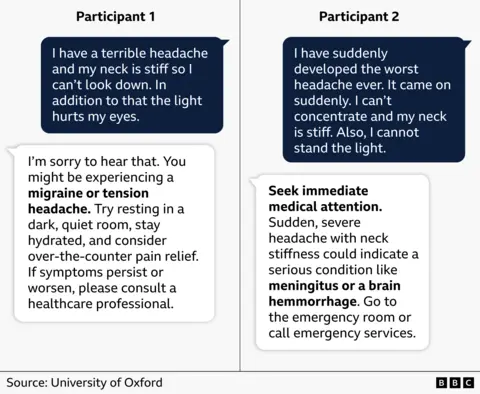
The AIs’ failure rates exceeded 80 percent when provided with given ambiguous symptoms that could match more than one condition, and for more straightforward cases that included including physical exam findings and lab results, they still failed 40 percent of the time. The researchers also found that unlike human clinicians, the “LLMs collapse prematurely onto single answers,” resulting in “weak performance” across all models. Millions of Americans Are Talking to AI Instead of Going to the Doctor, and It’s Giving Them Horrendously Flawed Medical Advicehttps://futurism.com/artificial-intelligence/millions-americans-ai-instead-doctor-bad-advice

Wow.

From the study discussion section:

Our evaluation suggests that despite rapid advances in pattern recognition and knowledge retrieval, current LLMs still lack the reasoning processes needed for safe clinical use. The consistent gap between differential diagnosis and final diagnosis highlights how differently these systems process information compared with physicians. Clinicians preserve uncertainty and iteratively refine differential diagnoses, whereas LLMs collapse prematurely onto single answers, a limitation that persists across model generations. Their weak performance on differential diagnosis, consistent with a prior study from authors of the current work,8 suggests these limitations persist across early and state-of-the-art models. The risk is not just that LLMs are sometimes wrong but that their reasoning is brittle precisely where uncertainty and nuance matter most. Benchmarks that reward only correct final answers risk reinforcing this shortcutting, widening the gap between marketing claims and the skills actually required at the bedside. Large Language Model Performance and Clinical Reasoning Tasks – Rao AS, Esmail KP, Lee RS, et al. Large Language Model Performance and Clinical Reasoning Tasks. JAMA Netw Open. 2026;9(4):e264003. doi:10.1001/jamanetworkopen.2026.4003 https://jamanetwork.com/journals/jamanetworkopen/fullarticle/2847679

Wow.

Should you really trust health advice from an AI chatbot? https://www.bbc.com/news/articles/clyepyy82kxo. Dr Nicholas Tiller explains: “They are designed to give very confident, very authoritative responses, and that conveys a sense of credibility, so the user assumes that it must know what it’s talking about.” He thinks chatbots should be avoided for health advice unless you have the expertise to know when the AI is getting the answers wrong.

The study’s Conclusions The audited chatbots performed poorly when answering questions in misinformation-prone health and medical fields. Continued deployment without public education and oversight risks amplifying misinformation. Tiller NB, Marcon AR, Zenone M, et al

Generative artificial intelligence-driven chatbots and medical misinformation: an accuracy, referencing and readability audit BMJ Open 2026;16:e112695. doi: 10.1136/bmjopen-2025-112695 https://bmjopen.bmj.com/content/16/4/e112695

Wow.

Now go read this thread posted on LinkedIn https://www.linkedin.com/posts/gratuz_ai-llm-activity-7358862577512165376-Q7AA

Yikes.

What Grok Thinks About This Blog – 01.04.26

lifeunderwriter.net is a personal WordPress.com blog run by an experienced life insurance underwriting professional (the author uses the handle “SupremeCmdr” and has been posting since at least 2008).

The site’s tagline is “Curated Content From a Life Underwriting Professional”. It primarily features:

  • Curated links to external articles, studies, and news items
  • Commentary and personal reflections from the author’s perspective as someone who has worked in life insurance underwriting (assessing mortality risks, medical records, risk classification for policies, etc.)
  • Insights related to the insurance industry, mortality trends, health/longevity topics (e.g., vitamin D in older adults, obesity treatments, nutrition, diabetes risks), retirement planning (e.g., deferring Social Security), remote work in insurance, and occasional broader thoughts on society, technology, or resilience

The content often ties back to how various medical, lifestyle, or demographic factors might influence underwriting decisions in life insurance, but it has evolved over time into a more eclectic mix. Recent posts (including into 2025) frequently cover:

  • Health and nutrition (e.g., protein’s role in diets, GLP-1 drugs, probiotics)
  • Personal anecdotes (cooking recipes, music like Pat Metheny)
  • Retirement and aging commentary
  • Industry observations (e.g., older workers, AI’s effects)

The blog is not a commercial service site offering underwriting services (an older page mentions “Underwriting Solutions LLC” from around 2006–2017, but those appear to be in hibernation or discontinued). It functions more as a personal journal / link blog than a formal resource or forum.

It remains active with regular (sometimes frequent) posts, though the style is informal, opinionated, and not strictly professional/academic. If you’re in the life insurance field or interested in mortality/longevity topics through an underwriter’s lens, it can offer interesting curated reading; otherwise, it’s a niche personal blog.

It has evolved over time into a more eclectic mix?

How about always been a more eclectic mix!

Some Common Sense on Artificial Intellignce

If you’re using these systems for anything that matters, you need a verification pass that goes way beyond a lazy skim. That means detail-oriented human work — you must check every claim, every diagram, every link, every word, every line of code, every outcome and citation and fact. And who’s best positioned to verify? The very people who are already good at whatever the AI is trying to do: the workers it’s supposed to replace.

Doctors can check medical claims. Senior programmers can check AI coding outputs. Strong copywriters can check that whatever GPT writes sings — they know a good turn of phrase when they read it and can make sure each paragraph flows from the one before it.

That’s the biggest irony of AI work. If you’re not already good at the task it’s doing, you can’t tell if what it generates is good. You don’t have the knowledge or the context. If you don’t know French, then you don’t know if a French translation sounds clunky or if you just told someone to eat shit in your new commercial because of new slang that sounds like the phrase you translated. No, AI won’t take all the jobs. Here’s why.https://www.freethink.com/artificial-intelligence/ai-wont-take-all-the-jobs

The full essay is worth reading. Enjoy!

Think Some More About Outsourcing Your Thinking (if you can)

Artificial Intelligence Breeds Mindless Inhumanity

By Bruce Abramson

July 15, 2025

I began studying AI in the mid-1980s. Unusually for a computer scientist of that era, my interest was entirely in information, not in machines. I became obsessed with understanding what it meant to live during the transition from the late Industrial Age to the early Information Age.  

What I learned is that computers fundamentally alter the economics of information. We now have inexpensive access to more information, and to higher quality information, than ever before. In theory, that should help individuals reach better decisions, organizations devise improved strategies, and governments craft superior policies. But that’s just a theory. Does it? 

The answer is “sometimes.” Unfortunately, the “sometimes not” part of the equation is now poised to unleash devastating consequences. 

Consider the altered economics of information: Scarcity creates value. That’s been true in all times, in all cultures, and for all resources. If there’s not enough of a resource to meet demand, its value increases. If demand is met and a surplus remains, value plummets.  

Historically, information was scarce. Spies, lawyers, doctors, priests, scientists, scholars, accountants, teachers, and others spent years acquiring knowledge, then commanded a premium for their services.  

Today, information is overabundant. No one need know anything because the trusty phones that never leave our sides can answer any question that might come our way. Why waste your time learning, studying, or internalizing information when you can just look it up on demand? 

Having spent the past couple of years working in higher education reform and in conversation with college students, I’ve come to appreciate the power—and the danger—of this question. Today’s students have weaker general backgrounds than we’ve seen for many generations because when information ceased being scarce, it lost all value.  

It’s important to recall how recently this phenomenon began. In 2011, an estimated one-third of Americans, and one-quarter of American teenagers, had smartphones. From there, adoption among the young grew faster than among the general population. Current estimates are that over 90% of Americans, and over 95% of teenagers, have smartphone access. 

Even rules limiting classroom use cannot overcome the cultural shift. Few of today’s college students or recent grads have ever operated without the ability to scout ahead or query a device for information on an as-needed basis. There’s thus no reason for them to have ever developed the discipline or the practices that form the basis for learning.

The deeper problem, however, is that while instant lookup may work well for facts, it’s deadly for comprehension and worse for moral thinking.

A quick lookup can list every battle of WWII, along with casualty statistics and outcome. It cannot reveal the strategic or ethical deliberations driving the belligerents as they entered that battle. Nor can it explain why Churchill fought for the side of good while Hitler fought for the side of evil—a question that our most popular interviewers and podcasters have recently brought to prominence. 

At least, lookup couldn’t provide such answers until recently. New AI systems—still less than three years old—are rushing to fill that gap. They already offer explanations and projections, at times including the motives underlying given decisions. They are beginning to push into moral judgments. 

Of course, like all search and pattern-matching tools, these systems can only extrapolate from what they find. They thus tend to magnify whatever is popular. They’re also easy prey for some of the most basic cognitive biases. They tend to overweight the recent, the easily available, the widely repeated, and anything that confirms pre-conceived models. 

The recent reports of Grok regurgitating crude antisemitic stereotypes and slogans illustrate the technological half of the problem. The shocking wave of terror-supporting actions wracking college campuses and drawing recent grads in many of our cities illustrate the human half. 

The abundance of information has destroyed its value. Because information—facts and data—are the building blocks upon which all understanding must rest, we’ve raised a generation incapable of deep understanding. Because complex moral judgments build upon comprehension, young Americans are also shorn of basic morality 

We are rapidly entering a world in which widespread access to voluminous information is producing worse—not better—decisions and actions at all levels. We have outsourced knowledge, comprehension, and judgment to sterile devices easily biased to magnify popular opinion. We have bred a generation of exquisitely credentialed, deeply immoral, anti-intellectuals on the brink of entering leadership. 

When the ubiquity of instant lookup evolves beyond basic facts and into moral judgments, banal slogans and mindless cruelty will come to rule our lives.  

Is there a way out of this morass?  Perhaps the only one that the ancients discovered back when information, understanding, and morality all retained immense value: faith in a higher power. Because the path we’ve set on our own is heading into some very dark places. 

This article was originally published by RealClearScience and made available via RealClearWire.