Concerning Trends in Retirement – More Less Than Random Thoughts

  • Lack of sufficient savings
  • Inflationary pressures
  • Rising credit card debt
  • Half of respondents said they had saved less than what was needed for retirement.
  • When we asked an open-ended question about why they rated their satisfaction with retired life as they did, inflation was a major reason.

The ‘Concerning Trends’ in Retirement Now https://www.kiplinger.com/retirement/concerning-trends-in-retirement-now

I’ve decided not to retire. Wait, let me clarify my statement.

I’ve not changed my mind about my decision not to retire five years ago.

I love double negative sentences.

 Fewer than twenty percent of older people worldwide enjoy a retirement pension that is enough for them to live off. Although countries like China and India are now also developing their pension systems, the prospect of most older people receiving pensions totaling 60 to 70% of their final salaries remains a long way off.

The invention of retirementhttps://www.swisslife.com/en/home/blog/interview-matthieu-leimgruber.html

The majority of our friends are retired. I’m always asked when I’m going to retire. My quick answer was always “Don’t know”. I’ve since modified my response to “Two to four years”. This has been my answer for the past two years. Might still be my answer next year too.

https://www.kiplinger.com/retirement/retirement-planning/the-90-rule-of-retirement-live-long-and-prosper

Nearly 40% of Americans ages 55 and older were employed in 2024, according to the Bureau of Labor Statistics — a striking shift that’s even more dramatic when you look at the oldest workers. Today, 2.8 million men over 70 are working in the U.S. — part of an extraordinary long-term transformation in which employment among Americans 75 and older has quadrupled since 1964. More Americans are ‘unretiring’: 5 money factors to weigh before joining themhttps://www.aol.com/finance/retirement-planning/article/unretiring-is-trending-5-money-factors-you-should-consider-first-153926242.html

I think I’ll retire in two to four years.

Scary Charts – 09.13.25

Interestingly, older workers (65+) earn around $3,000 more than those in the 25 to 34 bracket, reflecting a group of late-career professionals who continue to command strong wages. Charted: Median U.S. Salaries by Age Group https://www.visualcapitalist.com/charted-median-u-s-salaries-by-age-group/

Late-career professional. There seem to be a lot more of us now.

Three in four workers (75 percent) plan to work for pay in retirement, compared with just 29 percent of retirees who report they have actually worked for pay in retirement. In fact, the RCS has consistently found that workers are far more likely to plan to work for pay in retirement than retirees are to have actually done so. 2025 Retirement Confidence Surveyhttps://www.ebri.org/retirement/retirement-confidence-survey

But if you’re working for pay in retirement how can this be considered retirement?

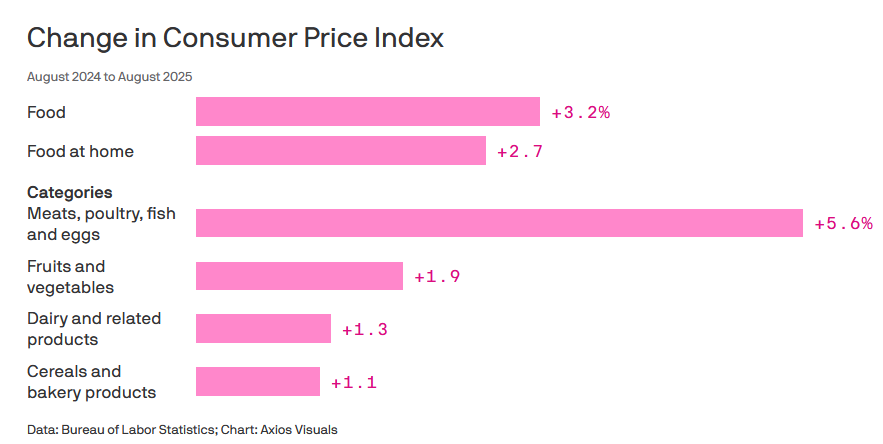
Source: https://www.axios.com/2025/09/11/trump-tariffs-grocery-prices-rise-cpi

FYI, the BLS statistics are BS. Real world eyeball prices at the market tell me so.

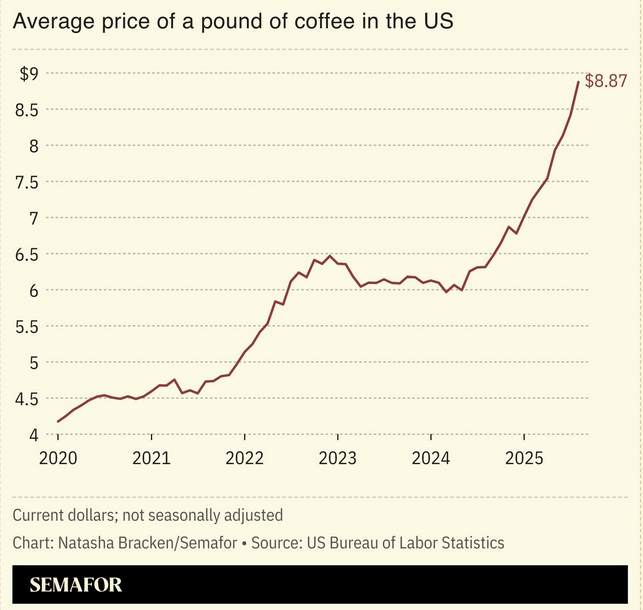
Like coffee. Coffee prices in the US has surged more than 20% in the last year.

US coffee prices surge as tariffs take effecthttps://www.semafor.com/article/09/12/2025/us-coffee-prices-surge-as-tariffs-take-effect

Ooh…not just coffee.

Here’s the inflation breakdown for August 2025 — in one charthttps://www.cnbc.com/2025/09/11/inflation-breakdown-for-august-2025.html

I guess I’ll keep working in “retirement”.

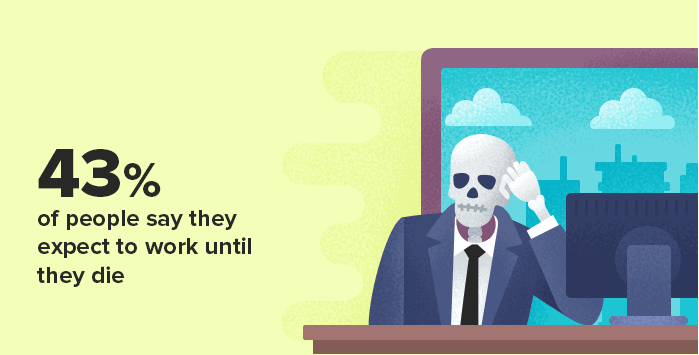
Work Until You Die – Scary Charts 09.07.25

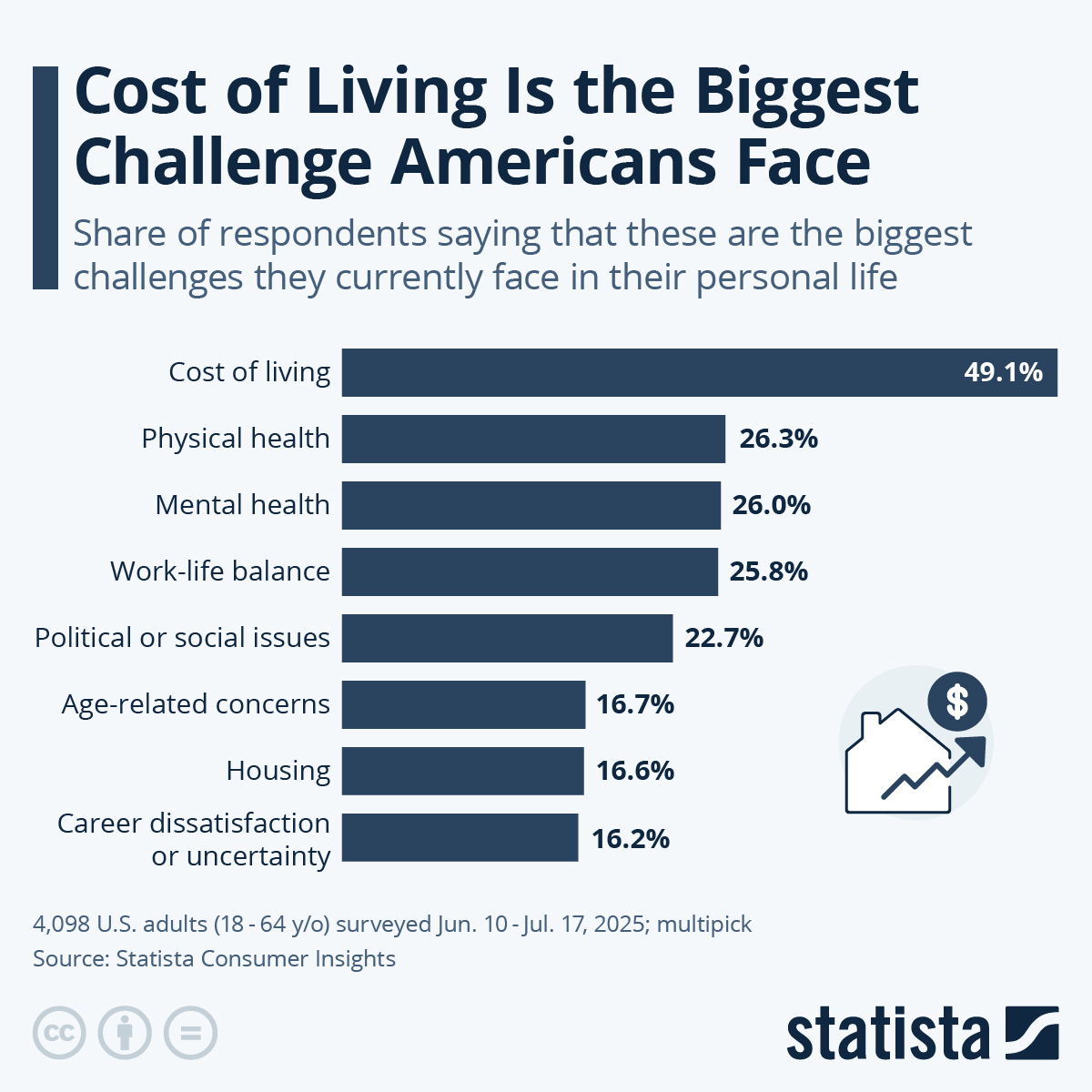
It is a common misconception that prices come down when inflation cools, when in reality a period of high inflation leaves a legacy of high prices. According to the Bureau of Labor Statistics, U.S. consumer prices have increased 22.7 percent since January 2021, with some categories seeing even steeper price increases than that. Food prices have are up 25 percent, rents have increased almost 27 percent and transportation prices are up 28 percent. And yet, nominal wages have only grown 21.8 percent since January 2021, leaving many people worse off than they were almost five years ago. Cost of Living Is the Biggest Challenge Americans Face https://www.statista.com/chart/35054/biggest-challenges-faced-by-americans/

Retirement Savings Survey: 50% of people don’t think it’s realistic for the average American to expect to retire comfortablyhttps://wallethub.com/blog/retirement-savings-survey/133047

The second survey is small with just over 200 respondents. The methodology statement is vague so it’s hard to tell if the findings are truly representative of a larger population.

Maybe the survey got an overwhelming number of pessimists.

Then again, maybe not.

Yikes.

Would You Pay $700.00 a Month to Live in One of These?

Brownstone, by virtue of renting cheaply in a city with sky-high prices and a dearth of new housing, has received thousands of applications for its $700-a-month pods over the past few years, Stallworth said. He thinks there’s at least “10,000 people probably interested in being in San Francisco at any time” and pointed to the tens of thousands of applications that Y Combinator, a local startup incubator, has received in recent years.(Startup founders make up a sizable share of the Mint Plaza building’s residents, Stallworth said.) Startup behind $700-a-month bed ‘pods’ wants to put 10,000 more in San Franciscohttps://www.sfgate.com/tech/article/startup-bed-pods-san-francisco-21029460.php

I keep telling The Boss all I’m trying to do is to make our retirement income last as long as we last.

Rejected. Again.

Random Thoughts on Retirement and Longevity – Can Remote Work Delay Retirement?

The mortality impact is interesting

The Journal of Epidemiology and Community Health found that those who worked just a year beyond retirement age had a 9% to 11% lower risk of dying during the 18 years the research covered, regardless of health. Could Remote Work Delay Your Retirement? https://www.kiplinger.com/retirement/retirement-planning/could-remote-work-delay-your-retirement

If you only eat “superfoods” will you have a long life?

“There is no single secret to living a long, healthy life.” Salvatore Di Somma, MD. Sanford Burnham Prebys. “A long and ongoing look at the secrets of human longevity and healthy aging.” ScienceDaily – https://www.sciencedaily.com/releases/2025/05/250505171023.htm

Coffee

All coffee types decrease the risk of adverse clinical outcomes in chronic liver disease: a UK Biobank study

Kennedy, O.J., Fallowfield, J.A., Poole, R. et al. BMC Public Health 21, 970 (2021) – https://bmcpublichealth.biomedcentral.com/articles/10.1186/s12889-021-10991

Movement is medicine

Being consistently physically active in adulthood is linked to a 30–40% lower risk of death from any cause in later life, while upping levels from below those recommended for health is still associated with a 20–25% lower risk, finds a pooled data analysis of the available evidence, published online in the British Journal of Sports Medicine. It’s never too late: Just moving more could add years to your lifehttps://www.sciencedaily.com/releases/2025/07/250711224321.htm

Whiskey

University of California neurologist Claudia Kawas and her team have been studying the lifestyle habits of people who live until their 90s. The group has been researching people of this age group for some 15 years – and they have found that those who drank two units of alcohol every day were less likely to die prematurely.“I have no explanation for it, but I do firmly believe that modest drinking improves longevity,” Kawas said. – Whiskey makes you live a longer, healthier lifehttps://www.irishcentral.com/culture/food-drink/whiskey-live-longer-healthier

Loneliness

Now, however, new research is calling into question this long-held belief and, surprisingly, found that loneliness may not be quite the threat that we all once thought it was. In fact, the problem may be one of confusing cause and effect. The Surprising Truth About Loneliness and Longevityhttps://www.kiplinger.com/retirement/the-surprising-truth-about-loneliness-and-longevity

Loneliness is pervasive in home care settings across the 3 countries; however, its association with mortality differs from reports for the general population. Loneliness was not associated with an increased risk of death after adjusting for health-related covariates. The causal order between changes in health, loneliness, and mortality is unclear. For example, loneliness may be a consequence of those health changes rather than their cause. Cross-National Evidence on Risk of Death Associated with Loneliness: A Survival Analysis of 1-Year All-Cause Mortality among Older Adult Home Care Recipients in Canada, Finland, and Aotearoa | New Zealandhttps://www.sciencedirect.com/science/article/pii/S152586102500204X

Clearing Up Myths About Older Workers

In 2001, only about 1 out of every 7 U.S. workers was 55 or older. By 2021, the number jumped to almost 1 out of every 4 workers (a 93% increase). That’s almost twice the proportion of older workers as before.3 Older workers are staying on the job longer for various reasons, ranging from financial needs to the joy of work.  More people are working past the age when they might have retired. They might be responding to the increase in the Social Security full retirement age, needing money or health insurance, or simply enjoying their jobs and being around their friends at work.⁴ Clearing Up Myths About Older Workers While Understanding and Supporting an Aging Workforcehttps://blogs.cdc.gov/niosh-science-blog/2023/09/25/older-workers/

I just learned I have a high level of Crystallized intelligence. https://en.wikipedia.org/wiki/Fluid_and_crystallized_intelligence

(Not) Random Thoughts on Retirement and THE SCARY CHART of the Year So Far

How Bad Could This Get? https://awealthofcommonsense.com/2025/04/how-bad-could-this-get/. I’ve lived through several stock market crashes. And to think I started the day reading up on the latest U of Michigan healthy aging poll.

National Poll on Healthy Aging home

Working adults age 50 and older commonly reported these reasons for working as being very important:

  • Have financial stability (78%)
  • Save for retirement (65%)
  • Get access to health insurance (59%)
  • Support family members financially (52%)
  • Maximize Social Security benefits (46%)

Link: https://www.healthyagingpoll.org/

How about adding these bullet points to the list:

  • Working past age 50 enables you to weather stock market volatility better
  • Working past age 60 enables you to have financial stability when the stock portion of your retirement portfolio loses value
  • Working past age 70 enables you to say I’m glad to be still working when the stock portion of my retirement portfolio loses value.

Disclaimer: the additional bullet points are fictional and not related to the real poll questions or answers.

Monday should be a very interesting day in the stock market. Stocks appear to be headed towards a fire sale. Time to buy!

Men Are Bad at Retirement

When envisioning retirement, many men imagine traveling, playing with grandchildren and driving that sexy convertible they can finally afford. The reality? For those over 70, 94% of adults watch television every day, with nearly 10% spending more than nine hours a day staring at the shows.

Men die earlier, with an average life expectancy of 73.5 years, according to a 2021 study. That’s about five years earlier than women in the U.S. One study found that men who considered themselves “traditional” men — unemotional and self-reliant — were more likely to ignore medical problems, and suffered worse health outcomes than women. And the problem gets worse as they get older. About 74% of men 55 and older go to the doctor for an annual check-up, compared to 43% of men age 35-54 and 26% of men age 18-34. Why So Many Men are Bad at Retirement https://getpocket.com/explore/item/why-so-many-men-are-bad-at-retirement?

This is an interesting article. Just more reasons why I’m not retired.

Retire. Watch TV all day long. Repeat.

Yikes.

There Are Health Related Benefits to Working Past Age 65

“Our perceptions of working after age 65 have changed over time, and these data suggest that most older adults who are still able to work after the traditional retirement age derive health-related benefits from doing so,” said poll director Jeffrey Kullgren, M.D., M.P.H., M.S., a primary care physician at the VA Ann Arbor Healthcare System and associate professor of internal medicine at U-M. “As we learn more about how loneliness, lack of social connection and isolation intertwine with physical and mental health in older adults, the role of work is important to consider.”Michigan Medicine – University of Michigan. “As more Americans work later in life, poll shows positive health impacts, especially for those over 65.” ScienceDaily. http://www.sciencedaily.com/releases/2025/02/250211141049.htm (accessed February 12, 2025)

National Poll on Healthy Aging Team. The Intersection of Work, Health, and Well-Being. University of Michigan National Poll on Healthy Aging. January/February 2025. Available at https://dx.doi.org/10.7302/25186