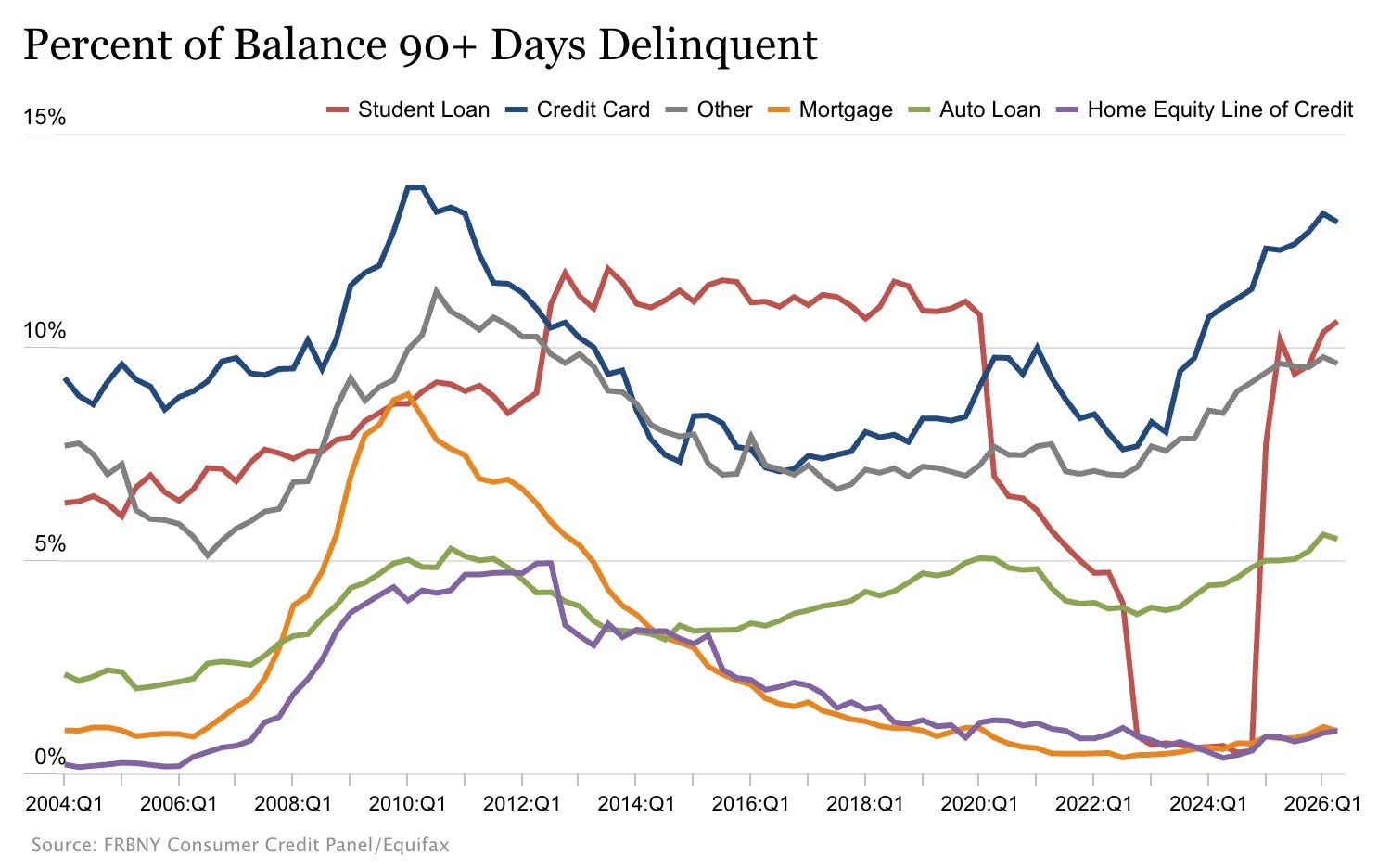
It’s as simple as this: as long-term interest rates continue moving higher, virtually every important piece of financial math gets worse, all at the same time.
The discount rate used to value stocks rises, which makes future earnings worth less today. Mortgages get more expensive. Corporate borrowing gets more expensive. Private equity deals and private credit…much of which is already FUBAR but not showing it yet…become harder to finance. Leveraged companies have to refinance debt at higher rates. Consumers pay more to borrow and the federal government pays more to service its enormous pile of debt.
Gas in bay park San Diego today BAHAHHAHAHAH 8.99 regular 9.99 diesel (probably higher that’s just as high as the sign can go hahahaha) pic.twitter.com/2B5yMVe8mP
Another quiet Saturday and thoughts turn to retirement (again). Today I thought about retirement income streams and how life would look once I stopped working. We need to find someplace affordable.
In California, Hawaii, and Massachusetts, retirees often need between $1.5 million and $2.2 million to maintain their lifestyles, according to a 2026 study by GoBankingRates. By contrast, Oklahoma is the most affordable state, with $735,284 the baseline for a comfortable retirement. Mississippi and Arkansas follow closely, with targets remaining under $810,000. What Is the Magic Number to Retire Comfortably? – https://www.kiplinger.com/retirement/magic-number-to-retire-comfortably
OK. Check that box off the list. My thoughts then turned towards what age would be a good age to retire. My former manager wanted me to stick around for five years. The last time I saw my current manager he told me a story of his grandfather working until he was 80. You hear stories of more people working into their later years and I wondered, at what age do people really retire?
Drawing on a nationally representative survey of 1,591 U.S. adults ages 22–75, this research uncovers a five-year difference between when current retirees, on average, actually left the workforce (age 57) and when future retirees expect to retire (age 62), with half of those planning to retire anticipating they’ll need to delay even further. Future retirees are shifting away from traditional income sources like Social Security and pensions, planning instead to rely more heavily on personal savings and continued employment. Career interruptions remain a significant but underappreciated threat to retirement security, as half of U.S. adults have left the workforce for more than a year.
The entire study Bridging retirement expectation gaps New evidence and insights can be downloaded here:
This is another post in the never ending series of random thoughts on retirement. For the curious, here’s a link to my previous posts full of random thoughts (brain droppings): https://lifeunderwriter.net/tag/retirement/.
I am writing this on Father’s Day, the fourth day of a four day weekend and I’m ready to go back to work. It’s tough being an Old Guy who is old enough to be retired but isn’t retired and still working. Some days I wonder why I’m not retired. I guess this is all part of my living a longer healthier life strategy.
Social connection, prosociality, spirituality, optimism, and work—growing evidence suggests these five factors can play an important role in improving the well-being of people and communities…Work is one of the most important—and neglected—social determinants of health, according to Lisa Berkman, Thomas D. Cabot Professor of Public Policy and of Epidemiology at Harvard Chan School and director of the Harvard Center for Population and Development Studies. “Work drives income, social ties, and the opportunity for meaningful participation in society,” she said. “As such, it also shapes both our cognitive and physical health in many different ways.” The importance of connections: Ways to live a longer, healthier life – https://hsph.harvard.edu/news/the-importance-of-connections-ways-to-live-a-longer-healthier-life/
The optimism factor is interesting.
“The findings are remarkably consistent,” she said. “Across different racial and ethnic populations, we have seen that people who are more optimistic are more likely to age in good health and less likely to suffer from chronic diseases, physical illness, or cognitive impairments in old age. Optimists are also more likely to live exceptionally longer lives, beyond age 85 or more.”
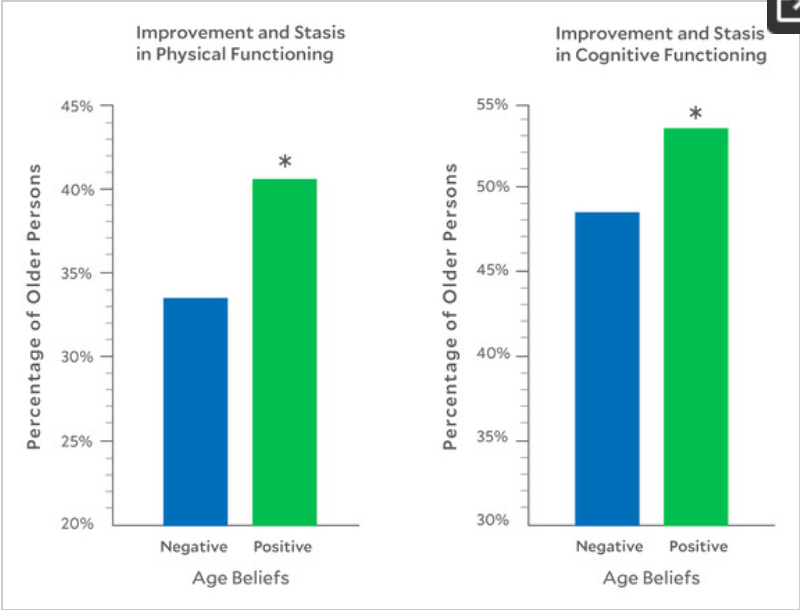
Aging Redefined: Cognitive and Physical Improvement with Positive Age Beliefs
Background/Objectives: A widespread assumption exists among scientists, health care providers, and the public that later life is a time of inevitable and universal cognitive and physical decline. This assumption is likely due to considering older persons who improve to be exceptions, and the reliance on aging-health measures that do not allow for improvement. In contrast, we utilized a measure that allowed for an upward trajectory to occur. Our objective was to examine whether a meaningful number of older persons improve with this measure and, if so, to examine whether a promising modifiable culture-based variable, positive age beliefs, contributes to this improvement. Methods: Individuals 65 years and older, who participated in a nationally representative longitudinal study, had their physical health assessed by walking speed and their cognitive health assessed by a global performance measure. We calculated the percentage of the sample that showed improvement in each domain from baseline to the last measurement up to 12 years later. We also examined whether a positive-age-belief measure predicted this improvement in regression models. Results: It was found that 45.15% of persons improved in cognitive and/or physical function over this period, and positive age beliefs predicted these two types of improvement, both with and without adjusting for relevant covariates. Conclusions: Our findings underscore the need to instill or magnify the positivity of age beliefs and to redefine aging so that it includes the possibility of improvement.
In sociology this phenomenon is known as a self-fulfilling prophecy.
Yes dear reader, yet another post in the never ending series of random thoughts on retirement. For the curious, here’s a link to some previous posts https://lifeunderwriter.net/tag/retirement/. I am an Old Guy who is old enough to be retired but isn’t retired and still working. After many mornings spent in deep contemplation and many posts where I think out loud I’ve finally accepted my fate and come to a deeper understanding of why I do what I do.
I’ve spent a lifetime working in risk management. Finally, the light bulb came on.
I am actively managing my longevity risk. It’s what I do. I manage risks.
The majority of our friends are retired. I’m always asked when I’m going to retire. My answer was always “Don’t know”. I subsequently modified my response to “Two to four years”. This has been my answer for the past two years. But now when someone asks when I will retire, my answer will be:
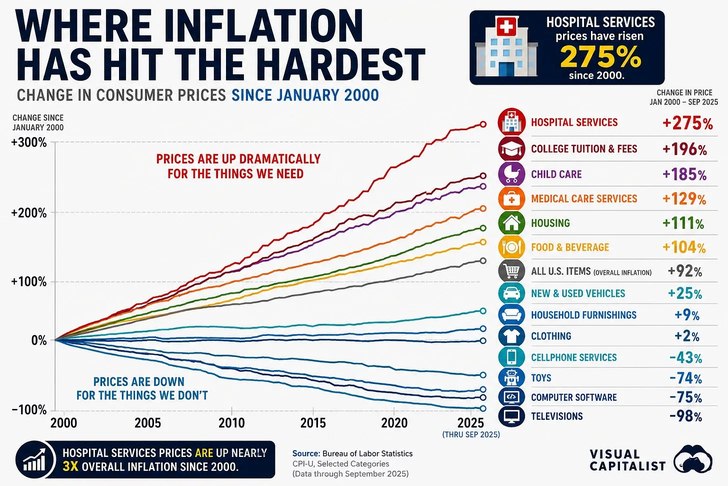
I am managing my longevity risk. I am managing future inflation risk.
Imagine you retire at 65, feeling confident. You’ve budgeted $80,000 a year to live comfortably — travel, dining out, covering healthcare, the works.
Fast-forward 25 years.
At age 85, you’re still spending about $80,000 a year … but that no longer buys what it used to.
That nice dinner out that cost $100 now costs about $210
A $5,000 annual vacation is now closer to $10,500
Groceries that ran $10,000 a year are now over $21,000
In other words, your $80,000 lifestyle now costs roughly $168,000 to maintain.
Ghilarducci is spot on with her assessment. My plan on working longer wasn’t really a plan so much as it was a set of assumptions. Everything had to go as “planned” or forget about working longer. The two major variables were continued good health and finding an employer that values older workers.
I got lucky. My illusion is working (pun intended).
Though the traditional retirement age in the U.S. typically falls between 62 and 67, many Americans continue working beyond that point. As of 2024, slightly more than 22% of adults aged 65 and older are still employed, either full-time or part-time. Though the traditional retirement age in the U.S. typically falls between 62 and 67, many Americans continue working beyond that point. As of 2024, slightly more than 22% of adults aged 65 and older are still employed, either full-time or part-time. – https://financebuzz.com/working-in-retirement-data
I’m not the only Old Guy who is still working past age 65.
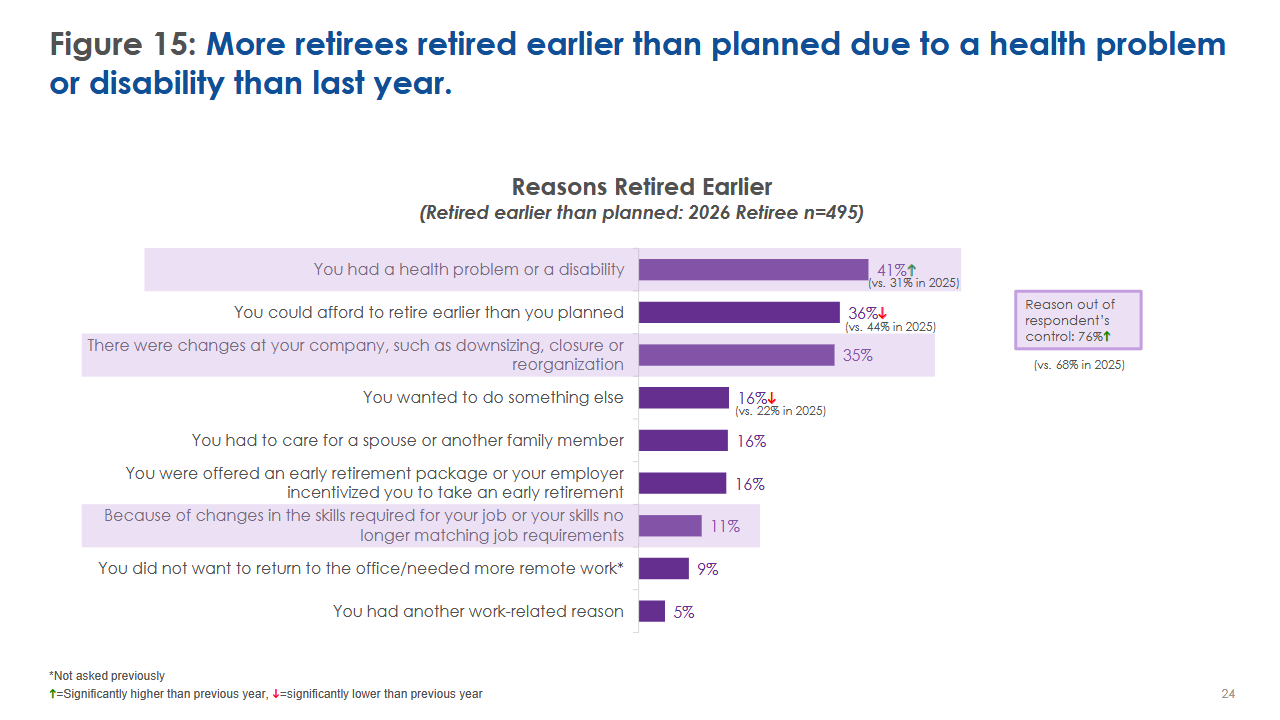
But despite the fact I’m not the only Old Guy who is still working past age 65 more people are starting retirements earlier than they expected (always have a Plan B and maybe even a Plan C).
We plan for the money. We don’t plan for the Monday morning when no one needs you to be anywhere.
Julianne Holt-Lunstad, a professor of psychology and neuroscience at Brigham Young University, published a landmark meta-analysis in 2015 involving over 3.4 million participants. Her finding: social isolation increases the risk of premature death by 26%, and loneliness by 29%. Those numbers rival the health impact of smoking fifteen cigarettes a day. We treat smoking as a public health crisis. We treat retirement loneliness as a personal failing.
Though the traditional retirement age in the U.S. typically falls between 62 and 67, many Americans continue working beyond that point. As of 2024, slightly more than 22% of adults aged 65 and older are still employed, either full-time or part-time. Though the traditional retirement age in the U.S. typically falls between 62 and 67, many Americans continue working beyond that point. As of 2024, slightly more than 22% of adults aged 65 and older are still employed, either full-time or part-time. – https://financebuzz.com/working-in-retirement-data
So I’m not the only Old Guy who is still working past age 65.




You must be logged in to post a comment.