“Medical” Advice for the Masses

The AIs’ failure rates exceeded 80 percent when provided with given ambiguous symptoms that could match more than one condition, and for more straightforward cases that included including physical exam findings and lab results, they still failed 40 percent of the time. The researchers also found that unlike human clinicians, the “LLMs collapse prematurely onto single answers,” resulting in “weak performance” across all models. Millions of Americans Are Talking to AI Instead of Going to the Doctor, and It’s Giving Them Horrendously Flawed Medical Advicehttps://futurism.com/artificial-intelligence/millions-americans-ai-instead-doctor-bad-advice

Wow.

From the study discussion section:

Our evaluation suggests that despite rapid advances in pattern recognition and knowledge retrieval, current LLMs still lack the reasoning processes needed for safe clinical use. The consistent gap between differential diagnosis and final diagnosis highlights how differently these systems process information compared with physicians. Clinicians preserve uncertainty and iteratively refine differential diagnoses, whereas LLMs collapse prematurely onto single answers, a limitation that persists across model generations. Their weak performance on differential diagnosis, consistent with a prior study from authors of the current work,8 suggests these limitations persist across early and state-of-the-art models. The risk is not just that LLMs are sometimes wrong but that their reasoning is brittle precisely where uncertainty and nuance matter most. Benchmarks that reward only correct final answers risk reinforcing this shortcutting, widening the gap between marketing claims and the skills actually required at the bedside. Large Language Model Performance and Clinical Reasoning Tasks – Rao AS, Esmail KP, Lee RS, et al. Large Language Model Performance and Clinical Reasoning Tasks. JAMA Netw Open. 2026;9(4):e264003. doi:10.1001/jamanetworkopen.2026.4003 https://jamanetwork.com/journals/jamanetworkopen/fullarticle/2847679

Wow.

Should you really trust health advice from an AI chatbot? https://www.bbc.com/news/articles/clyepyy82kxo. Dr Nicholas Tiller explains: “They are designed to give very confident, very authoritative responses, and that conveys a sense of credibility, so the user assumes that it must know what it’s talking about.” He thinks chatbots should be avoided for health advice unless you have the expertise to know when the AI is getting the answers wrong.

The study’s Conclusions The audited chatbots performed poorly when answering questions in misinformation-prone health and medical fields. Continued deployment without public education and oversight risks amplifying misinformation. Tiller NB, Marcon AR, Zenone M, et al

Generative artificial intelligence-driven chatbots and medical misinformation: an accuracy, referencing and readability audit BMJ Open 2026;16:e112695. doi: 10.1136/bmjopen-2025-112695 https://bmjopen.bmj.com/content/16/4/e112695

Wow.

Now go read this thread posted on LinkedIn https://www.linkedin.com/posts/gratuz_ai-llm-activity-7358862577512165376-Q7AA

Yikes.

America’s Next Epidemic is Happening in Canada

Sports betting is being marketed to young Americans as an investment. Social media has perpetuated the idea that betting on sports is a profitable venture, leading to the normalization of unsafe and risky behavior. The legalization of prediction markets like Kalshi and Polymarket have only reinforced that messaging. America’s next epidemichttps://www.bettoroff.org/about-6-1

Nearly one in four (23.5%) young adults, aged 18 to 29, who reported gambling online in the past year experienced high levels of gambling-related harms, including financial, emotional, psychological and relationship harms. Online Gambling Among Young Canadian Adults: A Call to Actionhttps://www.ccsa.ca/en

Yikes.

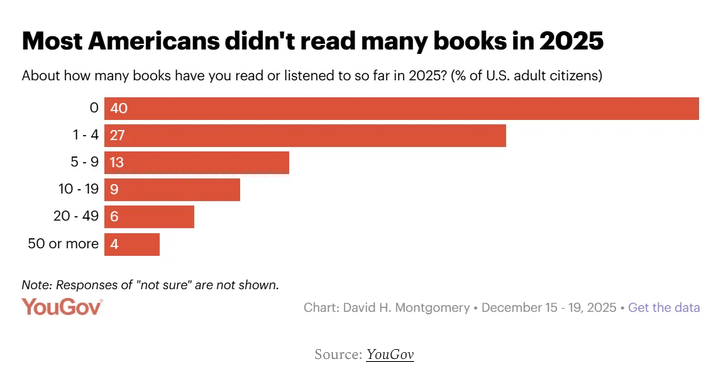
Now READ THIS (if you can)

Just a few days ago I posted READ THIS! (if you can). Then I came across this:

A conservative colleague said the use of AI to create addiction and device dependency was evil. That is an understatement. These kids rely on ChatGPT not just for information but also to make choices, and for many, that seems to extend to every aspect of their lives. Sam Altman makes clear in video clips below that this extreme loss of independence, of personal autonomy, is deliberate.

That means unless these kids can find a way to break free, they are cognitive serfs that can be told to do anything. How to vote. Whether to sign up to die in a hopeless war. Whether to take a job in a unsafe meatpacking plant and risk loss of limbs.

This widespread abuse is far worse than what the Sacklers and other opioid peddlers did to mainly working class pain victims, or what the British did to China in the Opium Wars. At least with opioid addiction, it is possible for the victims to recover even if the withdrawal process is painful. The evidence is mounting that even for adults, regular use of AI diminishes reasoning skills and attention spans.

These children are being turned into automatons, incapable of independent thought and action. It’s widely known in developmental psychology that if certain patterning does not happen at critical ages, the deficit is permanent. Kittens needing visual input in their first few days or they are blind. Kids who don’t crawl having coordination issues as adults due to missing important movement patterning. Less dramatic versions are not being able to make sounds in foreign languages if you have not heard and practiced them when young.

These young AI addicts are set to be permanently damaged. This is tech bros creating something as permanent and harmful as fetal alcohol syndrome on a mass basis. And they clearly know what they are doing, witness how they raise their children on completely different lines. “We Are Watching Critical Thinking Disappear in Real Time” Due to AI Addiction: 40% of Kids Can’t Read, Teachers Quitting in Droveshttps://www.nakedcapitalism.com/2026/01/we-are-watching-critical-thinking-disappear-in-real-time-due-to-ai-addiction-40-of-kids-cant-read-teachers-quitting-in-droves.html

Thanks for sharing Yves. But as one of your readers noted,

If we teach kids to think they won’t do what they’re told!

What Grok Thinks About This Blog – 01.04.26

lifeunderwriter.net is a personal WordPress.com blog run by an experienced life insurance underwriting professional (the author uses the handle “SupremeCmdr” and has been posting since at least 2008).

The site’s tagline is “Curated Content From a Life Underwriting Professional”. It primarily features:

  • Curated links to external articles, studies, and news items
  • Commentary and personal reflections from the author’s perspective as someone who has worked in life insurance underwriting (assessing mortality risks, medical records, risk classification for policies, etc.)
  • Insights related to the insurance industry, mortality trends, health/longevity topics (e.g., vitamin D in older adults, obesity treatments, nutrition, diabetes risks), retirement planning (e.g., deferring Social Security), remote work in insurance, and occasional broader thoughts on society, technology, or resilience

The content often ties back to how various medical, lifestyle, or demographic factors might influence underwriting decisions in life insurance, but it has evolved over time into a more eclectic mix. Recent posts (including into 2025) frequently cover:

  • Health and nutrition (e.g., protein’s role in diets, GLP-1 drugs, probiotics)
  • Personal anecdotes (cooking recipes, music like Pat Metheny)
  • Retirement and aging commentary
  • Industry observations (e.g., older workers, AI’s effects)

The blog is not a commercial service site offering underwriting services (an older page mentions “Underwriting Solutions LLC” from around 2006–2017, but those appear to be in hibernation or discontinued). It functions more as a personal journal / link blog than a formal resource or forum.

It remains active with regular (sometimes frequent) posts, though the style is informal, opinionated, and not strictly professional/academic. If you’re in the life insurance field or interested in mortality/longevity topics through an underwriter’s lens, it can offer interesting curated reading; otherwise, it’s a niche personal blog.

It has evolved over time into a more eclectic mix?

How about always been a more eclectic mix!

My Statin Comes From India

According to the USP, the bulk of the APIs come from India. That country is responsible for 50% of the active pharmaceutic ingredients. China is not far behind at 32%. The European Union supplies 10%. That’s a big change since 2000. Back then, European countries like France, Germany, Switzerland and Denmark supplied 42% of the APIs. Drug Recalls From India – Can You Trust Foreign-Made Generics?https://www.peoplespharmacy.com/articles/more-drug-recalls-from-india-do-you-trust-foreign-made-generics

Dozens of companies received approval from the FDA over the years to sell metoprolol and bupropion in the U.S. Yet from 2018 to 2024, the agency reported running only 2 tests on metoprolol and 7 on bupropion through its quality surveillance program — in each case, by pulling a sample from a single drug maker. In many of those years, the drugs weren’t tested at all, FDA records show. Those that were assessed received passing results. The FDA Often Doesn’t Test Generic Drugs for Quality Concerns, So ProPublica Didhttps://www.propublica.org/article/fda-generic-drug-testing

ClinCalc DrugStats Databasehttps://clincalc.com/DrugStats/

Both articles are long reads but worth your time.

Yikes.

What ChatGPT Run Through Duck.ai Thinks About This Blog

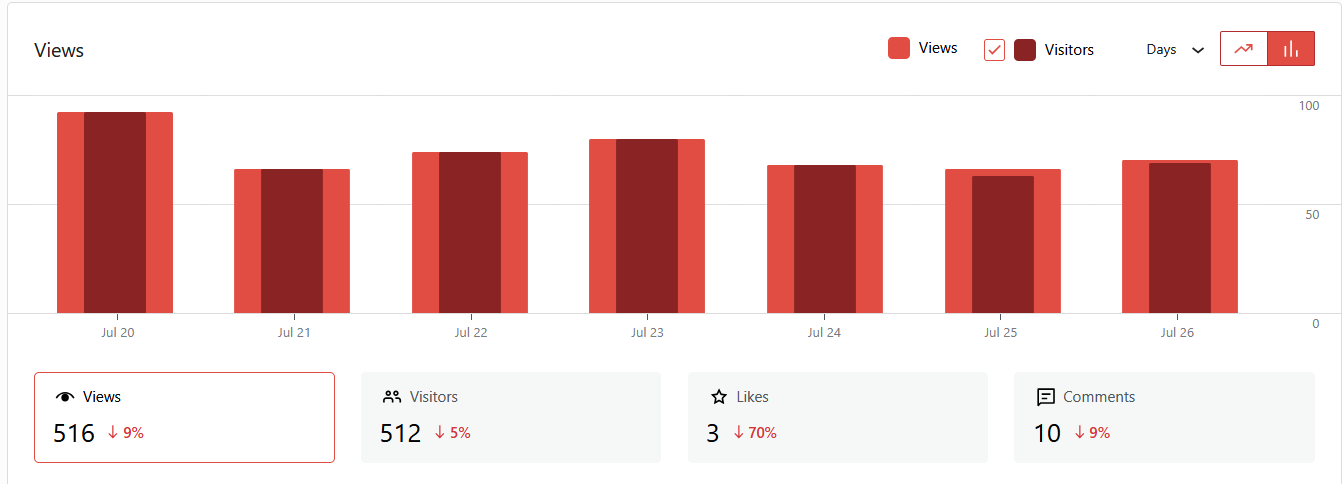
Lifeunderwriter.net is a blog mainly focused on topics related to life underwriting in the insurance sector. It covers various aspects of the underwriting process, success tips for professionals, and insights into the life insurance industry.

Key Features of the Blog

  • Curated Content: The blog displays curated content from a life underwriting professional aimed at sharing knowledge and resources.
  • Topics Covered: Posts may include discussions on underwriting practices, medical news relevant to underwriters, career tips, and personal insights about the industry.
  • Regular Updates: The blog has been active for several years, with posts dating back to 2008, and it appears to encourage subscriber engagement.

Recent Posts and Themes

Recent entries suggest a mix of industry insights and personal reflections. Topics range from the impact of emerging trends in underwriting to the importance of keeping updated with medical advancements.

If you’re interested in specific articles or themes from the blog, let me know!