Would You Pay $700.00 a Month to Live in One of These?

Brownstone, by virtue of renting cheaply in a city with sky-high prices and a dearth of new housing, has received thousands of applications for its $700-a-month pods over the past few years, Stallworth said. He thinks there’s at least “10,000 people probably interested in being in San Francisco at any time” and pointed to the tens of thousands of applications that Y Combinator, a local startup incubator, has received in recent years.(Startup founders make up a sizable share of the Mint Plaza building’s residents, Stallworth said.) Startup behind $700-a-month bed ‘pods’ wants to put 10,000 more in San Franciscohttps://www.sfgate.com/tech/article/startup-bed-pods-san-francisco-21029460.php

I keep telling The Boss all I’m trying to do is to make our retirement income last as long as we last.

Rejected. Again.

Sunday Musings – 08.31.25

“Page by page, chapter by chapter, the story unfolds. Day by day, year by year, your own story unfolds, your life’s story. Things happen. People come and go. The scene shifts. Time runs by, runs out. Maybe it is all utterly meaningless. Maybe it is all unutterably meaningful. If you want to know which, pay attention. What it means to be truly human in a world that half the time we are in love with and half the time scares the hell out of us—any fiction that helps us pay attention to that is as far as I am concerned religious fiction. The unexpected sound of your name on somebody’s lips. The good dream. The odd coincidence. The moment that brings tears to your eyes. The person who brings life to your life. Maybe even the smallest events hold the greatest clues.”

Frederick Buechner https://www.frederickbuechner.com/our-shared-story

How To Reduce Your Risk of Developing Diabetes

The researchers, from 23 universities in Spain and Harvard Chan School, split 4,746 PREDIMED-Plus participants into an intervention group and a control group and followed their health outcomes for six years. The intervention group adhered to a Mediterranean diet; reduced their caloric intake by about 600 calories per day; engaged in moderate physical activity, such as brisk walking and strength and balance exercises; and received professional support for weight loss control. The control group adhered to a Mediterranean diet without calorie restriction, exercise guidance, or professional support. Participants ranged from age 55 to 75, were overweight or obese, and had metabolic syndrome, but were free of T2D at baseline.

The study found that those in the intervention group had a 31% lower risk of developing T2D compared to those in the control group. Additionally, the intervention group lost an average of 3.3 kilograms and reduced their waist circumference by 3.6 centimeters, compared to 0.6 kilograms and 0.3 centimeters in the control group. Scientists found 3 simple tweaks that cut diabetes risk by 31%https://www.sciencedaily.com/releases/2025/08/250829022835.htm Harvard T.H. Chan School of Public Health. ScienceDaily. http://www.sciencedaily.com/releases/2025/08/250829022835.htm (accessed August 29, 2025).

Guess I’ll cut out beer.

Prozac is Better Than Viagra (for clams)

Fluoxetine, the drug commonly known as Prozac, isn’t known to increase sexual prowess in humans. In fact, it often does the very opposite. But when these clams were exposed to the same drug, they instantly jumped to sexual activity. Now, this wasn’t a complete surprise. Research conducted in the 1980s found that if serotonin is injected into the muscles or gonad of clams, they may begin to spawn after just 15 minutes.

How Prozac Might Give Clams a Boost https://undark.org/2025/08/14/excerpt-prozac-clams/

Think Some More About Outsourcing Your Thinking (if you can)

Artificial Intelligence Breeds Mindless Inhumanity

By Bruce Abramson

July 15, 2025

I began studying AI in the mid-1980s. Unusually for a computer scientist of that era, my interest was entirely in information, not in machines. I became obsessed with understanding what it meant to live during the transition from the late Industrial Age to the early Information Age.  

What I learned is that computers fundamentally alter the economics of information. We now have inexpensive access to more information, and to higher quality information, than ever before. In theory, that should help individuals reach better decisions, organizations devise improved strategies, and governments craft superior policies. But that’s just a theory. Does it? 

The answer is “sometimes.” Unfortunately, the “sometimes not” part of the equation is now poised to unleash devastating consequences. 

Consider the altered economics of information: Scarcity creates value. That’s been true in all times, in all cultures, and for all resources. If there’s not enough of a resource to meet demand, its value increases. If demand is met and a surplus remains, value plummets.  

Historically, information was scarce. Spies, lawyers, doctors, priests, scientists, scholars, accountants, teachers, and others spent years acquiring knowledge, then commanded a premium for their services.  

Today, information is overabundant. No one need know anything because the trusty phones that never leave our sides can answer any question that might come our way. Why waste your time learning, studying, or internalizing information when you can just look it up on demand? 

Having spent the past couple of years working in higher education reform and in conversation with college students, I’ve come to appreciate the power—and the danger—of this question. Today’s students have weaker general backgrounds than we’ve seen for many generations because when information ceased being scarce, it lost all value.  

It’s important to recall how recently this phenomenon began. In 2011, an estimated one-third of Americans, and one-quarter of American teenagers, had smartphones. From there, adoption among the young grew faster than among the general population. Current estimates are that over 90% of Americans, and over 95% of teenagers, have smartphone access. 

Even rules limiting classroom use cannot overcome the cultural shift. Few of today’s college students or recent grads have ever operated without the ability to scout ahead or query a device for information on an as-needed basis. There’s thus no reason for them to have ever developed the discipline or the practices that form the basis for learning.

The deeper problem, however, is that while instant lookup may work well for facts, it’s deadly for comprehension and worse for moral thinking.

A quick lookup can list every battle of WWII, along with casualty statistics and outcome. It cannot reveal the strategic or ethical deliberations driving the belligerents as they entered that battle. Nor can it explain why Churchill fought for the side of good while Hitler fought for the side of evil—a question that our most popular interviewers and podcasters have recently brought to prominence. 

At least, lookup couldn’t provide such answers until recently. New AI systems—still less than three years old—are rushing to fill that gap. They already offer explanations and projections, at times including the motives underlying given decisions. They are beginning to push into moral judgments. 

Of course, like all search and pattern-matching tools, these systems can only extrapolate from what they find. They thus tend to magnify whatever is popular. They’re also easy prey for some of the most basic cognitive biases. They tend to overweight the recent, the easily available, the widely repeated, and anything that confirms pre-conceived models. 

The recent reports of Grok regurgitating crude antisemitic stereotypes and slogans illustrate the technological half of the problem. The shocking wave of terror-supporting actions wracking college campuses and drawing recent grads in many of our cities illustrate the human half. 

The abundance of information has destroyed its value. Because information—facts and data—are the building blocks upon which all understanding must rest, we’ve raised a generation incapable of deep understanding. Because complex moral judgments build upon comprehension, young Americans are also shorn of basic morality 

We are rapidly entering a world in which widespread access to voluminous information is producing worse—not better—decisions and actions at all levels. We have outsourced knowledge, comprehension, and judgment to sterile devices easily biased to magnify popular opinion. We have bred a generation of exquisitely credentialed, deeply immoral, anti-intellectuals on the brink of entering leadership. 

When the ubiquity of instant lookup evolves beyond basic facts and into moral judgments, banal slogans and mindless cruelty will come to rule our lives.  

Is there a way out of this morass?  Perhaps the only one that the ancients discovered back when information, understanding, and morality all retained immense value: faith in a higher power. Because the path we’ve set on our own is heading into some very dark places. 

This article was originally published by RealClearScience and made available via RealClearWire.

Random Thoughts on Retirement and Longevity – Can Remote Work Delay Retirement?

The mortality impact is interesting

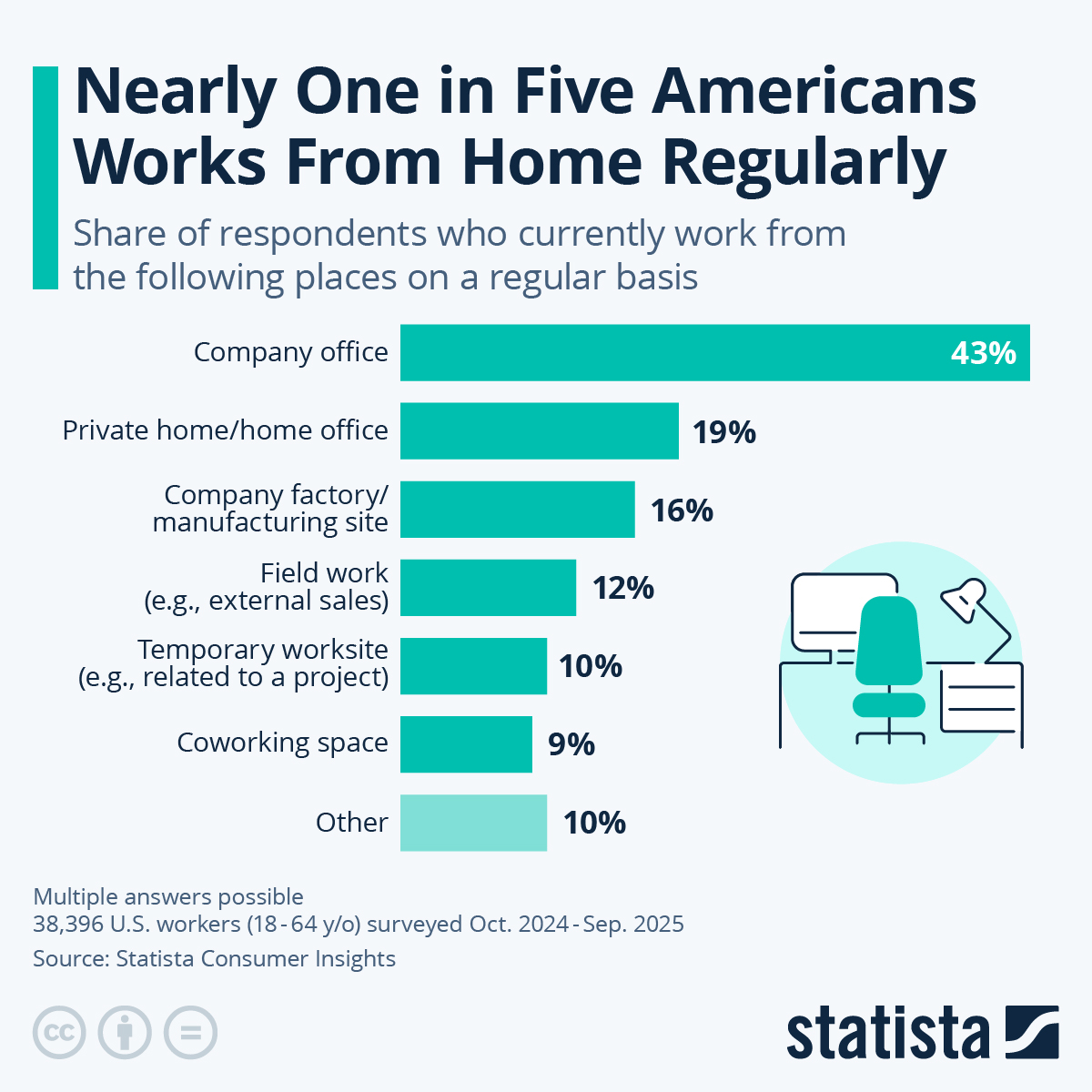
The Journal of Epidemiology and Community Health found that those who worked just a year beyond retirement age had a 9% to 11% lower risk of dying during the 18 years the research covered, regardless of health. Could Remote Work Delay Your Retirement? https://www.kiplinger.com/retirement/retirement-planning/could-remote-work-delay-your-retirement

If you only eat “superfoods” will you have a long life?

“There is no single secret to living a long, healthy life.” Salvatore Di Somma, MD. Sanford Burnham Prebys. “A long and ongoing look at the secrets of human longevity and healthy aging.” ScienceDaily – https://www.sciencedaily.com/releases/2025/05/250505171023.htm

Coffee

All coffee types decrease the risk of adverse clinical outcomes in chronic liver disease: a UK Biobank study

Kennedy, O.J., Fallowfield, J.A., Poole, R. et al. BMC Public Health 21, 970 (2021) – https://bmcpublichealth.biomedcentral.com/articles/10.1186/s12889-021-10991

Movement is medicine

Being consistently physically active in adulthood is linked to a 30–40% lower risk of death from any cause in later life, while upping levels from below those recommended for health is still associated with a 20–25% lower risk, finds a pooled data analysis of the available evidence, published online in the British Journal of Sports Medicine. It’s never too late: Just moving more could add years to your lifehttps://www.sciencedaily.com/releases/2025/07/250711224321.htm

Whiskey

University of California neurologist Claudia Kawas and her team have been studying the lifestyle habits of people who live until their 90s. The group has been researching people of this age group for some 15 years – and they have found that those who drank two units of alcohol every day were less likely to die prematurely.“I have no explanation for it, but I do firmly believe that modest drinking improves longevity,” Kawas said. – Whiskey makes you live a longer, healthier lifehttps://www.irishcentral.com/culture/food-drink/whiskey-live-longer-healthier

Loneliness

Now, however, new research is calling into question this long-held belief and, surprisingly, found that loneliness may not be quite the threat that we all once thought it was. In fact, the problem may be one of confusing cause and effect. The Surprising Truth About Loneliness and Longevityhttps://www.kiplinger.com/retirement/the-surprising-truth-about-loneliness-and-longevity

Loneliness is pervasive in home care settings across the 3 countries; however, its association with mortality differs from reports for the general population. Loneliness was not associated with an increased risk of death after adjusting for health-related covariates. The causal order between changes in health, loneliness, and mortality is unclear. For example, loneliness may be a consequence of those health changes rather than their cause. Cross-National Evidence on Risk of Death Associated with Loneliness: A Survival Analysis of 1-Year All-Cause Mortality among Older Adult Home Care Recipients in Canada, Finland, and Aotearoa | New Zealandhttps://www.sciencedirect.com/science/article/pii/S152586102500204X

Clearing Up Myths About Older Workers

In 2001, only about 1 out of every 7 U.S. workers was 55 or older. By 2021, the number jumped to almost 1 out of every 4 workers (a 93% increase). That’s almost twice the proportion of older workers as before.3 Older workers are staying on the job longer for various reasons, ranging from financial needs to the joy of work.  More people are working past the age when they might have retired. They might be responding to the increase in the Social Security full retirement age, needing money or health insurance, or simply enjoying their jobs and being around their friends at work.⁴ Clearing Up Myths About Older Workers While Understanding and Supporting an Aging Workforcehttps://blogs.cdc.gov/niosh-science-blog/2023/09/25/older-workers/

I just learned I have a high level of Crystallized intelligence. https://en.wikipedia.org/wiki/Fluid_and_crystallized_intelligence

Too Much Turmeric

Generally, turmeric—a golden-colored staple of curries—is not harmful, particularly in foods. But, as herbal supplements have gained popularity and doses have gotten larger, doctors have reported a rise in liver injuries from the spice. In fact, while rare overall, turmeric appears to have become the most common herbal cause of liver injuries in the US. Woman takes 10x dose of turmeric, gets hospitalized for liver damagehttps://arstechnica.com/health/2025/07/woman-takes-10x-dose-of-turmeric-gets-hospitalized-for-liver-damage/

Yikes.