Opiods + Marijuana = Bad

Cannabis Plus Opioids in Chronic Pain: Not a Great Combo

Previous research by Humphreys and colleagues showed that people who used medical cannabis also had higher rates of opioid use and misuse. “This is one of many examples where claims about the benefits of medical cannabis are not supported by evidence,” Humphreys told MedPage Today.  The current study had several limitations: it relied on cross-sectional, self-reported data and was subject to possible selection bias and confounding. It also did not assess the frequency or quantity of cannabis or opioid use, or the type of chronic pain.

CBD Is Everywhere, but Scientists Still Don’t Know Much About It

This NYT article should be read by anyone considering the use of CBD for anything.

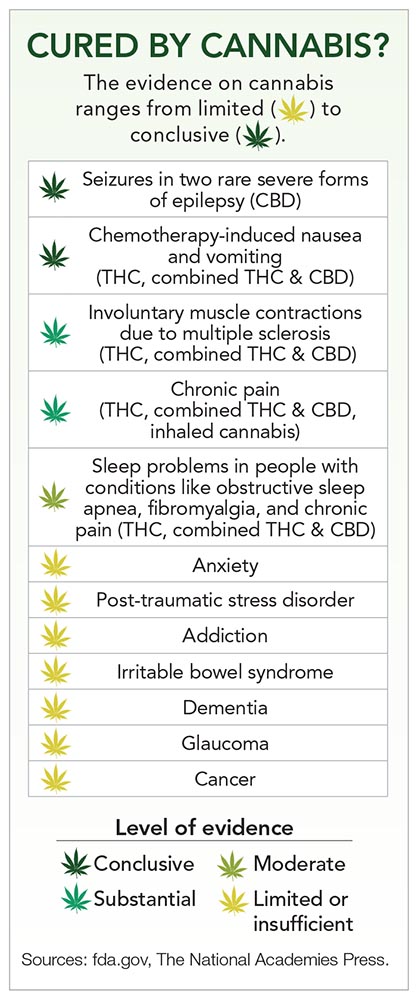
Here’s a list of what CBD can be used for from a local news rack publication.

Relief, the Natural Way

  • Pain
  • Depression
  • Acne
  • Anxiety
  • Cancer
  • Diabetes
  • Drug withdrawals
  • Epilepsy
  • Fibromyalgia
  • Heart health
  • Inflammation
  • Inflammatory bowel disease
  • Insomnia
  • Multiple Sclerosis
  • Neurodegenerative disorders
  • Psoriasis
  • Quitting smoking
  • Quality of life


Authors Guild Survey Shows Drastic 42 Percent Decline in Authors Earnings in Last Decade

The Authors Guild’s 2018 Author Income Survey, the largest survey of writing-related earnings by American authors ever conducted finds incomes falling to historic lows to a median of $6,080 in 2017, down 42 percent from 2009.

The Authors Guild surveyed its membership and the members of 14 other writers organizations in 2018, receiving detailed responses from 5,067 authors. This included traditionally, hybrid and self-published authors who have commercially published one or more books. When discussing median incomes, the survey looked at both full-time and part-time authors.

The respondents reported a median author income of $6,080, continuing a sharp decline over the last decade: $8,000 in 2014 and $10,500 in 2009 (per the Authors Guild’s 2015 Survey), down again from $12,850 in 2007, as reported in a joint Authors Guild/PEN survey.

Earnings from book income alone fell even more, declining 21 percent to $3,100 in 2017 from $3,900 in 2013 and just over 50 percent from 2009’s median book earnings of $6,250.

The survey showed a shift in book earnings to other writing-related activities, such as speaking engagements, book reviewing or teaching. Including those sources, respondents who identified themselves as full-time book authors still only earned a median income of $20,300, well below the federal poverty line for a family of three or more.

Add writer to the list of occupations to steer your grandchildren away from.

I am a non-professional non-paid writer.  And professional writers don’t make much more than I do writing.

Read the entire article here.

2018 -The year vegan junk food went mainstream

As Abigail Higgins laid out earlier this year at Vox, there are a number of reasons for vegans’ relative unpopularity (a 2017 analysis suggested that just “labeling a product as ‘vegan’ causes its sales to drop by 70%”). One is that vegans make people feel bad. “People tend to interpret someone’s choice not to eat meat as condemnation of their own choices, which can make them pretty defensive,” Higgins explained. And this defensiveness isn’t totally misplaced. It’s true that a lot of vegans believe, for any number of reasons, they are doing the right thing, which indeed indicates that they believe a) there is a “right” thing, and b) you’re not doing it.

This article is strikingly blunt.  I loved it.

Does Legal Marijuana Increase the Number of Car Accidents?

Crashes are up by as much as 6 percent in Colorado, Nevada, Oregon and Washington, compared with neighboring states that haven’t legalized marijuana for recreational use, new research from the Insurance Institute for Highway Safety (IIHS) and Highway Loss Data Institute (HLDI) shows.

Source article.

Insurance Agent:

“Why do you need a marijuana questionnaire?”

Underwriter:

“Confidential medical information.  Besides, I’ve seen her driving record and you haven’t.”

Insurance agent:

Silence.

Growing Up Surrounded by Books Could Have Powerful, Lasting Effect on the Mind

The study, published recently in Social Science Research, assessed data from 160,000 adults from 31 countries, including the United States, Canada, the United Kingdom, Australia, Turkey, Japan and Chile. Participants filled out surveys with the Programme for the International Assessment of Competencies, which measures proficiency in three categories: literacy, numeracy (using mathematical concepts in everyday life) and information communication technology, (using digital technology to communicate with other people, and to gather and analyze information).

Respondents, who ranged in age from 25 to 65, were asked to estimate how many books were in their house when they were 16 years old. The research team was interested in this question because home library size can be a good indicator of what the study authors term “book-oriented socialization.” Participants were able to select from a given range of books that included everything from “10 or less” to “more than 500.”

The effects were most marked when it came to literacy. Growing up with few books in the home resulted in below average literacy levels. Being surrounded by 80 books boosted the levels to average, and literacy continued to improve until libraries reached about 350 books, at which point the literacy rates leveled off. The researchers observed similar trends when it came to numeracy; the effects were not as pronounced with information communication technology tests, but skills did improve with increased numbers of books.

Interesting research findings.  Read the source article here.

Only two percent of teens read newspaper, one-third have not read book for pleasure in last year.  We. Are. Doomed.

Is Marijuana Safe?

A new study confirms that cannabis use is related to impaired and lasting effects on adolescent cognitive development.

To understand the relationship between alcohol, cannabis use and cognitive development among adolescents at all levels of consumption (abstinent, occasional consumer or high consumer), the research team followed a sample of 3,826 Canadian adolescents over a period of four years. Using a developmentally sensitive design, the authors investigated relationships between year-to-year changes in substance use and cognitive development across a number of cognitive domains, such as recall memory, perceptual reasoning, inhibition and working memory. Multi-level regression models were used to simultaneously test vulnerability and concurrent and lasting effects on each cognitive domain. The study found that vulnerability to cannabis and alcohol use in adolescence was associated with generally lower performance on all cognitive domains.

Yikes.  Read the full story here.