COVID Isolation and Anxiety Reinforce Eating Disorders

In March and April, the National Eating Disorders Association (NEDA) saw a 78% increase in messages sent to its helpline compared with the same period last year.

Dr. John Morton, medical director of bariatric surgery for Yale New Haven Health System, says he’s seeing patients via telehealth who have gained up to 30 pounds recently. He says it can happen within months.

In addition to a confidential and toll-free helpline, NEDA has created a list of free or low-cost resources related to eating disorders: https://www.nationaleatingdisorders.org/help-support/covid-19-resources-page.

COVID Isolation, Anxiety ‘Really Reinforce’ Eating Disorders

Georgia Health News © 2020

Citation: Judi Kanne. COVID Isolation, Anxiety ‘Really Reinforce’ Eating Disorders – Medscape – Aug 13, 2020.

The article focuses mainly on anorexia and bulemia but the quote from Dr. Morton caught my eye.  A 30 pound weight gain in a few months is pretty substantial.  I start to panic after a pound or two.  But if you lose 200 pounds and keep it off you tend to overreact  if the scale shows your weight creeping up.

My pandemic weight journey (so far) has been about taking a few of those stubborn pounds off.  I started the year at 192.  This morning I was 179.  There has to be more happy weight loss stories out there.  The article also didn’t mention anything on Orthorexia Nervosa.  I worry about those people too.


14 Guys Eat Pizza in the Name of Science

A pizza study.

You can’t make this stuff up.

…young, healthy men (aged 22 — 37) who volunteered for the trial consumed almost twice as much pizza when pushing beyond their usual limits, doubling their calorie intake, yet, remarkably, managed to keep the amount of nutrients in the bloodstream within normal range.

 Pizza study shows body copes surprisingly well with one-off calorie indulgence

Journal reference and link

Aaron Hengist, Robert M. Edinburgh, Russell G. Davies, Jean-Philippe Walhin, Jariya Buniam, Lewis J. James, Peter J. Rogers, Javier T. Gonzalez, James A. Betts. Physiological responses to maximal eating in men. British Journal of Nutrition, 2020; 124 (4): 407 DOI: 10.1017/S0007114520001270

Nutrition and Obesity in Covid-19

USCOVID19_IMAGE

NEJM

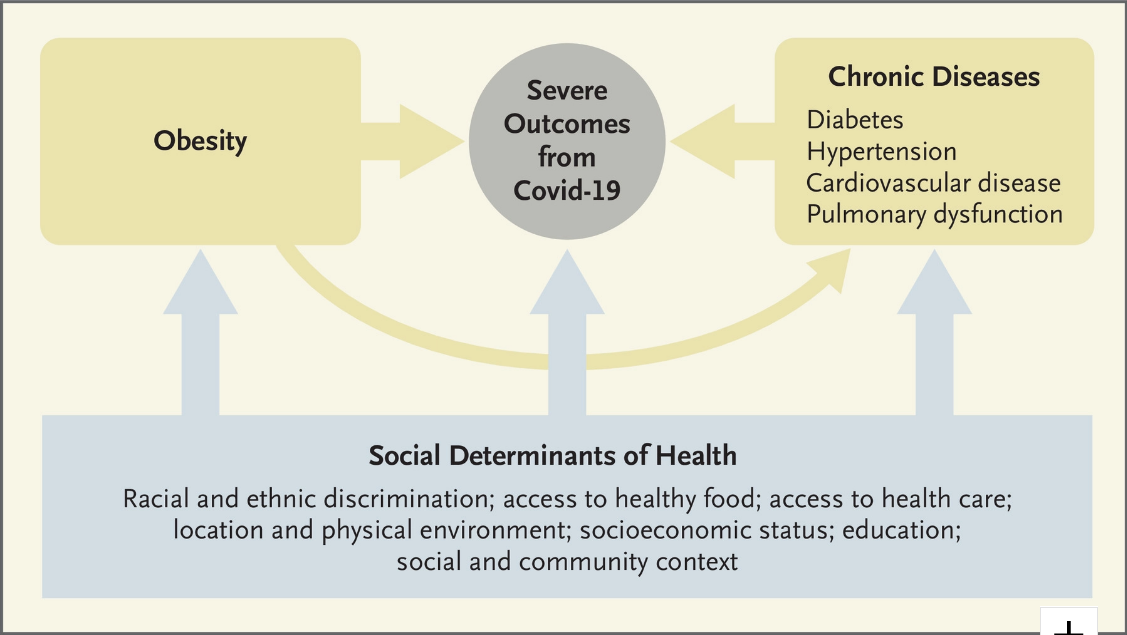
A healthy diet, rich in fruits and vegetables and low in sugar and calorie-dense processed foods, is essential to health. The ability to eat a healthy diet is largely determined by one’s access to affordable, healthy foods — a consequence of the conditions and environment in which one lives. In the United States, poor diet is the leading underlying cause of death, having surpassed tobacco use in related mortality.2 A study of dietary trends among U.S. adults between 1999 and 2012 showed overall improvement in the American diet, with the proportion of people who reported having a poor-quality diet decreasing from 55.9% to 45.6%; additional analyses, however, revealed persistent or worsening disparities in nutrition based on race or ethnicity, education, and income level.3

Covid-19 and Disparities in Nutrition and Obesity

Screenshot_2020-07-19 Covid-19 and Disparities in Nutrition and Obesity NEJM

The BMJ

Global efforts to develop treatments for covid-19 have focused on drug repurposing, immunotherapies including convalescent plasma and monoclonal antibodies, and vaccines. Despite obesity prevalence rates of 40% in the United States, 29% in England, and 13% globally, to our knowledge none of the several thousand clinical studies of covid-19 in international clinical trial registries proactively recruit participants with obesity. On the contrary, several studies consider overweight or obesity as exclusion criteria. We call for proportional representation of people with obesity in clinical trials of drugs and vaccines, including dose finding studies.

Obesity and covid-19: the unseen risks

More from The BMJ

Covid-19: What we eat matters all the more now

our food systems are making us ill.11 The covid-19 outbreaks at meat packing plants have focused minds on the meat industry as a driver for acute and chronic disease.12 Last month Monique Tan and colleagues wrote that the food industry should be held partly accountable “not only for the obesity pandemic but also for the severity of covid-19 disease and its devastating consequences.”13 The government must do more to hold the industry to account.

BMJ 2020; 370 doi: https://doi.org/10.1136/bmj.m2840

Lose weight.  Make better food choices.  Wear a mask.


slide16b7e185fa68643949edb6b68fed65ae3

Diabulimia

I live with “the world’s most dangerous” eating disorder

I have been struggling with diabulimia on and off since my diagnosis of type 1 diabetes in 2011, at age 30. I had just started a PhD and spent the first semester walking around campus with all the classic symptoms of type 1 diabetes: famished, dehydrated, constantly needing to urinate, and experiencing rapid weight loss. After my diabetes diagnosis, when I started injecting insulin, I gained the weight back—and then some. It didn’t take long to figure out that omitting insulin was not only an effective weight loss tool, compared with vomiting, it was a much less violent way to purge. Having a history of bulimia nervosa, I thought I had found the holy grail. I could eat what I wanted, not use insulin, and not gain weight.

And I thought Orthorexia Nervosa was bad.

Nearly 47,000 Meat Packers Have COVID-19 – updated Jan. 2021

As of Jan. 22, there have been at least 45,000 reported positive cases tied to meat and poultry processing facilities from at least 482 outbreaks in 38 states, and at least 240 reported worker deaths in at least 62 plants in 27 states.

MidWest Center for Investigative Reporting

Meanwhile in Oklahoma a few weeks ago…

116 COVID-19 infections found in pork processing plant in Guymon

and in Houston…

Screenshot_2020-06-27 2019 Novel Coronavirus

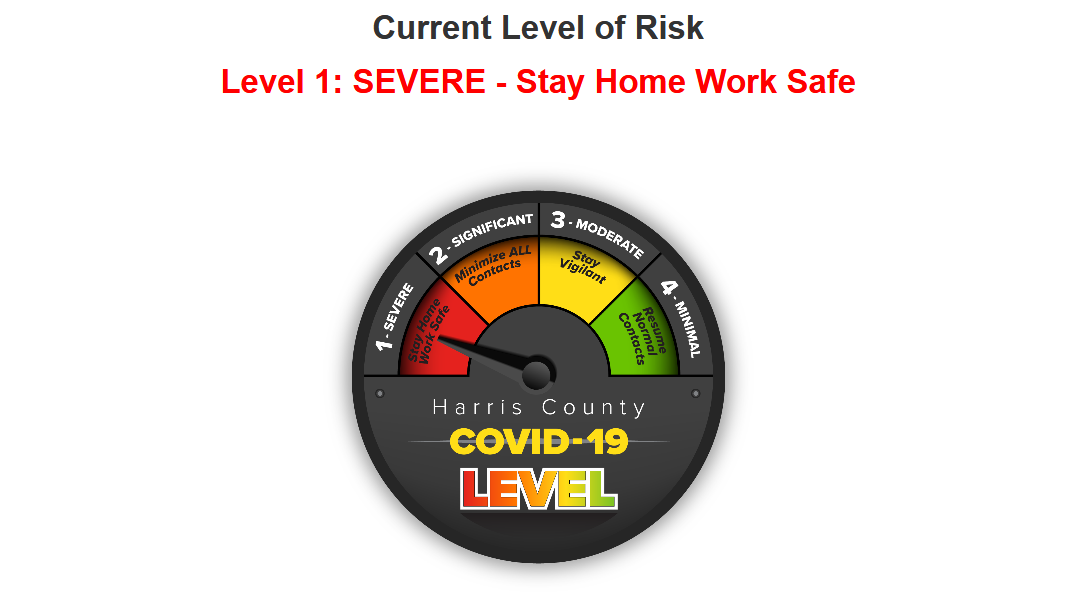
On June 26th, Harris County Judge Lina Hidalgo raised the Current Level of Risk for Harris County from Level 2 to Level 1.

Level 1 signifies a severe and uncontrolled level of COVID-19 in Harris County, meaning outbreaks are present and worsening and that testing and contact tracing capacity is strained or exceeded. At this level, residents take action to minimize contacts with others wherever possible and avoid leaving home except for the most essential needs like going to the grocery store for food and medicine.

Regardless of current level indicated, all residents should continue the use of social distancing, frequent hand washing, and the use of face coverings until there is a vaccine or a treatment for the virus. Additionally, residents exposed to COVID-19 should quarantine for 14 days regardless of level indicated.

My vegetarian cookbook collection is growing.  Grocery trips will include more shelf stable items so that I’ll be able to fix more meat-free meals in the near future.

The acquisition of more cookbooks is a rational strategy.  I’ll need more sources besides the same recipe that shows up multiple times on multiple websites as the best (fill in the blank) for inspiration in the kitchen when the POTUS issues an Executive Order rationing animal proteins.

Nearly 5,000 Meat Packers Have COVID-19

COVID-19 cases among U.S. workers in 115 meat and poultry processing facilities were reported by 19 states. Among approximately 130,000 workers at these facilities, 4,913 cases and 20 deaths occurred. Factors potentially affecting risk for infection include difficulties with workplace physical distancing and hygiene and crowded living and transportation conditions.

COVID-19 Among Workers in Meat and Poultry Processing Facilities ― 19 States, April 2020

Meanwhile in Oklahoma…

Texas County COVID-19 case count at 343; Guymon 3rd-highest number of cases

116 COVID-19 infections found in pork processing plant in Guymon

The article link is old.  I’m unable to find any current data on the number of Covid-19 cases at the meat processing plant.

Like I’ve before,  my vegetarian cookbook collection is growing.  I’ll need more sources for inspiration in the kitchen when the government starts rationing animal proteins and mandates veganism.

“Unlike other supply chain issues, this has nothing to do with anyone overseas. This has to do with how many people can you make work inside one of these processing plants—they’re all very close to each other and there’s a public health risk,” Rubio said. “So there’s been disruptions there. I know people are working hard to get that resolved. In the meantime, I guess we’ll have to go a little vegan, right?”

Marco Rubio Admits “We Have to Go a Little Vegan” Due to Meat Shortage

Vitamin D Hypothesis – A Role in COVID-19 Mortality Rates?

Vitamin D Levels Appear to Play Role in COVID-19 Mortality Rates

By analyzing publicly available patient data from around the globe, Backman and his team discovered a strong correlation between vitamin D levels and cytokine storm — a hyperinflammatory condition caused by an overactive immune system — as well as a correlation between vitamin D deficiency and mortality.

The research is available on medRxiv, a preprint server for health sciences.

The role of vitamin D in the prevention of coronavirus disease 2019 infection and mortality

In conclusion, we found significant crude relationships between vitamin D levels and the number COVID-19 cases and especially the mortality caused by this infection. The most vulnerable group of population for COVID-19, the aging population, is also the one that has the most deficit Vitamin D levels.

Vitamin D has already been shown to protect against acute respiratory infections and it was shown to be safe. It should be advisable to perform dedicated studies about vitamin D levels in COVID-19 patients with different degrees of disease severity.

Many years ago I approached my former personal care physician and asked to have my Vitamin D level checked.

“What the hell for?”

“I would like to know my Vitamin D blood level to see if I need to take a supplement.”

“Just get outside in the sun for around 20 minutes a day.”

“Just order the test.”

And he did.  Less than a week later Doc called me back to let me know I had Vitamin D deficiency.  I’ve been taking a daily supplement since.

Vitamin D deficiency is now recognized as a pandemic. The major cause of vitamin D deficiency is the lack of appreciation that sun exposure in moderation is the major source of vitamin D for most humans. Very few foods naturally contain vitamin D, and foods that are fortified with vitamin D are often inadequate to satisfy either a child’s or an adult’s vitamin D requirement. Vitamin D deficiency causes rickets in children and will precipitate and exacerbate osteopenia, osteoporosis, and fractures in adults. Vitamin D deficiency has been associated with increased risk of common cancers, autoimmune diseases, hypertension, and infectious diseases. A circulating level of 25-hydroxyvitamin D of >75 nmol/L, or 30 ng/mL, is required to maximize vitamin D’s beneficial effects for health. In the absence of adequate sun exposure, at least 800–1000 IU vitamin D3/d may be needed to achieve this in children and adults. Vitamin D2 may be equally effective for maintaining circulating concentrations of 25-hydroxyvitamin D when given in physiologic concentrations.

The American Journal of Clinical Nutrition, Volume 87, Issue 4, April 2008, Pages 1080S–1086S, https://doi.org/10.1093/ajcn/87.4.1080S
Published: 01 April 2008

An interesting hypothesis that needs more research.

Update 05.16.20

Journal Reference:

  1. E. Laird, J. Rhodes, R.A. Kenny. Vitamin D and Inflammation: Potential Implications for Severity of Covid-19. Irish Medical Journal, 2020; 113 (5): P81 [link]

Journal Reference:

  1. Petre Cristian Ilie, Simina Stefanescu, Lee Smith. The role of vitamin D in the prevention of coronavirus disease 2019 infection and mortality. Aging Clinical and Experimental Research, 2020; DOI: 10.1007/s40520-020-01570-8


Meat Intake and Colorectal Polyps

Meat Intake and Colorectal Polyps

Research professor of medicine Martha Shrubsole, Ph.D., and colleagues at Vanderbilt University Medical Center have published the first study to evaluate intakes of meat, cooking methods and meat mutagens and risk of developing sessile serrated polyps (SSPs, also called sessile serrated lesions). Shrubsole previously reported that consuming high levels of red meat increased the risk of developing all types of polyps, but that the likelihood of developing SSPs was two times greater than the risk of developing adenomas and hyperplastic polyps (HP).

Conventional colorectal adenomas are the precursor lesions for most colorectal cancers. SSPs, however, represent an alternative pathway to carcinogenesis that may account for up to 35 percent of colorectal cancers. Because a diagnostic consensus for SSPs was not reached until 2010, few epidemiologic studies have evaluated risk factors.


Visceral fat delivers signal to the brain that hurts cognition

“We have identified a specific signal that is generated in visceral fat, released into the blood that gets through the blood brain barrier and into the brain where it activates microglia and impairs cognition.”

Visceral fat delivers signal to the brain that hurts cognition

Quote and article link presented without the usual sarcasm.

Molecule found in oranges could reduce obesity and prevent heart disease and diabetes

In mice, so don’t start gorging on oranges.

Sorry, sarcasm restriction didn’t last long.

Early studies on the diet suggested red wine was a major contributor to the health benefits of the Mediterranean diet because it contains a compound called resveratrol, which activated a certain pathway in cells known to increase lifespan and prevent aging-related diseases. However, work in Mashek’s lab suggests that it is the fat in olive oil, another component of the Mediterranean diet, that is actually activating this pathway.

Olive oil in the diet may also help mitigate aging-related diseases