A Perspective on Mental Health Issues

Here’s the full post so you don’t have to go to X.

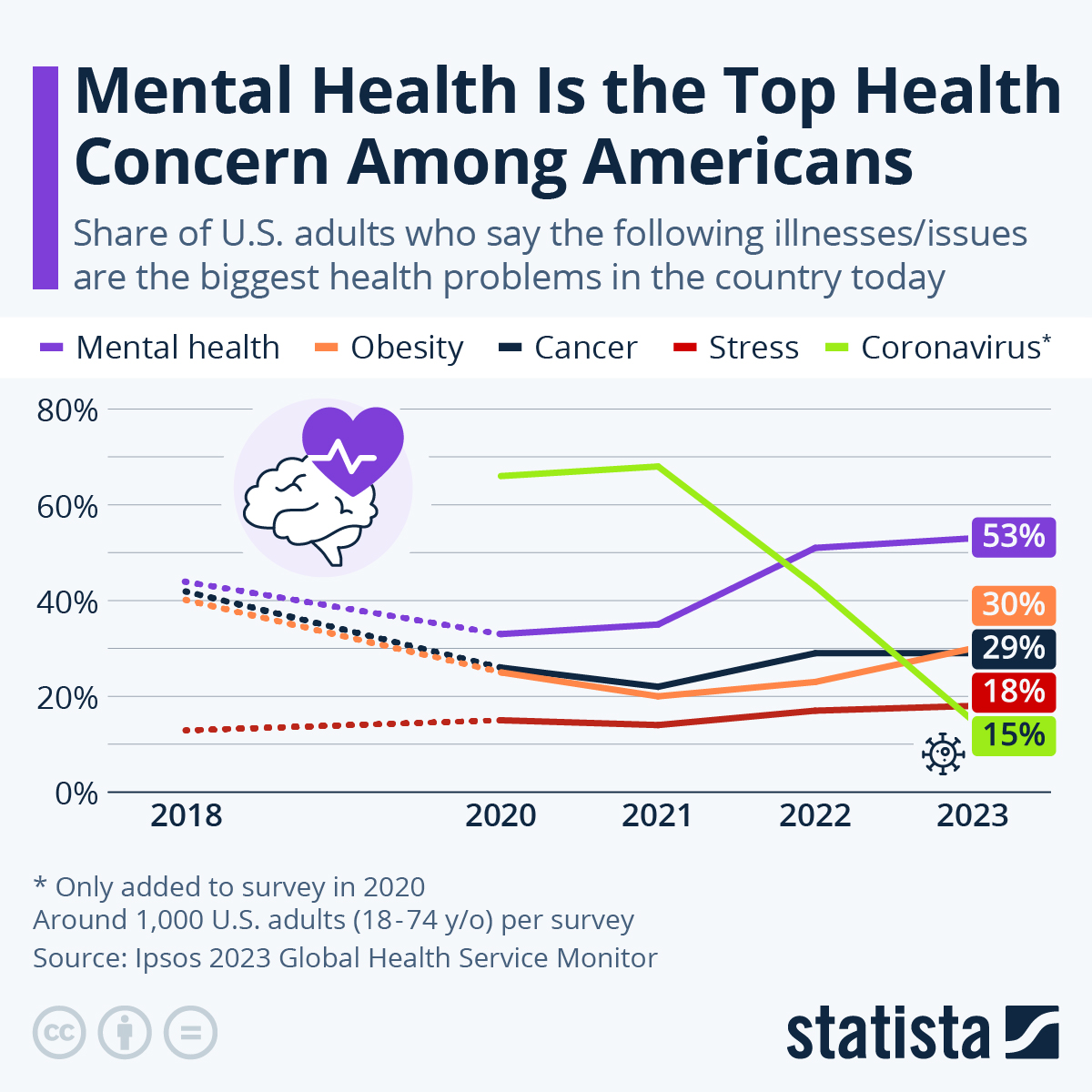
I am profoundly, profoundly concerned about the psychological health of both children and adults in this country. A culture overemphasizing emotional safety has robbed people of their opportunities for growth. Many people experience these opportunities as a threat, remaining permanently infantile, afraid, and unable and unwilling to cope with adversity as a result. Indeed the culture itself rather than encouraging resilience, persuades people that even minor inconveniences are personal affronts and even signs of systemic injustice visited upon them. As people begin experiencing everything that falls outside of their narrow box of predictable experience as a form of threat to be neutralized, not only are they personally deprived of growth opportunities, but they create a culture of mistrust, rigidity, and sterility, which in turn reduces in society as a whole availability of the kinds of messy experiences that are critically important for self-discovery, personal growth, and psychological resilience. The outcome is a society of the over-socialized, of the outraged, of the rule-abiding, of the sterile, and ultimately of the psychologically unwell, of the poorly adapted with scant psychological reserve for problems, crises, or even just interesting experiences that fall outside the norm but which in just days or weeks can provide the equivalent of years of life experience. By protecting everyone, we have destroyed the normal maturation process that is a central to creating psychologically well-functioning adults. The fruits of this are, well, that many young adults are now thoroughly psycho-pathological and unable to deal healthily with the normal stresses of life. I cannot be the only one to observe this and it disturbs me beyond words.

Kevin Bass PhD MS – posted on X 10.15.23

Scary Charts – 08.13.23 (and yet another Dark Side of Tik Tok)

APC indicates annual percentage change. This study of alcohol-related mortality in the US suggests there has been a significantly higher rate of increase in deaths among female individuals in recent years.

Trends in Alcohol-Related Deaths by Sex in the US, 1999-2020 — http://10.1001/jamanetworkopen.2023.26346

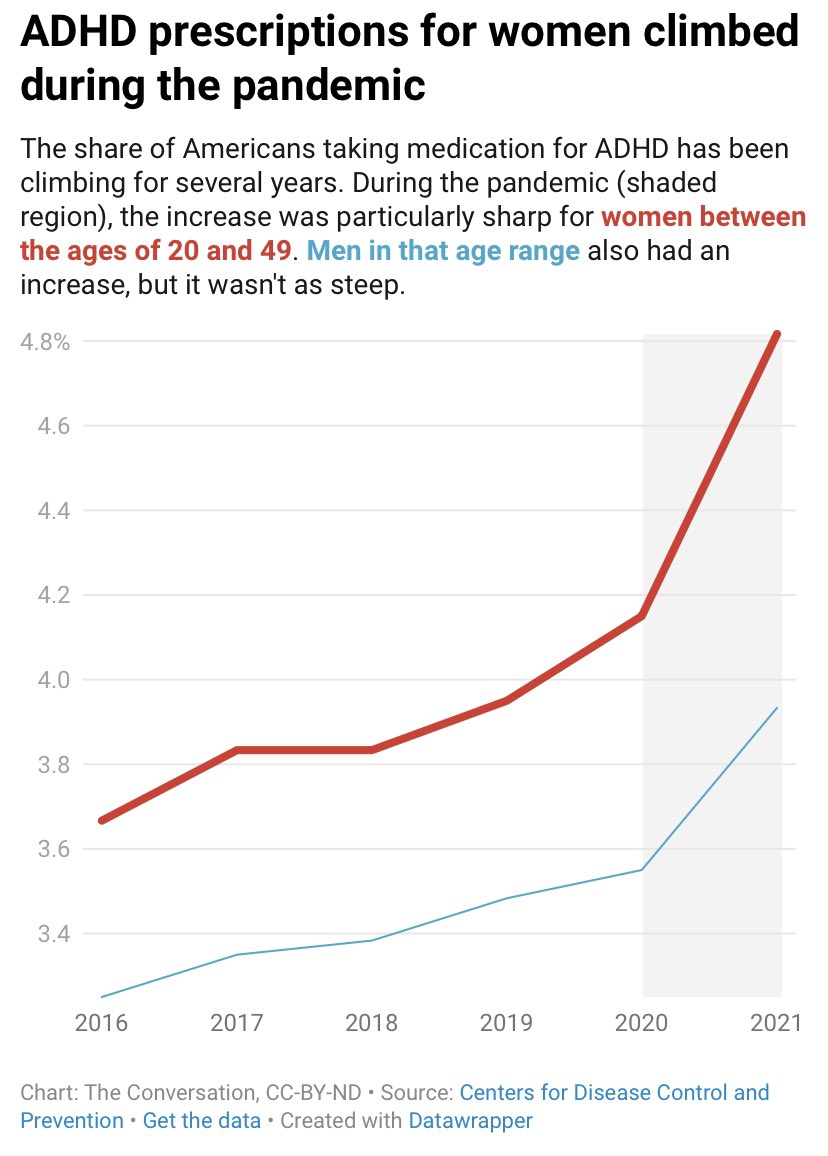
In March 2023, the U.S. Centers for Disease Control and Prevention reported an unprecedented spike in stimulant prescriptions between 2020 and 2021. Perhaps most surprising was that the demographic showing the greatest increases in stimulant use – an increase of almost 20% in one year – were in women in their 20s and 30s…

But while the internet exploded with ADHD content, researchers in Canada began sorting #ADHD TikTok videos into categories based on their accuracy and helpfulness. They reported something important: A majority of #ADHD content was misleading. Only 21% of the posts provided useful and accurate information.

More adults than ever have been seeking ADHD medications – an ADHD expert explains what could be driving the trend — https://theconversation.com/more-adults-than-ever-have-been-seeking-adhd-medications-an-adhd-expert-explains-what-could-be-driving-the-trend-206052

Alcohol AND amphetamines. Self-diagnosed ADHD. SMH.

The Dark Side of Tik Tok – Soak Your Eyeballs in Castor Oil

Some people on TikTok have been telling you to rub castor oil around and potentially into your eyes, even though it’s approved by the Food and Drug Administration (FDA) as a laxative and not as an eye remedy. TikTokers have been claiming that castor oil can help treat all sorts of eye problems ranging from eye dryness to floaters to cataracts to poor vision to glaucoma.

TikTokers Push Castor Oil As An Eye Remedy, Here Are The Problems — https://www.forbes.com/sites/brucelee/2023/08/12/tiktokers-push-castor-oil-as-an-eye-remedy-here-are-the-problems/?sh=1111bfa485ce

https://www.ophthalmologytimes.com/view/ophthalmologists-castor-oil-shouldn-t-be-rubbed-in-the-eyes-no-matter-what-they-do-on-tiktok

Natural selection at its finest. And we thought drinking detergent was bad. The Dark Side of Tik Tok – Updated

The Dark Side of Tik Tok – Updated

In the latest health fad to alarm and exasperate medical experts, people on TikTok have cheerily “hopped on the borax train” and are drinking and soaking in the toxic cleaning product based on false claims that it can reduce inflammation, treat arthritis, and “detoxify” the body.

Borax is the new Tide Pods, and poison control experts are facepalming — https://arstechnica.com/health/2023/07/borax-is-the-new-tide-pods-and-poison-control-experts-are-facepalming/?comments=1&comments-page=1

Natural selection at its finest.

Good article on Vox. Why TikTokers are drinking laundry detergent https://www.vox.com/technology/2023/7/29/23811639/tiktok-borax-challenge-dangerous-laundry-detergent

Social isolation and Lower Brain Volume

The people with the lowest amount of social contact had overall brain volume that was significantly lower than those with the most social contact. The total brain volume, or the sum of white and grey matter, as a percentage of the total intracranial volume, or the volume within the cranium, including the brain, meninges, and cerebrospinal fluid, was 67.3% in the lowest contact group compared to 67.8% in the highest contact group. They also had lower volumes in areas of the brain such as the hippocampus and amygdala that play a role in memory and are affected by dementia.

The study does not prove that social isolation causes brain shrinkage; it only shows an association.

Social isolation linked to lower brain volume — American Academy of Neurology. “Social isolation linked to lower brain volume.” ScienceDaily https://www.sciencedaily.com/releases/2023/07/230712165229.htm (accessed July 13, 2023).

Yikes!

Take Your Vitamins

In the current study, more than 3,500 adults (mostly non-Hispanic white) over age 60 were randomly assigned to take a daily multivitamin supplement or placebo for three years. At the end of each year, participants performed a series of online cognitive assessments at home designed to test memory function of the hippocampus, an area of the brain that is affected by normal aging. The COSMOS-Web study is part of a large clinical trial led by Brigham & Women’s Hospital and Harvard called the COcoa Supplement and Multivitamin Outcomes Study (COSMOS).

By the end of the first year, memory improved for people taking a daily multivitamin, compared with those taking a placebo. The researchers estimate the improvement, which was sustained over the three-year study period, was equivalent to about three years of age-related memory decline. The effect was more pronounced in participants with underlying cardiovascular disease.

Columbia University Irving Medical Center. “Multivitamin improves memory in older adults, study finds.” ScienceDaily. http://www.sciencedaily.com/releases/2023/05/230524181916.htm (accessed May 25, 2023).

(I am) Flunking Retirement

Participants with the most positive views of aging were living, on average, 7.5 years longer than those with the most negative views. 90%: the percentage of centenarians who were functionally independent in their 90’s.

People who live long lives can teach us how to live healthy lives.

Flunking Retirement – https://ysph.yale.edu/about-school-of-public-health/communications-public-relations/publications/public-health-magazine/article/flunking-retirement/

The source article is an interview with two Yale alumni who are still working at the age of 82. Both are youngsters when compared to…Willie who just turned 90 and still working.

Take a Break – 04.19.23 (let’s do some brain remodeling)

A study led by the UNIGE, HES-SO Geneva, and EPFL revealed that music practice and active listening could prevent working memory decline. Such activities promoted brain plasticity, they were associated with grey matter volume increase. Positive impacts have also been measured on working memory. This study was conducted among 132 healthy retirees from 62 to 78 years of age. One of the conditions for participation was that they had not taken any music lessons for more than six months in their lives…The participants were randomly assigned to two groups, regardless of their motivation to play an instrument. The second group had active listening lessons, which focused on instrument recognition and analysis of musical properties in a wide range of musical styles. The classes lasted one hour. Participants in both groups were required to do homework for half an hour a day.”

After six months, we found common effects for both interventions. Neuroimaging revealed an increase in grey matter in four brain regions involved in high-level cognitive functioning in all participants, including cerebellum areas involved in working memory. Their performance increased by 6% and this result was directly correlated to the plasticity of the cerebellum,” says Clara James, last author of the study, a privat-docent at the Faculty of Psychology and Educational Sciences of UNIGE, and full professor at the Geneva School of Health Sciences

Université de Genève. “How music can prevent cognitive decline.” ScienceDaily. http://www.sciencedaily.com/releases/2023/04/230417142520.htm (accessed April 18, 2023).

Journal Reference – Damien Marie, Cécile A.H. Müller, Eckart Altenmüller, Dimitri Van De Ville, Kristin Jünemann, Daniel S. Scholz, Tillmann H.C. Krüger, Florian Worschech, Matthias Kliegel, Christopher Sinke, Clara E. James. Music interventions in 132 healthy older adults enhance cerebellar grey matter and auditory working memory, despite general brain atrophy. Neuroimage: Reports, 2023; 3 (2): 100166 DOI: 10.1016/j.ynirp.2023.100166

I could feel my brain grey matter volume increasing when listening to this album.