Yes I would like fries with my double bacon cheeseburger.
The findings are from an analysis of 8015 emerging adults aged 18-25 in the cross-sectional National Health and Nutrition Examination Survey (NHANES), including NHANES II (1976-1980), NHANES III (1988-1994), and the continuous NHANES cycles from 1999 through 2018. The prevalence of obesity (BMI 30.0 kg/m2 or higher) in the emerging adult age group soared from 6.2% between 1976-1980 to 32.7% in 2017-2018 (P = .007).
When patients lose weight, the body desires to regain it via metabolic adaptation that decreases energy use, enhances metabolic efficiency, and prompts increased energy intake. With metabolic adaptation, a person recognizes that as they try a particular therapy, whether lifestyle, medication, surgery, or an endoscopic therapy, it initially feels relatively easy to do and maybe their weight responds. However, over time on therapy, continued weight loss becomes more and more challenging due to the alteration in hormone levels such as ghrelin, leptin, and glucagon-like peptide-1 (GLP-1). For example, increasing ghrelin levels stimulate a person to eat more, and falling GLP-1 levels cause a person to not feel as full.
Because of my social media activities my name and email address have found their way into some interesting email marketing lists. This quote comes from an email I got a few days ago. I actually went to the website, was granted guest access and downloaded the slide deck. Most of the information in the presentation was WAY above my pay grade.
Author Disclosure – I am not a medical doctor. I’m an insurance guy.
The calories that children and adolescents consumed from ultraprocessed foods jumped from 61% to 67% of total caloric intake from 1999 to 2018, according to a new study from researchers at the Friedman School of Nutrition Science & Policy at Tufts University. Published August 10, 2021, in JAMA, the study analyzed dietary intake from 33,795 children and adolescents nationwide.
The largest spike in calories came from such ready-to-eat or ready-to-heat dishes as takeout and frozen pizza and burgers: from 2.2% to 11.2% of calories. The second largest spike in calories came from packaged sweet snacks and desserts, the consumption of which grew from 10.6% to 12.9%.
Frozen pizza and burgers? Is this a problem?
Findings In this serial cross-sectional study of nationally representative data from 33 795 US youths aged 2-19 years, the estimated percentage of total energy consumed from ultraprocessed foods increased from 61.4% to 67.0%, whereas the percentage of total energy consumed from unprocessed or minimally processed foods decreased from 28.8% to 23.5%.
These findings show that the prevalence of food insecurity in the U.S. is highest among Americans for whom a healthy diet is especially critical—Medicaid enrollees with insulin-dependent diabetes and diabetes-related eye or kidney complications (over 40% were food insecure). The problem of co-occurring food insecurity and diabetes among the nation’s disadvantaged has likely worsened during the coronavirus disease 2019 pandemic.
The Prevalence of Food Insecurity Is Highest Among Americans for Whom Diet Is Most Critical to Health — Diabetes Care 2021 Jun; 44(6): e131-e132. https://doi.org/10.2337/dc20-3116
In patients with newly diagnosed T2DM, alcohol abstinence was associated with a low risk of AF development. Lifestyle modifications, such as alcohol abstinence, in patients newly diagnosed with T2DM should be recommended to reduce the risk of AF.
New research published in Diabetologia has shown that if people achieve and maintain substantial weight loss to manage their type 2 diabetes, many can also effectively control their high blood pressure and stop or cut down on their anti-hypertensive medication.
During Pandemic Year One I lost 25 pounds. My PCP was impressed but when I told her how my diet changed she put her “doctor face” on, looked me straight in the eyes and said,
“I can’t wait to see your blood test results.”
Due to my family history my risk of developing DM2 is approximately 25% higher than the average underwriter. When I asked a prominent Endocrinologist for some advice many years ago he too put on his “doctor face” looked me straight in the eyes and said,
“Stay as thin as you can as long as you can.”
Yesterday I went to see Kevin and got a fresh flattop. The first question he asked was,
“Did you lose more weight?”
No, I haven’t. But my face definitely looks thinner without a mask.
BTW my blood work was about the same as last year even with my change in diet.
In Mexico obesity reached epidemic proportions after it joined NAFTA with the United States and Canada in the early 1990s, making processed food more easily available. Diets quickly changed as many people, particularly those on lower incomes, replaced largely healthy traditional staples (corn tortilla, frijoles, Jamaica Water) with highly processed alternatives (hotdogs, nuggets, sodas). Sugar consumption soared and waistlines exploded. In the past 20 years the number of obese and overweight people has tripled, with 75% of the population now overweight.
Mexico also has the sixth highest mortality rate from Covid-19, which has spurred the government to escalate its war against obesity.
All patient identifiers removed for obvious reasons.
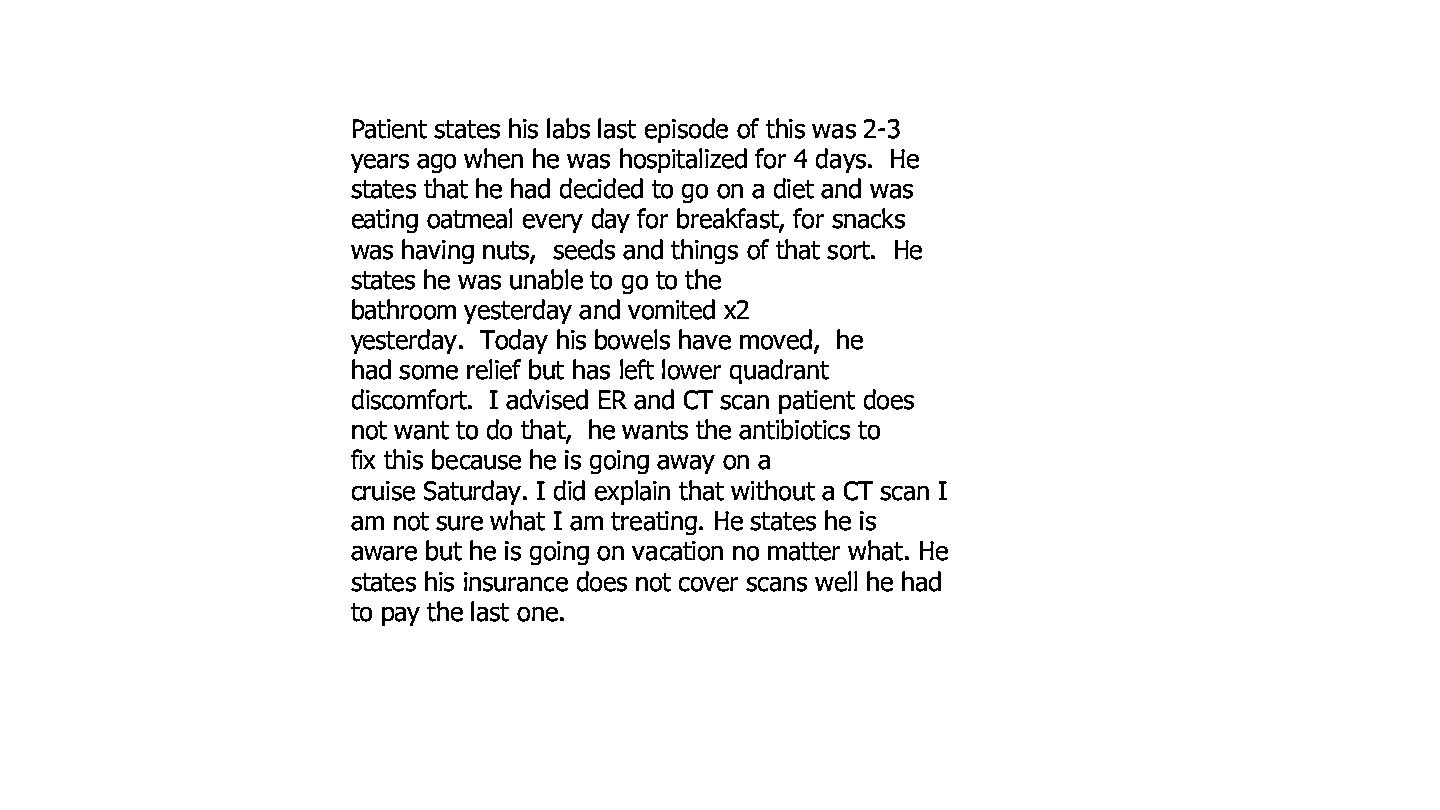
Patient is 60 years of age 5.9 289 with a history of hypertension, obstructive sleep apnea, acid reflux disease, recurrent diverticulitis, and anxiety/depression.
In some cases, food companies can obscure their involvement through the use of what are known as “front groups,” third-party organizations disguised by innocuous-seeming names. (Until recently, for example, Coca-Cola funded a front group called the “Global Energy Balance Network” that conducted research on obesity.) Sacks and his team included front groups in their definition of industry involvement.
“It’s sometimes quite difficult to see when you’re looking at who’s funding a study, if [they] are related to the food industry,” he said. “So when we would see a paper funded by some random-sounding group, the challenge was actually digging in, going on their website and seeing who’s funding them. Because the food industry often tries to hide that.”
At least 10 peer-reviewed studies about pasta published since 2008 were either fundeddirectly by Barilla or, like the one published this month, were carried out by scientists who have had financial ties to the company, which reported sales of 3.4 billion euros ($4.2 billion) in 2016. For two years, Barilla has publicized some of these studies, plus others favorable to its product, on its website with taglines like “Eat Smart Be Smart…With Pasta” and “More Evidence Pasta Is Good For You.” And the company hired the large public relations firm Edelman to push the latest study’s findings to journalists.
In 2015, 42% of 14-year-old girls and boys said they currently were trying to lose weight, compared to 30% in 2005.
Lead author Dr Francesca Solmi (UCL Psychiatry) said: “Our findings show how the way we talk about weight, health and appearance can have profound impacts on young people’s mental health, and efforts to tackle rising obesity rates may have unintended consequences.
“An increase in dieting among young people is concerning because experimental studies have found that dieting is generally ineffective in the long term at reducing body weight in adolescents, but can instead have greater impacts on mental health. We know, for instance, that dieting is a strong risk factor in the development of eating disorders.”
Obesity rates vary considerably between states and regions of the country. Mississippi has the highest adult obesity rate in the country at 40.8 percent and Colorado has the lowest at 23.8 percent. Twelve states have adult rates above 35 percent, they are: Alabama, Arkansas, Indiana, Kansas, Kentucky, Louisiana, Michigan, Mississippi, Oklahoma, South Carolina, Tennessee and West Virginia. As recently as 2012, no state had an adult obesity rate above 35 percent; in 2000 no state had an adult obesity rate above 25 percent.
Meanwhile in Oklahoma we are ranked #4 in the nation with an obesity rate of 36.8% — (SOURCE: Behavioral Risk Factor Surveillance System (BRFSS) data, CDC).
In March and April, the National Eating Disorders Association (NEDA) saw a 78% increase in messages sent to its helpline compared with the same period last year.
Dr. John Morton, medical director of bariatric surgery for Yale New Haven Health System, says he’s seeing patients via telehealth who have gained up to 30 pounds recently. He says it can happen within months.
The article focuses mainly on anorexia and bulemia but the quote from Dr. Morton caught my eye. A 30 pound weight gain in a few months is pretty substantial. I start to panic after a pound or two. But if you lose 200 pounds and keep it off you tend to overreact if the scale shows your weight creeping up.
My pandemic weight journey (so far) has been about taking a few of those stubborn pounds off. I started the year at 192. This morning I was 179. There has to be more happy weight loss stories out there. The article also didn’t mention anything on Orthorexia Nervosa. I worry about those people too.




You must be logged in to post a comment.