Even More Random Thoughts on Retirement – November 2023

Retirement blues are “a dirty secret,” says Robert Delamontagne, PhD, author of The Retiring Mind. He had to go through his own adjustment when he retired in 2007. He says people are reluctant to talk openly about those struggles because it’s embarrassing. “People would ask me, ‘How’s retirement?’ I used to say, ‘It’s great! I’m having a great time!’ What was I supposed to say?” Once the newness wears off, you may start to question your new situation. “Will my money last?” “Will my health hold up?” “Am I being useful, or am I going to just play bridge and golf for the rest of my life?”

The Emotional Shock of Retirement — https://www.webmd.com/healthy-aging/features/emotional-shock-retirement?src=RSS_PUBLIC

Saturday 11/4

The strategy has achieved clarity. The Plan is a 3-5 year time-frame. The objective is to continue full time paid work then pursue part time paid work til death do us part. As a younger man I never envisioned this to be my desired life in retirement. But here we are.

Time is the most valuable asset I’m sacrificing for this strategy. Time to do whatever I please, whenever I like. Personal projects like my future best seller The Man Who Had No Hobbies will have a completion date further into the future. But the tradeoffs for me are worth it. Many times I’ve asked retired people how’s retirement? Too many times the answer is “I’m bored”. When you are younger, working your ass off, building a career, raising a family, the thought of retirement is seductive. The reality of retirement is different and nothing you could have imagined in your younger life.

No one talks about what we lose when we retire. Well, no one except Jonathan Clements the founder and editor of https://humbledollar.com/ Here’s his list:

  • Income
  • Identity
  • Purpose
  • Structure
  • Community
  • Relevance
  • Power

Income. This is the most obvious loss, we all know it’s coming—and yet many folks are left anxious by the disappearance of their paycheck, even if they have ample savings. Moreover, with that paycheck gone, not only do we lose the ability to save, but also our financial life goes into reverse, with savings coming out of our nest egg instead of going in.

Given that, it’s hardly surprising that studies suggest retirees tend to be happier when they have ample predictable income, such as from a pension. Don’t have a pension? To ease the anxiety of retirement, consider delaying Social Security to get a larger monthly check and perhaps also purchasing immediate fixed annuities. I plan to do both.

What We Lose — https://humbledollar.com/2023/08/what-we-lose/

Read the full article at the link above. Especially if you are nearing retirement.

Well, that’s enough thinking about retirement for a Saturday morning. I have to mow the shade grass The Boss over seeded in the backyard. There’s college football today. I also need to get ready for dinner company tonight.

What to Expect as You Age

Rosanne M. Leipzig is a geriatrician and author of the book, Honest Aging: An Insider’s Guide to the Second Half of Life. An earlier post Unlocking the Secrets to Aging Well pointed to a podcast. The following is an excerpt from an article by Judith Graham at KFF Health News titled Let’s Have an Honest Conversation About What to Expect as You Age https://kffhealthnews.org/news/article/navigating-aging-expectation-adjustment-change/. Graham interviewed Dr. Leipzig for the story.

Can the stages of aging be broken down, roughly, by decade? No, said Leipzig, noting that people in their 60s and 70s vary significantly in health and functioning. Typically, predictable changes associated with aging “start to happen much more between the ages of 75 and 85,” she told me. Here are a few of the age-related issues she highlights in her book:

  • Older adults often present with different symptoms when they become ill. For instance, a senior having a heart attack may be short of breath or confused, rather than report chest pain. Similarly, an older person with pneumonia may fall or have little appetite instead of having a fever and cough.
  • Older adults react differently to medications. Because of changes in body composition and liver, kidney, and gut function, older adults are more sensitive to medications than younger people and often need lower doses. This includes medications that someone may have taken for years. It also applies to alcohol.
  • Older adults have reduced energy reserves. With advancing age, hearts become less efficient, lungs transfer less oxygen to the blood, more protein is needed for muscle synthesis, and muscle mass and strength decrease. The result: Older people generate less energy even as they need more energy to perform everyday tasks.
  • Hunger and thirst decline. People’s senses of taste and smell diminish, lessening food’s appeal. Loss of appetite becomes more common, and seniors tend to feel full after eating less food. The risk of dehydration increases.
  • Cognition slows. Older adults process information more slowly and work harder to learn new information. Multitasking becomes more difficult, and reaction times grow slower. Problems finding words, especially nouns, are typical. Cognitive changes related to medications and illness are more frequent.
  • The musculoskeletal system is less flexible. Spines shorten as the discs that separate the vertebrae become harder and more compressed; older adults typically lose 1 to 3 inches in height as this happens. Balance is compromised because of changes in the inner ear, the brain, and the vestibular system (a complex system that regulates balance and a person’s sense of orientation in space). Muscles weaken in the legs, hips, and buttocks, and range of motion in joints contracts. Tendons and ligaments aren’t as strong, and falls and fractures are more frequent as bones become more brittle.
  • Eyesight and hearing change. Older adults need much more light to read than younger people. It’s harder for them to see the outlines of objects or distinguish between similar colors as color and contrast perception diminishes. With changes to the cornea, lens, and fluid within the eye, it takes longer to adjust to sunlight as well as darkness.
  • Because of accumulated damage to hair cells in the inner ear, it’s harder to hear, especially at high frequencies. It’s also harder to understand speech that’s rapid and loaded with information or that occurs in noisy environments.
  • Sleep becomes fragmented. It takes longer for older adults to fall asleep, and they sleep more lightly, awakening more in the night.

This is by no means a complete list of physiological changes that occur as we grow older.

Ouch.

Even More Random Thoughts on Retirement – October 2023

Source: https://www.statista.com/chart/31034/change-in-behavior-in-response-to-inflation/

Muscle loss and chronic disease

One of the most important parts of exercise programming, no matter who I am working with, is proper resistance training to build muscle strength. Some amount of age-related loss of muscle function is normal and inevitable. But by incorporating resistance training that is appropriate and safe at any ability level, you can slow down the rate of decline and even prevent some loss of muscle function.

The medical term for a condition that involves age-related loss of muscle function and mass is sarcopenia. Sarcopenia can begin as early as age 40, but it tends to be more common in adults age 60 and older. Sarcopenia is associated with a number of health issues such as increased risk of falling, cardiovascular disease and metabolic disease, among others.

In one of our team’s previous studies, we saw that otherwise healthy individuals with sarcopenia had issues delivering vital nutrients to muscle. This could lead to greater likelihood of various diseases, such as Type 2 diabetes, and slow down recovery from exercise.

Recent estimates suggest that sarcopenia affects 10% to 16% of the elderly population worldwide. But even if a person doesn’t have clinically diagnosed sarcopenia, they may still have some of the underlying symptoms that, if not dealt with, could lead to sarcopenia.

Steep physical decline with age is not inevitable – here’s how strength training can change the trajectoryhttps://theconversation.com/steep-physical-decline-with-age-is-not-inevitable-heres-how-strength-training-can-change-the-trajectory-213131

Reducing overall calorie intake may rejuvenate your muscles and activate biological pathways important for good health, according to researchers. Decreasing calories without depriving the body of essential vitamins and minerals, known as calorie restriction, has long been known to delay the progression of age-related diseases in animal models. This new study suggests the same biological mechanisms may also apply to humans.

NIH/National Institute on Aging. “Calorie restriction in humans builds strong muscle and stimulates healthy aging genes.” ScienceDaily. ScienceDaily, 13 October 2023. https://www.sciencedaily.com/releases/2023/10/231013150733.htm

When I said random thoughts I meant it.

Sedentary Behavior and Incident Dementia Among Older Adults

Conclusions and Relevance  Among older adults, more time spent in sedentary behaviors was significantly associated with higher incidence of all-cause dementia. Future research is needed to determine whether the association between sedentary behavior and risk of dementia is causal.

Sedentary Behavior and Incident Dementia Among Older Adults — https://jamanetwork.com/journals/jama/article-abstract/2809418

I’m screwed.

More Random Thoughts on Retirement – September 2023

Again, you can’t connect the dots looking forward; you can only connect them looking backward. So you have to trust that the dots will somehow connect in your future. You have to trust in something — your gut, destiny, life, karma, whatever. This approach has never let me down, and it has made all the difference in my life.

Steve Jobs

The older I get the more I think about retirement. But some things in this life should take a while to make decisions about and retirement is definitely one of those things. I made my decision on retirement 4 years ago when I decided not to retire. Recently, I made my second decision about retirement when I again decided not to retire. But it’s never too early to start thinking about various aspects of retirement as in what you want to retire to. I want to retire to a quiet life of blogging and writing my Future Best Seller tentatively titled The Man Who Had No Hobbies.

The time had come to upgrade my workstation.

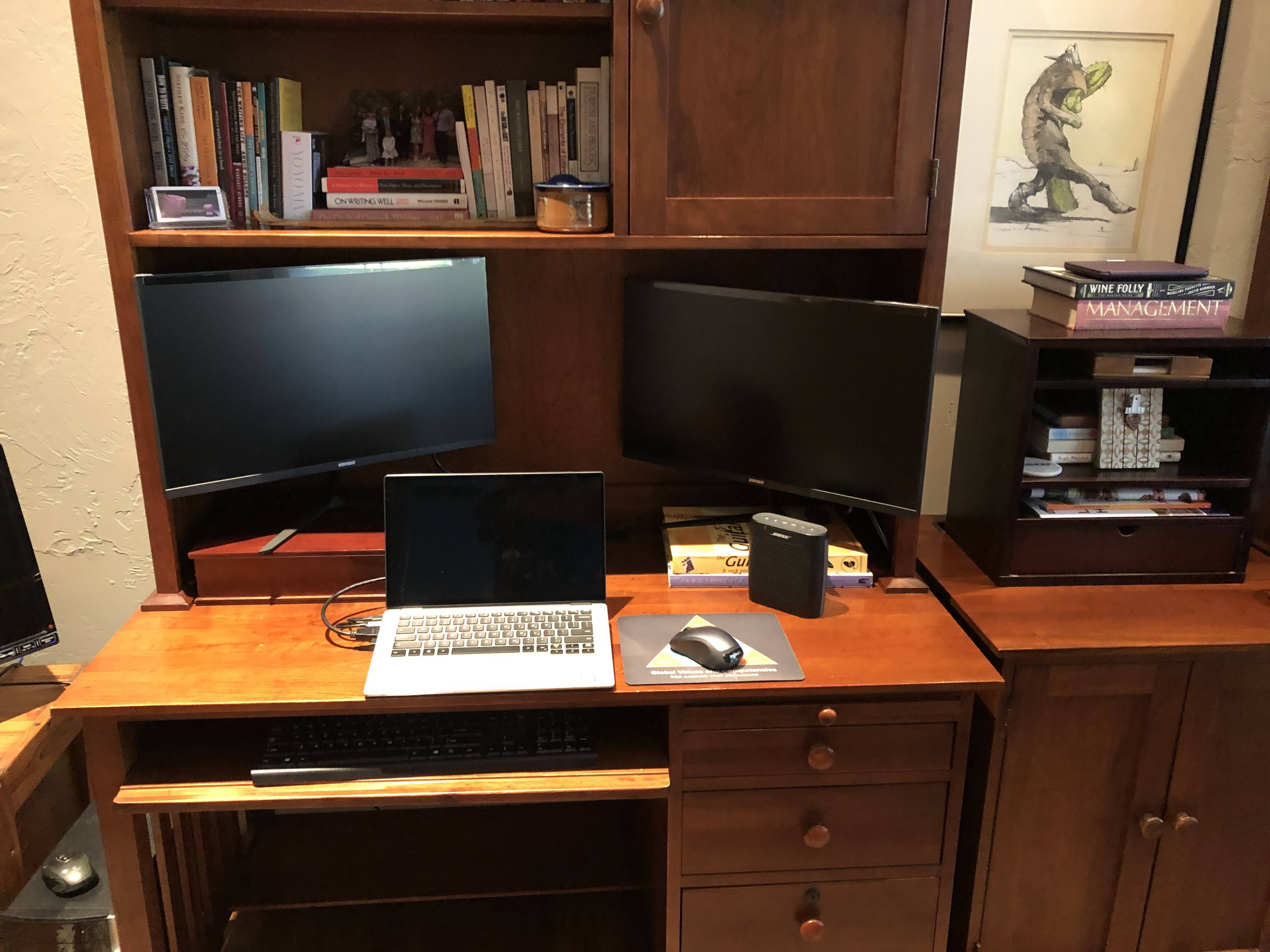
Here’s the workstation for my Day Job.

And here’s my new personal workstation setup (yeah, looks the same).

My old Windows 7 machine was nearing the end. At the bottom left of the picture you can see it still sitting on the floor. I’ve upgraded to a Windows 11 laptop, docking station, and two extra monitors. I should be good until Windows 20 now.

For other random retirement thoughts go to https://garyskitchen.net/. At one point I may combine the two into a single blog.

Maybe when I’m retired.

The Dark Side of Pickleball

It’s a new national obsession, the fastest-growing sport in the U.S. And by the end of 2023, it’s expected to yield roughly 67,000 emergency department visits, 366,000 outpatient visits, 8,800 outpatient surgeries, 4,700 hospitalizations, and 20,000 post-acute injury episodes. All told, UBS Group AG financial analysts have forecast that the direct medical costs of pickleball will top $377 million this year alone, mostly due to wrist, lower leg, head, or lower trunk injuries…

Felice de Jong, PhD, a 67-year-old scientist who lives in Nellysford, VA, explained that when she first heard the name “pickleball,” she thought it would be a “piece of cake, like playing tiddlywinks.” Because she had spent a lifetime being active, she dove right in after only a few lessons, badly twisted her ankle, developed tennis elbow, and was forced to lay off the paddle for a few weeks before returning to the court. 

As Injuries from Pickleball Surge, Here’s How to Play Safely — https://www.webmd.com/fitness-exercise/news/20230724/heres-how-to-play-pickleball-safely?src=RSS_PUBLIC

I have a 12 court facility located at the public golf course 2 miles from the house.

I’m tempted. Just need to make sure my health insurance premiums are paid and up to date.

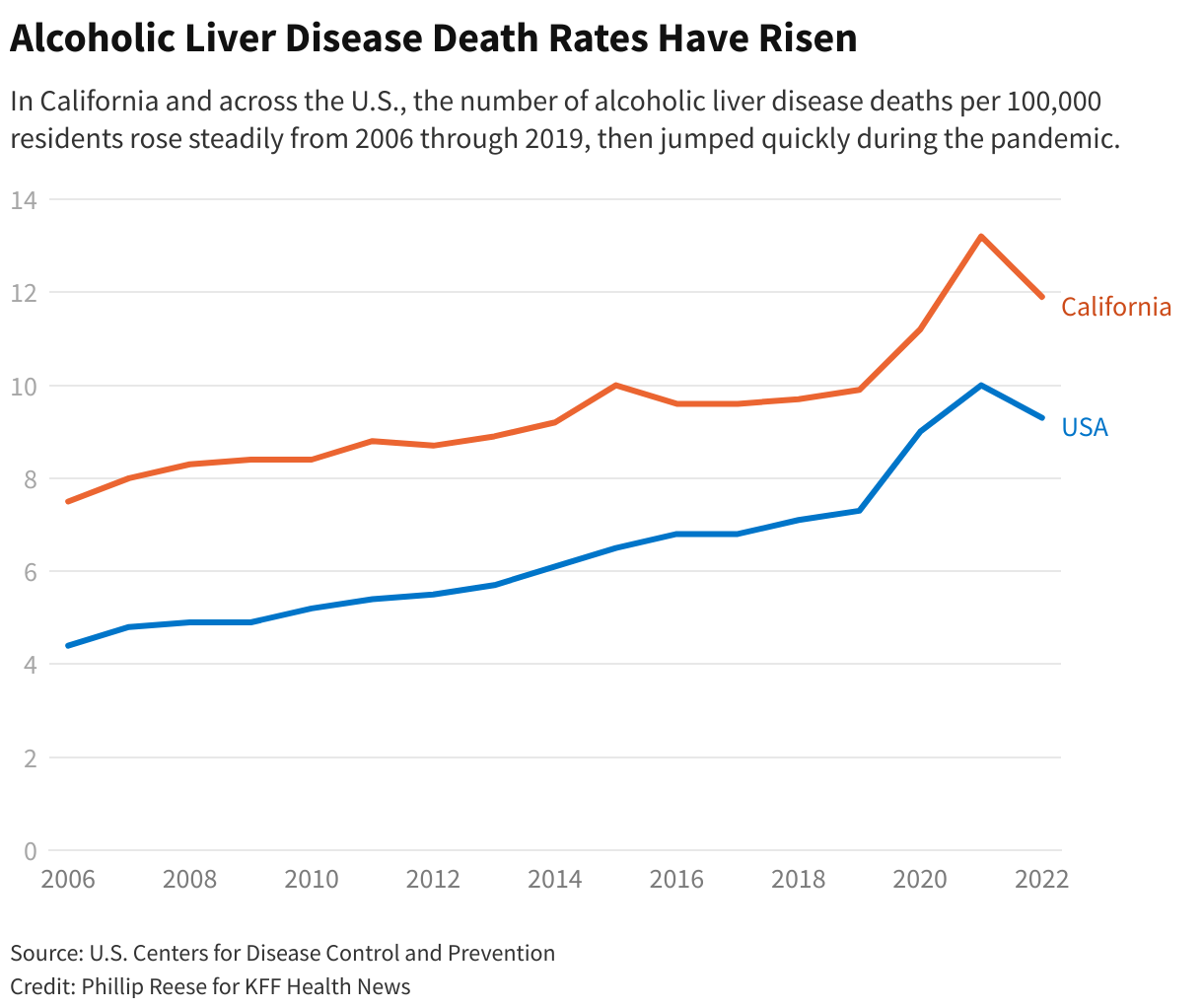
Scary Charts – 07.16.23

Note the Pandemic Bump. Overall trend lines for both CA and USA still heading north.

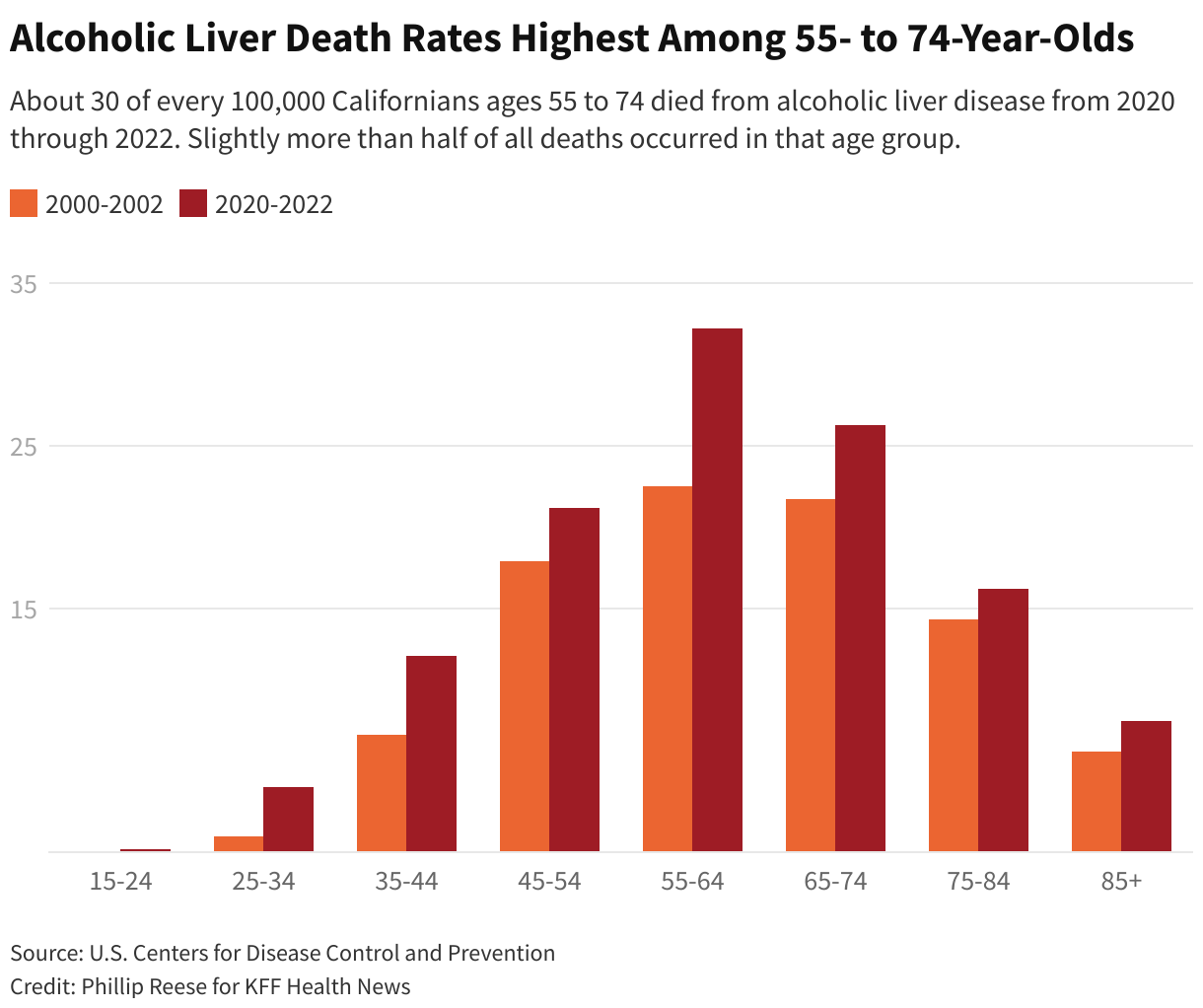
CA only. USA death rates probably show a similar pattern.

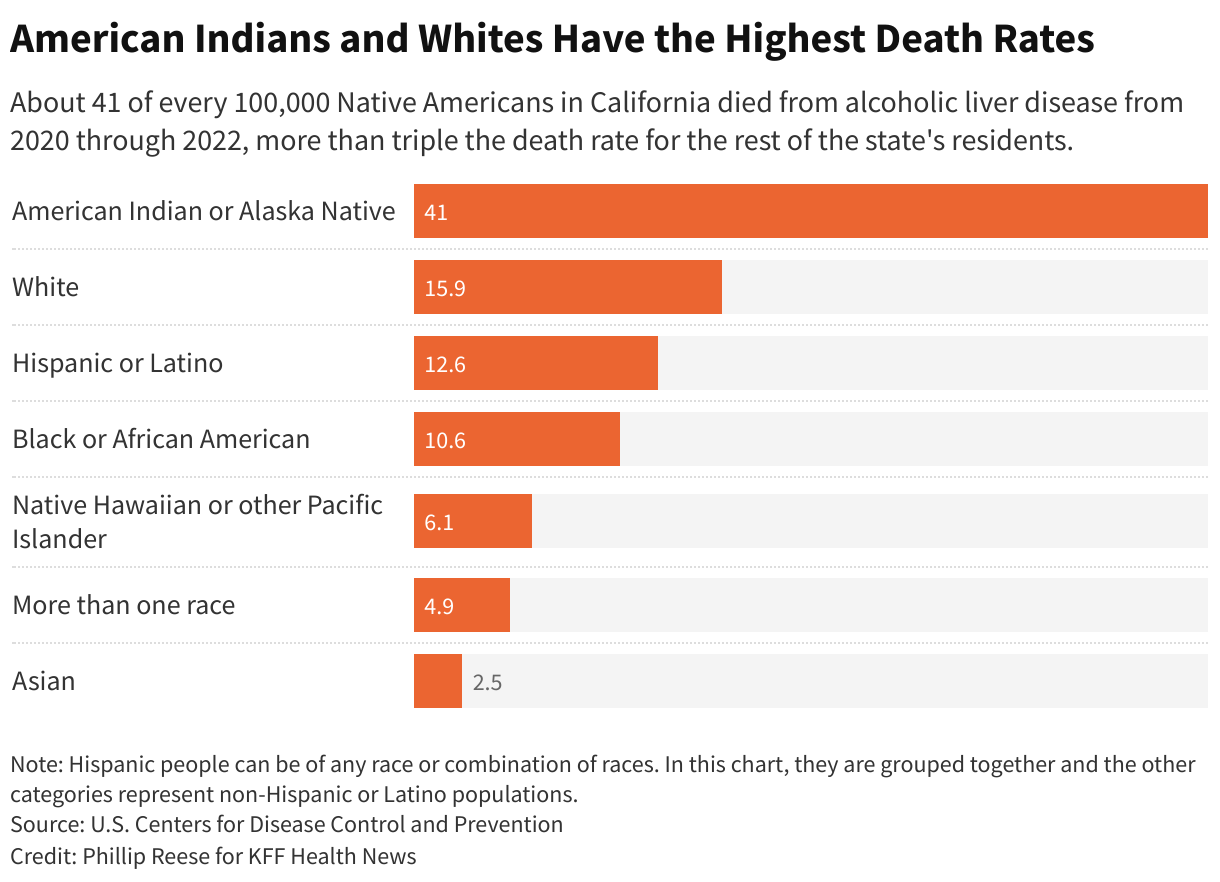
CA statistics. NOTE the ASIAN RATE.

Excessive drinking during the covid-19 pandemic increased alcoholic liver disease deaths so much that the condition killed more Californians than car accidents or breast cancer, a KFF Health News analysis has found. Lockdowns made people feel isolated, depressed, and anxious, leading some to increase their alcohol intake. Alcohol sales rose during the pandemic, with especially large jumps in the consumption of spirits.

Excessive Drinking During the Pandemic Increased Alcoholic Liver Disease Death Rates — https://kffhealthnews.org/news/article/excessive-drinking-during-the-pandemic-increased-alcoholic-liver-disease-death-rates/

Yes it’s Sunday morning and I’m thinking about single malt Scotch because I ran out.

Take Home Lesson for UW Professionals

The highest mortality rates were Gen X and Boomers.

Memo to Self

Think before you drink.

Social isolation and Lower Brain Volume

The people with the lowest amount of social contact had overall brain volume that was significantly lower than those with the most social contact. The total brain volume, or the sum of white and grey matter, as a percentage of the total intracranial volume, or the volume within the cranium, including the brain, meninges, and cerebrospinal fluid, was 67.3% in the lowest contact group compared to 67.8% in the highest contact group. They also had lower volumes in areas of the brain such as the hippocampus and amygdala that play a role in memory and are affected by dementia.

The study does not prove that social isolation causes brain shrinkage; it only shows an association.

Social isolation linked to lower brain volume — American Academy of Neurology. “Social isolation linked to lower brain volume.” ScienceDaily https://www.sciencedaily.com/releases/2023/07/230712165229.htm (accessed July 13, 2023).

Yikes!

Save as Much as You Can Because Whatever You Manage to Save Will Never Be Enough – Random Thoughts on Retirement

As a gentle reminder to readers who may be visiting this blog for the first time my Random Thoughts About Retirement are written by an Old Guy who is old enough to be retired but isn’t retired and is still working. To be clear, saving as much as you can is different than saving more. I come across way too much “financial advice” that emphasizes saving more for retirement as the hands down absolute solution for a secure retirement. Saving more is typically followed by advice to spend less. Well life keeps getting more expensive so it’s getting harder to save more AND spend less.

So save as much as you can. That’s it. That’s the post.